
The federal government is providing $109,000 for the University of Idaho to study an emerging plant disease the school says “poses a substantial threat to the state’s potato industry.”
The money will be used to monitor potato fields for the presence of psyllids, which spread a crop disease called zebra chip. The grant also will allow research into effects of the disease on tubers during storage – a topic about which little is known.
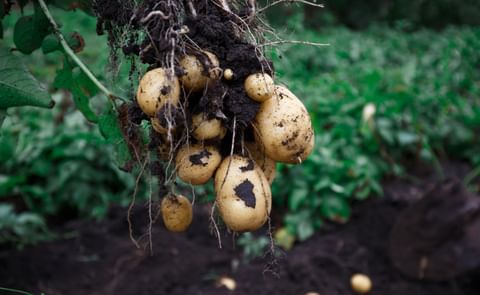
Zebra chip reduces yields and causes bands in potato flesh that become dark when fried. It makes potatoes unmarketable, but there is no health risk to humans.
The grant from the U.S. Department of Agriculture will be received late this year and used during 2013 and 2014. It will allow programs currently under way with Idaho Potato Commission money to expand significantly, said Erik Wenninger, an assistant professor of entomology at the university who is currently working at the Kimeberly Research and Extension Center.
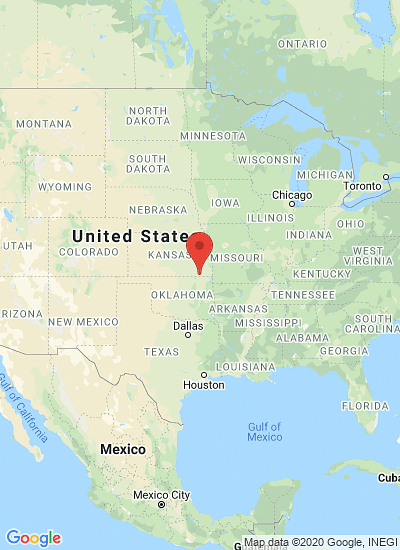
Wenninger and colleagues have surveyed Idaho fields for psyllids this summer. They reported finding them in the Kimberley center’s field and in a commercial field in Twin Falls about six weeks ago. Early this month, they saw a sharp increase in potato psyllids, according to a posting on the Pacific Northwest Pest Alert website.
University of Idaho receives grant to study zebra chip disease

¿Te gustaría recibir noticias como esta por correo electrónico? ¡Únete y suscríbete!
Get the latest potato industry news straight to your WhatsApp. Join the PotatoPro WhatsApp Community!
Empresa Destacada

Noticias relacionadas
Septiembre 28, 2026
México: menor oferta de papa podría impulsar los precios durante el invierno
En México, el cierre de cosechas, los menores rendimientos y la reducción de la superficie sembrada podrían restringir la oferta de papa y generar presión al alza sobre los precios entre diciembre de 2026 y febrero de 2027.

Septiembre 28, 2026
España: la sequía reduce la cosecha de patatas en 2026
La producción española de patata caerá entre un 8% y un 10% en 2026, hasta unos 1,8 millones de toneladas, con descensos de hasta 35% en Andalucía debido principalmente a la sequía y los menores rendimientos.

Septiembre 23, 2026
Chile: buscan mejorar el diagnóstico molecular de la sarna polvorienta y la sarna común en papa
En Chile, el proyecto SCAB-ID 2.0 busca validar un sistema de qPCR multiplex capaz de detectar y diferenciar simultáneamente la sarna polvorienta y la sarna común de la papa, con miras a transferirlo a laboratorios de diagnóstico agrícola.