
Explore Almidón Nativo de Patata Productos
Browse Companies Offering Almidón Nativo de Patata

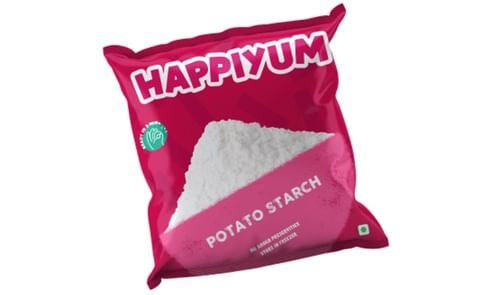
Happiyum Foods

Goodrich Cereals
Frequently Asked Questions
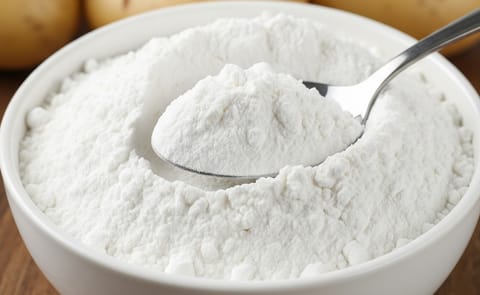
Potato starch is a fine white powder made by extracting and purifying the starch from potato tubers. It is mainly composed of the carbohydrates amylose and amylopectin and is naturally gluten-free. Potato starch is widely used as a thickener, binder and texture modifier in foods, as well as in pharmaceutical and industrial applications.
Potato starch is used as a thickener, binder, stabilizer and texture modifier in foods such as soups, sauces, bakery products, noodles, meat products, snacks and confectionery. It is also used in pharmaceuticals as an excipient and tablet disintegrant, and in industrial applications such as paper, textiles, adhesives and biodegradable materials.
Native potato starch is starch extracted and purified from potato tubers without intentionally modifying the starch molecules. It retains the natural properties of potato starch, including high swelling capacity, high viscosity, water-binding ability and good paste clarity.
Potato starch and cornstarch are both effective thickeners, but they behave differently. Potato starch generally provides higher viscosity, greater paste clarity and a glossy appearance, while cornstarch produces a more opaque paste and is often preferred for applications requiring longer cooking or different texture characteristics. The better choice depends on processing conditions, desired texture, clarity, stability and cost.
Yes, potato starch can replace cornstarch in many applications, including sauces, soups, gravies, baking and frying. A 1:1 substitution can work in many recipes, although the final viscosity, texture and cooking stability may differ. Potato starch generally thickens quickly and is often best added toward the later stages of cooking.
Pure potato starch is naturally gluten-free because it is extracted from potatoes rather than wheat, barley or rye. It is therefore widely used in gluten-free food formulations. However, manufacturers should control cross-contact during processing and verify the finished product when a certified gluten-free claim is required.
Potato starch is produced by washing and rasping potatoes to release the starch granules, followed by separation of potato fiber and juice. The starch milk is then purified and concentrated, mechanically dewatered and rapidly dried to produce a fine native potato starch powder. Industrial processing is designed to recover the starch while preserving its natural granule structure.
No. Potato starch and potato flour are different products. Potato starch is a highly purified starch extracted from potatoes, while potato flour is produced from whole potatoes and contains starch along with other components such as protein and fiber. They therefore have different functional properties and are not generally interchangeable.
Potato starch is an effective thickener because its starch granules absorb water and swell strongly when heated. This produces high viscosity and can create clear, glossy sauces, gravies, fillings and other foods. Its large granules and naturally occurring phosphate groups contribute to its high swelling and viscosity characteristics.
Important properties of native potato starch include high swelling power, strong water-binding capacity, high paste viscosity, good paste clarity, a relatively low gelatinization temperature, neutral taste and odor and film-forming ability. Its performance depends on factors such as granule size, amylose and amylopectin structure, phosphate content, potato variety and processing conditions.
Native potato starch is extracted and purified without intentionally modifying its starch molecules, so it retains its natural swelling, viscosity and clarity characteristics. Modified potato starch is deliberately altered through physical, chemical or enzymatic processes to provide specific functional advantages, such as improved resistance to heat, acid, shear or other processing conditions.
Potato starch generally begins gelatinizing at approximately 58–66°C, although the exact gelatinization temperature depends on the potato variety, starch composition, moisture level and analytical method. During gelatinization, the starch granules absorb water and swell, causing viscosity to increase.
In food processing, potato starch is used as a thickener, binder, water-management ingredient and texture modifier. Applications include soups, sauces, gravies, fruit fillings, bakery products, gluten-free foods, noodles, meat products, snacks, coatings, confectionery and extruded products. Its high viscosity, swelling capacity, clarity and neutral sensory profile make it useful across many formulations.
Potato starch can be used as a pharmaceutical excipient, including as a binder, diluent and disintegrant in tablets and capsules. As a disintegrant, starch absorbs water and helps the dosage form break apart so the active pharmaceutical ingredient can be released. Specialized pharmaceutical applications may use modified or pregelatinized starches when additional functionality is required.
Potato starch is used industrially in paper manufacturing, textile sizing, adhesives, pharmaceuticals and starch-based biodegradable materials. In paper, it can contribute to surface properties and strength; in textiles, it can provide temporary yarn stiffness and protection during weaving; and in adhesives, its ability to form cohesive pastes and films makes it useful in starch-based formulations.
Make This Page Even Better!
This content was last updated on Agosto 17, 2026
Have a helpful detail to contribute? Catch something that should be corrected?