

Native Potato Starch: What It Is, Properties and Applications
Native potato starch is a refined, unmodified starch extracted from the tubers of Solanum tuberosum (potato). It is produced through mechanical separation and purification processes that isolate the natural starch granules without chemically modifying them. As a major commercial starch alongside maize (corn) and wheat starch, potato starch is used in food, pharmaceutical, paper, textile and other industrial applications worldwide.
Native potato starch is valued for its high paste viscosity, good clarity, strong water binding capacity and neutral taste and odor. These properties make it useful as a thickener, binder, stabilizer and texture modifier in a wide range of products. Potato starch is also naturally gluten free, making it suitable for many gluten-free food formulations.
Unlike modified potato starch, native potato starch retains the natural characteristics of the starch as it occurs in the potato. Its functional properties are influenced by factors such as potato variety, starch granule size, amylose and amylopectin content, phosphate groups and processing conditions. These characteristics give potato starch its distinctive performance in food and industrial applications.
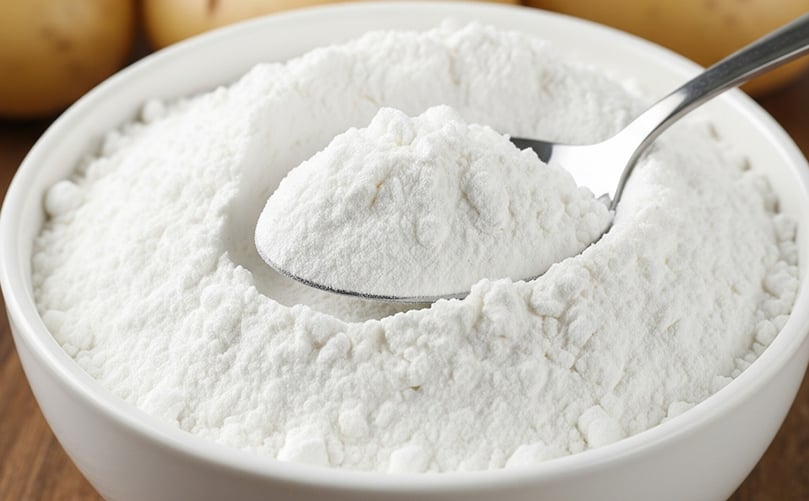
Native Potato Starch: Properties and Applications
What Is Native Potato Starch?
Native potato starch is the purified starch extracted from potato tubers (Solanum tuberosum) without any chemical, enzymatic or intentional physical modification of the starch molecules themselves. It is produced mainly through mechanical methods that separate and clean the natural starch granules while keeping their original chemical structure unchanged.
Potato starch is one of the major commercial starches, along with maize (corn) and wheat starch. It is widely used in food, pharmaceutical, paper, textile and other industrial applications.
Native potato starch consists mainly of two glucose polymers: amylose and amylopectin. Amylose is a mostly linear chain of α-1,4-linked glucose units, while amylopectin is a highly branched molecule containing α-1,6 branch points. Commercial potato varieties typically contain about 18–25% amylose and 75–82% amylopectin, although the proportion can vary with reported amylose levels ranging from approximately 15–30% or higher depending on the cultivar.
One of the distinctive characteristics of potato starch is its naturally occurring phosphate monoester groups. Potato amylopectin contains relatively high levels of these phosphate groups, commonly reported at around 500–1,000 ppm phosphorus, often close to 800 ppm. They are mainly attached to the C-6 and C-3 positions of glucose residues. These naturally occurring phosphate groups contribute to the characteristic high swelling power, high viscosity and good paste clarity of potato starch.
In the potato tuber, starch is stored as discrete starch granules. Potato starch granules are characteristically large and are generally oval to spherical in shape, with sizes ranging from approximately 5 to 100 μm in diameter. Many commercial potato starches have granules averaging around 20–50 μm or larger.
After proper extraction and purification, native potato starch is obtained as a fine white powder with very low levels of residual protein, lipid and fiber. It commonly contains more than 98–99% carbohydrate on a dry basis, while the moisture content of commercial native potato starch is typically around 17–20%.
Because native potato starch is produced through mechanical separation, purification and drying without intentionally changing the starch molecules, it is generally considered an unmodified starch. It is distinct from modified potato starch, which has been deliberately altered to improve specific functional or processing properties.
Native potato starch is also different from potato flour. Potato flour contains a broader range of potato components, including fiber, protein and other potato solids, whereas native potato starch is a highly purified starch fraction.
The natural properties of native potato starch make it useful as a thickener, binder, stabilizer and texture modifier. It is used across a wide range of applications, including food, pharmaceuticals, paper, textiles and other industries.
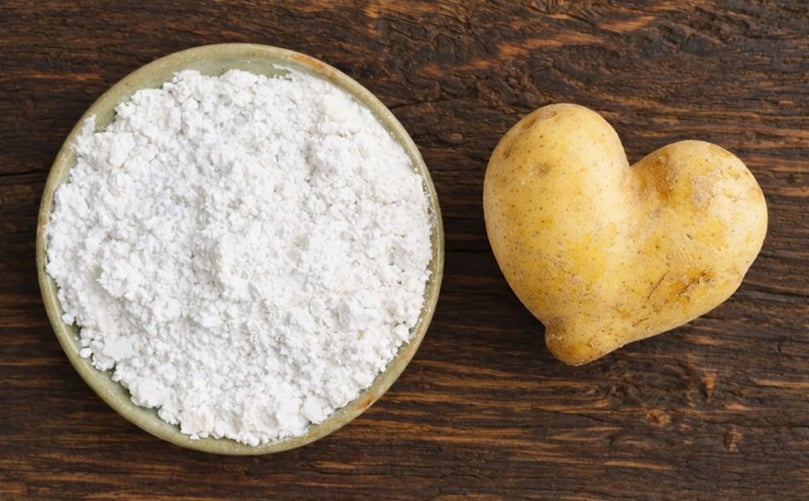
Understanding Native Potato Starch
How Is Native Potato Starch Made?
Industrial production of native potato starch is a continuous wet milling process designed to extract and purify intact starch granules while minimizing starch damage or gelatinization.
Reception and cleaning: Fresh potatoes, preferably high starch varieties containing about 15–25% starch are weighed, destoned and thoroughly washed to remove soil, stones and surface debris. Process water may be recycled after clarification.
Rasping / grinding: Clean potatoes are processed in high speed raspers or mills to rupture the cells and release starch granules into a slurry. Efficient cell disruption is important for achieving high starch extraction while limiting excessive fiber formation.
Juice and fiber separation: The potato slurry is passed through centrifugal sieves, screens or decanters to separate starch milk from potato pulp (fiber) and potato juice. Multi-stage washing helps recover starch remaining in the fiber stream.
Refining and purification: The crude starch milk is concentrated and washed through multi-stage hydro cyclones or separators. This removes soluble proteins, sugars, fine fibers and mineral impurities, producing a high purity starch slurry.
Dewatering: The purified starch milk is mechanically dewatered using vacuum filters or centrifuges to produce a moist starch cake containing approximately 36–40% moisture.
Drying: The moist starch is rapidly dried using pneumatic or flash dryers. Drying conditions are carefully controlled to keep the starch below its gelatinization temperature and preserve the native starch granule structure. The final moisture content is generally about 17–20%.
Milling, sieving and packaging: The dried potato starch is cooled, milled if necessary and sieved to achieve the required particle size before packaging.
Commercial production typically yields about 14–18% dry starch from fresh potatoes, depending on potato variety, starch content and processing efficiency. Starch recovery can reach approximately 85–90% of the available starch. Major by-products include potato pulp, which can be used for animal feed or biogas and protein rich potato juice. In some plants, sulfur dioxide may be used to control enzymatic browning, while the starch itself remains chemically unmodified.
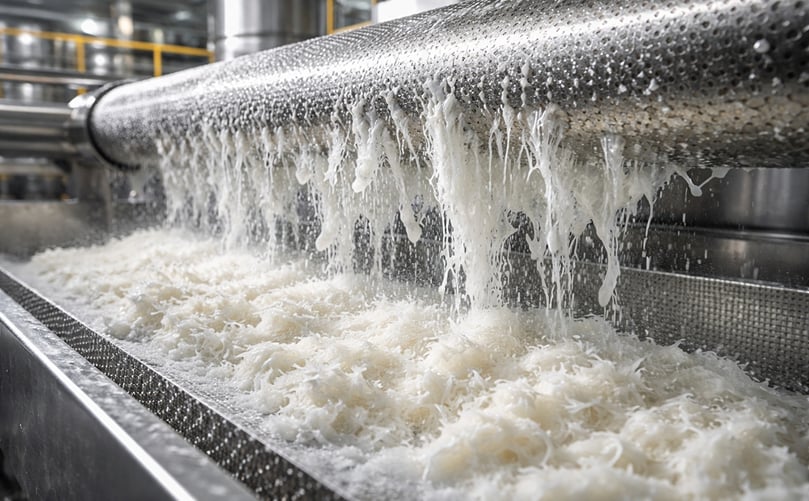
Native Potato Starch Production Process
Functional Properties of Native Potato Starch
Native potato starch exhibits a distinctive set of physicochemical and functional properties that differentiate it from cereal and other tuber starches:
Gelatinization behavior: Onset gelatinization temperatures typically fall in the 58–66°C range with peak temperatures often around 60–68°C. This relatively low gelatinization temperature allows viscosity development earlier in many heating processes compared with corn flour.
High swelling power and water binding capacity: The large granule size and negatively charged phosphate groups enable rapid and extensive water uptake. Swelling power values are among the highest of commercial native starches, supporting strong moisture retention and high paste volume.
Exceptional paste viscosity: Peak viscosities are characteristically high (frequently several thousand cP under standard Rapid Visco Analyzer conditions, often significantly higher than maize or wheat starches at equivalent concentrations). This allows efficient thickening at relatively low use levels. Native potato starch pastes often show notable breakdown under prolonged shear or high temperature, reflecting the fragility of the highly swollen granules.
Paste clarity and gloss: Cooked pastes are typically highly translucent and glossy. Light transmittance is higher than that of most cereal starches, making the starch suitable for clear sauces, glazes and fillings where optical clarity is desired.
Texture and gel characteristics: Upon cooling, potato starch pastes form cohesive, elastic and often “long” (stringy) gels rather than short, brittle ones. Film forming ability is good, supporting applications in coatings and certain biodegradable materials.
Sensory neutrality: Extremely low residual protein and lipid levels result in a virtually odourless and tasteless powder that does not contribute off-flavors or mask delicate product aromas.
Other functional traits: Strong binding capacity, good adhesion and the ability to form smooth textures. It is natural off-flavour, gluten-free and free of major allergens when properly processed.
These properties are strongly influenced by the natural phosphate content, granule size distribution, amylose/amylopectin ratio and amylopectin chain length profile all of which vary with potato cultivar and growing conditions. While native potato starch delivers outstanding performance in many applications, its sensitivity to high shear, extreme acidity or repeated freeze thaw cycles can limit its use in highly demanding processes, which is why modified versions are sometimes preferred. Overall, its combination of high functionality and clean-label status continues to make native potato starch a valuable ingredient across global food and industrial markets.
Native Potato Starch vs Modified Potato Starch
| Feature | Native Potato Starch | Modified Potato Starch |
| Modification | Unmodified (mechanical extraction only) | Physically, chemically or enzymatically modified |
| Functional properties | Natural (high viscosity, clarity, swelling) | Tailored (improved heat, shear, acid or freeze thaw stability) |
| Processing performance | Depends on application and conditions | Often provides improved stability and consistency under demanding conditions |
| Applications | Broad food and industrial uses; clean-label preferred | Specialized food and industrial uses requiring enhanced performance |
| Labeling | Typically listed simply as “potato starch” | Often “modified starch” (may carry E-numbers depending on region and modification) |
Native starch retains the inherent properties of potato starch and supports clean-label positioning. Modification is used when native performance is insufficient for specific processing stresses (high shear, long heating, acidity, freeze thaw cycles, etc.). Choice depends on the required functionality, regulatory/label requirements and cost.
Applications and Uses of Native Potato Starch
Native potato starch is widely used in the food, pharmaceutical, paper, textile, adhesive and biodegradable materials industries. Its large starch granules, high swelling capacity, high pasting viscosity, good paste clarity and neutral taste and color make it particularly useful as a thickener, binder, gelling agent, texture modifier and film forming material. Its functional performance is mainly determined by its amylose and amylopectin content, granule structure, gelatinization behavior and swelling properties.
Native Potato Starch in Food and Beverage Products
Soups, sauces and gravies: Native potato starch provides rapid viscosity development and produces relatively clear, smooth and glossy pastes. It is therefore used in soups, sauces, gravies, pie fillings and other products where thickening with limited opacity is desirable.
Bakery and gluten free products: Potato starch is used in bakery formulations to modify crumb texture, moisture retention and softness. In gluten free products, it can contribute to structure and improve the textural properties of products such as bread, cakes and other baked goods.
Noodles and pasta: Native potato starch can be incorporated into noodles and pasta to modify cooking quality, water absorption, texture and mechanical properties. Research has reported improved water retention and cooking related properties in potato starch-based noodles.
Snacks and extruded products: Potato starch can contribute to expansion, crispness, binding and texture in snack products and starch-based extruded foods. Its swelling and gelatinization characteristics influence the final structure of these products.
Meat and poultry products: Potato starch can function as a binder and water management ingredient in processed meat products, helping improve moisture retention, texture and product yield. The extent of these effects depends on formulation and processing conditions.
Dairy and plant-based products: Native potato starch can be used as a thickening and texture modifying ingredient in products such as desserts, puddings, yogurt type products and some plant-based formulations.
Confectionery and fruit preparations: Its high swelling capacity and gelling behavior make potato starch useful in confectionery products, fruit fillings, puddings and other gelled or thickened foods. Potato starch can form relatively clear and cohesive gels after gelatinization.
Batters and coatings: Potato starch is used in frying applications to improve coating adhesion and contribute to a crisp surface. Its functional behavior depends on starch concentration, hydration, frying conditions and interactions with other batter ingredients.
Industrial and Manufacturing Applications of Native Potato Starch
Paper industry: Potato starch is used in paper manufacturing as a sizing and coating material. Starch-based treatments can improve paper surface properties, strength, printability and smoothness.
Textile industry: Native starch can be used as a sizing agent for yarns. The starch coating provides temporary stiffness, strength and smoothness during weaving and can help reduce mechanical damage to yarns.
Adhesives: Potato starch is used as a raw material for starch-based adhesives, including paper, board and wallpaper applications. Its ability to form cohesive pastes and films contributes to its adhesive function.
Biodegradable materials: Potato starch is being investigated and used as a renewable raw material for bioplastics, starch-based films, coatings and biodegradable packaging. Its biodegradability and abundance make it attractive for sustainable material development, although native starch generally requires suitable plasticizers, blending or processing to obtain the desired mechanical and water resistance properties.
Pharmaceutical Applications of Native Potato Starch
Native potato starch is used as a pharmaceutical excipient, particularly as a binder, filler/diluent and disintegrant in solid dosage forms such as tablets. As a disintegrant, starch can promote tablet breakup when it comes into contact with water, facilitating drug release. Research reviews identify native potato starch among starches used for pharmaceutical binding, filling and disintegration functions.
Potato starch is also being investigated for applications in drug delivery systems and controlled release formulations. However, specialized drug-delivery performance often requires starch modification or formulation with other materials rather than relying solely on unmodified native starch.
Emerging and Innovative Applications of Native Potato Starch
Research is expanding the use of potato starch in 3D food printing, encapsulation, edible and biodegradable films, starch-based packaging and other sustainable biomaterials. These applications take advantage of its gelatinization, swelling, film forming and biodegradable properties.
Factors Influencing Native Potato Starch Performance
The performance of native potato starch depends on starch concentration, granule characteristics, amylose-to-amylopectin ratio, hydration, temperature, heating time, shear, pH and interactions with salts, sugars, proteins and other ingredients. Native potato starch has high pasting viscosity and good swelling properties, but its resistance to high heat, strong shear and acidic conditions is limited. Therefore, applications requiring high process stability may use modified potato starch instead
Why Do Food Manufacturers Use Native Potato Starch?
Food manufacturers select native potato starch for a combination of functional, sensory, labeling and commercial advantages:
Efficient thickening and texture control: High peak viscosity and strong swelling capacity allow native potato starch to provide body, smoothness and elasticity at relatively low usage levels compared with many other native starches.
Superior clarity and gloss: It produces clear to translucent, glossy pastes making it suitable for clear sauces, glazes, fruit fillings, soups and other products where visual appearance is important.
Neutral sensory profile: Native potato starch is virtually tasteless and odorless, allowing it to preserve delicate fruit, dairy and spice flavors without significantly affecting the product's flavor profile.
Clean-label and regulatory advantages: It can generally be declared as “potato starch,” supporting clean-label formulations and avoiding the E-numbers associated with chemically modified starches. Potato starch is naturally gluten-free and when properly processed can be suitable for products targeting consumers avoiding major allergens.
Processing practicality: Its relatively low gelatinization temperature enables viscosity development early during cooking. Its water binding and film-forming properties can also support moisture retention, yield and texture in bakery, meat and snack applications.
Cost-in-use and versatility: Its high functionality at relatively low inclusion levels can support formulation economics. Native potato starch is used across a wide range of food categories, including sauces, soups, bakery products, meat products, snacks and gluten free foods.
Sourcing and sustainability considerations: Potato starch is derived from a widely cultivated crop and some supply chains can utilize potatoes or potato processing streams that are less suitable for fresh market consumption, supporting resource efficiency and circular economy initiatives.
Limitations: Native potato starch is generally less resistant to severe shear, strong acidity, prolonged high temperature processing and repeated freeze thaw cycles than many modified starches. Therefore, manufacturers typically select it for applications where processing conditions are compatible with its functional properties or combine it with other ingredients when greater process stability is required.
Native Potato Starch vs Corn Starch: Which Is Better?
Both are widely used native starches, yet they differ substantially in origin, structure and performance.
| Aspects | Native Potato Starch | Corn (Maize) Starch |
| Botanical source | Potato tubers (Solanum tuberosum) | Corn endosperm |
| Typical granule size | Larger (often 5–100 μm, many in 20–50+ μm range) | Smaller (commonly 5–25 μm) |
| Amylose content (approx.) | 18–25% | 25–28% |
| Distinctive feature | High natural phosphate monoester content | Higher residual lipids/proteins possible |
| Gelatinization temperature | Lower (onset often ~58–65 °C) | Higher (onset often ~62–72 °C or above) |
| Peak viscosity | Generally higher | Moderate |
| Paste clarity | High (clear, glossy) | Lower (more opaque/cloudy) |
| Flavor contribution | Neutral | Can retain mild cereal notes if undercooked |
| Shear/heat tolerance (native) | More sensitive to prolonged high shear | Generally more robust in continuous processing |
| Typical texture | Elastic, “long,” cohesive gels | Firmer, shorter gels |
| Relative industrial cost | Often higher | Generally lower and more widely available |
Practical Applications of Potato and Corn Starch
- Potato starch excels where high viscosity at low dosage, optical clarity, gloss and flavor neutrality are priorities, such as clear sauces, glazes, fruit fillings, gluten free bakery products and certain snacks.
- Corn starch is often preferred for cost sensitive applications, opaque gravies, custards and products requiring extended cooking or specific texture characteristics. Its performance depends on the starch type and processing conditions.
- Freeze thaw stability and retrogradation differ between potato and corn starches. Potato starch can provide good performance in some short-term applications but may require formulation adjustments for products subjected to prolonged frozen storage and repeated freeze thaw cycles.
- Neither starch is universally superior. Selection depends on the desired sensory properties, processing conditions including shear, pH, temperature and holding time shelf-life requirements, cost and labeling objectives. Blending potato and corn starch can sometimes help balance clarity, cost, texture and stability.
These distinctions make native potato starch particularly valuable in applications requiring high viscosity, premium appearance and neutral sensory characteristics, while corn starch remains a widely used starch for many conventional food applications.
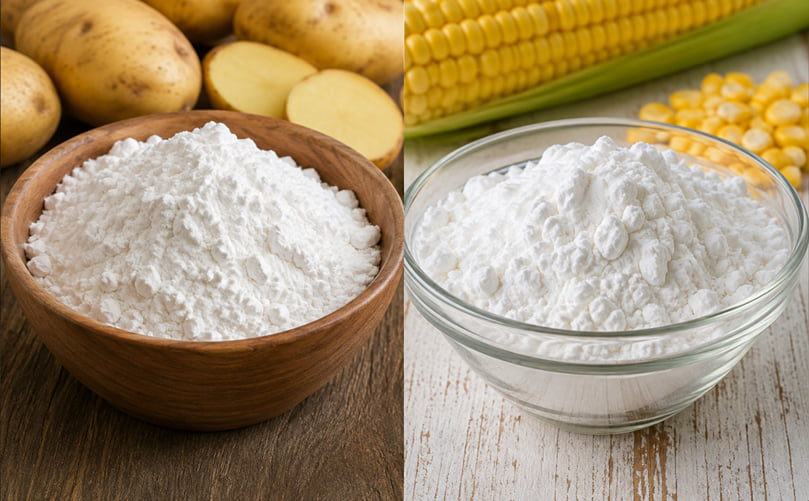
Potato Starch or Corn Starch: Which Is Better?
Factors Affecting Native Potato Starch Quality and Functionality
The quality and functional performance of native potato starch are influenced by several biological, environmental, raw material and processing factors. Understanding these factors helps manufacturers select suitable potato varieties, optimize starch extraction and achieve consistent potato starch quality and functionality.
Potato Variety (Cultivar) and Genetics: Different potato cultivars produce starch with varying amylose content, amylopectin structure, phosphorus content, granule size and pasting properties. Amylose content is commonly around 18–25%, although broader ranges can occur depending on the cultivar and growing conditions. Cultivar is an important factor affecting phosphorus content, peak viscosity, swelling power and gelatinization temperature. Potato varieties with higher phosphate levels generally produce higher viscosity and clearer starch pastes. High starch industrial potato varieties with high dry matter are preferred for efficient potato starch extraction.
Growing Conditions and Environment: Temperature, rainfall, soil type, fertilization, location and harvest year can influence potato starch content, granule size and functional properties. Growing temperature can affect granule development and gelatinization behavior, while environmental conditions may also influence total starch yield and phosphorus content. Potato storage conditions before processing, including temperature and storage duration can further affect starch properties and pasting behavior.
Starch Content and Dry Matter: The starch content and dry matter of potatoes directly affect starch extraction efficiency and processing yield. Potatoes with higher dry matter and starch content are generally preferred for industrial starch production. A typical target range for industrial potatoes is approximately 15–25% starch on a fresh weight basis although this varies by variety and production system.
Starch Granule Size and Morphology: Potato starch is characterized by relatively large starch granules, typically ranging from approximately 5–100 μm. Granule size distribution varies with cultivar and growing conditions and can influence swelling power, peak viscosity, gelatinization and texture. Larger granules often contribute to strong swelling and high peak viscosity although the overall functional performance also depends on granule structure and starch composition.
Amylose and Amylopectin Structure: The amylose-to-amylopectin ratio is an important determinant of potato starch functionality. Higher amylose levels can increase gel firmness and retrogradation, while potentially reducing swelling and paste clarity. The molecular structure and chain-length distribution of amylopectin also influence viscosity development, gelatinization, paste clarity and freeze thaw stability.
Phosphorus Content: Phosphorus content is a key quality factor in native potato starch. Potato starch naturally contains phosphate monoesters attached to amylopectin. Higher phosphate levels increase electrostatic repulsion between starch molecules, promoting water uptake, swelling, viscosity and paste clarity. Because phosphorus content varies considerably among potato cultivars, it is an important indicator of the functional properties of potato starch.
Potato Starch Processing Conditions: Starch extraction and processing conditions strongly affect final starch quality. Washing efficiency, cell disruption, separation technology, hydro cyclone stages, drying temperature, residence time and final moisture content can influence starch purity and native granule integrity.
Gentle processing helps minimize starch damage and preserve the natural functional properties of native potato starch. Excessive heat during drying can cause partial gelatinization and affect starch performance. Low levels of residual protein, fiber, lipid and ash generally support better clarity, color, flavor neutrality and consistency. Commercial potato starch commonly has a moisture content of approximately 17–20%, although specifications vary by manufacturer and application.
Other Potato Starch Quality Parameters: Other important potato starch quality parameters include ash content, residual protein, pH, color, moisture content and microbiological quality. These properties can affect the appearance, sensory neutrality, storage stability and processing performance of the starch. Consistent quality control helps manufacturers achieve predictable performance in food and industrial applications.
Native Potato Starch in Food Processing: Uses and Applications
In food manufacturing, native potato starch is widely used as a thickener, binder, texture modifier and moisture management ingredient. Its relatively low gelatinization temperature with onset commonly around 58–65°C, allows viscosity to develop early during heating. This makes it useful for sauces, fillings, batters, bakery products, meat products and snacks.
Practical Use and Hydration: Native potato starch is insoluble in cold water and requires heating to gelatinize. It is typically dispersed or made into a slurry with cold liquid before heating to prevent lumping and promote uniform hydration. During heating, the large starch granules absorb water and swell substantially, producing high viscosity at relatively low inclusion levels. Typical usage levels may range from 2–6%, depending on the product formulation and desired texture.
Excessive shear after gelatinization can damage swollen starch granules and reduce viscosity. Therefore, temperature, shear rate and holding time should be carefully controlled during processing.
Texture and Sensory Properties: Native potato starch can produce clear to translucent, glossy pastes with a smooth and cohesive texture. These properties make it particularly useful in sauces, gravies, fruit fillings and glazes where appearance, body and cling are important.
In bakery products, potato starch can contribute to moisture retention and a softer crumb. In processed meat and plant-based products, it helps bind water and can improve yield and product texture. In snacks and coatings, it can contribute to expansion, crispness and adhesion, depending on the formulation and processing conditions.
Formulation Considerations: The functionality of native potato starch can be affected by other ingredients and processing conditions. Acidity, salt, sugar, proteins and hydrocolloids can influence gelatinization, swelling, viscosity and final texture. Native potato starch may have limited stability under severe processing conditions and repeated freeze thaw cycles, so formulation adjustments or starch blends may be required for demanding applications.
Its neutral flavour and simple ingredient declaration as “potato starch” also make it suitable for clean label formulations.