

India
India is one of the world’s major potato-producing countries, with potato cultivation spread across a wide range of agro-climatic conditions, from the Himalayan hills to the Indo-Gangetic plains and central and western parts of the country. Around 85% of India’s potato production has historically been concentrated in the Indo-Gangetic plains, where winter temperatures, fertile alluvial soils, irrigation and established market infrastructure support large-scale cultivation. Uttar Pradesh, West Bengal, Bihar, Gujarat, Madhya Pradesh and Punjab are the principal potato-producing states, together accounting for more than 85% of national production in the 2020–21 data reported by India’s Agricultural Marketing Information Network.
Indian potato production is strongly associated with the rabi season, particularly in the northern plains, although potatoes are also grown in the hills and in other regions during suitable seasons. Uttar Pradesh is the country's largest potato-producing state, followed by West Bengal and Bihar, while Gujarat, Madhya Pradesh and Punjab have developed important production and processing sectors. The crop has become an important source of farm income as well as a major raw material for the food-processing industry, including chips, French fries and other processed potato products. India's diverse growing environments have also encouraged breeding programmes for varieties adapted to different maturity periods, diseases, processing requirements, heat and other production constraints.
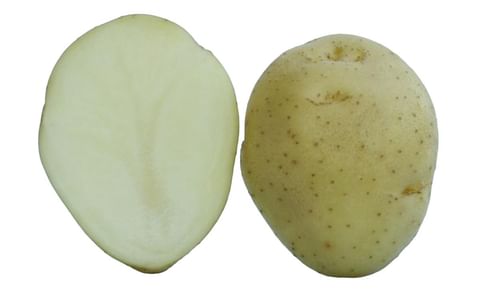
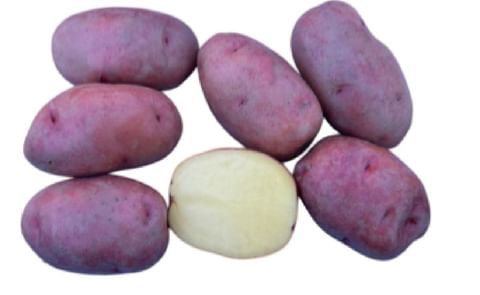
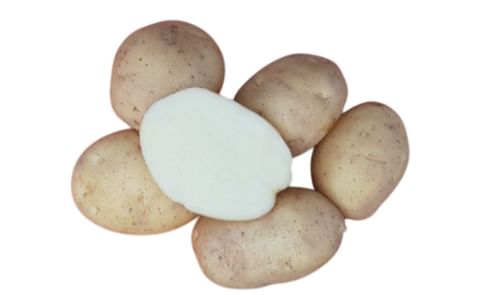
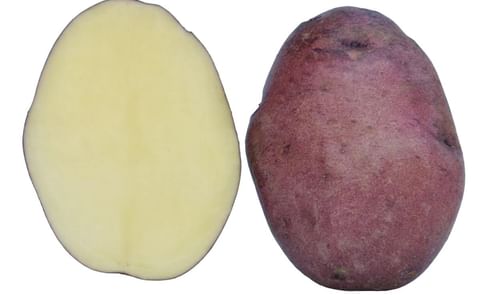
Potato production in India has been transformed by systematic breeding, quality seed production and crop-management research. The ICAR-Central Potato Research Institute (ICAR-CPRI) and the All India Coordinated Research Project on Potato have played a central role in developing varieties suited to India's short-day and subtropical production environments. ICAR-CPRI reports that it has developed dozens of varieties adapted to different regions and uses, including table potatoes and processing potatoes. Varieties such as Kufri Jyoti, Kufri Bahar, Kufri Pukhraj and Kufri Chipsona 1 have historically occupied a substantial share of the country's potato area, while newer varieties have been developed for disease resistance, heat tolerance, drought tolerance, processing quality and nutritional traits.
The potato (Solanum tuberosum) is native to the Andes of South America and reached India through early international trade. The exact date and route of its first introduction remain uncertain, because historical records from the period are limited. A detailed review published by the International Potato Center notes that the potato was probably brought to India by Portuguese traders and may have reached Surat on India's western coast during the early 17th century. Historical accounts provide evidence of potatoes in northern India and later in western and southern parts of the country. A 2019 review in the Indian Journal of Agricultural Sciences similarly states that Portuguese merchants probably introduced the crop during the 17th century and that potato was established in the gardens of Surat and Karnataka by 1675.
The potato gradually moved from gardens and hill settlements into commercial agriculture. British influence contributed to its expansion in the northern Indian hills, including the Shimla hills, where cultivation was established around 1828, while the crop reached the Nilgiri hills around 1830. By the late 18th and early 19th centuries, potato had become an established vegetable crop in both the hills and plains of India. Farmers also selected locally adapted types that became known by names such as Phulwa, Gola and Satha, forming part of India's early indigenous or “desi” potato material. Historical literature also records the development of potato trade between hill-growing areas and the plains.
A major turning point came with organized agricultural research during the 20th century. Formal potato research in India began on 1 April 1935, when breeding and seed-production stations were established at Shimla, Kufri and Bhowali. ICAR-CPRI was established at Patna in August 1949 and its headquarters were subsequently shifted to Shimla in 1956. Research focused on adapting potato to India's short winter growing season, improving yield and disease resistance, developing healthy seed systems and producing varieties suitable for different agro-climatic regions.
After independence, these research efforts accelerated the transformation of potato from a relatively limited vegetable crop into a major commercial crop. ICAR describes the increase from approximately 1.54 million tonnes on 0.23 million hectares in 1949–50 to around 50 million tonnes on 1.96 million hectares in the triennial period cited in its institutional history. The development of high-yielding Indian varieties, improved seed production, irrigation, mechanization, storage and expanding urban markets were important factors in this growth.
Modern Indian potato breeding increasingly addresses both farmers' production requirements and changing consumer and processing markets. ICAR-CPRI has developed varieties for table consumption, chips and French fries, as well as varieties with resistance or tolerance to important diseases and environmental stresses. More recently, the institute has also released biofortified and speciality potatoes, including Kufri Jamunia, a purple-fleshed potato with high anthocyanin content. In 2025, four additional ICAR-CPRI varieties—Kufri Ratan, Kufri Chipbharat-1, Kufri Chipbharat-2 and Kufri Tejas were notified for seed production and multiplication across India.




Make This Page Even Better!
This content was last updated on September 27, 2026
Have a helpful detail to contribute? Catch something that should be corrected?