
June often represents a month where farmers can observe the crops they planted emerge from the ground, daily gaining strength on their way to reaching a yield potential that everyone would be pleased with.
Although the new crop may be planted and growers are busy keeping it healthy in the summer season, marketing does not end there. In comparison to bygone times, much more volume both for fresh and processing is sold later in the season. It is not uncommon for some growers to have planted, and maintained a new crop (perhaps even carried out early kill down on seed potatoes), all before shipping the last of their old crop to market.
Given that producers across Canada have generally received better prices in the last two years, it could be very easy to become complacent in product pricing. It is critical that old crop pricing levels not drop off and therefore harm pricing potential for the new crop.
No matter what the commodity, all of us have experienced how easy it is for the price to move down, and how painstakingly hard it is to inch it back up penny by penny. Whether we like it or not, climate dictates a shipping window for most regions;the earliest product starting in the south, moving to central, then north, finally ending the crop out of refrigerated storages. When I first started growing potatoes, our farm produced varieties for the “early market”. With great interest, we followed the price up the eastern seaboard, as each area came into the marketplace. Over time it became increasingly obvious that the price we would receive was often much lower than the price received for those first entering the market. The take home message has two components: Firstly, each region must do what it can to maintain pricing throughout its marketing window, and to avoid dropping the price as growers and packers in that area empty bins at the end of their season. Dropping the price to move clean out inventory when buyers are moving their focus to another area puts downward pressure on pricing for the new area coming on. Secondly, price drops as each “new crop” area cleans up and the action moves to the later harvesting areas can be exponential by the end of the season (or when it becomes time for you to sell).
A final consideration in transition pricing should be its affect on the processing market. Grower bargaining teams across North America have negotiated fair contract prices with their processing buyers this year. Maintaining strong fresh pricing helps processing growers and processors to maintain reasonable pricing going into the next negotiating season. Surplus production and weak open prices (for fresh or processing) hurts those efforts and destabilizes the pricing environment for all sectors of our industry.
To help facilitate some of the transition from old crop to new, United Potato Growers of America will be holding a Crop Transition Conference in Minneapolis on June 13. The United Potato Growers of Canada would certainly encourage as much participation as possible.
Transitioning the Crop
Like to receive news like this by email? Join and Subscribe!
Get the latest potato industry news straight to your WhatsApp. Join the PotatoPro WhatsApp Community!
Highlighted Company
Related News

September 28, 2026
HZPC France Begins Construction of New Greenhouse for Mini Potato Tuber Production
HZPC France has begun construction of a new greenhouse in Ruisseauville to produce up to 2 million mini potato tubers, supporting greater production autonomy, improved quality and faster marketing capacity in France.
September 27, 2026
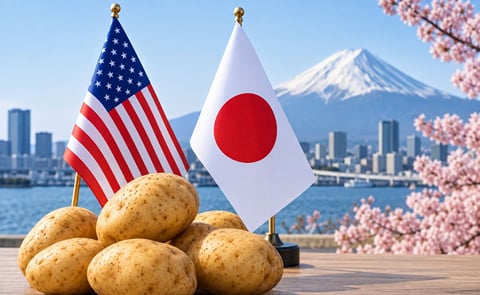
Japan Advances Quarantine Consultations on Fresh Potato Imports From the United States
Japan is advancing quarantine consultations on fresh potatoes from the United States for general distribution, with authorities assessing pest risks and potential management measures before deciding whether broader market access can be granted.
September 22, 2026
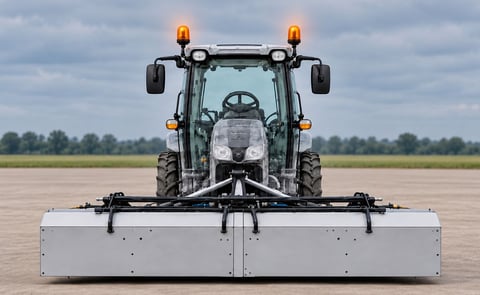
Croptimal Launches Tractor-Mounted Croptiscan 3000 for AI-Based Seed Potato Disease Detection
Croptimal has launched the tractor-mounted Croptiscan 3000, using camera and recognition technology to detect PVY and leaf roll early in seed potato crops, providing smaller growers with an alternative to fully self-driving machines.