

Regenerative Potato Farming: Balancing Soil Health with Intensive Crop Demands
Regenerative agriculture is an ecosystem based approach to farming that aims to restore and enhance natural systems while maintaining productive and profitable crop production. It focuses on improving soil health, increasing biodiversity, enhancing water quality and efficiency and reducing dependence on synthetic inputs. In potato production, this approach is increasingly being adopted by major industry players such as McCain Foods, which has developed a structured framework built around six key principles: maintaining armoured soils (preferably with living cover), increasing crop diversity, minimizing soil disturbance, reducing pesticide toxicity, enhancing ecosystem diversity and optimizing agrochemical and water use. The broader goal is to achieve measurable improvements in soil health, water use efficiency, biodiversity and climate impact with targets such as transitioning all contracted potato acreage to at least an “Onboarding” level of regenerative practices by 2030.
Potato cultivation presents unique challenges for regenerative systems compared to other crops. Unlike cereals or legumes, potatoes have relatively shallow root systems and high nutrient demands, particularly for nitrogen and potassium. Their production requires soil disturbance for operations such as hilling, which is essential to prevent tuber greening and ensure proper shape as well as for mechanical harvesting. These practices inherently conflict with core regenerative principles, especially reduced tillage. Repeated soil disturbance can lead to erosion, compaction, nutrient leaching, decline in soil organic matter (SOM) and reduced water infiltration. These issues are further intensified by processor requirements for clean, soil free tubers, which often discourage residue retention on the soil surface.
Additional constraints include the use of heavy machinery under wet field conditions, which exacerbates soil compaction and limited windows between harvest and the next planting cycle, restricting the successful establishment of cover crops in many regions. As a result, potatoes are considered one of the more difficult crops to integrate into fully regenerative systems. Complete no-till systems are generally not feasible under current commercial practices. Therefore, regenerative potato farming focuses on a balanced strategy: minimizing soil disturbance during the potato phase while maximizing soil recovery and ecosystem benefits during the rotation period through cover cropping, diversified rotations and improved soil management practices.
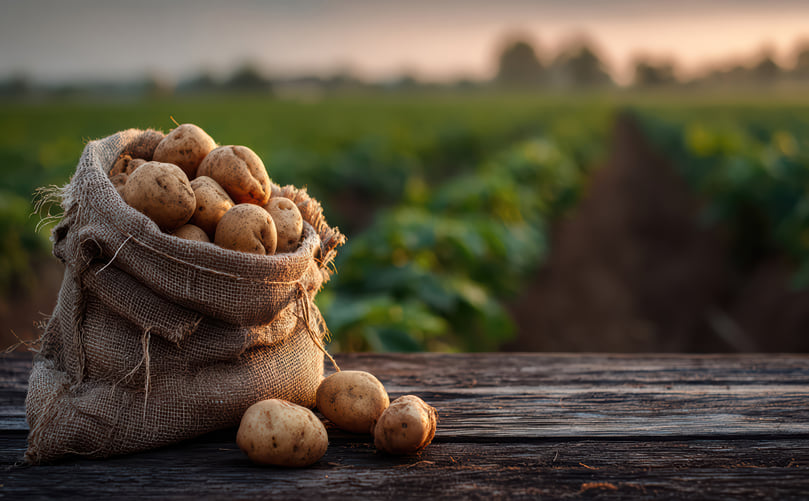
Regenerative Potato Farming in Practice: Soil, Crop and Sustainability in Balance
What Is Regenerative Agriculture?
Regenerative Agriculture is an ecosystem focused farming method that seeks to enhance farm resilience, crop yield and quality by improving soil and water health, optimizing water efficiency, boosting biodiversity and minimizing reliance on synthetic inputs. This approach goes beyond sustainability by actively restoring ecosystems, sequestering carbon and building long term soil fertility through practices like cover cropping, reduced tillage and diverse rotations. For potatoes, a root crop that demands specific soil conditions, regenerative methods address unique challenges such as compaction and disease susceptibility, promoting healthier tubers and resilient systems.
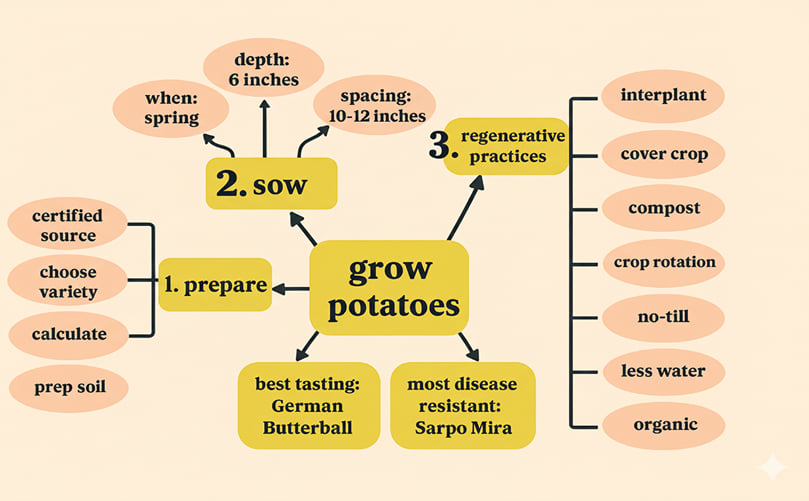
Regenerative farming approaches for potatoes
The Future of Potatoes Lies in Regenerative Agriculture
The humble potato (Solanum tuberosum L.), a global food staple producing over 368 million metric tons annually, stands at the center of a farming revolution. With rising demand driven by population growth and dietary shifts, the crop faces mounting challenges: soil degradation affecting 33% of global arable land, water scarcity impacting 40% of production regions, climate variability causing yield losses of up to 20% and escalating pest and disease pressures from pathogens such as late blight. Regenerative agriculture an ecosystem-based approach is emerging as a game changer by restoring soil health, enhancing biodiversity and reducing synthetic inputs, thereby paving the way for resilient and sustainable potato farming.
Unlike conventional methods that prioritize short term yields through intensive tillage and chemical dependence resulting in a 1–2% annual decline in soil organic matter regenerative practices emphasize long term ecological balance. Farmers adopting cover cropping, reduced tillage, integrated pest management (IPM) and precision irrigation are achieving higher quality harvests while enhancing their natural resource base year after year. Initiatives such as McCAIN’S Regenerative Agriculture Framework, implemented across 500,000 tons of production in New Zealand, highlight potatoes as a model crop for regenerative systems, combining profitability with environmental stewardship. Early adopters have reported up to 25% yield increases and 30% reductions in nitrogen fertilizer use.
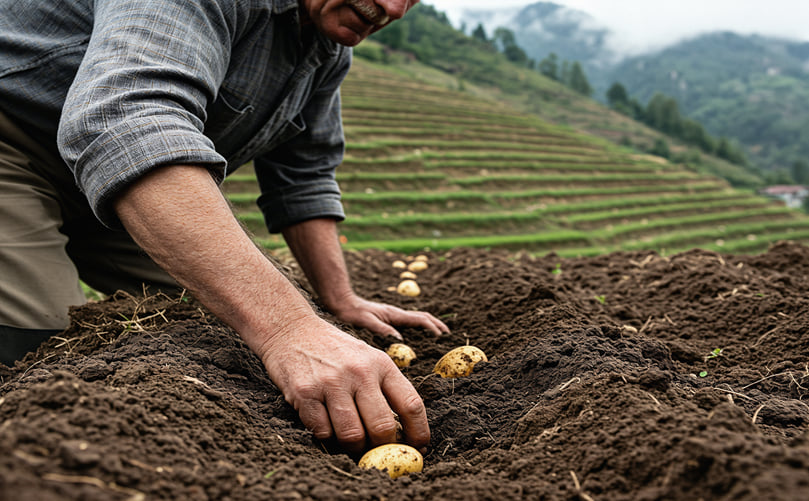
Farmer Sowing Potato Seeds: Laying the Foundation for a Healthy and Productive Crop
Why Regenerative Agriculture Matters for Potatoes
As the world’s fourth most important food crop, the potato (Solanum tuberosum L.) nourishes over a billion people across diverse landscapes from Idaho’s volcanic plains to the Andean highlands. However, conventional farming practices such as intensive tillage eroding 24 billion tons of topsoil annually, heavy pesticide use contaminating waterways and monocropping increasing climate vulnerability have degraded soils and heightened production risks. Regenerative agriculture presents a viable solution, emphasizing the following principles:
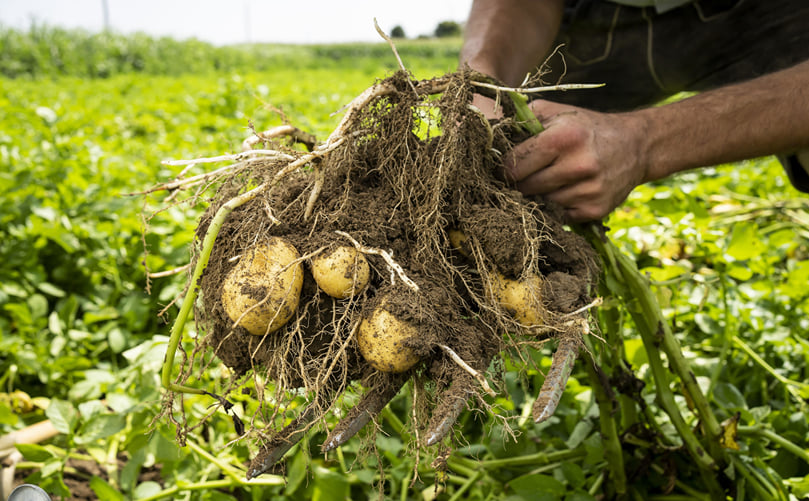
Can Regenerative Agriculture Benefit Potato Farming?
Soil Health: Enhances water retention (up to 20,000 gallons more per acre), nutrient cycling and organic matter buildup (1–2% increase over cycles). Healthy soils function as living ecosystems, storing water like a sponge through microbial activity. Practices such as cover cropping, compost application and mulching reduce erosion by 30–50%, improve tuber size and quality and build long term fertility even in low organic soils of Northern Europe.
Crop Diversification: Disrupts pest and disease cycles while reducing chemical dependency. Rotating potatoes with legumes, cereals or oilseeds breaks the lifecycle of late blight and other soil borne pathogens. Diversified systems naturally enrich nutrients, suppress weeds by up to 40% and generate additional income from multiple crops as demonstrated in Canadian trials enhancing system resilience.
Minimal Soil Disturbance: Preserves soil structure, protects carbon stocks (sequestering 0.4–1.2 tons CO₂e per hectare annually) and fosters microbial life. Reduced tillage maintains porosity for root growth and water infiltration, minimizes carbon release and supports beneficial organisms that boost plant resilience. Studies in the Andes have shown 3.5% yield gains under minimal tillage systems without plastic waste.
Reduced Chemical Reliance: Strengthens ecosystem health while lowering production costs (15–30% savings on inputs). Integrating biological pest control, organic amendments and IPM practices significantly reduces the need for synthetic fertilizers and pesticides. In trials across Africa, Asia and Latin America, pesticide use dropped by as much as 92% while maintaining biodiversity and pollinator health.
Efficient Water Management: Enhances drought resilience through drip irrigation, mulching and soil moisture monitoring, achieving up to 30% water savings. These strategies conserve resources in drought-prone regions, stabilize yields and align with United Nations sustainability targets for water efficiency.
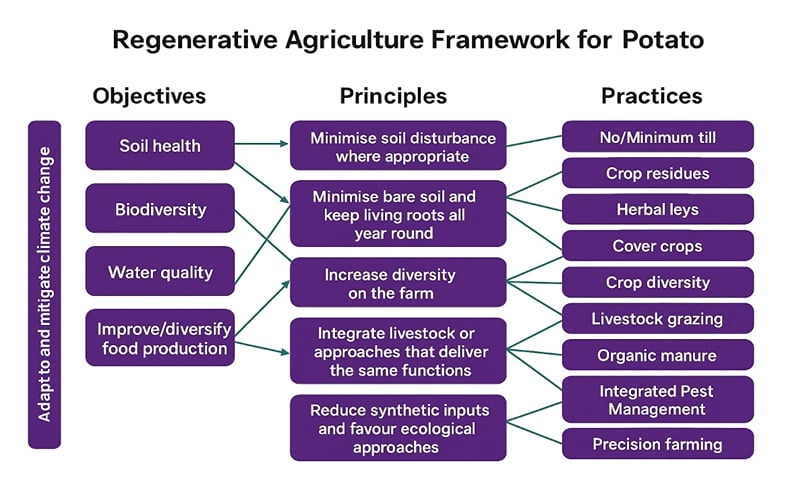
Principles and Practices of Regenerative Potato Farming
Transformative Benefits of Regenerative Practices in Potato Farming
Regenerative practices deliver transformative outcomes for potato farming:
Enhanced Soil Health: Cover crops, mulching and organic amendments enrich soil organic matter, which stabilizes soils, boosts microbial diversity and improves nutrient availability. Healthier soils increase potato resilience to stress and contribute to more uniform tuber development even in regions with historically poor organic matter such as parts of Northern Europe.
Higher Yields and Quality: By breaking disease cycles and replenishing soil fertility, crop diversification and mulching have been shown to raise yields without chemical intensification. For example, diversified potato rotations in Canada and mulching systems in the Andes improved yields by up to 28% while maintaining disease resistance. This demonstrates that regenerative systems can enhance both productivity and quality over the long term.
Environmental Impact: Regenerative practices reduce soil erosion, preventing sediment and nutrient runoff into rivers and lakes. Increased biodiversity supports natural pest control, cutting pesticide use by as much as 92% in certain trials. Furthermore, by sequestering carbon in soils and reducing input related emissions, regenerative potato farming has been shown to lower the carbon footprint of potato production by nearly 20%.
Economic Resilience: Farmers adopting regenerative approaches save 12–30% on fertilizers and irrigation through improved soil fertility and efficient water management. Intercropping potatoes with legumes or cereals also diversifies income sources, creating financial stability and reducing risk for smallholder farmers. This contributes directly to rural food security and livelihoods.
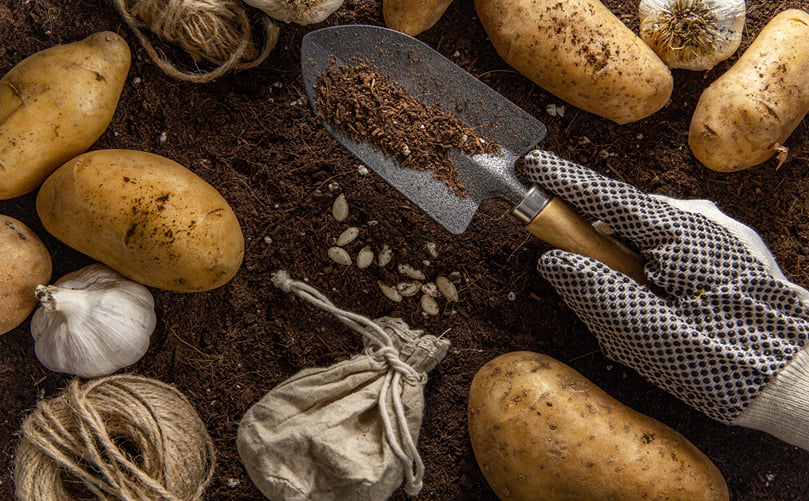
Sustainable Farming Practices Driving Potato Productivity
Economics of Regenerative Potato Farming: From Transition Challenges to Long-Term Profitability
Economic performance remains a central concern for farmers worldwide, especially when transitioning to regenerative systems. During the initial years, some variability in yield or even slight declines may occur as soil biological processes rebuild and input use is optimized. However, long term evidence consistently shows that once systems stabilize, both productivity and profitability improve significantly.
In regions such as Mid and South Canterbury in New Zealand, growers supplying McCain Foods experienced stagnating yields of around 55 t/ha despite increasing fertilizer and crop protection costs. By adopting the SAI Platform “Regenerating Together” framework, they implemented longer and more diverse rotations, extending cycles from six to nine years and incorporating a wider range of crops. Nutrient management was improved through techniques such as petiole testing for nitrogen optimization, while the integration of light livestock grazing added biological benefits to the system. These changes resulted in average potato yields increasing by approximately 25% compared to historical baselines. At the same time, greenhouse gas emissions per ton of potatoes declined by around 9%, and nitrogen inputs at planting were significantly reduced, improving overall cost efficiency and restoring profitability.
Similar economic trends have been observed in North America. Research indicates that reduced tillage practices, such as minimizing field passes or shifting tillage to spring only operations can maintain yields while improving profitability by about USD138 per hectare due to savings in fuel and labor. In addition, diversified crop rotations that include small grains and forage crops have been shown to increase yields by 7–11% and profitability by 21–33% compared to shorter, less diverse rotations. These systems help break pest and disease cycles while enhancing soil organic carbon, leading to more stable and productive cropping environments.
At a broader level, regenerative farming systems have been found to deliver 75–80% higher profitability over the long term compared to conventional systems. This improvement is largely driven by reduced expenditure on fertilizers, pesticides, fuel and irrigation, even though some initial investments in seeds, soil amendments or equipment modifications may be required. Field scale trials, including those conducted under McCain’s “Farm of the Future” initiative, demonstrate that yields can remain stable or even improve during early transition phases without negative impacts.
Additional economic opportunities are also emerging. Market premiums for regenerative or low carbon potatoes are beginning to develop, while participation in carbon markets and ecosystem service programs offers new income streams. Furthermore, regenerative systems reduce financial risk by improving resilience to climate stress, particularly through better water retention and drought tolerance. Diversification strategies including the use of cover crops or integration of livestock can also provide supplementary income.
Ultimately, the strongest economic outcomes are achieved when regenerative practices are carefully adapted to local conditions through soil testing, field trials and continuous monitoring. This adaptive approach is central to frameworks like McCain’s tiered progression model Onboarding, Engaged, Advanced and Leading which guides farmers toward long-term sustainability and profitability.
Real World Success Stories in Regenerative Potato Farming: Global Case Studies and Practical Insights
Practical, field-level examples play a critical role in demonstrating the effectiveness of regenerative potato farming. Across different regions, farmers and organizations have implemented regenerative practices with measurable improvements in yield stability, soil health and profitability, even under diverse climatic and operational conditions.
New Zealand: Long-Term System Transformation
In the Mid and South Canterbury regions of New Zealand, growers supplying McCain Foods faced stagnant yields of approximately 55 t/ha in the early 2010s, despite increasing input costs. Through a structured transition guided by the SAI Platform framework, farmers conducted detailed system analysis and identified key constraints such as short crop rotations and declining soil fertility.
They responded by extending rotations from six to nine years and incorporating up to 14 different crop species. Nitrogen management was optimized using frequent petiole testing allowing for reduced application rates at planting. Additionally, lighter livestock were integrated into the system to enhance biological activity while minimizing soil compaction. Over more than a decade, these interventions resulted in approximately 25% higher average yields compared to historical baselines alongside a reduction of around 9% in greenhouse gas emissions per ton of potatoes produced over recent years. Nitrogen inputs declined significantly, soil fertility improved and overall farm profitability was restored. Future improvements are focused on refining integrated pest management and further reducing soil disturbance.
Europe: Practical Adoption Across Farming Systems
Across Europe, particularly in Germany and Austria, farmers have successfully integrated regenerative practices into both conventional and organic potato systems with notable results.
In Bavaria, Germany, a conventional farmer managing around 15 hectares of potatoes adopted cover crops, conservation tillage, compost tea applications and eliminated glyphosate use. This resulted in higher soil organic matter levels and significantly improved soil structure, demonstrated by stable ridges even after intense rainfall events of 80 mm within 20 minutes, while maintaining yields.
In Lower Saxony, another farmer practicing regenerative methods for three years on approximately 35 hectares implemented conservation tillage, cover crops, under sowing and transfer mulch systems without glyphosate. The farm experienced reduced weed pressure, lower fertilizer requirements and improved soil structure.
An organic farmer in Austria with over a decade of regenerative experience, relies heavily on mulch and compost tea. This system has delivered higher yields, healthier tubers and complete control of Colorado potato beetle without chemical inputs, although it requires greater labor investment. These European examples highlight that even incremental regenerative practices can significantly enhance soil resilience and system performance without compromising productivity
India and South Asia: Scalable Smallholder Innovation
In South Asia, the International Potato Center has introduced a scalable regenerative approach known as zero tillage potato with mulch (PZTM), implemented across India, Bangladesh, Cambodia and Peru.
This system involves planting potatoes directly into untilled soil immediately after rice harvest and covering them with rice straw or locally available mulch materials. The approach improves soil fertility and carbon sequestration, conserves moisture and suppresses weeds, pests and diseases, thereby reducing reliance on agrochemicals. It also extends the growing season, allowing cultivation of longer duration varieties. Importantly, it has strong social impacts by empowering women farmers through self-help groups and participatory training methods.
While large scale yield datasets are still developing, field level trials consistently demonstrate reduced labor and fertilizer requirements along with improved resilience to climatic stress. This makes the system particularly suitable for smallholder farmers facing land degradation and water scarcity in rice potato cropping systems.
India: Local Adaptation of Global Frameworks
In India, McCain Foods is also advancing regenerative potato farming through localized initiatives including model farms in Madhya Pradesh developed in collaboration with the International Potato Center and other partners. These efforts adapt global regenerative principles to regional agronomic conditions, ensuring relevance for Indian farmers.
Across all these case studies, a consistent pattern emerges regenerative potato farming is not merely theoretical. When tailored to local soil types, climate conditions, and market realities, it delivers tangible benefits including stable or improved yields, reduced input costs, enhanced environmental performance and stronger long-term farm profitability.
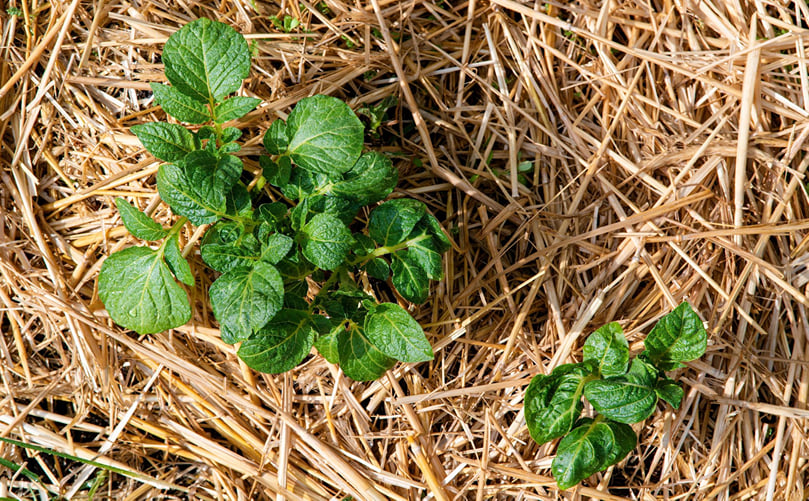
Mulch-Based Potato Farming: Protecting Soil, Conserving Water and Boosting Sustainability
Challenges and Future Outlook of Regenerative Potato Farming
While highly promising, regenerative agriculture in potato production faces notable challenges. The crop root architecture requires some degree of tillage making full no-till implementation difficult currently a limitation in nearly 70% of production systems. Upfront costs for cover crop seeds, specialized equipment and farmer training often strain smallholders, who constitute about 80% of global producers with returns on investment typically realized only after two to three years. Knowledge gaps, limited extension support and data verification issues further constrain widespread adoption keeping global uptake at an estimated 20–30%.
Regional factors also pose obstacles: frost in the Andean highlands, drought stress across Europe and variable soil conditions demand locally tailored regenerative solutions. Despite these hurdles, the outlook remains positive. Advances in precision technologies such as AI-based soil and crop monitoring, supportive policy measures like the EU’s Common Agricultural Policy (CAP) subsidies and collaborative efforts led by organizations such as the International Potato Center (CIP) are accelerating progress.
By 2030, scaling regenerative practices to 50% of global potato systems could transform the crop into a model of sustainability producing nutrient-dense potatoes, revitalizing ecosystems and building climate resilient farming communities worldwide.