
From Ground to Growth: The Power of Soil Cultivation
Soil cultivation plays a pivotal role in potato farming directly influencing crop yield, quality and long-term farm sustainability. Proper cultivation enhances soil structure, nutrient availability and water management, which can boost potato crop resilience by up to 30%, reducing reliance on chemical inputs such as fertilizers and pesticides.
It also promotes microbial activity and organic matter retention leading to improved profitability and environmental resilience in potato systems. Research indicates that maintaining soil health through cultivation contributes to farm longevity by preventing soil degradation and ensuring consistent production.
Different soil types affect drainage, nutrient retention and texture factors that are critical for optimal potato growth. The primary objective of soil cultivation in potato farming is to create a loose, well drained and aerated seedbed. This involves breaking up compacted layers, incorporating organic matter and ensuring a fine tilth to facilitate root penetration and tuber expansion. Such preparation promotes better water infiltration and air circulation, essential for healthy plant development.
Effective soil cultivation significantly influences tuber initiation, growth and uniformity by minimizing stress factors such as poor drainage and soil compaction, which often lead to deformed tubers or reduced yields. Research indicates that well prepared soils promote uniform tuber sizing and increase marketable output.
Additionally, adopting reduced tillage practices can enhance long-term productivity by preserving soil structure and organic integrity. In potato systems, such cultivation practices improve root respiration and nutrient uptake, resulting in healthier plants and higher quality tuber production.
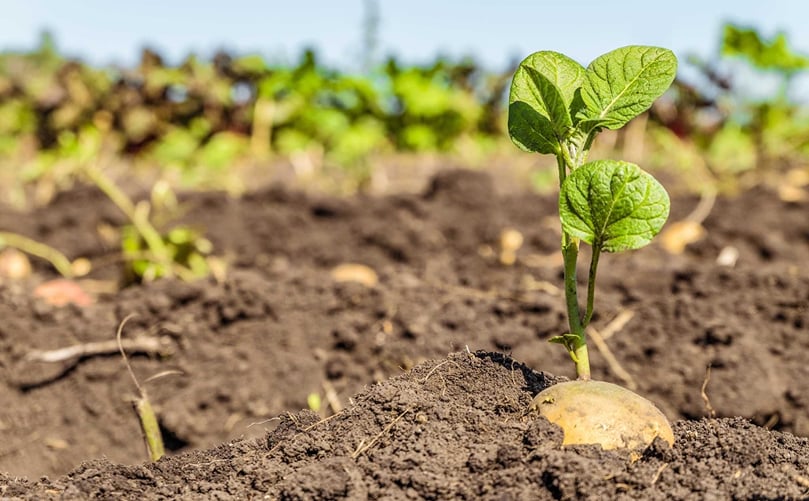
Healthy Soil, Healthy Potatoes: The Start of Sustainable Cultivation
Ideal Soil Conditions for Successful Potato Cultivation
Potatoes perform best in light to medium sandy loam soils, which offer the perfect balance between drainage and moisture retention. These soils enable roots to penetrate easily while preventing excess water accumulation that can cause rot. In contrast, heavy clay soils tend to compact and restrict tuber expansion, while overly sandy soils drain too quickly and often demand more frequent irrigation and nutrient amendments.
In areas with suboptimal soil conditions, adding organic matter can help replicate the characteristics of sandy loam, improving texture and fertility for better yields. The soil should be friable and well aerated to support root respiration and microbial activity, minimizing anaerobic conditions that stunt growth. Compacted soils restrict oxygen flow, resulting in smaller tubers; therefore, incorporating compost or well-rotted manure helps maintain a crumbly structure that supports deeper root systems especially since potato roots can reach depths of 18–24 inches.
Drainage is a critical factor for preventing waterlogging, which can lead to tuber rot and diseases such as blackleg and soft rot. Ideally, well drained soils should allow excess water to percolate within 24–48 hours after heavy rainfall while retaining enough moisture for steady growth. In low lying or compacted areas, raised beds or ridges are effective for improving drainage and aeration.
The optimal soil pH for potatoes ranges from 5.5 to 6.5 though the crop can tolerate between 4.5 and 8.5. For organic farming or in fields prone to common scab, maintaining a slightly acidic range of 4.8 to 5.5 is ideal as higher pH levels increase disease susceptibility unless resistant varieties are used. Low soil salinity is equally important as high salt concentrations can stress plants and reduce yields.
Regular soil testing allows for precise pH management using amendments such as elemental sulfur to correct alkalinity or agricultural lime to reduce excessive acidity. Maintaining 2–5% organic matter content further enhances structure, moisture retention and nutrient cycling. Incorporating compost, green manure or cover crops not only improves fertility but also prevents erosion, ensuring sustainable and resilient soil health across multiple growing seasons.
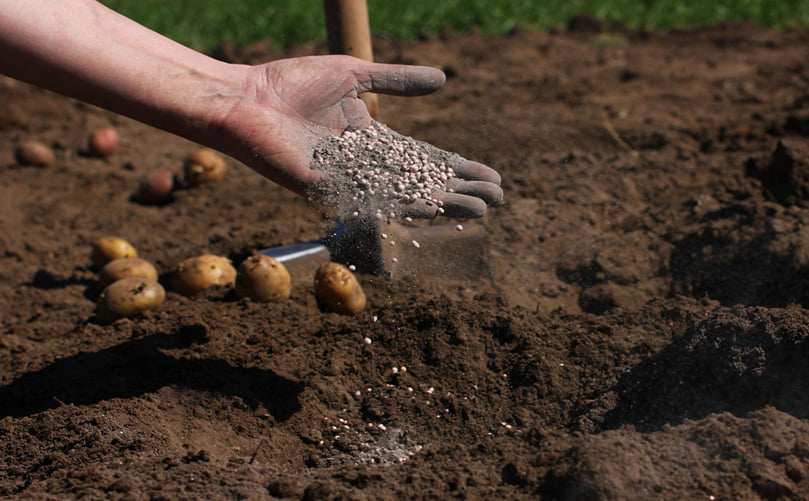
Ideal Soil Structure for Healthy Potato Growth
Pre-Cultivation Practices for Optimal Potato Production
Pre-cultivation sets the foundation for a successful potato crop by preparing the soil, managing pests and ensuring healthy seed material. Each step in this phase contributes to strong establishment, uniform emergence and high yields.
Field Clearing: The first step involves removing previous crop residues, stones, weeds and debris to create a clean field and prevent pest or disease carryover. This reduces competition for nutrients and eliminates habitats for pests such as wireworms and fungal spores. Field clearing can be done manually or mechanically and in some cases, controlled burning (where permitted) helps clear residues effectively.
Primary Tillage: This stage typically includes deep ploughing to a depth of 20–25 cm to loosen compacted layers, incorporate organic residues and enhance water infiltration and aeration. For potatoes, deep tillage is critical as it creates a loose soil bed that allows free tuber expansion. Small scale farms may use hoes or power tillers, while large fields rely on tractor drawn ploughs.
Crop Rotation: A three-year rotation cycle is recommended to break pest and disease cycles, improve soil fertility and maintain nutrient balance. Avoid planting potatoes after other Solanaceous crops like tomatoes, peppers or eggplants as they share similar pathogens and pests.
Secondary Tillage: After primary tillage operations like harrowing or rotavation break down soil clods and refine the seedbed into a fine, even tilth ideal for planting. This ensures uniform root growth and emergence. Power tillers are especially useful on smaller farms for better soil texture and weed control.
Field Levelling: A level field ensures uniform irrigation, nutrient distribution and mechanization efficiency. Avoiding depressions helps prevent waterlogging and rot. In precision agriculture, laser levelling is used to achieve accurate slopes for optimal drainage and even water flow.
Seed Preparation: Choose certified seed potatoes free of disease. Large tubers should be cut into 1.5–2 ounce pieces, each with at least one healthy eye. Allow cut pieces to cure for 1–2 days to form a protective layer against rot. Chitting (pre-sprouting) under cool, well-lit conditions for 4–6 weeks encourages quicker emergence and early vigor.
Planting Timing: Plant 2–4 weeks before the last expected frost, once soil temperatures reach 7–13°C. Proper timing ensures rapid establishment and uniform sprouting, setting the stage for vigorous crop growth.
Comprehensive Soil Preparation Steps for Potato Cultivation
Proper soil preparation is a vital foundation for achieving high yields, uniform tuber size and healthy plant growth in potato cultivation. A well-prepared field ensures efficient root penetration, good aeration and effective nutrient and water management throughout the crop cycle.
Bed Formation and Ridging: Bed formation or ridging plays a crucial role in improving drainage, soil warmth and aeration. Raised beds or ridges, usually spaced 60–75 cm apart helps the soil warm faster in spring and prevent waterlogging while facilitating later operations such as hilling and harvesting. Ridges are typically 20–30 cm (8–12 inches) high and formed after tillage to protect tubers from excessive moisture and make harvesting easier. In high rainfall areas, ridges can be tied at intervals to prevent erosion and maintain soil stability. For garden scale cultivation, digging trenches about 30 cm deep before placing seed pieces ensures the soil remains loose and well aerated. Raised beds are particularly beneficial in clay soils, which are prone to compaction and drainage issues as they improve root respiration and reduce the risk of rot and fungal diseases.
Achieving a Fine Tilth: After primary ploughing, repeated harrowing or rotavation refines the soil into a fine tilth suitable for potato growth. A fine, crumbly soil texture promotes uniform tuber expansion, better aeration and easier root penetration. The goal is to achieve small, firm soil aggregates that retain moisture without becoming dusty or compacted. Overly pulverized soil should be avoided because it can form a hard crust after rainfall or irrigation, limiting aeration and emergence. A well-structured tilth helps seedlings establish quickly and reduces the energy plants expend during early growth.
Incorporation of Soil Amendments: Before final tillage, it is essential to incorporate organic and mineral amendments to enhance soil fertility and structure. Applying two to four inches of well decomposed farmyard manure or compost enriches the soil with slow-release nutrients, increases water-holding capacity and encourages microbial activity. The addition of biochar making up around 2–5% of the soil mix, further improves nutrient retention and long-term soil stability. Phosphorus is especially important for root and tuber initiation; bone meal or rock phosphate can be mixed into the soil during bed preparation to ensure early nutrient availability. In raised bed or container systems, layers of compost and manure at the base, dusted lightly with bone meal and topped with loose soil create a nutrient rich and aerated environment ideal for seed placement.
Planting Layout and Spacing: Uniform planting ensures balanced canopy development and optimal use of nutrients and light. Seed tubers are usually placed in rows spaced 75–90 cm (30–36 inches) apart with 25–30 cm (10–12 inches) between plants within each row. Larger tubers should be planted 8–10 cm (3–4 inches) deep, while smaller seed pieces can be set slightly shallower about 3–5 cm (1–2 inches). The seed pieces are then covered with 10–15 cm (4–6 inches) of soil to maintain consistent moisture and protect against temperature fluctuations. Proper spacing helps minimize competition, improve air circulation and reduce the spread of diseases such as late blight.
Hilling (Earthing-Up): Once plants reach about 20–25 cm in height, soil should be mounded around the stems to promote the development of additional stolons and tubers. Hilling also prevents sunlight from reaching the developing tubers, which can cause greening and make them unsuitable for consumption. Moreover, it enhances drainage around the base of the plants and helps control weeds naturally. Typically, two to three hilling operations are performed per growing season the first soon after emergence and the second before the canopy closes. In mechanized systems, disc hillers or ridgers are commonly used to maintain consistent ridge height and spacing across the field.
Final Pre-Planting Checks: Before planting the soil, temperature should be between 7–13°C to encourage uniform sprouting and emergence. The soil should be moist but not waterlogged to prevent seed piece decay. pH levels must be tested and adjusted as needed lime can be applied in acidic soils, while elemental sulfur can correct alkaline conditions maintaining an ideal range of 5.5–6.5. A well-prepared, fertile and properly conditioned soil ensures strong seedling establishment and sets the stage for a high-quality potato harvest.
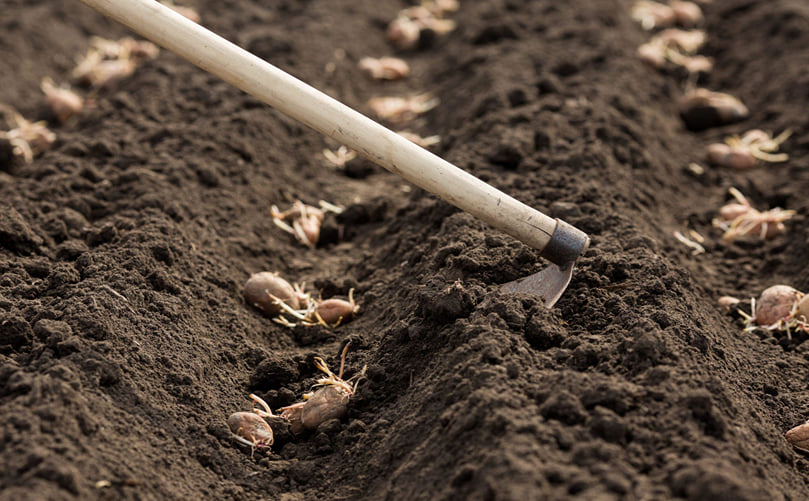
Foundation of High-Yield Potato Production: Proper Soil Preparation
Basal Fertilization and Soil Nutrient Management in Potato Cultivation
Basal fertilization forms the cornerstone of nutrient management in potato production, ensuring the crop has immediate access to essential nutrients during early growth. As potatoes are heavy feeders, balanced and timely nutrient supply is critical for achieving high yields and maintaining tuber quality.
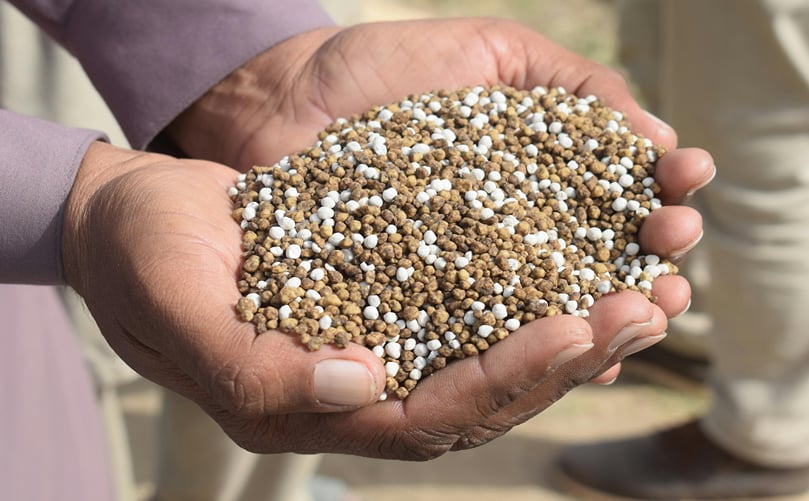
Balanced Fertilization: Fueling Healthy Potato Growth
Balanced NPK Application: Basal fertilization involves blending organic manure with a balanced NPK formulation prior to planting with application rates determined through soil testing for site specific precision. Potatoes require high amounts of potassium (K) to promote tuber development, enhance disease resistance and improve storage quality. Nitrogen (N) should be applied moderately to prevent excessive vegetative growth that could overshadow tuber formation, while phosphorus (P) supports early root and stolon initiation.
The general nutrient application schedule recommends applying 50–70% of nitrogen and 50% of potassium at planting or crop emergence with the remaining portions side dressed 35–40 days later, usually around the time of tuber bulking. All phosphorus should be band applied near the root zone as it is relatively immobile in soil and best utilized when placed close to developing roots.
pH Correction and Soil Conditioning: Maintaining the correct soil pH is vital for nutrient uptake efficiency. The optimal pH range for potatoes is 5.5–6.5, though slightly acidic soils can help minimize common scab disease. Lime is applied to raise pH in acidic soils, improving calcium availability and reducing aluminum toxicity, while gypsum is used in sodic or alkaline soils to displace excess sodium and enhance soil structure. These amendments should be incorporated well before planting as they require several weeks to react and stabilize within the soil matrix. Correcting pH ensures better phosphorus solubility and overall nutrient availability during critical growth stages.
Importance of Soil Testing: Comprehensive soil testing is the foundation of an effective fertilization program. It measures key parameters such as pH, organic matter content and concentrations of macronutrients (N, P, K, Ca, Mg) and micronutrients (Zn and B). The results help determine exact nutrient requirements, preventing both deficiencies and excesses that may harm plants or the environment. Nutrient recommendations should also account for varietal differences, soil type and local climate. For example, high yielding varieties and those grown in sandy soils often require higher N and K inputs due to faster nutrient leaching.
Micronutrient Enrichment: Micronutrients play essential roles in maintaining plant health and optimizing yield. Zinc (Zn) supports enzyme activity and hormonal balance, boron (B) strengthens cell walls and prevents disorders like hollow heart and iron (Fe) is crucial for chlorophyll synthesis and photosynthesis. Deficiencies in these elements can cause poor tuber formation, chlorosis or reduced yield. Based on test results, these nutrients can be supplied through soil application or foliar sprays, preferably in chelated forms for higher bioavailability.
For organic and sustainable systems, compost teas, vermiwash or seaweed extracts serve as excellent natural sources of trace elements, enhancing soil microbiology while supplying vital micronutrients. Balanced enrichment ensures healthy plant growth, uniform tuber development and long-term soil fertility.
Optimizing Soil Moisture and Irrigation in Potato Cultivation
Maintaining proper soil moisture is a cornerstone of successful potato farming as the crop’s shallow root system typically only 18–24 inches deep make it highly vulnerable to both water deficits and excess. Achieving 60–80% of field capacity during crucial growth phases like tuber initiation and bulking is vital any deviation can cause yield losses of 20–30% or trigger physiological disorders such as hollow heart.
Before emergence, soil should be kept moist enough to prevent crusting and ensure uniform sprouting, but irrigation can be delayed slightly to avoid waterlogging. After emergence, consistent moisture supply supports root expansion and tuber development.
Efficient Irrigation Systems: Modern irrigation technologies enhance precision and sustainability. Drip irrigation stands out for its high efficiency delivering water directly to the root zone while minimizing evaporation losses by up to 50%. It also supports fertigation allowing simultaneous nutrient delivery. Sprinkler systems offer even coverage but can increase canopy humidity encouraging disease. Boom irrigators work best on large, level fields, while rain guns are adaptable but less efficient under windy conditions.
Avoiding Soil Compaction and Waterlogging: Overuse of heavy machinery on wet soils compacts the soil limiting root penetration and water infiltration. This can worsen water stress, regardless of irrigation efforts. To mitigate this field operations should be restricted when soil is saturated.
Monitoring and Scheduling: Using soil moisture sensors like tensiometers or capacitance probes ensures accurate irrigation timing by tracking both water potential and volumetric content. Maintaining 60–70% available soil water optimizes plant health and yield while conserving resources.
Soil Type and Mulching Considerations: Irrigation frequency should align with soil texture, sandy soils require frequent, light watering, whereas loam or clay soils need deeper but less frequent irrigation. Accounting for evapotranspiration, rainfall and crop stage allows fine-tuned management. Additionally, mulching with organic residues such as straw or compost helps retain soil moisture, suppress weeds and enhance temperature stability further promoting sustainable water use in potato systems.
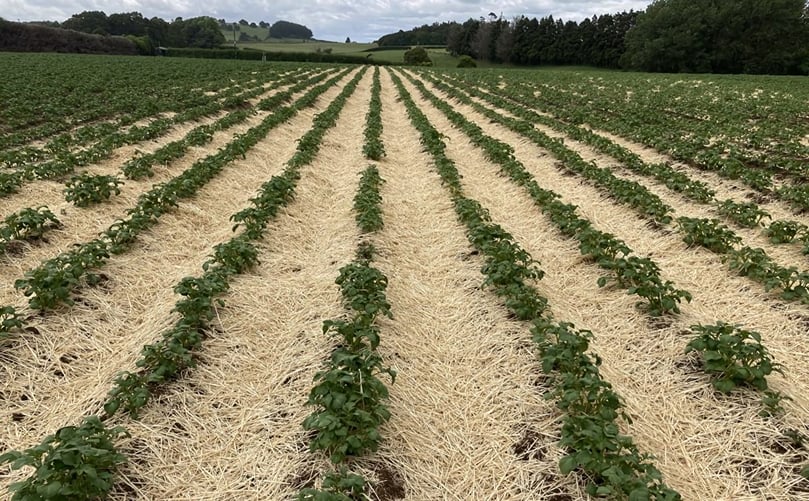
Straw Mulching: Conserving Moisture in Potato Fields
Building Crop Health Through Effective Soil Cultivation in Potatoes
Soil cultivation plays a vital role in maintaining the overall health and productivity of potato crops by enhancing soil structure, organic matter and microbial activity. These improvements not only increase yield and profitability but also build long-term resilience and sustainability within the farming system.
Healthy cultivation practices focus on minimizing soil disturbance particularly within the top 30 cm where most potato roots are active to preserve structure and microbial balance. This layer is critical for nutrient cycling and water movement and by maintaining its integrity, erosion risks are reduced while soil fertility improves naturally.
Enhancing Microbial Activity and Disease Resistance: Proper cultivation fosters beneficial microorganisms that suppress soilborne diseases such as Verticillium wilt and Rhizoctonia canker through natural antagonism. These microbes along with increased organic matter, strengthen plant immunity and root vitality. By maintaining good aeration, oxygen penetrates deeper into the soil profile, supporting root respiration and preventing anaerobic zones that favor pathogens.
Sustainable Practices for Soil Health: Techniques such as reduced tillage and cover cropping are key to sustaining living roots year-round, which in turn supports soil fauna like earthworms and mycorrhizal fungi. These organisms improve soil aggregation, enhance water retention and facilitate nutrient exchange. Rotating potatoes with non-host crops like legumes interrupts pest and pathogen cycles, while the inclusion of perennials restores organic carbon and biological balance to the soil.
Boosting Yield and Quality: Well-structured and aerated soils ensure uniform tuber formation, consistent nutrient uptake and balanced moisture distribution. Such conditions can enhance marketable yields by 10–20% compared to poorly cultivated soils. Integrating organic manures, composts or bio-based amendments rebuilds degraded soils over time mitigating the negative effects of continuous potato cultivation.
Holistic Soil Health Management: Viewing soil as a living system balancing its physical, chemical and biological dimensions creates a foundation for healthier plants with stronger natural defenses. This integrated approach reduces the need for chemical interventions promoting both environmental sustainability and economic stability in potato production systems.
Embracing Modern Tools and Technologies in Potato Soil Cultivation
Modern potato farming has evolved beyond traditional methods, integrating advanced machinery and digital innovations to enhance precision, efficiency and environmental sustainability. These technologies streamline cultivation processes, reduce labor and enable site specific management, ensuring optimal soil conditions for healthy, uniform tuber development.
Advanced Machinery for Efficient Cultivation: Tractor mounted cultivators and rotavators form the backbone of large-scale soil preparation. They efficiently break down clods, refine tilth and mix residues while minimizing unnecessary soil disturbance. Modern models feature adjustable working depths, allowing farmers to perform targeted tillage that preserves soil structure and prevents compaction in lower layers. For smaller farms or greenhouse systems, power tillers offer exceptional maneuverability and energy efficiency, enabling precise secondary tillage even in confined plots without the risk of overworking the soil.
Precision Land Leveling and Irrigation Management: Achieving uniform field topography is critical for water efficiency in potato systems. Laser land levelers ensure perfect grading, improving irrigation distribution and reducing water runoff by up to 20%. This precision fosters uniform crop emergence and reduces disease risks associated with uneven moisture zones. When combined with drip or sprinkler systems, land leveling contributes to sustainable water management and improved soil health.
Digital Agriculture and Smart Technologies: Modern soil cultivation increasingly relies on GPS guided equipment and variable rate technology (VRT) for precision operations. These tools use digital soil and fertility maps to deliver site specific inputs such as fertilizers and amendments enhancing efficiency and minimizing waste. Automated planters further refine accuracy in seed placement and spacing, ensuring consistent plant stands and reducing seed costs.
Monitoring and Data Driven Decisions: The integration of drones and remote sensing has transformed how farmers monitor soil and crop health. Equipped with multispectral or thermal sensors, drones detect early signs of compaction, nutrient stress or moisture imbalance. AI-driven analytics, combined with satellite-based NDVI mapping (e.g., EOSDA platforms) provide real time insights into vegetation health and soil performance. These data help optimize cultivation timing, tillage intensity and input management.
Smart Irrigation and Automation: Automated irrigation systems, linked to soil moisture sensors and weather forecasting tools, deliver water precisely when and where needed. This reduces wastage, supports uniform growth and prevents waterlogging an essential advantage in potato cultivation. Integration with fertigation units also enables balanced nutrient delivery alongside irrigation, further improving efficiency.
By blending mechanization with digital intelligence, modern potato farming not only enhances productivity but also supports climate smart and resource-efficient soil management practices building the foundation for sustainable and profitable agriculture.
Overcoming Challenges in Potato Soil Cultivation: Smart Solutions for Sustainable Growth
Potato cultivation faces multiple soil related challenges that can significantly impact productivity, tuber quality and long term soil health. Addressing these issues through a combination of mechanical, agronomic and ecological solutions ensures sustainable and resilient production systems.
Tackling Soil Compaction: Soil compaction is one of the most persistent problems in potato farming, often caused by heavy machinery and repeated field traffic. Compacted soils restrict root penetration, reduce water infiltration and limit nutrient uptake leading to yield reductions of up to 30%. To counter this, deep tillage or subsoiling at depths of 12–18 inches can effectively fracture hardpans and restore porosity, ideally conducted when soils are dry to prevent smearing. Controlled traffic farming (CTF) where machinery movement is confined to specific lanes and the use of low-pressure or wide tires help prevent future compaction by distributing weight more evenly.
Preventing Soil Erosion and Nutrient Loss: Erosion, especially on sloped or hilly terrain leads to the loss of fertile topsoil, organic matter and nutrients. Practices like contour ridging and terracing effectively redirect surface runoff, reducing erosion intensity. Incorporating cover crops such as rye, clover or vetch can lower runoff and soil loss by 50–70%, while their root systems enhance soil stability. In vulnerable regions, mulching with straw or organic residues further protects the soil surface from rain impact and temperature fluctuations promoting moisture conservation and microbial activity.
Restoring Soil Fertility: Continuous potato cropping rapidly depletes essential nutrients and encourages pest buildup including nematodes and soilborne pathogens. Implementing 3–4-year crop rotation cycles with legumes or cereals replenishes nitrogen naturally and disrupts pest life cycles. The incorporation of green manures, compost and farmyard manure (FYM) improves soil organic carbon and boosts beneficial microbial diversity, enhancing nutrient cycling and disease suppression. Regular soil testing ensures nutrient application is precise, avoiding both deficiency and excess, while reduced tillage helps preserve soil structure and moisture.
Addressing Water and Pest Challenges: Water scarcity, compounded by erratic rainfall and rising temperatures, threatens consistent yields. Solutions include adopting efficient irrigation systems such as drip or sprinkler setups with automated moisture sensors that maintain optimal soil water balance. Simultaneously, integrated pest management (IPM) combining resistant varieties, biological control agents and cultural practices like crop rotation mitigates pest pressure without overreliance on chemicals.
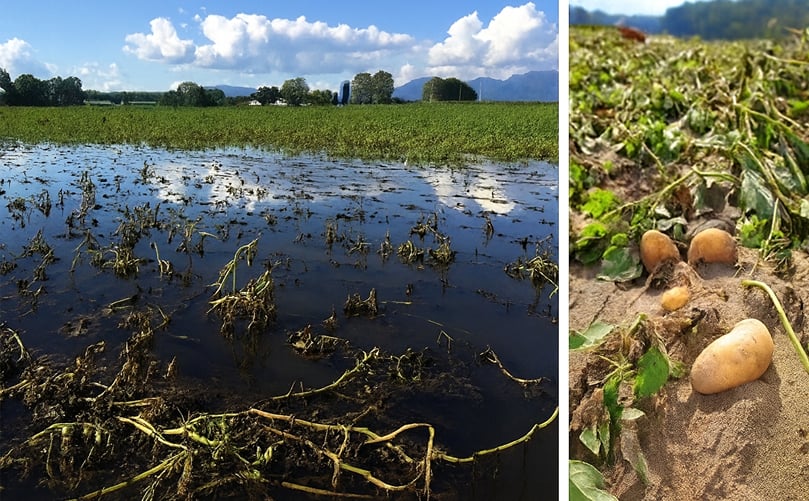
The Hidden Threat: Excess Water in Potato Fields
Toward Sustainable Cultivation: By combining these soil smart practices mechanical correction, biological restoration and precision management farmers can overcome the constraints of compaction, erosion, fertility decline and water stress. The result is a resilient, high performing potato system capable of sustaining productivity while conserving soil health for future generations.
Key Stages and Equipment for Soil Cultivation in Potato Farming
Primary Soil Preparation (Pre-Planting): Primary soil preparation is one of the most important stages in potato cultivation because potatoes require loose, well-aerated and deep soil for proper tuber development. Farmers use heavy tillage equipment to break compacted soil layers, incorporate crop residues, improve drainage and prepare a fine seedbed suitable for planting.
Plows (Moldboard and Disc Ploughs): Plows are commonly used for initial land preparation. Moldboard ploughs completely invert the soil, burying weeds, volunteer plants and crop residues while loosening the soil to depths of around 20–30 cm. Disc ploughs are more suitable for heavy, sticky or stony soils because they cut and turn soil more effectively under difficult field conditions. Deep plowing also improves root penetration and water infiltration, which are essential for healthy tuber formation.
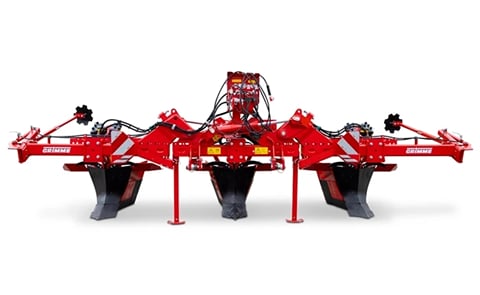
Subsoilers: Subsoilers or chisel ploughs are used to break compacted hardpan layers at deeper depths of approximately 40–60 cm without fully inverting the soil profile. This operation improves drainage, enhances root growth and reduces soil compaction caused by repeated machinery movement. Subsoiling is especially beneficial in fields with poor water movement or dense subsoil layers.
Rotavators and Rotary Tillers: Rotavators or rotary tillers are widely used to pulverize the soil into a fine tilth suitable for potato planting. These tractor mounted implements mix and refine the soil thoroughly, creating a loose and uniform seedbed. They are generally operated using tractors ranging from 50–100 HP depending on machine width and soil type. However, excessive rotary tillage should be avoided because over pulverization may damage soil structure and increase compaction risk.
Disc Harrows: Disc harrows are commonly used after plowing to break large soil clods, incorporate residues, level the field surface and refine the seedbed further. Tandem disc harrows are particularly effective in stony or medium-to-heavy soils where additional clod breaking is required.
Power Harrows: Power harrows provide more precise secondary tillage with minimal soil inversion. These machines create a uniform, well aerated seedbed while preserving soil moisture and structure. They are increasingly preferred in modern potato production systems where soil conservation and reduced tillage practices are emphasized.
Stone Separators and Destoners: In many commercial potato-growing regions, stone separators and destoners are also used during land preparation. These machines remove stones and large clods from the ridge zone helping reduce tuber damage during growth and harvesting while improving market quality.
Best Soil Preparation Practices: The best soil preparation practice generally involves deep plowing followed by harrowing, cross cultivation and final seedbed refinement to achieve loose, friable soil. In minimum tillage or conservation agriculture systems, farmers reduce the number of fields passes to preserve soil structure, lower fuel consumption, minimize erosion and maintain beneficial microbial activity.
Ridging, Bed Formation and Planting
Potatoes are usually cultivated on ridges or raised beds because these systems improve drainage, increase soil aeration, promote tuber expansion and reduce the risk of tuber greening caused by sunlight exposure.
Ridgers (Hillers or Row Builders): Ridgers are used to create ridges typically ranging from 75–90 cm in width and 20–30 cm in height depending on the variety and production system. Disc hillers, mouldboard ridgers and basket hillers shape loose soil into raised peaks suitable for planting.
Bed Makers: Bed makers are used to form raised beds, especially in regions with heavy rainfall or poorly drained soils. Raised beds improve water management and create favorable soil conditions for tuber growth. Many modern bed forming machines are integrated with planting systems to improve operational efficiency.
Potato Planters with Ridging Systems: Modern potato planters often combine multiple operations in a single pass. Advanced cup-type, belt-type or air-cup planters can simultaneously open furrows, place seed tubers at uniform spacing and depth, apply fertilizers, apply crop protection products and form ridges over the planted rows. This integrated approach reduces labor requirements, improves planting precision and minimizes soil compaction caused by repeated machinery movement.
Importance of Proper Ridge Formation: Proper ridge formation is essential because ridge shape and uniformity influence tuber size, drainage, irrigation efficiency and harvesting performance. Well-formed ridges also help protect developing tubers from exposure to sunlight and temperature fluctuations.
Inter-Row Cultivation and Hilling During Crop Growth
Inter-row cultivation is carried out during the growing season to control weeds, loosen surface soil, improve aeration and maintain ridge structure without damaging potato roots or developing tubers.
Potato Cultivators (Inter-Row Cultivators): Potato cultivators are specially designed to operate between crop rows while maintaining precise spacing. These machines may use tine, disc or sweep cultivation systems depending on soil type and weed pressure. Single-row, two-row and multi-row cultivators are available for different farm sizes and levels of mechanization.
Hilling Discs and Adjustable Ridgers: Hilling discs and adjustable ridgers push loose soil toward the base of potato plants, enlarging ridges and covering exposed tubers. Most systems are tractor mounted and allow adjustment of working depth and ridge width according to crop stage and field conditions.
Spring Tine Cultivators and Chain Harrows: Spring tine cultivators and chain harrows are used for shallow cultivation, light weed control and surface soil loosening during early crop growth stages. These implements help improve soil aeration while minimizing root disturbance.
Timing and Importance of Hilling: The first hilling operation is generally performed when potato plants reach approximately 15–20 cm in height. Additional hillings may be carried out depending on weed growth, soil erosion, irrigation practices and ridge condition. During hilling, soil is mounded around the stems while leaving the upper foliage exposed for continued photosynthesis.
Proper hilling provides several important benefits including prevention of tuber greening, improved weed suppression, enhanced tuber initiation, better drainage and increased marketable yield. Well maintained ridges also improve harvesting efficiency and reduce tuber exposure during late crop growth.
Supporting and Specialized Equipment
Tractors: Tractors provide the primary power source for all soil cultivation, planting, cultivation, spraying and harvesting operations in potato farming. Tractor size depends on farm scale, soil conditions and machinery requirements, ranging from compact utility tractors for small farms to high-horsepower tractors for large commercial operations.
Combined and Integrated Machines: Modern potato farming increasingly relies on combined or integrated machines capable of performing multiple operations simultaneously, such as cultivation, fertilization, ridging and planting. These systems improve operational efficiency, reduce labor costs, lower fuel consumption and minimize soil compaction caused by repeated field passes.
Precision Agriculture Technologies: Advanced potato production systems also incorporate precision agriculture technologies such as GPS-guided tractors, automatic steering systems, variable rate fertilizer application, soil moisture sensors and controlled traffic farming. These technologies improve field accuracy, optimize input use, reduce overlaps and support sustainable potato production.
Major Potato Machinery Manufacturers:
Several specialized agricultural machinery manufacturers provide complete potato cultivation systems including soil preparation equipment, planters, cultivators, ridgers, harvesters, grading systems and storage solutions. Major global companies include GRIMME, John Deere, Dewulf, AVR and Standen Pearson. These companies offer integrated mechanization solutions for both small scale and large commercial potato production systems worldwide.