

Introduction: Micronutrient Dynamics in Potato (Solanum tuberosum) Cultivation
Micronutrients, though required in minute quantities (typically <0.1% of plant dry weight), play critical roles in Solanum tuberosum physiology, influencing enzyme activation, photosynthesis, hormone regulation, disease resistance and tuber quality. Due to their shallow root system (20–40 cm) and high nutrient extraction rate, potatoes are particularly prone to micronutrient deficiencies. For instance, yields of 30–50 t/ha can remove 0.5–2.5 kg/ha of key micronutrients from the soil.
Deficiencies are most common in sandy soils, those with low organic matter (<2% OM), high pH (>7.0) or calcareous characteristics conditions prevalent in areas such as the U.S. Pacific Northwest, Idaho, Minnesota and parts of Europe and Asia. Such imbalances lead to chlorosis, stunted growth, hollow heart, internal brown spot and reduced tuber size, ultimately lowering yields by 10–40% and diminishing storability due to increased decay.
Soil pH significantly affects micronutrient availability:
- Acidic soils (pH <6.0) restrict molybdenum (Mo) uptake but enhance availability of iron (Fe), manganese (Mn), copper (Cu) and zinc (Zn).
- Alkaline soils immobilize Fe, Zn and boron (B), a problem aggravated by irrigation driven leaching losses reaching 30–50%.
Integrated nutrient management strategies such as soil acidification (e.g., sulfur amendments), foliar chelates, fertigation and precision diagnostics using petiole sap analysis or drone-based imaging enhance nutrient use efficiency (NUE) by 15–30%. These practices also mitigate environmental impacts like eutrophication and support biofortification efforts aimed at improving human nutrition (e.g., increasing tuber Fe/Zn concentrations to alleviate global deficiencies affecting over two billion people).
Recent studies emphasize sustainable micronutrient enrichment through organic amendments and cover crops. For example, serradella mulch has been shown to boost tuber Fe content by 25–30%, while meta-analyses confirm that Zn and B foliar sprays can increase yields by 10–20% without causing phytotoxicity. Innovative microfertilization techniques including pre-sowing seed soaking and foliar feeding have demonstrated productivity gains of 15–25% in regions like Gegharkunik, Armenia.
With the growing challenges of climate change where drought can reduce nutrient uptake by 20–40% the adoption of microbial inoculants such as plant growth promoting rhizobacteria (PGPR) has proven effective. These beneficial microbes enhance micronutrient solubilization and uptake, thereby improving crop resilience and overall productivity.
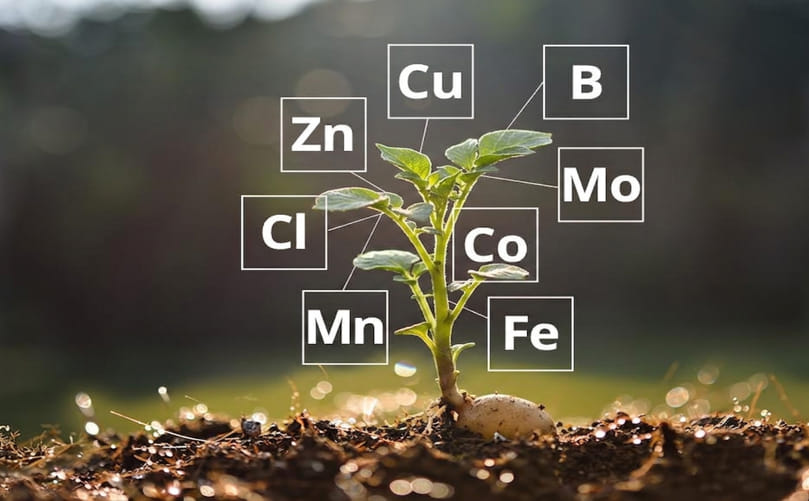
Essential Micronutrients for Healthy Potato Growth and Tuber Development
What Are Micronutrients and Why Are They Important for Potatoes?
Micronutrients comprise eight essential elements boron (B), chlorine (Cl), copper (Cu), iron (Fe), manganese (Mn), molybdenum (Mo), zinc (Zn) and nickel (Ni) that are vital for potato (Solanum tuberosum) growth and development, even though they are required only in small amounts (0.05–1.5 kg/ha). These elements activate over 300 enzymes and play critical roles in chlorophyll synthesis, osmoregulation and tolerance to abiotic and biotic stresses.
Micronutrients directly influence key physiological processes such as tuber initiation (B and Zn promote cell expansion) and tuber quality (Mn and Cu enhance resistance to pathogens). However, potatoes exhibit low micronutrient use efficiency (5–25%) compared to macronutrients (50–75%), due to their shallow root systems, rapid growth cycle (90–120 days) and complex soil nutrient interactions. Consequently, 25–45% of global potato acreage is affected by micronutrient deficiencies, particularly in alkaline or eroded soils.
Excessive macronutrient application can further disrupt micronutrient balance for example, high phosphorus (P) inputs antagonize zinc (Zn) uptake, reducing its availability by up to 30%. Environmental stressors such as drought and salinity also intensify micronutrient demands.
According to 2024 Nutrien guidelines, tissue analysis is preferred over soil testing for assessing micronutrient bioavailability, while organic amendments and microbial inoculants (e.g., Bacillus species that solubilize Fe and Zn) have been shown to enhance tuber micronutrient content by 15–30%. Deficiencies can cause economic losses of USD 150–400 per hectare through reduced yield and quality, but targeted interventions often deliver a return on investment (ROI) exceeding 6:1.
Micronutrient management also supports biofortification in potato varieties such as Russet Burbank and colored flesh types contributing to improved human nutrition for instance, Fe-enriched tubers help combat anemia. Moreover, emerging studies highlight nickel’s (Ni) role in urea metabolism, which can improve nitrogen efficiency by up to 10% in crop rotations and molybdenum (Mo) in enhancing nitrogen fixation in acidic soils, both of which strengthen crop resilience under changing climatic conditions.
Boron (B) Nutrition in Potato Cultivation: Role, Deficiency, Toxicity and Management Strategies
Role and Importance
Boron is an essential micronutrient that plays a central role in maintaining cell wall integrity through pectin cross linking, ensuring proper cell division and elongation. It facilitates pollen germination and tube growth, supports carbohydrate translocation across membranes and activates over 50 enzymes involved in hormone biosynthesis (particularly auxins) and nitrogen metabolism.
In potatoes, boron prevents physiological disorders such as hollow heart, internal necrosis and surface cracking by promoting meristematic activity and vascular tissue development. It also enhances calcium uptake in tubers, improving skin set and reducing post-harvest storage disorders. Beyond this, boron strengthens membrane stability, improves root growth and enhances drought tolerance by regulating stomatal function and water balance within plant tissues.
Deficiency Symptoms
Early boron deficiency appears as thickened, crinkled young leaves with light brown edges extending between veins. Stems become brittle, terminal buds die back and plants show bushy growth with shortened internodes. Tubers may develop internal necrosis, corky patches or hollow heart, resulting in 15–30% yield losses.
Deficiency is most common in dry, calcareous or sandy soils, where boron mobility is low. Additional signs include upward leaf rolling, delayed maturity, weak root systems and greater disease susceptibility.
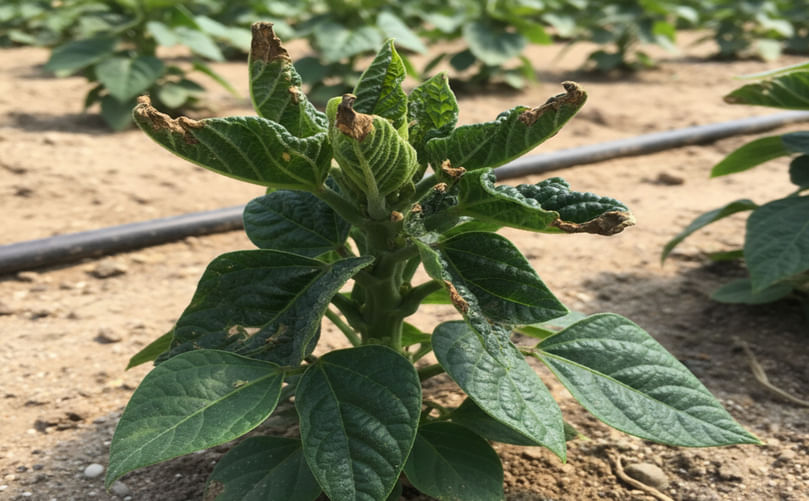
Boron-Deficient Potato Leaves with Crinkling and Browning
Sufficiency Levels
- Soil: 0.5–1.2 ppm (hot water extractable method preferred)
- Petiole tissue: 25–50 ppm at early bloom stage Levels below 20 ppm in tissue indicate deficiency risk. Regular tissue testing during multiple growth stages ensures balanced boron nutrition.
Toxicity Risks
Toxicity occurs at >2–3 ppm boron in soil, showing as leaf margin scorch, tip burn and necrosis advancing toward the midrib. In potatoes, toxicity impairs photosynthesis and root growth, causing tuber deformities and 10–20% yield losses. It is common in alkaline or over fertilized conditions, especially where irrigation water contains high boron.
Soil pH Influence
- Optimal range: pH 5.5–6.5
- Reduced availability: pH >7.0 (fixation with calcium)
- Toxicity risk: pH <5.5 (excess solubility in acidic soils)
Maintaining a slightly acidic soil pH ensures boron remains available without reaching toxic levels.
Best Management Practices
To maintain adequate boron levels in potato crops:
- Apply borax (11% B) or boric acid at 1–3 kg/ha before planting.
- Use foliar sprays of Solubor (20.5% B) at 0.5–1.5 L/ha during tuber initiation or early bulking, repeating every 10–14 days if needed.
- Adopt nano-boron formulations for improved foliar absorption and 20–30% higher efficiency.
- Use low-dose fertigation (0.1–0.3 kg/ha) to prevent leaching losses.
- Increase organic matter in sandy soils to improve boron retention.
- Avoid over-liming, which ties up boron and restricts uptake.
Nutrient Interactions and Compatibility
Antagonistic effects: High calcium (Ca) or magnesium (Mg) levels can lower boron uptake by 20–30%.
Synergistic effects: Boron and zinc (Zn) together improve yield by 10–15% and enhance tissue strength.
Excess nitrogen (N): may delay or mask boron deficiency symptoms.
High phosphorus (P): levels can aggravate boron deficiency, while balanced potassium (K) supports boron movement within the plant.
Chlorine (Cl) in Potato Cultivation: Functions, Deficiency, Toxicity and Nutrient Management
Role and Importance
Chlorine (Cl) functions primarily as an osmotic regulator enhancing water use efficiency (WUE) by 15–25%. It supports stomatal function and turgor maintenance, both of which are crucial in saline and drought prone potato environments. Chlorine contributes to cell membrane stability and ion balance helping suppress soil borne diseases such as Verticillium wilt.
In potato physiology, Cl aids nitrate competition and uptake, thereby promoting nitrogen assimilation and optimizing nutrient balance. It also participates in oxygen evolution during photosynthesis and enzyme activation, both vital for maintaining healthy plant metabolism. Under stress conditions, adequate Cl levels improve tissue hydration and help reduce the occurrence of tuber physiological disorders.
Deficiency Symptoms
Chlorine deficiency is rare but can occur in areas with low-chloride soils or excessive leaching. Typical symptoms include wilting despite sufficient soil moisture, bronzing or chlorosis of young leaves and reduced photosynthetic activity. In regions such as the Canadian Prairies, deficiency has been associated with 5–15% yield losses, stunted vines and smaller tubers. Affected plants may also display general yellowing resembling nitrogen deficiency, though without nitrate accumulation.
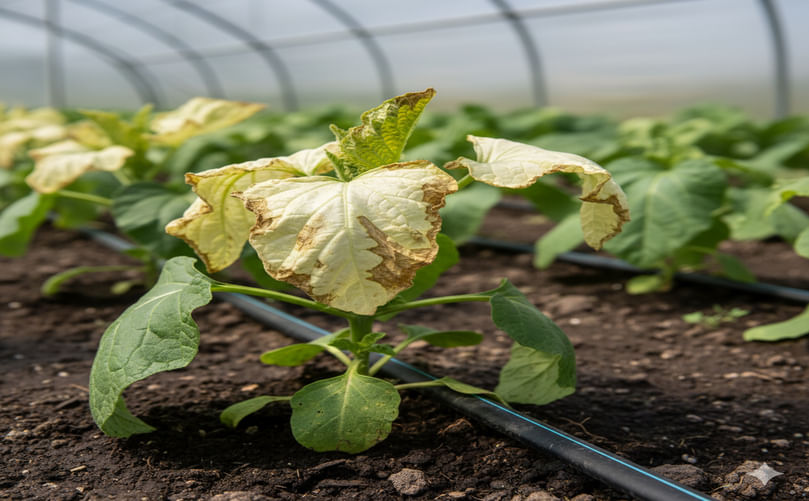
Bronzing and Wilting in Chlorine Deficient Potato Foliage
Sufficiency Levels
- Tissue concentration: 2,500–4,000 ppm
- Soil threshold: Below 20 ppm indicates a potential need for supplementation
Maintaining Cl levels within this range ensures proper osmotic regulation and balanced nutrient uptake without the risk of toxicity.
Toxicity Risks
Chlorine toxicity occurs when soil levels exceed 40–60 ppm, particularly in poorly drained or saline soils. Symptoms include leaf tip burn, marginal necrosis and salt stress, leading to reduced plant vigor. In potatoes, excess Cl can lower tuber specific gravity, increase hollow heart incidence by 20–30% and cause sprouting problems during storage. Because potatoes are naturally chloride sensitive, sustained high Cl levels can reduce starch content and compromise tuber quality.
Soil pH Influence
Chlorine remains generally available across a wide pH range (5.0–8.0), though it is highly mobile and leachable in sandy soils, particularly under irrigation. While pH extremes seldom limit Cl availability directly, they can alter interactions with other ions, especially nitrate and potassium, affecting overall nutrient balance.
Best Management Practices
To correct or manage chlorine levels in potato cultivation:
- Apply potassium chloride (KCl) at 50–120 kg/ha for soils confirmed deficient in Cl.
- In regions with naturally high chloride levels, use sulfate-based potassium sources (K₂SO₄) instead of KCl to maintain tuber quality.
- Avoid over application of chloride fertilizers as excess can induce salt stress and quality loss.
- For post-harvest sprout control, limited exposure to chlorine atmospheres (around 20 mg/L) can help inhibit sprouting, though residue monitoring is essential.
- Use balanced fertilization programs integrating sulfate and nitrate forms to maintain ionic balance and prevent excess chloride buildup.
Nutrient Interactions and Compatibility
- Competitive interaction: Chlorine competes with nitrate (NO₃⁻) for uptake, potentially reducing nitrogen use efficiency if levels are unbalanced.
- Synergistic effects: When applied as KCl, Cl can reduce hollow heart incidence by 15–25%, though slightly decreasing starch content (5–10%).
- Positive link with sulfur (S): Chlorine and sulfur together help suppress soil borne pathogens.
- Interaction with potassium (K): Adequate K enhances Cl efficiency, optimizing both yield and quality while minimizing toxicity risks.
Copper (Cu) Nutrition in Potato Cultivation: Functions, Deficiency, Toxicity and Best Management Practices
Role and Importance
Copper is essential for lignin biosynthesis, providing stem and vascular strength and for photosynthetic electron transport through activation of plastocyanin. It acts as a cofactor in superoxide dismutase (SOD) enzymes helping the plant manage oxidative stress and improving resistance to diseases such as early blight and common scab. In potatoes, copper also influences ethylene signaling (affecting tuber dormancy and sprout control) and supports carbohydrate metabolism and nitrogen reduction.
Deficiency Symptoms
Copper deficiency (uncommon) shows as pale green, inward cupped young leaves, floppy oversized foliage and uneven canopy development. Vines may be stunted by 10–20% leading to poor tuber fill and irregular growth. Severe shortage can produce chlorosis and necrosis that resemble other micronutrient issues, so tissue testing helps confirm diagnosis.
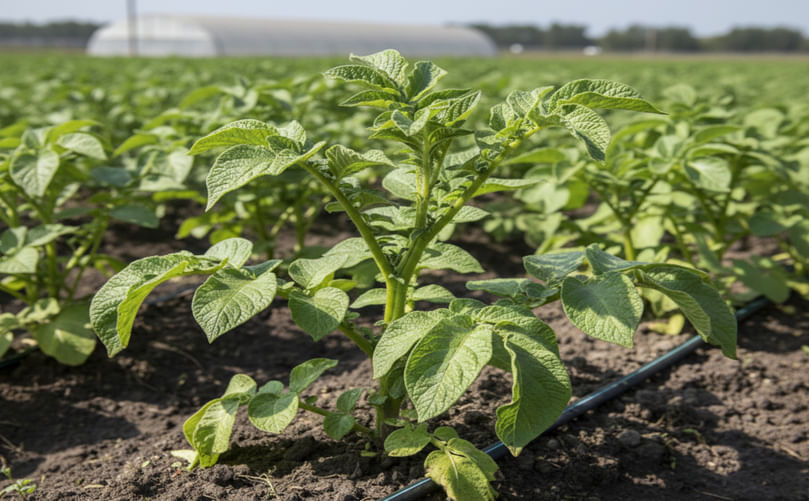
Cupped and Pale Young Leaves from Copper Deficiency in Potatoes
Sufficiency Levels
- Soil (DTPA extract): 0.4–1.5 ppm
- Petiole/tissue (mid-season): 4–15 ppm
Regular soil and tissue testing during the season helps maintain optimal levels and avoid under or over application.
Toxicity Risks
Excess copper often from repeated use of copper-based fungicides can damage roots, cause chlorosis similar to iron deficiency and reduce yields. Plant toxicity typically occurs above 50–100 ppm in soil (symptoms vary with soil type and organic matter). High copper can disrupt uptake of other nutrients and reduce overall biomass.
Soil pH Influence
Copper availability falls at pH >7 due to precipitation and complex formation. Acidic soils generally increase Cu availability and organic matter helps form stable complexes that improve uptake. In high-pH soils, chelated copper formulations are preferred to improve plant availability.
Best Management Practices
- Soil application: Band copper sulfate (CuSO₄, ~25% Cu) at 2–6 kg/ha where soil tests indicate deficiency.
- Foliar application: Use chelated Cu formulations at 0.4–0.6 kg/ha when tissue levels are low; foliar sprays can be tank mixed with fungicides for operational efficiency.
- High-pH soils: Prefer chelated forms (EDTA or amino acid complexes) for better uptake.
- Fungicide stewardship: Rotate and limit copper-based fungicide use to avoid accumulation and phytotoxicity.
- Organic matter: Maintain or increase soil organic matter to buffer Cu availability and reduce antagonisms.
- Monitoring: Combine soil and tissue testing with visual scouting to guide timing and rates.
Nutrient Compatibility
- Antagonists: High manganese (Mn) or phosphorus (P) can reduce copper uptake (~20%).
- Synergies: Copper and zinc (Zn) often complement each other for disease control.
- Organic amendments: May slightly lower tuber Cu concentrations adjust applications based on testing.
- Excess effects: High Cu can shift tissue nutrient balances (e.g., alter P and K levels), so avoid over-application.
Iron (Fe) Nutrition in Potato Cultivation: Functions, Deficiency, Toxicity and Best Management Practices
Role and Importance
Iron is fundamental for chlorophyll synthesis through its role in heme and non-heme enzymes, essential for electron transport during photosynthesis and respiration. It also supports nitrogen fixation in preceding legume rotations and aids in oxidative stress management through catalase and peroxidase enzymes. In potatoes, iron contributes to root exudate activity and enhances rhizosphere microbial balance, supporting overall plant vigor and nutrient cycling.
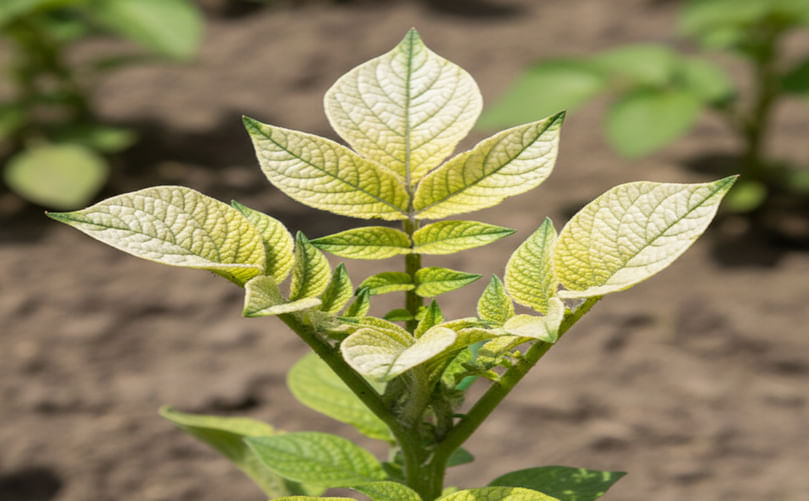
Lime-Induced Iron Chlorosis: Yellow Leaves with Green Veins
Deficiency Symptoms
Iron deficiency first appears on young leaves as bright yellowing with green veins (known as lime induced chlorosis). As it worsens, tissues between veins may become white and necrotic, while leaf tips and margins remain green longest. Deficiency leads to 40–50% reduction in photosynthesis and 20–30% yield loss, often accompanied by stunted growth and poor tuber development.
Sufficiency Levels
- Petiole/tissue: 40–120 ppm
- Deficiency trigger: Soil pH >7.5, even if total Fe exceeds 50 ppm
Regular tissue testing and pH monitoring are essential for maintaining balance.
Toxicity Risks
Iron toxicity is uncommon but may occur in acidic, waterlogged soils leading to bronzing, reduced growth and oxidative stress. Excess Fe can disrupt nutrient balance, particularly with phosphorus and manganese.
Soil pH Influence
Availability of Fe drops sharply above pH 6.5, especially in calcareous soils where bicarbonate fixation occurs. In contrast, highly acidic soils increase solubility, raising toxicity risks. Maintaining an optimal pH around 6.0–6.5 is key for balanced uptake.
Best Management Practices
- Foliar feeding: Apply Fe-EDTA chelate (5–7% Fe) at 2–5 L/ha weekly until greening returns.
- Soil management: Use elemental sulfur or acidifying amendments to gradually lower pH and improve Fe solubility.
- Chelate selection: In high pH soils, use EDDHA-based Fe chelates, which remain stable and plant-available.
- Crop rotation: Include leguminous cover crops to naturally enhance Fe cycling and soil biological activity.
- Organic matter: Incorporate compost or humic substances to improve Fe chelation and uptake stability.
Nutrient Compatibility
- Antagonists: High phosphorus (P), calcium (Ca) or manganese (Mn) can block Fe absorption.
- Synergies: Organic matter and microbial activity enhance Fe availability by 15–25% through natural chelation.
- Management tip: Avoid overuse of phosphate fertilizers in high-pH soils to prevent induced Fe deficiency.
Manganese (Mn) Nutrition in Potato Cultivation: Functions, Deficiency, Toxicity and Best Management Practices
Manganese (Mn) plays a vital role in photosynthesis acting as an activator of Photosystem II for oxygen evolution. It supports nitrogen assimilation through the activation of nitrate reductase and contributes to lignin synthesis, enhancing structural strength and scab resistance in potato tubers. Additionally, Mn is integral to Mn-superoxide dismutase (Mn-SOD) enzymes, which protect plant cells from oxidative stress.
Deficiency Symptoms
Deficiency first appears on young leaves as interveinal chlorosis with grayish spots along the veins. As the condition progresses, necrotic flecks develop, leading to reduced canopy vigor and diminished photosynthetic efficiency.
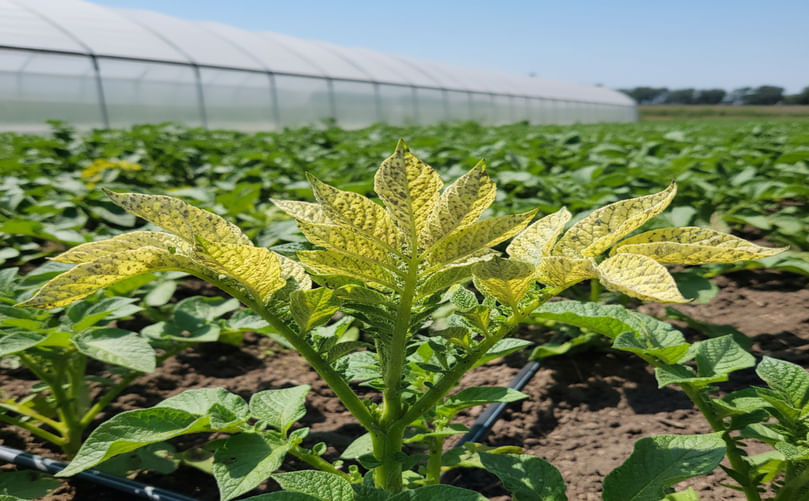
Interveinal Yellowing and Gray Spots from Manganese Deficiency
Sufficiency Levels
- Petiole concentration: 20–60 ppm
- Soil (DTPA extractable): 4–12 ppm
Toxicity
Toxicity symptoms occur mainly in acidic soils (pH <5.5), manifesting as brown spots on older leaves. Potatoes are highly sensitive to Mn toxicity; levels exceeding 80–100 ppm can result in 20–30% yield losses due to root impairment and disrupted nutrient uptake.
pH Effects
Manganese availability is optimal between pH 5.5 and 6.5. It becomes less available above pH 7.5, while excessively soluble under acidic conditions, increasing the risk of toxicity.
Best Management Practices
- Foliar application: Apply manganese sulfate (MnSO₄; 30–35% Mn) at 2–4 kg/ha for rapid correction.
- Soil application: Apply banded MnSO₄ at 5–15 kg/ha in deficient fields.
- Toxicity mitigation: Use liming to raise soil pH and reduce Mn solubility in acidic soils.
Molybdenum (Mo) Nutrition in Potato Cultivation: Functions, Deficiency, Toxicity and Best Management Practices
Role and Importance
Molybdenum is a vital micronutrient for nitrogen metabolism in potatoes. It functions as a cofactor in nitrate reductase, enabling the conversion of nitrate (NO₃⁻) to ammonium (NH₄⁺), which plants can readily assimilate. It also supports symbiotic nitrogen fixation in legume rotations, indirectly improving nitrogen efficiency in subsequent potato crops. Additionally, Mo is involved in sulfur metabolism, enzyme activation and contributes to stress tolerance by maintaining balanced nutrient and redox processes.
Deficiency Symptoms
Deficiency symptoms typically appear on older leaves as pale yellowing with whiptail like leaf distortions. The condition often mimics nitrogen deficiency, but with a distinct feature high nitrate accumulation in the petiole due to impaired nitrate reduction. Affected plants exhibit 15–25% yield losses, smaller tubers and poor size uniformity, particularly in acidic sandy soils.
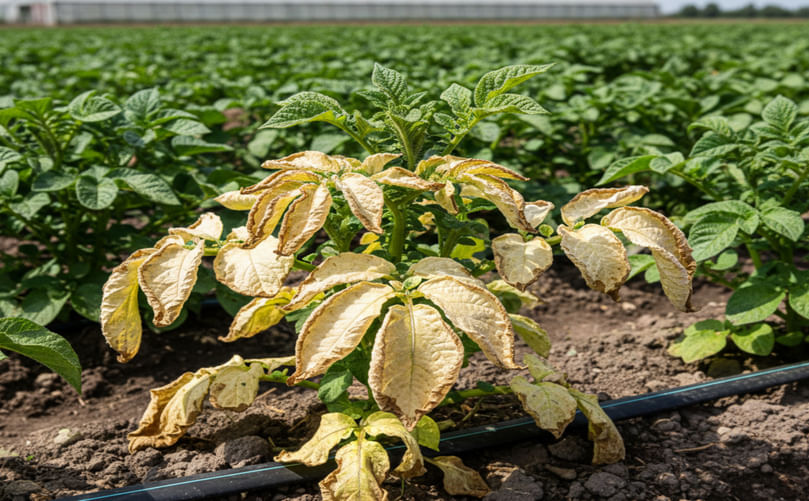
Whiptail Distortion in Molybdenum Deficient Older Potato Leaves
Sufficiency Levels
- Tissue: 0.08–0.6 ppm
- Soil: 0.1–0.3 ppm
Though required in very small amounts, molybdenum is critical for maintaining proper nitrogen assimilation and tuber formation.
Toxicity Risks
Molybdenum toxicity is extremely rare in potatoes with few documented cases. Excessive Mo can interfere with the uptake of copper (Cu) and sulfur (S), but such conditions are uncommon under normal fertilization practices.
Soil pH Influence
Availability of Mo increases in neutral to alkaline soils (pH >6.5) and becomes deficient in acidic sands where fixation limits uptake. Liming acidic soils is the most effective strategy to restore availability, improving Mo efficiency by 20–30%.
Best Management Practices
- Soil application: Apply sodium molybdate (Na₂MoO₄, 39% Mo) at 0.05–0.15 kg/ha before planting.
- Foliar feeding: Use 0.1–0.2 L/ha of sodium or ammonium molybdate during early vegetative growth for rapid correction.
- Seed treatment: Treat seed tubers with Mo-enriched solutions to prevent deficiency carryover.
- pH management: Regular liming of acidic soils enhances availability and supports overall nutrient balance.
- Integration with nitrogen: Ensure Mo is available when using nitrate-based fertilizers to optimize conversion efficiency.
Nutrient Compatibility (Simple Guide)
- Antagonists: High levels of sulfur (S) or copper (Cu) can reduce Mo uptake.
- Synergies: Works with phosphorus (P) and nitrogen (N) to improve nutrient assimilation and enzyme function.
- Management tip: Maintain balanced N ratios and adequate pH for best Mo utilization in potato systems.
Zinc (Zn) Nutrition in Potato Cultivation: Functions, Deficiency, Toxicity and Best Management Practices
Role and Importance
Zinc is an essential micronutrient that activates over 300 enzymes involved in auxin (IAA) synthesis, which promotes cell elongation and proper leaf and tuber development. It plays a crucial role in membrane stability, DNA synthesis, protein formation and antioxidant defense, contributing directly to plant resilience and tuber quality. In potato production, Zn enhances biofortification potential, improving the nutritional value of tubers for human health.
Deficiency Symptoms
Zinc deficiency leads to “little leaf” or rosette formation, where leaves become small, chlorotic and upright with cupped or distorted tips. Plants show tip burn, reduced tuber size and gritty texture, resulting in lower marketable quality. Severe deficiency can significantly reduce yield and vigor due to impaired enzyme and hormone activity.
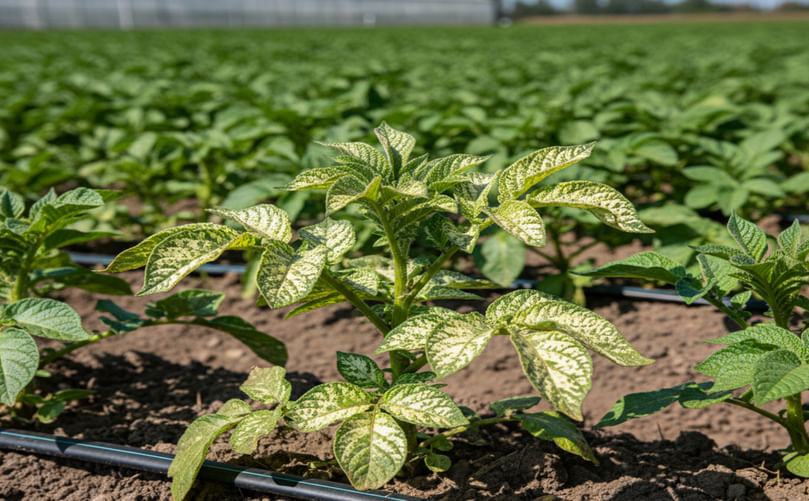
Little Leaf Rosette Syndrome in Zinc-Deficient Potato Plants
Sufficiency Levels
- Petiole/tissue: 15–50 ppm
- Soil (DTPA extract): 0.4–1.2 ppm
These levels are especially critical for high yielding or short duration potato varieties, which have rapid nutrient demands during early growth.
Toxicity Risks
Zinc toxicity is rare but may cause iron like chlorosis at tissue concentrations above 200 ppm. Excess Zn disrupts the uptake of other micronutrients, especially iron (Fe), manganese (Mn) and copper (Cu) leading to nutrient imbalances.
Soil pH Influence
Zinc availability decreases sharply above pH 7.0, especially in calcareous or high phosphorus sandy soils. In alkaline environments, Zn forms insoluble complexes, reducing plant uptake. Maintaining soil pH between 6.0–6.5 ensures better solubility and root absorption.
Best Management Practices
- Soil application: Band zinc sulfate (ZnSO₄, 35% Zn) at 5–12 kg/ha before planting for sustained supply.
- Foliar feeding: Apply Zn-EDTA chelate at 1–3 L/ha every two weeks during early vegetative and tuber initiation stages.
- Seed/tuber priming: Soak seed tubers in 10 mg/L Zn solution before planting to enhance early vigor and root development.
- Chelated forms: Use Zn-EDTA or Zn-DTPA in calcareous soils for improved efficiency.
- Organic matter integration: Incorporate compost or humic substances to improve Zn availability and mobility in the rhizosphere.
Nutrient Compatibility
- Antagonists: High phosphorus (P) or nitrogen (N) (especially when P > 20:1) reduces Zn uptake.
- Synergies: Works with boron (B) to improve tuber formation and yield by 15–20%.
- Interactions: High manganese (Mn) or phosphorus (P) may further limit Zn mobility; maintaining balanced nutrient ratios ensures steady uptake and quality tuber development.
Nickel (Ni) Nutrition in Potato Cultivation: Functions, Deficiency, Toxicity and Best Management Practices
Role and Importance
Nickel is an ultra-micronutrient crucial for the enzyme urease, which converts urea into usable ammonia and CO₂, supporting nitrogen metabolism and preventing toxic urea buildup. It promotes plant vigor in urea-based nutrition systems and enhances tolerance to environmental stress.
Deficiency Symptoms
Leaf tip necrosis resembling “mouse-ear” symptoms, chlorosis and overall stunted growth. In potatoes, deficiency reduces tuber size, nitrogen efficiency and plant vitality.
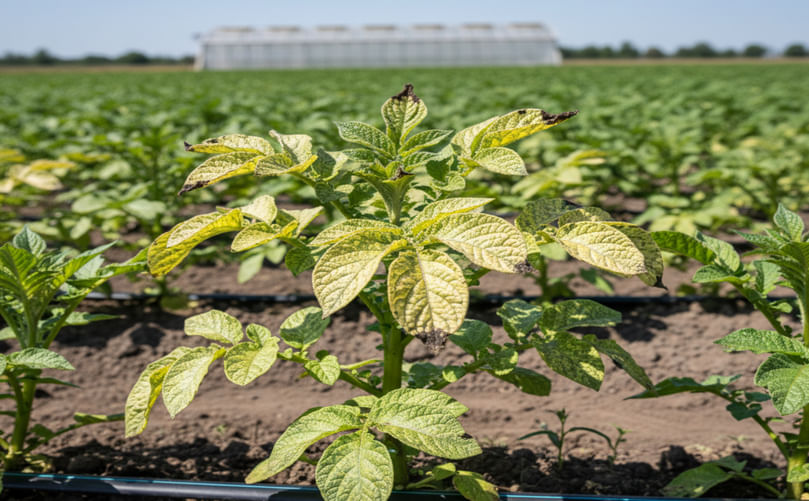
Leaf Tip Necrosis from Nickel Deficiency in Potato Crops
Sufficiency Levels
Tissue: 0.1–5 ppm. Deficiency occurs below 0.1 ppm. Requirements are minimal but essential for urea utilizing crops.
Toxicity
Concentrations above 15–20 mg/L can cause oxidative stress, growth suppression and nutrient imbalance. Some related species tolerate moderate levels through antioxidant activity, but potatoes are more sensitive to excess Ni.
pH Effects
Nickel availability rises in acidic soils, increasing toxicity risks. Managing pH through liming reduces potential buildup and toxicity.
Best Management Practices
Apply foliar NiSO₄ at 0.1–0.5 kg/ha. Incorporate with urea fertilizers to enhance efficiency. Adjust soil pH and organic matter content to maintain balance and reduce metal accumulation.
Nutrient Compatibility
Synergistic with nitrogen for improved metabolism. Excess nickel can interfere with Cu and Zn uptake, disturbing micronutrient harmony.
Soil Testing and Nutrient Diagnosis in Potato Cultivation: Monitoring, Interpretation and Precision Management
Accurate soil testing and diagnosis form the foundation of balanced nutrient management in potato cultivation. Diagnosis combines visual assessment, soil extraction methods (e.g., DTPA for Zn, Cu, Mn, Fe; hot water extraction for B) and tissue or petiole sampling typically conducted at early bloom using the 4th petiole from the tip.
Sufficiency ranges are often adjusted based on nitrogen status (for example, Zn is considered marginal at 10–35 ppm in petioles). Advanced extractants like Mehlich-3 provide better insight into nutrient bioavailability, while digital tools such as Yara Atfarm and geospatial models help predict micronutrient deficiencies across variable field zones.
Monitoring and Interpretation
“Hidden hunger,” or subclinical deficiencies, affects 30–50% of fields, underscoring the need for annual monitoring of key parameters such as pH, electrical conductivity (EC) and organic matter (OM) to prevent nutrient imbalances.
A comprehensive soil analysis for potatoes should include:
- pH: optimal 5.5–6.5
- Organic matter: target 2–4%
- Macronutrients: phosphorus (P), potassium (K), calcium (Ca), magnesium (Mg)
- Micronutrients: zinc (Zn) and boron (B)
- Nitrate testing: to a 2-foot depth for precise nitrogen management
Buffer pH determines lime requirements, while cation exchange capacity (CEC) indicates nutrient retention potential, particularly important in sandy soils.
Micronutrient Testing and Sampling Practices
Micronutrient testing is typically recommended only when deficiency symptoms are suspected; however, routine testing every two years helps prevent toxicity buildup, particularly for elements like B and Zn, which can accumulate over time.
Drone-based NDVI (Normalized Difference Vegetation Index) imaging can detect early chlorosis, enabling targeted sampling and integration with on-site lab kits for rapid analysis.
Research from the University of Minnesota highlights that petiole sampling offers greater accuracy for Fe and Mn assessment than whole tissue analysis as it more closely reflects the plant’s current nutrient status.
Field and Regional Considerations
Soil conditions such as texture, drainage, temperature and nutrient interactions (e.g., high phosphorus levels binding zinc) should be considered when interpreting test results. Sampling is best done in fall or early spring to allow for timely pre-plant amendments.
In Aroostook County, Maine, guidelines recommend boron levels between 0.5 and 1.2 ppm, illustrating the regional variability in optimal nutrient thresholds.
Emerging technologies like robotic soil samplers and advanced laboratory methods (ensuring salinity EC <1 dS/m) enhance precision and representativeness, supporting more sustainable nutrient management in potato systems.

Advanced Soil Testing for Balanced Potato Nutrition
Micronutrient Application Methods in Potato Cultivation: Soil, Foliar, Fertigation and Precision Approaches
Soil Application: Band pre-plant applications of zinc (Zn) and copper (Cu) with 50–75% nutrient use efficiency are recommended to target root zones directly. Broadcast applications are preferred for boron (B) and molybdenum (Mo) to ensure uniform distribution, particularly in sandy soils where leaching risk is high.
Typical application rates range from 0.5–3 kg/ha (elemental basis), adjusted according to soil test results. Incorporate fertilizers through tillage to reduce volatilization and runoff losses. In high pH soils, use chelated forms to improve nutrient stability and availability.
Foliar Application: Chelated forms such as EDTA or DTPA are ideal for Fe, Mn and Zn, achieving 80–95% absorption efficiency. Apply solutions at 2–5% dilution during evening hours under <80% relative humidity to prevent leaf burn. The inclusion of non-ionic surfactants enhances leaf adhesion and absorption.
Pre-sowing seed soaking can stimulate early micronutrient uptake, while biweekly foliar sprays during the vegetative and bulking stages correct mid-season deficiencies rapidly.
Fertigation: Fertigation allows precise and efficient delivery of micronutrients, typically at 0.1–0.6 kg/ha per application through drip or pivot irrigation systems. Water acidification (pH <6.0) helps maintain Fe solubility and prevents emitter clogging.
This method suits irrigated potato systems, enabling split applications synchronized with key growth stages such as tuber initiation and bulking.
Organic and Biological Sources: Organic inputs like farmyard manure, compost and biofertilizers containing PGPR (plant growth-promoting rhizobacteria) can enhance micronutrient solubilization by 20–30%, improving nutrient cycling and availability.
Cover crops such as serradella naturally biofortify tubers, contributing to higher micronutrient density. Compatibility tests should be performed at pH 5.5–6.5 to avoid nutrient precipitation when mixing with other inputs.
Advanced and Precision Approaches: Nano-formulations and controlled release fertilizers increase nutrient use efficiency by 20–30%, minimizing environmental losses. Variable rate technology (VRT), integrated with GPS-based soil mapping, enables site specific dosing for precise nutrient delivery.
Tank mixing micronutrients with compatible fungicides can save time and labor provided the mix is tested for stability.
Considerations and Challenges in Micronutrient Management for Potato Cultivation
Nutrient Interactions and Antagonisms: Micronutrient management in potatoes is complicated by nutrient antagonisms and soil chemical dynamics. High phosphorus (P) levels can bind zinc (Zn) leading to 25–35% nutrient losses, while liming induced pH shifts can alter micronutrient availability. In acidic soils, manganese (Mn) concentrations above 80–100 ppm can become toxic, affecting root function and yield.
Excessive copper (Cu) accumulation from repeated fungicide use may inhibit iron (Fe) uptake, while magnesium (Mg) from certain fungicides can reach up to 40 lb/acre in regions like Florida, causing nutrient imbalances. These interactions underscore the importance of following the 4R nutrient stewardship framework applying the right source at the right rate right time and right place.
Economic and Access Limitations: Micronutrient application costs typically range from USD 15–60 per hectare, often offset by 10–25% yield gains. However, smallholder farmers frequently lack access to soil testing kits, diagnostic labs and digital monitoring tools, limiting precision management. The result is either under or over application, both of which reduce efficiency and profitability.
Environmental and Climatic Challenges: Climatic stressors such as drought can reduce foliar nutrient absorption efficiency by 40–50%, while salinity buildup from irrigation water stresses root systems and restricts nutrient uptake. Overuse of synthetic fertilizers contributes to soil degradation, biodiversity loss and greenhouse gas emissions, pushing growers toward organic and regenerative practices.
In organic farming systems, however, management is restricted by regulations that prohibit chemical interventions making disease control and nutrient correction more difficult. Soil disturbance from hilling and harvesting further challenges soil structure and microbial health.
Monitoring and Sustainability Considerations: Micronutrient buildup can lead to toxicity, so regular monitoring every two years is advised. Sustainable approaches such as balanced fertilizer programs, cover cropping, and reduced tillage help improve nutrient efficiency and maintain soil health.
Advanced tools like drone-based imaging and NDVI analysis assist in detecting early deficiencies, while precise sampling protocols prevent misdiagnosis. Integrating micronutrient management with soil health practices reduces erosion, enhances nutrient cycling and supports long-term productivity.