
Binnen twee jaar heeft de aardappelverwerkende industrie in België een grotere verwerkingscapaciteit dan de Nederlandse.
De grote verwerkingscapaciteit zorgt echter niet voor een hogere prijs voor de telers. Dat zei commercieel directeur Jan van Hoogen van Agrico donderdagavond op een bijeenkomst in Lambertschaag (NH) van de Nederlandse Akkerbouw Vakbond (NAV).
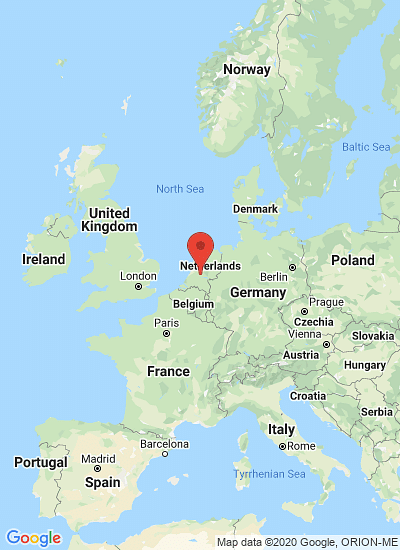
Volgens Van Hoogen kon in 1998 de industrie in Noordwest-Europa 11 miljoen ton aardappelen verwerken. Dat is gegroeid naar 14 miljoen ton per jaar. "Vooral in België is de verwerkingscapaciteit gegroeid. In 2008 konden de Belgen per jaar 2,9 miljoen ton aardappelen verwerken. Nederland zit op een capaciteit van 3,3 miljoen ton. In Nederland komt er geen productiecapaciteit bij, in België wel. Ik denk dat België binnen twee jaar Nederland heeft ingehaald."
Jan van Hoogen: "Belgie haalt Nederlandse aardappelcapaciteit in"
Like to receive news like this by email? Join and Subscribe!
Get the latest potato industry news straight to your WhatsApp. Join the PotatoPro WhatsApp Community!
Uitgelichte Bedrijven
Related News
juli 17, 2026
Dutch Growers and NAO Back Crop Protection Covenant to Advance Sustainable Potato and Plant Sectors
Dutch growers and the Dutch Potato Organisation (NAO) support the Outline Crop Protection Covenant to reduce environmental impacts, improve water quality and boost innovation while promoting legal certainty and sustainable potato production.
juli 17, 2026
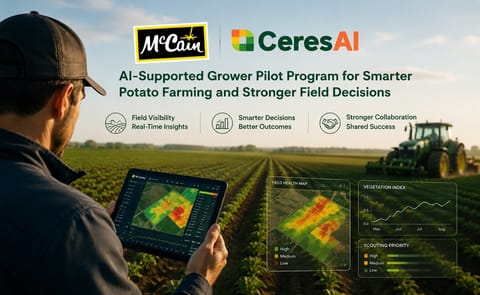
McCain Foods Launches Ceres AI-Supported Grower Pilot Program to Improve Potato Field Visibility and Decision-Making
McCain Foods launches a Ceres AI-supported grower pilot program to improve field visibility and decision-making. The AI solution helps potato growers optimize scouting, coordination, and in-season crop management.
juli 14, 2026
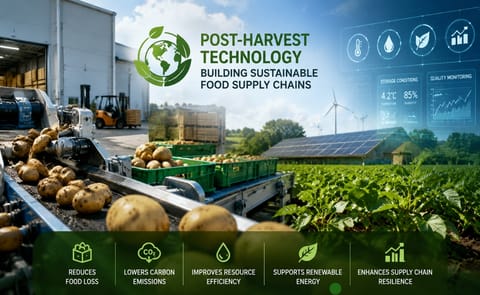
Post-Harvest Technology Emerges as a Key Driver of Sustainable Food Systems and Climate Goals
Advanced post-harvest technologies are helping cut food waste, reduce carbon emissions, improve storage efficiency, and strengthen sustainable food supply chains through AI, IoT, precision sorting, renewable energy, and smart cold storage solutions.