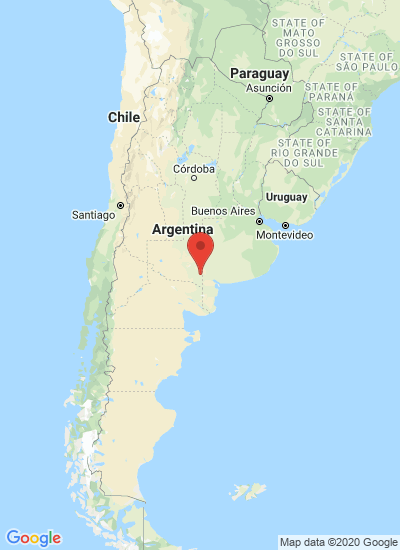

Cinco Hispanos plans a new multipurpose snack production plant in Balcarce, Argentina, strengthening vertical integration with the country’s main potato-producing region.
Argentina: Cinco Hispanos invests in a multipurpose production plant
Cinco Hispanos Compañía de Alimentos, one of the most important snack companies in Argentina, confirmed one of the most significant investments in its history: the construction of a new multipurpose plant in the city of Balcarce, in Buenos Aires province, a strategic hub of the country’s southeastern production region. The project, which will begin in 2026, is presented as a milestone for strengthening the link between industry and primary production.
Strategic location in the heart of the production region
The initiative will be developed on a 7.5-hectare site located just a few meters from the intersection of National Route 226 and Provincial Route 55, an area of high strategic value for agro-industrial logistics. This is the heart of the country’s main raw potato-producing region, a key input for the company’s snack business.
Vertical integration strategy and phased development
Company representatives explained that the new plant responds to a vertical integration strategy aimed at securing raw material supply, reducing logistics costs, and raising quality standards from the source. The project is designed with a five-year growth vision and will be structured in two clearly defined phases.
The first phase, scheduled between 2026 and 2028, will focus on strengthening agricultural and logistics capabilities. During this stage, approximately 50% of the land will be allocated to critical infrastructure, such as raw potato storage and conditioning facilities, cold storage systems, an agricultural machinery center, and areas dedicated to management, quality, and research and development.
This initial phase will also have a direct impact on regional employment, with the creation of more than 15 skilled jobs. These roles will be linked to operational, technical, and management tasks, meaning the investment not only aims to strengthen the company’s competitiveness but also to boost the local economy.
In the second phase, industrial expansion is planned through the incorporation of new manufacturing lines in line with business growth and evolving demand, while maintaining flexibility to adapt to different production scenarios.
Eduardo López, CEO of Cinco Hispanos:
"This plant is not just an investment in infrastructure; it is the cornerstone of our growth strategy for the next decade. The project will allow us to improve logistics efficiency, ensure quality from the field, and have installed capacity to scale production in an agile and competitive way."
This proposal aims to move toward models of greater integration between primary production and industry in order to gain efficiency, predictability, and competitiveness. In a context of high logistics costs and strong competition, investments of this type not only strengthen companies, but also consolidate key production territories, reinforcing the link between the countryside and industry as a driver of national agricultural development.
Like to receive news like this by email? Join and Subscribe!
Get the latest potato industry news straight to your WhatsApp. Join the PotatoPro WhatsApp Community!
Highlighted Company
Related News

October 05, 2026
Covered Bridge Potato Chips Expands in Japan With 12-Container Costco Japan Order
Covered Bridge is expanding in Japan after Costco Japan ordered 12 containers of its potato chips, with eight shipped by late September 2026, following an agreement that made Japan its tenth international market.

October 04, 2026
Uglies Sweet Potato Chips Win Two Major Industry Awards in 2026
Uglies® Sweet Potato Chips won two 2026 industry awards. Its Hot Honey flavor received a Best New Product Award, while its Original, Hot Honey and Spicy BBQ varieties earned Double Gold for taste and packaging.

September 28, 2026
Colombia: PepsiCo to invest USD 1 billion and could strengthen its potato supply chain
PepsiCo will invest USD 1 billion in Colombia over five years to expand production and distribution, an investment that could strengthen its potato supply chain, where it is already the country’s largest industrial buyer at around 84,000 tonnes per year.