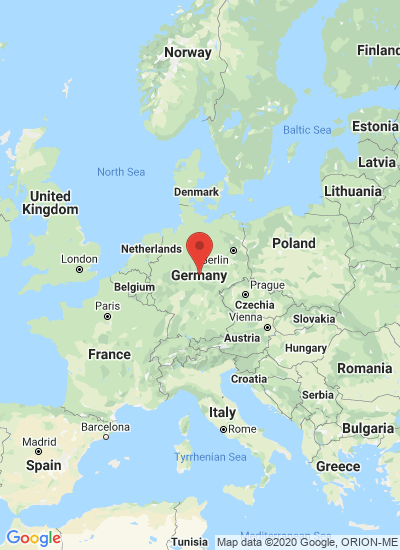

Free potato distribution in Berlin after a record harvest leaves Germany with a massive surplus, prompting citywide giveaways to residents, charities, and institutions as part of the '4000 Tonnes' rescue initiative
Record German Potato Harvest Leads to Massive Free Giveaways Across Berlin

Germans consume an average of 63 kg of potatoes per person each year, according to official statistics. However, an exceptional surplus from the most recent harvest has overwhelmed even Germany's traditionally strong demand for the crop.
Following the highest potato yield in 25 years, farmers have been left with a massive oversupply. The situation has been dubbed the "Kartoffel-Flut" (potato flood), triggering an unprecedented public distribution effort in Berlin, where potatoes are being given away for free across the city.
Free potato distribution across Berlin
The initiative has seen appeals circulated throughout the German capital inviting residents to collect potatoes at designated locations. Soup kitchens, homeless shelters, kindergartens, schools, churches and non-profit organisations have all participated. Berlin Zoo has also taken part, collecting tonnes of potatoes to feed animals instead of sending the surplus to landfill or biogas production. Two truckloads have additionally been sent to Ukraine.
Many city residents, facing rising living costs, have collected potatoes using sacks, buckets, handcarts and backpacks. At one of 174 spontaneous distribution points set up around Berlin, Astrid Marz queued in the Kaulsdorf district to fill a rucksack with potatoes.
Astrid Marz:
"I stopped counting at 150. I think I’ve got enough to keep me and my neighbours going until the end of the year."
The "4000 Tonnes" rescue operation
The distribution effort, known as “4000 Tonnes”, was launched after a farmer near Leipzig was left with 4,000 tonnes of unsold potatoes following a collapsed sale in December. The operation was organised by a Berlin newspaper together with the Berlin-based not-for-profit search engine Ecosia.
Astrid Marz:
"At first I thought it was some AI-generated fake news when I saw it on social media. There were pictures of huge mountains of ‘earth apples’ with instructions to come and get them for free."
The atmosphere at distribution sites has been described as festive, despite freezing winter conditions disrupting travel and public transport across the city.
Ronald, Berlin resident:
"There was a really party-like atmosphere. People helped each other with heavy loads and exchanged cooking tips."
Potatoes regain cultural and culinary attention
The potato surplus has reignited interest in the crop’s historical and cultural role in Germany. Stories have resurfaced about how the potato became a staple food following an 18th-century cultivation order by Prussia’s Frederick II, known as the Kartoffelbefehl (potato decree).
Recipes have circulated widely online, from traditional dishes to creative interpretations. Berlin chef Marco Müller of the Rutz restaurant has promoted innovative uses of the potato, including broths made from roasted peelings. Former German chancellor Angela Merkel’s Kartoffelsuppe has also reappeared in public discussions, with her preference for hand-mashed potatoes noted once again.
Angela Merkel, former German Chancellor:
"I always pound the potatoes myself with a potato masher, rather than using a food mixer."
Nutrition experts have highlighted the potato’s vitamin C and potassium content, countering recent trends that discourage carbohydrate consumption.
Market concerns and environmental debate
Despite the positive public response, some regional farmers have criticised the mass giveaway, arguing that it further devalues the crop and saturates the local market. Environmental groups have pointed to broader structural issues within the food system, comparing the surplus to historical “butter mountains” and “milk lakes” created by production incentives in past decades.
While potatoes are the focus this year, analysts warn that other commodities may follow, with hops previously affected and milk potentially next. Organisers expect one final round of potato distributions in the coming days, with approximately 3,200 tonnes (3,200,000 kg) still available.
Like to receive news like this by email? Join and Subscribe!
Get the latest potato industry news straight to your WhatsApp. Join the PotatoPro WhatsApp Community!
Related News

October 11, 2026
Agrico Shares Key Lessons for Building Strong, Sustainable Potato Sectors
Agrico's Michel de Bruin says strong potato sectors need more than quality seed, highlighting the importance of farmer knowledge, functioning markets, enabling regulations and flexible approaches tailored to local conditions.
October 11, 2026
International Potato Symposium in Madrid Highlights Key Challenges and Opportunities for Europe’s Potato Sector
The 1st International Potato Symposium in Madrid brought together 250 professionals to discuss key challenges and opportunities in production, trade, plant health, innovation and sustainability, promoting stronger European cooperation.

October 10, 2026
India and Netherlands Strengthen Cooperation Through Seed Partnership
India and the Netherlands are strengthening cooperation in the seed sector through the India–Netherlands Seed Partnership. A recent mission included ministerial talks and a seed-sector business roundtable focused on future collaboration.