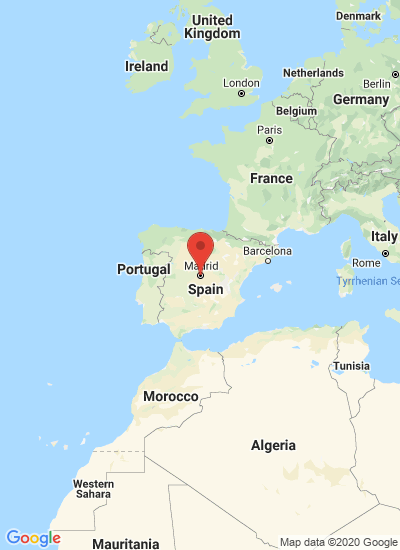

Spain strengthens agri-food border controls, with Algeciras serving as a key inspection hub.
Spain: stronger agri-food border controls with more physical inspections

The reorganization of border inspection services carried out by the Government at the end of 2024 has made it possible to increase the number of physical inspections carried out on agri-food products by 7.5% in one year, according to the Minister of Agriculture, Fisheries and Food, Luis Planas.
Border control of products imported and exported by the European Union (EU) was one of the main topics discussed during the meeting held in Seville between the Minister of Agriculture, Fisheries and Food, Luis Planas, and the Commissioner for Health and Animal Welfare, Olivér Várhelyi.
At a time when the EU has opened a process of reflection on harmonizing and improving the effectiveness of control systems in all Member States due to increased trade flows resulting from new trade agreements, Spain is presenting its new organizational model as a successful reference point.
New system at border control points
Gradually implemented since October 2024 and extended to Spain’s 45 border control points —30 in ports and 15 in airports— the new integrated system, under the functional responsibility of the Ministry of Agriculture, Fisheries and Food, aims to optimize resources, improve coordination, and avoid duplication in order to achieve greater efficiency in inspections.
According to the minister, the results of this reinforcement have been very positive.
The creation of multidisciplinary teams has improved the efficiency of inspection processes. There are currently 581 staff working at border control points, 20% more than four years ago, including 473 inspectors, agronomists, and veterinarians, with the remainder being technical staff.
Planas reiterated that a triple control is carried out at border control points: documentary, identity, and physical inspection of products. The first two are applied to 100% of consignments, while physical checks are conducted randomly and selectively based on risk factors.
Increase in inspections and laboratory analysis
In addition to the overall 7.5% increase in physical inspections, the minister highlighted that inspections of products such as peppers, mangoes, and asparagus have risen by 80% this year.
He also pointed to a 50% increase in laboratory pesticide analysis, covering 400 different plant protection products, as well as viruses, mycotoxins, heavy metals, and other elements.
The minister assured that the strengthening of controls will continue in the coming years and that there will also be a significant improvement in results in 2026.
Visit to the Algeciras border control point
After the meeting in Seville, which in its second part also included the Andalusian regional minister for Agriculture, Fisheries, Water and Rural Development, Ramón Fernández Pacheco, as well as representatives of farmers’ organizations and agri-food cooperatives, the minister and the commissioner traveled to Algeciras (Cádiz) to visit the port’s border control point.
This was the first inspection center to apply the new unified inspection model and is one of the main entry points for agri-food products in Europe, as it serves as the EU’s southern border.
For plant products alone, more than 132,000 import certificates were recorded at this port last year, of which the vast majority —more than 130,000— corresponded to fruits and vegetables, representing 62% of all traffic through Spain’s border control points.
Like to receive news like this by email? Join and Subscribe!
Get the latest potato industry news straight to your WhatsApp. Join the PotatoPro WhatsApp Community!
Related News

September 15, 2026
Survey Finds Americans Increasingly Turn to Food Delivery and Grocery Convenience Services
A FinanceBuzz and Bank of America survey finds 63 percent of Americans use food delivery monthly, while high fees influence ordering decisions, with 68 percent abandoning a delivery order after seeing the final cost.

September 06, 2026
FAO Food Price Index rises in August amid broad-based increases, led by sugar
The FAO Food Price Index averaged 131.1 points in July 2026, up 0.7 points from its June level. Increases in the price indices for cereals, sugar and vegetable oils were partially offset by declines in those for meat and dairy products.

August 07, 2026
FAO Food Price Index edges higher in July on stronger crop prices
The FAO Food Price Index averaged 131.1 points in July 2026, up 0.7 points from its June level. Increases in the price indices for cereals, sugar and vegetable oils were partially offset by declines in those for meat and dairy products.