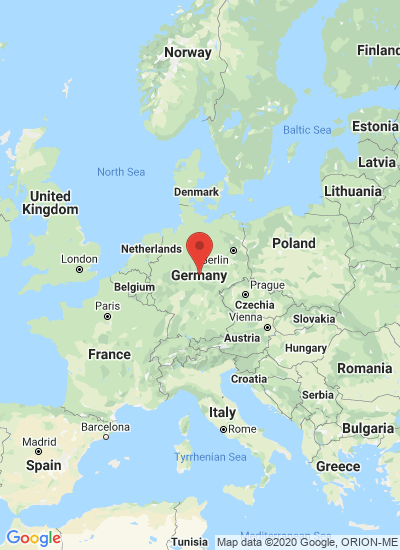

PotatoEurope Germany 2026 highlights how digital technologies, precision machinery, and artificial intelligence are advancing potato planting, crop care, harvesting, storage, and quality sorting across the potato value chain.
PotatoEurope 2026 to showcase digital farming, robotics and AI for potato production

The continuous increase in productivity in potato production can be attributed in no small part to the ongoing mechanization of many farming operations. With the rise of digitalization and the integration of artificial intelligence, the potato sector is now entering the next stage of development, from which further benefits are expected throughout the entire value chain.
Given their strong affinity for technology, many farmers are generally receptive to new ideas emerging from the agricultural machinery industry. However, these technical solutions can only deliver their full potential if they adequately address the agronomic requirements of potato crops and genuinely simplify farm operations. At the same time, changing framework conditions, such as restrictions on fertilizer application and the declining availability of crop protection products, are increasingly influencing the practical implementation of individual production processes in potato farming.
Planting
Many digital applications now enable farmers to optimize field traffic planning for individual fields on their office computers, with field plans subsequently transferred to tractors via USB devices or cloud-based systems. Information for variable row shut-off when planting wedge-shaped fields can also be incorporated, while the creation of tramlines can be automated.
In practical planting operations, maintaining a consistent planting depth and achieving uniform ridge formation are essential quality criteria. These factors not only provide the basis for even crop emergence and subsequent crop development but also influence the harvesting depth required later in the season.
By combining sensors with hydraulic chassis control systems, the distance between the main planter frame and the soil surface can now be maintained at a relatively constant level. Regardless of bunker fill levels or variations in soil carrying capacity, this supports precise furrow opener depth control as well as uniform ridge formation by the various working elements. These technical solutions provide measurable benefits, particularly when farms use seed potatoes with a narrow grading range.
The commonly used grading range of 20 mm results in corresponding variations in planting depth, as larger tubers sink deeper into the planting furrow than smaller ones. In planters with horizontal planting elements, wider grading ranges can also negatively affect the uniformity of in-row spacing. While this may not necessarily reduce yield, it can influence the size distribution of harvested potatoes. According to several potato marketing organizations, however, the market share of narrowly graded seed potato lots still offers considerable room for expansion.
The increasing use of hydraulically driven—and in the future electrically driven—planting elements not only allows individual adjustment of plant spacing in tramline areas but also enables the automatic implementation of field-specific planting maps.
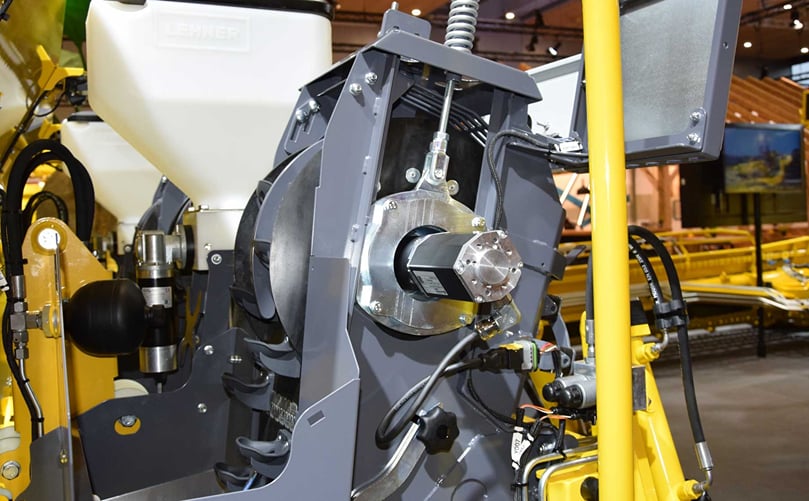
Hydraulically driven planting elements enable precise plant spacing, automated tramline adjustment, and the implementation of field-specific planting maps
Crop Care
The relatively slow early development of potato plants, combined with their comparatively wide row spacing, makes potatoes less competitive against weeds during the early growth stages. Alongside mechanical weed control measures and herbicides, the targeted selection of varieties with faster canopy closure can help address this challenge.
However, periods of highly variable weather conditions often force growers to compromise on cultivation timing. In potatoes, whose root systems extend deep into the sides of the ridges, such compromises can result in long-lasting negative effects on crop development. Conversely, if cultivation is carried out too late, control of larger weeds becomes significantly less effective.
One potential solution is the use of mechanical cultivation equipment with wider working widths. Through autonomous implement steering or individual side-shift control of specific cultivation tools, these machines could operate across multiple tramlines while minimizing crop damage.
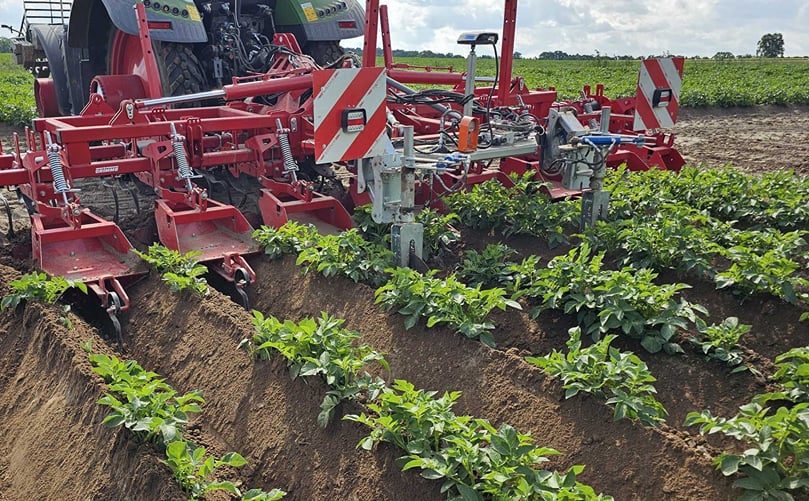
Autonomous implement steering and side-shift control allow cultivation equipment to operate accurately across multiple tramlines while minimizing crop damage
Harvesting and Storage
Although potato harvesting marks the final stage of field operations, undetected errors—particularly damage to tubers—can create significant risks during storage and subsequent marketing. Various sensors and camera systems are being introduced to improve monitoring and optimization of crop flow through harvesting machines. In addition, artificial intelligence is increasingly being used to capture and systematically analyze the information contained in these images.
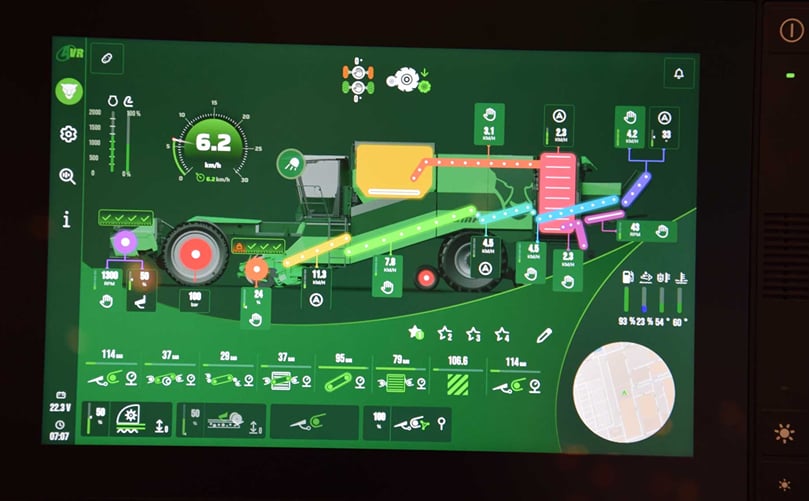
Sensors, cameras, and artificial intelligence monitor potato flow through harvesters to detect tuber damage and optimize harvesting performance
Another long-standing issue associated with potato harvesting concerns the necessity and timing of separating soil, stones and other impurities either during harvesting or during storage intake. Some farms remove stones or separate impurities before planting to ensure efficient harvesting with minimal contamination. In contrast, a growing number of farms are using mechanical, pneumatic and electronic separation systems to remove impurities only during the storage process.
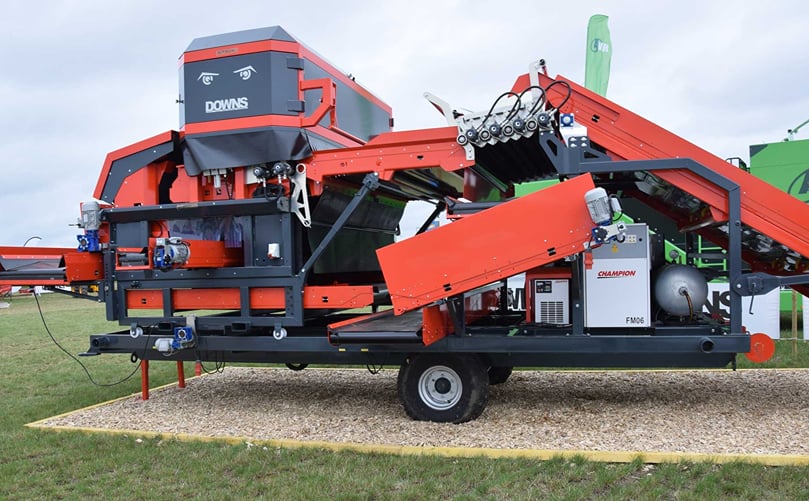
Mechanical, pneumatic, and optical separation systems remove soil, stones, and other impurities during potato storage intake to improve product quality
This trend is being driven by significantly higher harvesting capacities in the field, a shortage of reliable manual sorting labor, and major advances in optical-electronic sorting technology. These developments are closely linked to innovations in image recognition and image processing, increasingly supported by artificial intelligence.
Optical-electronic sorting systems can also be used during unloading from storage to detect impurities and clearly visible defects such as rotten or severely damaged tubers. In principle, these machines are also suitable for quality sorting of unwashed potatoes, provided appropriate software solutions are available.
At present, however, the trend is moving toward dedicated sorting machines that use a larger number of images per individual tuber as the basis for decision-making and that can subsequently divide the product stream into more than three fractions or size classes. Although these systems require substantially higher investments, potato growers associate them with significantly reduced labor requirements and greater flexibility in preparing batches to meet the varying quality and size specifications demanded by customers.
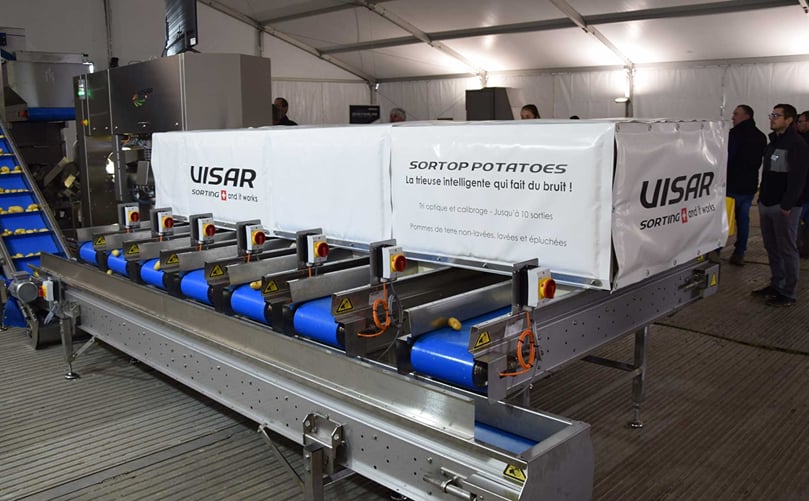
Advanced optical sorting systems analyze multiple images of each potato to classify tubers by quality and size while reducing manual labor
Like to receive news like this by email? Join and Subscribe!
Get the latest potato industry news straight to your WhatsApp. Join the PotatoPro WhatsApp Community!
Highlighted Company

Related News

October 10, 2026
EarthFresh Butter Potatoes Reach More Than 4 Million Households as Retail Demand Surges
EarthFresh Butter Potatoes are gaining momentum across North America, reaching over 4 million households. With acreage up 40% and 100% incremental sales, the premium lineup offers retailers new opportunities to grow the potato category.

October 08, 2026
ICAR-CPRI Potato Varieties Cover Nearly 75% of India’s Potato Area
ICAR-CPRI's Kufri Jyoti, Kufri Bahar, Kufri Pukhraj and Kufri Chipsona-1 together cover nearly 75% of India's potato cultivation area. The varieties have boosted productivity, farmer incomes and the potato processing sector.

October 06, 2026
Dutch Potato Organisation Celebrated Potato Tuesday at Utrecht Central Station on October 6
The Dutch Potato Organisation celebrated Potato Tuesday on October 6 at Utrecht Central Station during the Week of Our Food. Visitors can enjoy free recipe booklets and discover the people behind the Dutch potato industry.