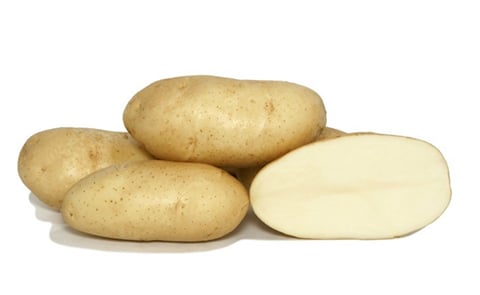

Saskatchewan
Saskatchewan is an important potato growing province on the Canadian Prairies, although its potato industry is considerably smaller than those of Alberta, Manitoba, Prince Edward Island and New Brunswick. Commercial production is concentrated primarily in areas where suitable soils and irrigation are available. Potatoes perform well under Saskatchewan's long summer days and relatively cool nights, conditions that can support strong crop development and are particularly valuable for seed potato production. Lighter textured sandy loam soils are preferred, while crop rotation is used to manage soil-borne diseases and maintain field quality.
Saskatchewan's potato industry serves mainly the seed and table potato markets. The province has developed a reputation for producing high-quality seed potatoes because its northern growing conditions contribute to what the industry calls “Northern Vigor.” Long days, cool nights and relatively low disease pressure can help produce vigorous seed that performs well when planted in other potato-growing regions. Certified seed production is closely regulated, with field inspections and post-harvest testing used to maintain varietal purity and disease standards.
Potato production in Saskatchewan depends heavily on appropriate irrigation, soil management, certified planting material and specialized harvesting and storage infrastructure. In 2024, Saskatchewan had approximately 2,995 hectares of harvested potatoes, producing about 78,744 tonnes. The province also accounted for approximately 1,889 hectares of registered seed potato varieties, representing about 8% of Canada's registered seed-potato area. These figures show that Saskatchewan's importance extends beyond the size of its overall potato crop, particularly through its seed-potato sector.
Potatoes have been grown in Saskatchewan since the early development of agricultural settlement on the Prairies. Historical records from the Provincial Archives of Saskatchewan document potato patches and commercial scale potato harvesting in the province around the beginning of the 20th century, including a potato field near Moose Jaw. Potatoes were also grown in household and farm gardens in different parts of the province, including northern settlements. By the early 1900s, potatoes had become an established horticultural crop alongside Saskatchewan's expanding grain-based agricultural economy.
The industry gradually developed toward specialized seed and table production, supported by Saskatchewan's climate and certification system. By the mid-20th century, organized seed potato production was sufficiently established for the Saskatchewan Certified Potato Growers' Association to hold annual meetings, while certified seed inspection and education became important parts of production. Irrigation later created opportunities for expanding higher value crops, including potatoes. In the 1990s, the province attempted to significantly expand potato production around Lake Diefenbaker through the Saskatchewan Potato Utility Development Company (SPUDCO), with the longer-term objective of developing a processing industry. Although the initiative ultimately failed, it demonstrated the province's potential for irrigated potato production and contributed to later discussion about agricultural diversification and irrigation development.