

Punjab
Punjab is one of India’s important potato-growing states and a major centre for seed potato production, particularly in the northwestern plains. During 2023–24, potato occupied about 117,066 hectares in Punjab and produced approximately 3.24 million tonnes, according to Punjab Department of Horticulture data compiled by Punjab Agricultural University (PAU). The crop is concentrated in districts including Jalandhar, Hoshiarpur, Ludhiana, Kapurthala, Amritsar, Bathinda, Fatehgarh Sahib and Moga. Jalandhar recorded the largest production in the state at about 707,018 tonnes, followed by Ludhiana and Hoshiarpur.
The Doaba region, particularly Jalandhar, Hoshiarpur and Kapurthala, forms the heart of Punjab’s potato industry. Its deep sandy-loam soils, winter temperatures and established irrigation infrastructure provide favourable conditions for potato cultivation. Punjab importance extends beyond fresh-market production because a large proportion of its crop is grown for quality seed potato multiplication and supply to other Indian states. Punjab already supplies seed potatoes to more than a dozen Indian states, making it one of the country's important domestic seed-potato hubs. Kapurthala alone had around 10,000 hectares under potatoes in 2025–26, with approximately 80% devoted to seed production; seed from the district is supplied to markets including West Bengal, Maharashtra and Karnataka.
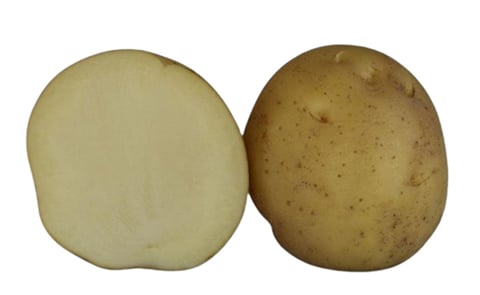
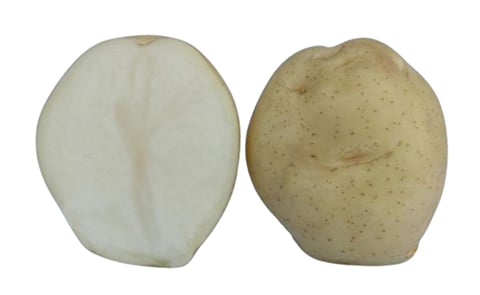
Punjab’s potato production includes table, seed and processing types. Commonly cultivated varieties include Kufri Pukhraj, Kufri Badshah, Kufri Jyoti, Kufri Chipsona-1 and Kufri Jawahar, while Kufri Chandramukhi and other cultivars are also grown in the state. Processing potato cultivation has been increasing, supported by varieties selected for characteristics such as dry matter and processing quality. Potato research and seed development are supported by PAU and ICAR-CPRI’s Regional Station at Jalandhar, while newer varieties developed for Punjab include Punjab Potato-101 and Punjab Potato-102.
An important feature of Punjab’s seed-potato sector is the development of generation-based seed production and traceability. The Punjab Tissue Culture Based Seed Potato Act, 2020 provides for a controlled progression of seed generations from G0 to G4, with certified seed labels carrying QR codes. The system is intended to allow seed lots to be traced through the domestic production chain. Punjab has therefore developed important elements of a modern seed system, although the traceability and certification framework has so far been primarily designed for the Indian market.
Punjab’s strength in seed production does not yet translate into a large international seed-potato export business. India exported about 3,648 tonnes of seed potatoes worth approximately US$1.9 million in 2025, nearly twice the value recorded in 2024, but this remained small compared with India’s approximately US$90.8 million in exports of potatoes for eating. Most of the 2025 seed export volume about 91% went to Senegal, showing that India’s international seed trade is still concentrated in a small number of markets.
For Punjab, international expansion faces several additional requirements. Foreign buyers generally need certification they can recognize, while each importing country can impose its own phytosanitary requirements. Export seed also needs traceability from the production field through the seed generation and shipment. Punjab has begun addressing traceability domestically through its G0–G4 system and QR-coded certification, but the Indian system has not yet been assessed or recognized by importing countries.
Competition from established suppliers is another challenge. Potential markets for Punjab seed potatoes include countries such as Kenya, Nigeria and Ethiopia in Africa, Bangladesh and Bhutan in South Asia, and some Gulf countries. However, these markets already have established relationships with Dutch seed suppliers. In 2025, for example, Kenya’s recorded seed-potato imports were almost entirely supplied by the Netherlands, while the Netherlands shipped about US$3.81 million of seed potatoes to Bangladesh more than twice the value of India’s total seed-potato exports that year.
The development of Punjab’s modern potato sector is closely linked to the expansion of organized agricultural research and improved varieties in northern India. The establishment and growth of agricultural research institutions in the region provided a foundation for systematic crop improvement and improved production practices. PAU traces its institutional roots to the Punjab Agriculture College and Research Institute established at Lyallpur in 1906, later re-established after Partition and shifted to Ludhiana, where it became Punjab Agricultural University in 1962. The university subsequently became an important centre for agricultural research and extension during the Green Revolution period.
Potato research in Punjab has progressively shifted from reliance on established varieties toward regional breeding, quality seed production and specialized processing varieties. Punjab became particularly important as a source of disease-free seed potatoes for other parts of India. PAU reported that the state supplied a substantial share of India's disease-free seed requirement, while its potato breeding programme, initiated in 2016, eventually produced Punjab Potato-101 and Punjab Potato-102, recommended in 2023. More recently, PAU has expanded the programme with additional varieties, while ICAR-CPRI continues research at its Jalandhar regional station on potato breeding, varietal development, crop management and modern seed production technologies.
The seed sector has also moved toward greater formalization and traceability. Under the Punjab Tissue Culture Based Seed Potato Act, 2020, seed production follows successive generations from G0 through G4, with certified seed labels carrying QR codes. The system reflects an effort to maintain seed identity and quality as planting material moves through successive generations. The state has also introduced specific production requirements, including planting deadlines and haulm-cutting requirements designed to support seed quality and disease management.


Make This Page Even Better!
This content was last updated on October 4, 2026
Have a helpful detail to contribute? Catch something that should be corrected?