

Fiji
Potato (Solanum tuberosum) is a minor but commercially important crop in Fiji, where production is primarily directed toward domestic consumption. The crop is grown mainly during the cooler part of the year because Fiji's tropical climate, high temperatures and variable rainfall can restrict tuber development. Government crop guidelines recommend planting from April to early June, with production concentrated in areas where suitable soils, moisture and cooler growing conditions are available.
Fiji's potato sector has historically depended on smallholder farmers, with production occurring in several areas of the Western Division and other suitable locations. The crop faces constraints including bacterial wilt, blight, insect pests, unsuitable seed material, high production costs, weather variability and marketing difficulties. These challenges contribute to inconsistent domestic supply and Fiji has continued to rely substantially on imported potatoes to satisfy market demand. Research on the sector identifies import substitution and increasing local consumption as major drivers for further development of domestic potato production.
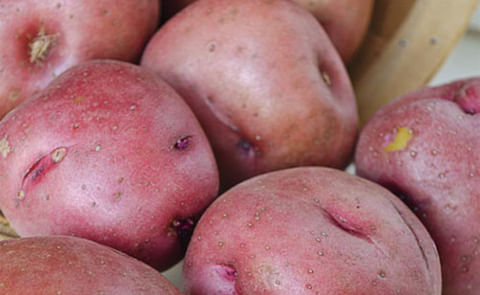
Several potato varieties have been evaluated or grown in Fiji, including Domoni, Red Pontiac, Dalisay, Servance, Sebago and Sequoia. Red Pontiac has been particularly important because of its adaptability and ability to produce reasonable yields under Fiji's conditions. Other varieties such as Red Rascal, Ivory Crisp, Illam Hardy, Nadeem and Rocket have also been introduced, particularly from New Zealand. Improving access to quality seed, selecting varieties suited to Fiji's climate and strengthening crop management remain important opportunities for increasing productivity and reducing dependence on imports.
Potato was introduced to Fiji during the 1860s, associated with European settlement and the development of commercial agriculture. Over subsequent decades, cultivation expanded and contracted depending on market conditions, production costs, weather and pest and disease pressures. Historical agricultural research in Fiji dates back at least to the 1940s, when studies documented planting practices, varieties, soils, pests and diseases affecting potato production. By the 1960s, however, the domestic potato industry had declined considerably because of a combination of production and marketing constraints.
Research and variety improvement subsequently played an important role in attempts to rebuild the sector. Fiji's potato research included fertilizer, seed treatment, spacing and cultivar evaluation, while efforts to identify bacterial wilt resistant material led to the selection of the line CIP 800-226-BR-69-84, later named Domoni, for commercial production. Historical production data also show that Fiji remained a small potato producer compared with major countries in the Asia-Pacific region. More recently, government and agricultural stakeholders have renewed efforts to increase local production, improve seed availability and reduce the country's dependence on imported potatoes.

Make This Page Even Better!
This content was last updated on October 5, 2026
Have a helpful detail to contribute? Catch something that should be corrected?