
The Crucial Role of Irrigation in Modern Potato Cultivation
Irrigation plays a pivotal role in potato farming, directly influencing crop health, productivity and resource efficiency. In recent years amid increasing climate variability and droughts such as those affecting Prince Edward Island growers, where yields dropped significantly due to dry conditions optimized irrigation has become essential for sustaining global potato production, which reached approximately 383 million metric tons in 2023 and continues to grow.
Potatoes are highly sensitive to water stress, which can reduce yields by up to 52% through tuber malformations, increased disease susceptibility such as common scab or Verticillium wilt and quality issues including hollow heart or sugar ends. Conversely, over irrigation exacerbates problems like nutrient leaching, soil erosion and diseases such as late blight and black scurf, potentially lowering marketable yields by 10–15%.
Proper irrigation management has been shown to enhance tuber size, uniformity and quality with research indicating yield increases of 15–30% through precision techniques, while also improving water use efficiency (WUE) by 20–40% to meet rising demands amid water scarcity. This relationship underscores the need for tailored irrigation strategies that balance water input with environmental sustainability.
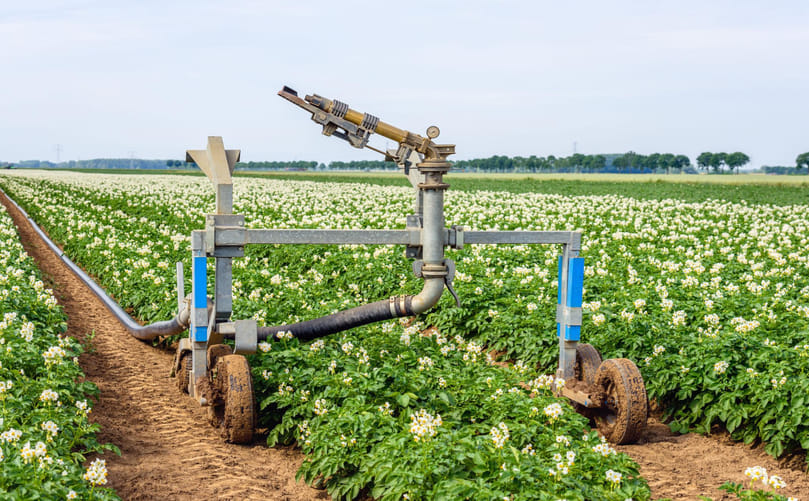
Efficient Irrigation Boosting Potato Growth in the Field
Water Requirements for Optimal Potato Growth
Water is one of the most critical inputs in potato cultivation, directly influencing yield, tuber quality and overall crop uniformity. Potatoes generally require 500–700 mm of water per growing season to achieve optimal yields though this amount varies by climate, variety and soil type. For example, farmers in temperate North European regions often achieve yields of 45–65 tons/ha with around 500 mm of seasonal water, while those in drier Mediterranean zones may need up to 700 mm to reach 70–90 tons/ha.
Throughout the growth cycle the crop’s water requirement changes significantly. During sprout initiation and vegetative growth, potatoes need moderate water inputs of about 25–50 mm per week, while the tuber bulking stage the most water sensitive phase demands as much as 50–100 mm per week. Soil texture strongly influences irrigation scheduling; sandy soils with low water-holding capacity require more frequent irrigation, whereas loamy soils retain moisture for longer durations.
Evapotranspiration (ET) and temperature are key determinants of irrigation frequency. Higher temperatures can increase ET rates by 10–20% in arid and semi-arid regions requiring careful adjustment of irrigation schedules. Recent mapping studies in the North-Western Himalayas, using real time ET estimates, demonstrate how precision water management can maintain yields even under fluctuating climatic conditions.
In contrast, drought tolerant varieties such as UNICA and CIP-Matilde have shown promising results under water limited environments requiring only about 300 mm of water while still producing 15–20 tons/ha. These varieties represent a step toward sustainable potato production helping farmers adapt to increasing climate variability and water scarcity across global growing regions.
Stage-Wise Water Management in Potato Cultivation
Potato growth progresses through distinct stages, each with specific water requirements and water stress at critical points can significantly affect plant development, yield and tuber quality. Effective irrigation management tailored to each growth stage is essential for maximizing productivity.
Vegetative Stage (Post-Emergence): During this phase, rapid foliage growth occurs and moderate moisture is needed to support leaf expansion and root establishment. Water deficits can stunt plant height by 20–30% and reduce overall biomass, while overwatering may encourage excessive vegetative growth at the expense of tuber formation.
Tuber Initiation Stage: This stage is highly sensitive to soil moisture. Consistent water availability is crucial for stolon formation and early tuber set. Water stress can lead to 15–25% fewer tubers per plant, malformed tubers and increased susceptibility to disorders such as knobbiness or secondary growth. Even short-term deficits during this stage can have lasting impacts on tuber number and size with recovery taking days or weeks depending on severity.
Tuber Bulking Stage: The peak water demand phase occurs during tuber bulking, where rapid tuber enlargement takes place. Insufficient moisture primarily reduces yield with potential losses exceeding 40% due to smaller tubers and lower specific gravity. Fluctuating water availability can also cause quality issues such as sugar accumulation and hollow heart. Over-irrigation risks nutrient leaching and diseases like blackleg, highlighting the need for careful monitoring.
Maturation Stage: As tubers mature, irrigation should be reduced to promote skin set and dormancy maintaining soil moisture around 50–60% field capacity. This helps prevent rot and enhances storage quality. Abrupt moisture changes, however, can lead to tuber cracking affecting marketability.

Stage Wise Water Management in Potato
Key Takeaway: Both excessive and insufficient water at any stage can disrupt physiological processes leading to yield reductions of 20–50%. Stage specific irrigation management is therefore critical to optimize water use, maintain tuber quality and minimize recovery times from stress.
Modern and Traditional Irrigation Systems in Potato Farming
Selecting the appropriate irrigation method for potatoes depends on factors like soil type, farm size, water availability and energy costs with each approach offering distinct advantages in efficiency, uniformity and disease control though limitations in setup and operation must be considered.
Furrow Irrigation: This traditional surface method involves channeling water along rows making it cost effective (low initial investment of $100-200/ha) and suitable for small to medium farms with level terrain and clayey soils. Advantages include minimal energy requirements and ease of implementation allowing for natural soil aeration; however, it suffers from low efficiency (50-60% due to high evaporation and runoff), uneven distribution leading to waterlogging in low spots and increased erosion risk, which can reduce yields by 10-20% in sandy soils. It's less ideal for hilly areas and may exacerbate weed growth.
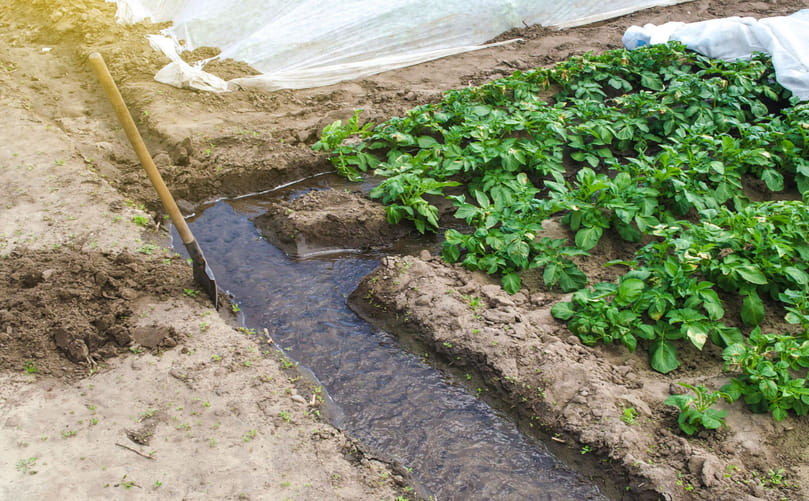
Furrow Irrigation: A Conventional and Cost-Effective Irrigation Method
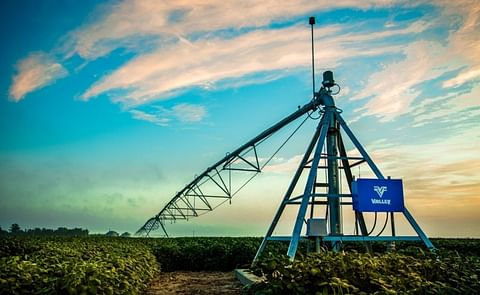
Sprinkler Irrigation: Overhead systems like center pivots or wheel lines deliver water as mist or droplets achieving 70-85% efficiency and providing uniform coverage across uneven fields. Benefits encompass frost protection, foliar nutrient application and adaptability to various scales (USD 400-800/ha setup) with yields often reaching 40-50 tons/ha; drawbacks include higher energy use for pumping, potential leaf wetting that promotes fungal diseases like late blight (increasing incidence by 15-25%) and wind induced losses of 10-20%. Solid-set sprinklers are common for potatoes but require careful timing to avoid runoff.
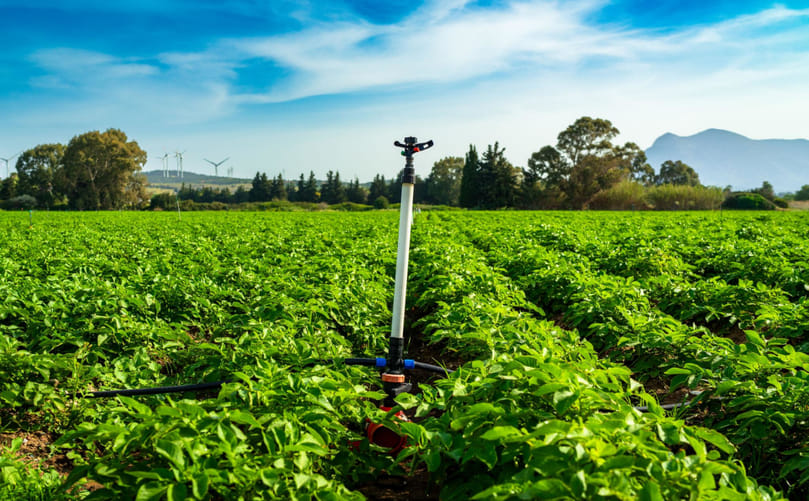
Sprinkler Irrigation Systems in Potato Farming
Drip Irrigation: Precision delivery through emitters targets the root zone, boasting 90-95% efficiency and water savings of 30-50% compared to furrows. Ideal for sandy soils and large operations (USD 1,000-2,000/ha), it minimizes disease by keeping foliage dry, integrates fertigation for nutrient precision (boosting uptake by 20%) and enhances tuber uniformity with yields up to 60 tons/ha; limitations involve clogging from poor water quality, high upfront costs and the need for filtration systems, plus potential harvest interference from buried lines.
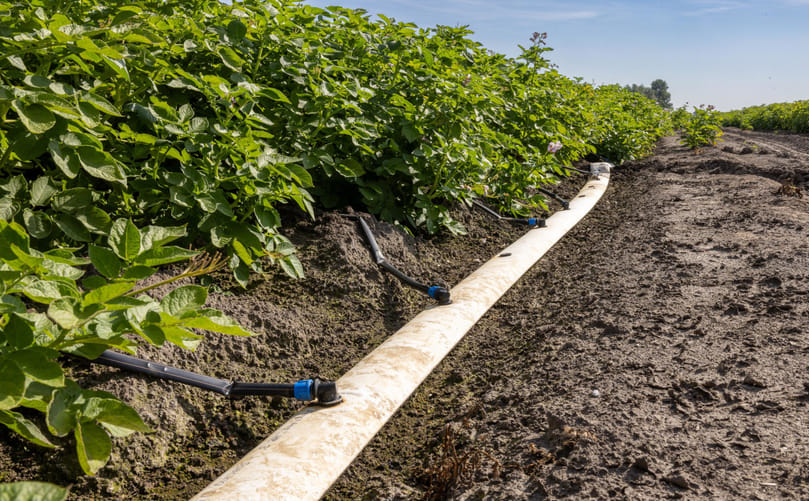
Drip Irrigation
Boom and Rain Gun Irrigation: These overhead variants use traveling booms or large guns for broad coverage with efficiencies around 65-75% and suitability for irregular fields. Advantages include mobility and rapid application (covering 5-10 ha/day), but they share sprinkler's disease risks, have higher evaporation in hot climates (up to 25% loss) and demand significant water pressure making them less efficient than drip for water-scarce areas.
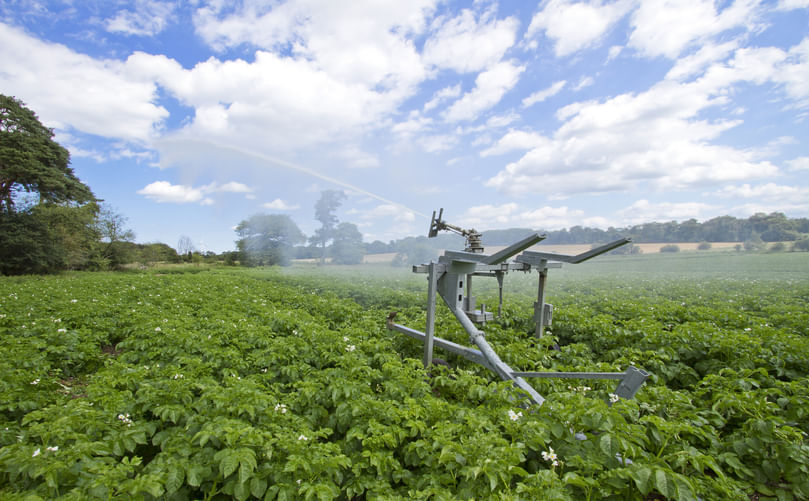
Overhead rain guns (Source: AHDB)
Subsurface Drip Irrigation: An advanced form burying tapes 15-30 cm deep, it offers superior efficiency (95+%) by reducing evaporation entirely and promoting deeper roots. Suited for precision farming on large scales, it cuts water use by 20-40% and disease incidence; however, installation costs (USD 1,500-3,000/ha) are prohibitive for small farms and it risks emitter damage during tillage.
Strategic Irrigation Scheduling for Potatoes
Effective irrigation scheduling is essential for optimizing potato yield, quality and water use efficiency. It involves determining the right timing, frequency and amount of water based on crop needs, soil characteristics and weather conditions.
Frequency and Depth:
- Irrigation frequency varies by soil type: every 2–4 days for sandy soils and 5–7 days for loams during peak water demand.
- Application depths generally range from 20–40 mm, sufficient to replenish the root zone without causing waterlogging.
Soil-Based Scheduling:
- Tools like tensiometers or gypsum blocks help monitor soil moisture tension (e.g., irrigate at 30–50 kPa for loams to avoid stress).
- Soil moisture readings guide precise application to maintain optimal root-zone conditions.
Plant-Based Indicators:
- Canopy temperature and leaf turgor can indicate water stress.
- Observing plant response ensures timely irrigation, especially during critical stages like tuber initiation and bulking.
Atmospheric Methods: Evapotranspiration (ET) estimates are used to replace 80–100% of crop ET, adjusted with the crop coefficient (Kc):
- Emergence: Kc 0.4–0.5
- Bulking: Kc 1.1–1.2
Checkbook or Water Balance Method:
- Tracks water input and loss like a ledger, factoring in rainfall, irrigation and ET.
- Irrigation is triggered when soil moisture deficit reaches 25–50% of available water capacity (AWC), typically 50–75 mm in the top 60 cm.
Advanced Tools for Precision Scheduling:
- Soil moisture sensors (capacitance or neutron probes) at multiple depths (e.g., 15 cm and 45 cm) provide real time data.
- Weather-based models like CIMIS or Penman Monteith equations predict water requirements.
- Simulation software such as SUBSTOR enables predictive irrigation planning.
- In drip systems, for example, applying 20 mm every 7 days (adjusted for ET) can save 20–30% water compared to fixed intervals.
Water Quality Considerations in Potato Cultivation
Water quality significantly affects potato health with key parameters including electrical conductivity (EC), pH and specific ions such as sodium or boron. Potatoes are moderately sensitive to salinity, tolerating EC levels up to 1.7–2.0 dS/m before yields begin to decline, although thresholds may vary depending on variety and soil type.
Saline irrigation (EC >2 dS/m) causes osmotic stress, reducing water uptake and triggering physiological disruptions such as increased reactive oxygen species (ROS), membrane damage and nutrient imbalances. These stresses can lead to stunted growth, reduced tuber yield (10–30% reduction per dS/m increase) and quality issues including rough skin, lower starch content and internal browning. In arid regions, poor quality groundwater further promotes salt accumulation in the root zone, which can halve yields over time if not managed properly.
Management Strategies
- Pre-Season Testing: Analyze both water and soil to determine salinity levels before planting.
- Leaching: Apply water 10–20% above crop needs to flush salts below the root zone, preferably during off-season periods or when low salinity water is available.
- Soil Amendments: Use gypsum (calcium sulfate) to improve soil structure and displace sodium, mitigating sodicity effects on permeability. Recommended application: 2–5 tons/ha based on soil test results.
- Water Blending and Desalination: Mix saline water with fresher sources or employ desalination to maintain EC within acceptable limits.
- Efficient Irrigation: Use drip irrigation to reduce surface evaporation and salt accumulation, enhancing leaching efficiency by 15–25%.
- Monitoring and Variety Selection: Conduct quarterly EC checks and opt for salt tolerant varieties to sustain production in saline prone areas.
Irrigation Management Practices in Potato Cultivation
Effective irrigation management in potato cultivation integrates practices that optimize water use, enhance soil health and support other agronomic activities to maximize yields while minimizing environmental impacts.
Field Preparation and Leveling: Proper field leveling is essential to ensure uniform water distribution. Uneven fields can lead to pooling in low areas, causing waterlogging and uneven crop growth. Techniques like laser guided leveling help reduce runoff by up to 25% and improve water infiltration, especially in undulating terrains promoting more consistent crop development.
Mulching for Moisture Conservation: Mulching with organic materials such as straw or using plastic films helps conserve soil moisture by reducing evaporation by 15–30%. It also suppresses weed growth and moderates soil temperature. This practice is particularly valuable in arid regions, as it maintains consistent moisture levels during critical growth stages of potatoes.
Fertigation and Drip Irrigation: Integrating fertigation with drip irrigation allows precise delivery of nutrients along with water, improving nutrient uptake efficiency by 20–40% while reducing fertilizer requirements. In potato cultivation, nitrogen, phosphorus and potassium are applied in phased doses aligned with crop growth with higher nitrogen during vegetative stages to support canopy development.
Drainage and Irrigation Scheduling: Avoiding waterlogging and runoff is crucial as excessive moisture can aggravate diseases such as late blight and black scurf. Installing effective drainage systems, such as tile drains in heavier soils combined with irrigation scheduling based on real-time soil moisture monitoring, ensures that water is supplied according to crop needs without exceeding field capacity.
Soil Preparation and Health: Good soil preparation enhances water management by improving aeration and water infiltration. Deep tillage, coupled with the incorporation of organic matter, increases the soil’s water holding capacity, particularly in sandy soils, by 10–20%. Adjusting soil pH ensures optimal nutrient availability as prolonged irrigation can lead to acidic conditions that hinder nutrient uptake.
Integration with Pest and Disease Management: Irrigation practices also play a critical role in disease prevention. Avoiding overhead irrigation during humid periods reduces foliar wetness that promotes pathogen development. Early season irrigation maintains soil moisture during tuber initiation, minimizing common scab. Crop rotation with non-host plants such as cereals disrupts waterborne pathogen cycles and improves soil structure for better water management.
Water Use Efficiency and Sustainability: When integrated effectively, these irrigation practices can increase potato yields by 15–25% and improve water-use efficiency by 20–35%, especially when combined with monitoring tools like soil moisture probes. Timing irrigation during early morning hours minimizes evaporation and reduces disease risk, while on-farm water storage reservoirs help capture excess rainfall, supporting sustainable water use in potato cultivation.
Climate-Smart and Modern Approaches in Potato Irrigation
Climate-smart irrigation for potatoes focuses on enhancing resilience to changing weather patterns including increased droughts and erratic rainfall. These approaches combine innovative technologies and sustainable practices to improve water efficiency maintain yields and reduce environmental footprints.
Automation and Sensor-Based Irrigation: Automation and sensor-based systems, such as IoT-enabled soil moisture sensors and automated controllers allow real time irrigation adjustments. By irrigating only when thresholds are met for example, 50–60% field capacity during tuber bulking these systems can save 25–40% of water.
Remote Sensing and Variable Rate Irrigation: Remote sensing using satellites or drones enables field-scale moisture mapping, identifying variability within fields. This supports variable rate irrigation (VRI), applying water precisely where it is needed. In heterogeneous fields, VRI improves irrigation uniformity and can enhance yields by 10–20%.
Deficit Irrigation and Precision Scheduling: Deficit irrigation strategies, which supply 70–80% of full crop evapotranspiration during non-critical stages, conserve water in scarce regions while maintaining tuber yields. Studies show up to 30% water savings without significant quality loss when timed after tuber initiation. Integration with AI-driven models predicting ET from weather data allows precise scheduling and facilitates coordinated fertigation, enabling holistic crop management.
Drought-Resistant Varieties and Efficient Practices: Cultivating drought-tolerant potato varieties that prioritize root and tuber growth during stress, combined with efficient drip irrigation, mitigates yield losses from tuber deformities or scab. On-farm water storage, such as winter rainfall reservoirs, provides sustainable water supplies, reduces pumping energy and buffers against variable rainfall including floods and soil erosion.
Soil and Field Management Enhancements: Soil management strategies enhance resilience to extreme conditions. Adding organic matter increases moisture retention, while ridges prevent waterlogging during intense rainfall. These measures improve both water use efficiency and crop stability under variable climatic conditions.
Innovative Approaches for Sustainability: Modern innovations like agrivoltaics, which combine solar panels with potato fields, provide shade to reduce evaporation while generating energy for irrigation systems. These techniques increase water productivity by 15–25%, promote sustainable resource use and help mitigate climate impacts. Global studies show that yields can improve under elevated CO₂ levels when water requirements are efficiently met.
Impact of Climate Smart Practices: Smart irrigation practices not only boost potato yields but also enhance water efficiency, minimize resource waste and reduce greenhouse gas emissions. Precision irrigation, coupled with AI and drone technologies, enables targeted water application, ensuring high outputs even under challenging climatic conditions.

Sensor based irrigation control in potatoes
Common Irrigation Problems in Potato Cultivation and Their Solutions
Irrigation challenges can significantly impact potato growth, yield and quality. Understanding the causes and implementing targeted solutions ensures efficient water management and healthy crops.
Uneven Growth: Irregular watering caused by poor system uniformity, uneven terrain or inconsistent scheduling leads to uneven crop growth. This can be addressed by scheduling irrigation uniformly using precision tools such as soil moisture sensors and variable rate irrigation (VRI). Field leveling ensures even water flow and adopting drip or sprinkler systems provides consistent distribution across the entire field.
Cracked Tubers: Excess irrigation following drought periods triggers rapid tuber expansion resulting in cracked tubers. Prevent this by gradually increasing water application and using evapotranspiration (ET)-based scheduling to maintain steady soil moisture levels throughout the tuber bulking stage avoiding sharp fluctuations.
Disease Outbreaks: Water stagnation from over irrigation, poor drainage or evening watering prolongs leaf wetness and promotes diseases like late blight and black scurf. Mitigate this risk by improving drainage with tile drains or ridge formation, switching to drip irrigation to keep foliage dry, irrigating early in the morning and limiting irrigation runs to no more than six hours.
Low Yield: Water stress during tuber bulking caused by under irrigation or high evapotranspiration can reduce yields. Maintain soil moisture at 80–90% of field capacity using automated monitoring systems, provide supplementary irrigation as needed and implement deficit irrigation strategies during less sensitive growth phases.
Common Scab: Common scab develops under dry conditions or insufficient moisture during tuber initiation. Control it by ensuring consistent soil moisture, limiting depletion to 20% from tuber set for 4–6 weeks, selecting scab resistant varieties and applying adequate early season irrigation to suppress pathogen activity.
Powdery Scab: Overly wet soils from excessive late season irrigation increase the risk of powdery scab. Reduce its incidence by limiting water applications toward maturity, improving soil drainage, avoiding low lying areas prone to water accumulation and choosing resistant potato cultivars.
Nutrient Leaching: Excessive irrigation can push nutrients beyond the root zone causing leaching losses. Prevent this by limiting irrigation depth to 18–24 inches within the active root zone, applying nutrients through fertigation and conducting regular soil tests to adjust fertilizer levels.
Hollow Heart and Brown Center: Fluctuating soil moisture, particularly cycles of stress followed by excess water can cause hollow heart or brown center in tubers. Stabilize conditions by providing frequent, light irrigations during bulking and monitoring soil moisture with tensiometers, avoiding extreme wet dry cycles.
Tuber Rot or Black Heart: Excess late season irrigation can reduce soil oxygen levels leading to tuber rot or black heart. Avoid this by tapering irrigation to 60–70% of field capacity around vine kills, maintaining soil aeration through proper tillage and organic matter incorporation and allowing adequate drying before harvest.
Irrigation Equipment for Potato Cultivation
Irrigation equipment for potato farming has evolved significantly, driven by climate challenges like the severe droughts in Prince Edward Island that slashed yields by 20-30%, prompting widespread adoption of efficient, tech integrated systems. Equipment selection focuses on water efficiency (up to 95% with precision tools), yield enhancement (10-15% boosts) and integration with IoT for real time management, reducing labor by 40-50% and costs by 25-45%. Key components include pumps, pipes, emitters, nozzles, filters and smart controllers, tailored to methods like drip, sprinkler, furrow, overhead rain guns, boom irrigation and center pivots.
Funding initiatives, such as the USD 500,000 grant to Farming Smarter for potato-specific equipment, underscore investments in advanced tools like variable rate systems and subsurface installations. Rivulis and Netafim lead with potato optimized kits, while retrofit technologies modernize legacy setups for sustainability. Drip irrigation is particularly favored for potatoes as it delivers water directly to the roots, maintaining optimal soil moisture near field capacity, reducing disease risks by keeping foliage dry and supporting light, frequent applications suited to the crop's needs. Sprinkler systems including solid set and wheel line options are common for larger fields, while furrow methods work well in bed planted setups where one furrow can serve two rows.
Pumps and Power Sources in Potato Irrigation
Pumps are the driving force behind modern irrigation systems, ensuring that water reaches potato crops at the correct pressure and volume for optimal growth. Typically, drip irrigation systems operate at 20–50 psi, while sprinkler systems require 40–80 psi. Among the latest innovations, solar-powered centrifugal and submersible pumps have gained popularity for their superior energy efficiency, cutting operational costs by 30–50% particularly in off-grid or remote potato growing regions. These systems provide a sustainable means of water delivery from wells, canals or surface reservoirs, enabling steady irrigation even under challenging climatic conditions.
Centrifugal surface pumps are widely used for furrow and low-pressure drip irrigation. Models such as the Grundfos MQ series (1–2 HP) can meet seasonal water requirements of 500–700 mm, while variable frequency drives (VFDs) offer precise flow control, reducing energy consumption by up to 20%. Surface mounted designs make these pumps ideal for flat terrains and gravity fed systems, where low lift applications are common.
Submersible pumps including Franklin Electric 4-inch models (5–10 HP) are better suited for deep wells in arid zones and are frequently paired with subsurface drip systems. Installed below the water level, they efficiently push water upward, minimizing priming issues and performing reliably across variable water table conditions typical of potato growing areas.
The integration of solar power has revolutionized irrigation efficiency. Systems like the Lorentz PS2 can power 1–5 hectare fields using solar panels and battery storage, delivering up to 40% energy savings and achieving a return on investment (ROI) within 2–3 years. Equipped with AI-optimized inverters for cloudy weather, these solar setups synchronize perfectly with automated irrigation systems maintaining optimal soil moisture through growth stages such as tuber initiation and bulking.
In addition to these systems turbine pumps are employed for high volume sprinkler irrigation, while positive displacement pumps are used in fertigation setups for drip systems ensuring uniform nutrient delivery. These technologies not only enhance nutrient efficiency but also help prevent deficiencies in potassium sensitive potato varieties ultimately supporting healthier plants and higher yields.
Pipes, Tubing and Distribution Lines
Durable, UV-resistant materials ensure longevity (10-15 years) in potato row spacing (75-90 cm). These components form the network that transports water from the source to the field with designs optimized for minimal pressure loss and easy installation in contoured potato beds.
PVC/HDPE Pipes: Mainlines (2–6-inch diameter) for furrow/sprinkler; e.g., Rivulis Tiran parallel tapes (16 mm) for drip with inline emitters spaced 20-30 cm for uniform tuber bulking. HDPE offers flexibility for uneven fields, while PVC provides rigidity for buried lines.
Drip Laterals: Thin wall polyethylene (e.g., Netafim UniRam, 0.2-0.3 mm thick) buried 10-15 cm for SDI, reducing weed pressure and diseases; pressure compensating models maintain 1-2 L/h flow across 100-200 m runs. Subsurface drip (SDI) is particularly effective for potatoes, as it targets the 15-30 cm root zone directly, minimizing surface evaporation and runoff.
Aluminum Pipes: For portable wheel-line sprinklers; lightweight (e.g., 3-4 inch) sections couple quickly for 1-10 ha potato fields. These are ideal for movable systems in rotational cropping, allowing farmers to shift irrigation between potato plots and other crops.
Layflat hoses serve as temporary distribution lines for boom or rain gun systems, offering quick setup for emergency watering during dry spells.
Emitters and Nozzles
Precision delivery minimizes waste; potato specific designs target root zones (15-30 cm deep). These components control the rate and pattern of water application, crucial for avoiding water stress that can lead to irregular tuber shapes or reduced quality.
Drip Emitters: Pressure compensating (PC) types (e.g., DripWorks PC-05, 0.5-1 GPH) prevent clogging in fertigated systems; inline vs. inserted for row crops, yielding 25-30 tons/ha with 20% less water. Inline emitters are integrated into tubing for uniform spacing, while punch-in options allow customization for varying plant densities.
Sprinkler Nozzles: Low angle (e.g., Nelson R2000, 10-20 ft radius) for uniform coverage; LEPA (Low Energy Precision Application) variants reduce drift by 15%, ideal for frost prone potato areas. These can be mounted on risers or drops in center pivot systems, providing overhead watering that also helps with frost protection by forming ice layers on plants.
Furrow Gates/Siphons: Aluminum gates (e.g., McMaster-Carr slide types) or PVC siphons control flow; automated solenoid valves integrate with sensors for surge irrigation, cutting advance time by 20%. Surge techniques alternate wetting and drying cycles to improve infiltration in clay heavy potato soils.
Micro-sprinklers or foggers are emerging for greenhouse potato cultivation, offering fine mist for seedling stages.
Filtration and Maintenance Tools
Prevent blockages from sediment or fertilizers, critical for potato's fine root systems. Proper filtration ensures system longevity and consistent performance, especially in water sources with high particulate matter.
Screen/Disc Filters: Auto-backflush models (e.g., Amiad AMF2, 130-micron) for drip; handle 50-100 m³/h, extending emitter life by 2-3 years. Disc filters excel at removing organic debris, while screens handle larger particles.
Fertilizer Injectors:Venturi or electric (e.g., Dosatron, 1-10% ratio) for chemigation; pH/EC monitors ensure compatibility, reducing salt buildup. These allow simultaneous application of nutrients like nitrogen during irrigation, optimizing uptake in potato's high demand phases.
Flush Valves and Tools: Manual flush kits for laterals; Hoss Tools wheel hoes with plow attachments for furrow creation/maintenance in small-scale potato plots. Pressure gauges and flow meters are essential maintenance tools for monitoring system health and detecting leaks early.
Sand media filters complement disc types for turbid water and UV sterilizers can be added to control algae in recirculating systems.
Smart Controllers and Sensors
Automation is a hallmark, with IoT enabling 35-40% water savings via real time data. These technologies allow for scheduling based on crop evapotranspiration (ET) rates, which vary across potato growth stages from emergence to maturity.
Controllers: Weather-based (e.g., Hunter Hydrawise Pro-HC, integrates ET data) or sensor driven (e.g., Rain Bird ESP-LXME2); app-controlled for zone-specific potato stages with VRI for uneven fields. Variable rate irrigation (VRI) adjusts flow based on soil variability, improving efficiency in large potato operations.
Sensors: Capacitive soil moisture (e.g., Decagon GS1, 0-100% accuracy) or tensiometers (Irrometer, 0-80 kPa); wireless networks (e.g., Arable Mark 3) track EC/pH, alerting via SMS for bulking-stage deficits. Multi-depth sensors monitor moisture at different root levels, ensuring water reaches the tuber zone without over saturation.
Drones/Remote Tech: Multispectral UAVs (e.g., DJI Agras T40) map moisture variability; integrated with controllers for autonomous pivots, adding 12% yields in small pivot potato setups. Satellite imagery and AI analytics further enhance decision making, predicting irrigation needs based on weather forecasts.
Global Market Overview for Irrigation Equipment in Potato Cultivation
The global irrigation equipment market, encompassing systems like drip, sprinkler and pivot tailored for agriculture including potato farming, is experiencing robust growth driven by escalating water scarcity, climate variability and the push for precision agriculture. Potatoes, a water intensive crop requiring consistent soil moisture for optimal tuber development represent a significant segment within this market particularly in regions like North America, Europe and Asia-Pacific where production exceeds 375 million tons annually. Efficient irrigation methods such as drip and sprinkler systems are critical for potatoes, as they enhance yields by 10-40% while reducing water use by up to 40%, minimizing risks like powdery scab and ensuring uniform tuber quality for fresh markets.
Market Size and Growth Projections
The broader irrigation equipment market is projected to expand significantly with drip irrigation a preferred method for potatoes due to its root zone precision leading adoption. Key forecasts include:
Overall Irrigation Equipment: Valued at approximately USD 17.43 billion in 2024, expected to reach USD 26.98 billion by 2030, growing at a CAGR of 7.46% during 2024-2030. This growth is fueled by water scarcity in potato belts (e.g., Idaho, PEI) and subsidies for efficient systems boosting adoption.
Drip Irrigation (Potato-Optimized): Estimated at USD 6.94 billion in 2024, projected to reach USD 13.59 billion by 2030 with a CAGR of 12.1% from 2024-2030. Potato trials show 18-40% yield gains and 40% water savings versus sprinklers, ideal for sandy/clay soils.
Sprinkler Irrigation: Around USD 4.23 billion in 2024 (estimated), forecasted to hit USD 12.76 billion by 2031, at a CAGR of 14.8% during 2024-2031. It provides uniform coverage for frost prone potato fields with LEPA variants reducing drift by 15%.
Micro-Irrigation (Drip + Sprinkler): USD 12.5 billion in 2023, anticipated to grow to USD 27.4 billion by 2034, registering a CAGR of 9.7% from 2024-2034. It targets potato root zones (15-30 cm) and integrates with fertigation for nutrient efficiency.
Irrigation Automation (IoT/Smart): Valued at USD 5.22 billion in 2024, projected to exceed USD 25 billion by 2030 (estimated), with a CAGR of 21.9% during 2024-2030. Real-time ET data supports potato stages (emergence to bulking), enabling 35-40% water savings via sensors.
Regional Insights: Asia-Pacific commands Approximately 29% share, boosted by India's subsidies (55-75% under PMKSY) for potato growers; North America leads growth (CAGR Approximately 9%) due to tech adoption in U.S./Canadian potato hubs. Europe prioritizes sustainability with drip systems covering 75%+ of micro-irrigation for high value crops like potatoes.
Potato-Specific Trends: Drip systems hold 71% of precise irrigation share, outperforming sprinklers in trials with 25% yield boosts and 60 t/ha outputs. Furrow methods endure in small scale setups but trail in efficiency. Funding like Canada's USD 500K grants accelerates potato tailored tech.
Challenges include high upfront costs (limiting smallholders) and awareness gaps, offset by trends like IaaS (Irrigation-as-a-Service) and AI integration for variable rate application in uneven potato fields.
Leading Companies
The market is moderately competitive, with top players focusing on potato optimized innovations like pressure compensating emitters and subsurface drip. Netafim and Rivulis, prominent in potato contexts hold strong positions in drip/micro systems. Below is a comparison of key leaders:
Netafim (Orbia): Headquarters in Israel. Key Potato-Relevant Products: UniRam drip laterals, PC emitters (0.5-1 GPH); SDI kits for buried lines. Market Focus/Strengths: Drip leader; potato yield +25-30% with 20% less water. Est. Global Share (Irrigation Segment): approximately 15-20% (drip/micro).
Rivulis Irrigation: Headquarters in Israel. Key Potato-Relevant Products: Tiran tapes (16mm inline emitters, 20-30cm spacing); variable-rate SDI. Market Focus/Strengths: Potato trials: 18-40% yield boost, 40% water savings vs. sprinklers. Est. Global Share (Irrigation Segment): approximately 10-15% (drip).
Jain Irrigation Systems: Headquarters in India. Key Potato-Relevant Products: Micro-sprinklers, fertigation injectors; potato row drip (75-90cm spacing). Market Focus/Strengths: Affordable for emerging markets; integrated with solar pumps. Est. Global Share (Irrigation Segment): approximately 10% (overall irrigation).
The Toro Company: Headquarters in USA. Key Potato Relevant Products: Precision sprinklers (R2000 series), smart controllers (Hydrawise). Market Focus/Strengths: Sprinkler/drip hybrids; frost protection for potatoes. Est. Global Share (Irrigation Segment): approximately 8-10% (sprinkler).
Rain Bird Corporation: Headquarters in USA. Key Potato Relevant Products: Low angle nozzles (10-20ft radius), ESP-LXME2 controllers. Market Focus/Strengths: Uniform coverage; IoT for potato ET scheduling. Est. Global Share (Irrigation Segment): approximately 7-9% (smart irrigation).
Valmont Industries (Valley Irrigation): Headquarters in USA. Key Potato Relevant Products: Center pivots with VRI; LEPA drops for potatoes. Market Focus/Strengths: Large scale potato ops; GPS integration. Est. Global Share (Irrigation Segment): approximately 10% (pivot).
Lindsay Corporation: Headquarters in USA. Key Potato Relevant Products: Pivot/sprinkler systems; solar integrated pumps. Market Focus/Strengths: Efficiency in off-grid potato fields; ROI in 2-3 years. Est. Global Share (Irrigation Segment): approximately 8% (mechanized).
Hunter Industries: Headquarters in USA. Key Potato Relevant Products: Sensors (tensiometers), solenoid valves for surge furrow. Market Focus/Strengths: Automation for small medium potato plots. Est. Global Share (Irrigation Segment): approximately 5-7% (controllers).
Nelson Irrigation: Headquarters in USA. Key Potato Relevant Products: R2000 nozzles, pressure regulators. Market Focus/Strengths: Low-drift for frost-prone areas; potato uniformity. Est. Global Share (Irrigation Segment): approximately 5% (sprinklers).
T-L Irrigation: Headquarters in USA. Key Potato Relevant Products: Linear move pivots; lightweight aluminum pipes. Market Focus/Strengths: Portable for rotational potato cropping. Est. Global Share (Irrigation Segment): approximately 4% (pivot).