TNA Solutions will preview its tna vacuum de-oiler for lower-fat potato chip production at Interpack 2026
Can You Make a Healthier Potato Chip Without Losing the Crunch? TNA Solutions Says Yes

At Interpack 2026 in Düsseldorf (Hall 14, Stands C56 & D56, 7 to 13 May), TNA Solutions is launching something the potato chip industry has been waiting for: a vacuum-driven de-oiling technology that significantly lowers fat content in batch-fried chips without touching the taste, texture, or crispiness consumers love.
Twan van den Berg, Group Solution Specialist Manager for Processing at TNA Solutions, sat down with us to explain the technology, the industry pressures behind it, and where TNA is heading next. Visitors to the TNA stand can also experience live machine demonstrations and a dedicated IntelliAssist experience zone during the show.
What Has Changed for Potato Chip and French Fry Manufacturers?
If there is one word that defines the state of the potato processing industry today, it is pressure. According to van den Berg, manufacturers across the globe are being asked to deliver more consistent results with less waste, less time, less energy, and fewer operators on the floor. The conversation has fundamentally shifted to total cost of ownership, and it is now the metric driving business success.
On the product side, the demand for better-for-you snacks continues to grow. Consumers want lower fat content and cleaner labels, but here is the catch: they are not willing to give up the taste and crunch they have always enjoyed. On the operations side, rising costs, tighter efficiency targets, and a persistent shortage of skilled labour are making it harder to keep up.
What this means in practice is that producers are no longer shopping for individual machines. They want partners who can deliver across the board: a healthier product, efficiency that runs from one end of the line to the other, equipment that is easy to learn, and support that lasts the full lifecycle. Van den Berg sees the shift towards integrated, performance-driven solutions as the single biggest change sweeping across the industry today.
As a complete line solution partner, TNA continues to support producers in achieving improved efficiency with single-source accountability.
What Does TNA's Single-Source Complete Line Approach Mean in Practice?
TNA has long been recognised globally as a provider of packaging, seasoning, and distribution solutions. About 11 years ago, driven by the vision of its founders Alf and Nadia Taylor to offer total solutions, the company acquired the former Florigo business unit. That move gave TNA complete processing capabilities for the potato industry, covering both the food side (french fries and potato specialties) and the snack side (potato chips). Today, it positions itself as a single partner for the entire production process, from raw material handling through to final packaging.
For producers, this is not just a convenience play. It translates into real, measurable advantages:
- Single-source accountability across the entire line, from design through to daily operation, simplifying project delivery and support
- Faster commissioning and a quicker path to production start-up, enabling faster return on investment
- Unified HMI and control logic that makes operator training simpler and day-to-day operations smoother
- Reduced spare parts complexity, which means lower inventory costs and easier maintenance
- Improved operator efficiency through consistent interfaces across the line
Twan van den Berg, Group Solution Specialist Manager for Processing at TNA Solutions:
"Most of our customers are not really looking for a supplier anymore; they are looking for a true partnership."
Van den Berg is quick to point out that producers evaluating their options should think beyond how any single piece of equipment performs in isolation. The real question is how the whole line will function together, both on day one and years down the road. At Interpack, TNA will bring this idea to life through TNA IntelliAssist, an immersive extended reality platform that lets visitors see firsthand how line-level simplicity drives better performance across product flow, control points, system interaction, and future upgrades. A dedicated section on the booth will allow visitors to experience what IntelliAssist really is and how it can benefit their business.
(Click picture to watch video)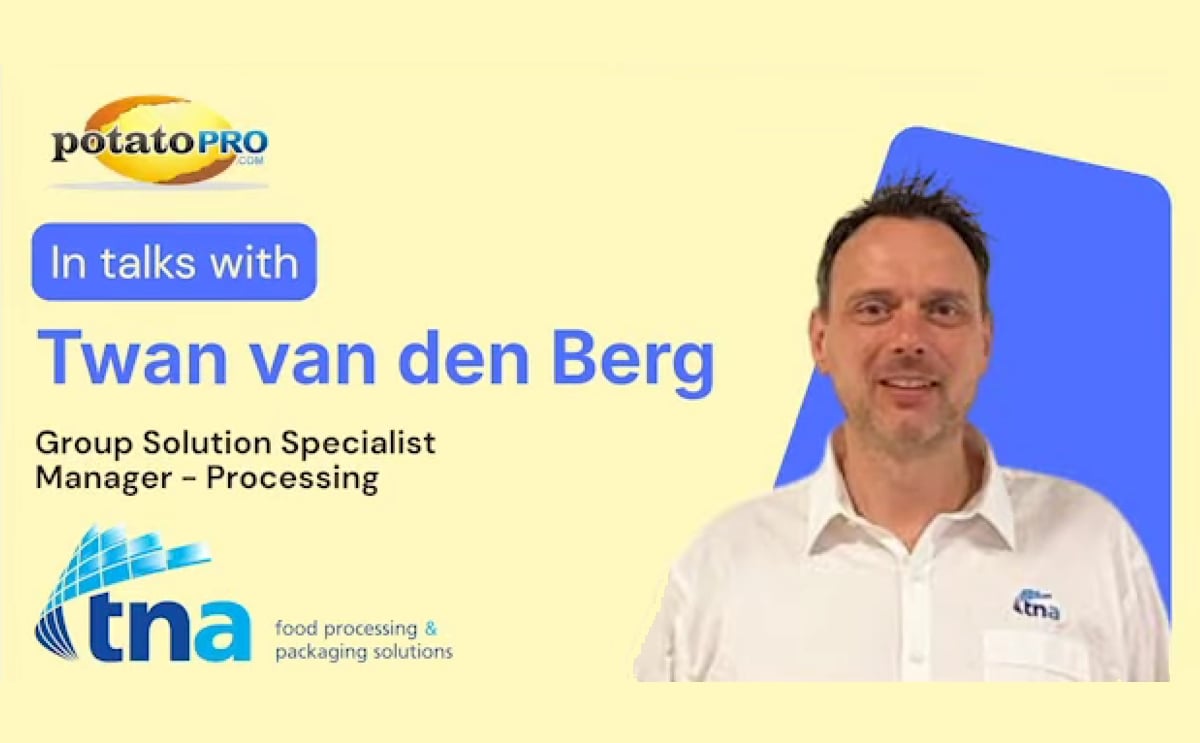
Vacuum De-Oiler That Could Transform Potato Chips Manufacturing | Twan van den Berg | TNA Solutions
Which Industry Trend Is Putting the Most Pressure on Potato Processing Lines?
Van den Berg has been vocal about five trends reshaping the snacking sector: better-for-you products, plant-based diets, acrylamide control, sustainability, and bold flavours. When it comes to potato chip processors specifically, he does not hesitate: the better-for-you trend is the one keeping manufacturers up at night.
The reason is straightforward but the challenge is not. Equipment now has to handle more delicate, oil-sensitive products while still hitting high throughput targets and keeping waste low. Lines that were designed for traditional potato or corn products may simply not be up to the task anymore.
Adding to the complexity, regulatory scrutiny around acrylamide and trans fats continues to intensify. Acrylamide, a naturally occurring substance that forms when starchy foods are cooked or fried at high temperatures, remains a front-of-mind compliance concern. Technologies gaining traction in response include:
- Low-temperature finish frying and vacuum frying for gentler heat application, both of which TNA can provide
- Multi-zone frying, blanching, and hot washing for precise control of temperature, sugar content, and moisture levels in the product
- Pulsed Electric Field (PEF) treatment, which pre-treats raw materials using electrical pulses to permeabilise cell membranes, reducing sugars and moisture before the product ever hits the fryer
PEF technology is proving especially valuable in regions where climate and growing conditions produce a wide variety of potato types. It delivers more consistent colour, supports lower acrylamide formation during cooking, and opens the door to processing higher-sugar or late-season crops that would otherwise be problematic.
Twan van den Berg:
"There is still a gap between consumer expectations and what traditional processes can deliver. That is exactly where newer technologies, such as the vacuum de-oiler, are going to help bridge that gap."
How Does the TNA Vacuum De-Oiler Work?
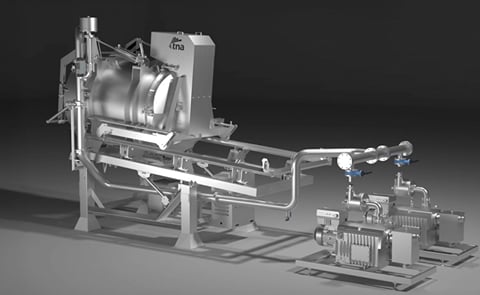
This is where the conversation gets exciting. The TNA vacuum de-oiler is a patent-pending technology built from the ground up for batch-fried potato chips. And it takes a fundamentally different approach from what is currently available on the market.
Van den Berg is straightforward about the competitive landscape: there are existing de-oiling technologies available, but TNA found that they tend to compromise on product quality in some way. That gap is what drove the development of this new concept.
Unlike conventional heated centrifuge systems, the TNA vacuum de-oiler operates at ambient temperature. It uses vacuum-driven extraction to pull oil out of chips after frying, and not just the sticky surface oil that sits on the outside. The technology reaches oil that has been absorbed deep into the potato cells themselves. That is what makes the fat reduction so significant: total fat content drops from approximately 32 to 35% down to the low 20% range, depending on what the customer needs.
Van den Berg notes that it is technically possible to push fat content even lower, but the low 20s represent the "sweet spot" where you get the health benefit without sacrificing the eating experience.
What makes this approach stand out from existing solutions:
- No reheating required. The ambient temperature operation means no further browning and no additional acrylamide formation, problems that can creep in when systems reheat chips after frying. TNA believes that reheating compromises product quality.
- Product quality stays intact. Flavour, texture, and crispiness are preserved.
- Less risk of over-processing and the colour variation that comes with it.
- Greater control over the final product, which van den Berg identifies as one of the most critical parameters for any producer.
Beyond improving nutritional profiles, the vacuum de-oiler also supports more efficient resource use. Recovered oil is filtered and returned to the fryer, helping reduce overall consumption and minimise operational costs. Van den Berg notes that oil filtering is not always required, but TNA offers it as an option within their portfolio.
Twan van den Berg:
"What sets our technology apart is that it operates at ambient temperature. It uses vacuum-driven technology to gently remove oil without further browning or additional acrylamide formation."
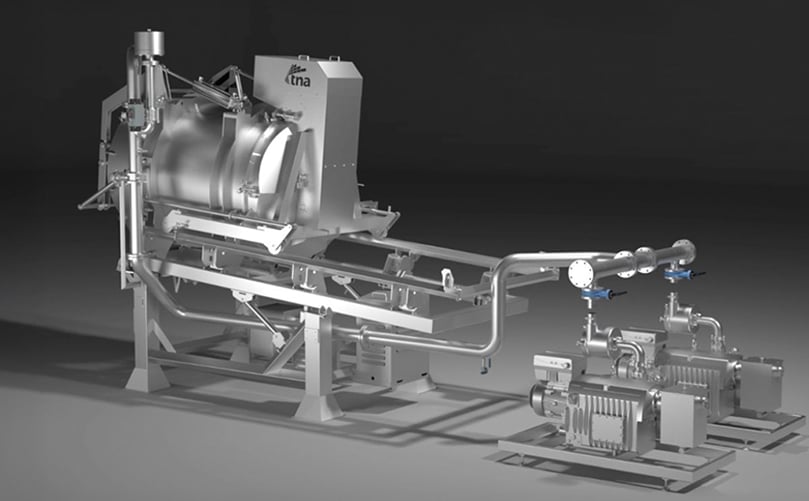
TNA’s patent-pending vacuum de-oiler uses ambient, vacuum-driven extraction to remove both surface and absorbed oil, reducing fat content to the low 20% range while preserving flavour, texture, and crispiness.
Can It Fit into Existing Production Lines?
One of the first questions any producer will ask is whether this means ripping out and redesigning their current setup. The answer, reassuringly, is no.
The vacuum de-oiler has been engineered specifically for batch processing and slots directly into the existing batch rhythm of a frying line without requiring changes to the core process concept. The centrifuge is sized to handle one complete batch straight from the fryer, enabling smooth process flow and minimising disruption to existing operations.
What makes adoption even more practical:
- It is manufacturer-agnostic: The system works with batch frying lines from any equipment supplier, not just TNA. It can be easily implemented in operations where no TNA fryers are installed.
- One unit can serve multiple fryers: A single vacuum de-oiler supports multiple batch fryers operating out of cycle, making it a genuinely scalable solution for high-capacity production environments.
- Flexible configuration: This allows manufacturers to optimise throughput while maintaining consistent processing conditions, which van den Berg sees as an important criteria for customers to meet.
What Is the Business Case?
The investment story for the vacuum de-oiler is compelling because it works on two fronts simultaneously.
On the product side, manufacturers get a credible path to lower-fat potato chips that meet growing consumer demand for healthier snacking, without giving up the taste and texture that keeps customers coming back.
On the operations side, the savings add up quickly. Because the system relies on vacuum rather than reheating, gas consumption drops. The oil extracted from the chips is not wasted either. It is recovered and can be filtered (though filtering is not always necessary), then returned to the fryer, directly cutting oil usage and lowering running costs.
Twan van den Berg:
"It is not just about meeting consumer expectations. It is about improving efficiency and reducing costs at the same time."
What Is Next for TNA in Potato Processing?
Looking beyond Interpack, TNA's innovation roadmap is focused on helping manufacturers navigate an industry that is only getting more complex, while keeping things as simple and efficient as possible. The company is calling this philosophy Innovation Simplified, and it runs through everything TNA is investing in.
Van den Berg circles back to the theme that underpins every conversation TNA is having with its customers right now: total cost of ownership. Being innovative, he says, remains one of TNA's key tasks, whether that means developing new equipment or improving what already exists. Current investment areas include:
- Process optimisation across frying, seasoning, distribution, and packaging
- Resource efficiency to drive down energy, oil, and waste across the full line
- System integration so that every element of a production line functions as one synchronised system
- The Food Technology Center (FTC) in Woerden, the Netherlands, where customers can test and validate new processes in a real-world setting before committing to full-scale production
Twan van den Berg:
"The direction is clear. We want to help manufacturers produce better products more efficiently, and with greater control over their operations."
Like to receive news like this by email? Join and Subscribe!
Get the latest potato industry news straight to your WhatsApp. Join the PotatoPro WhatsApp Community!
精选企业
产品
相关新闻
九月 28, 2026
Urschel与KRONEN将在2026年全球果蔬与花卉展上展示一体化食品加工生产线解决方案
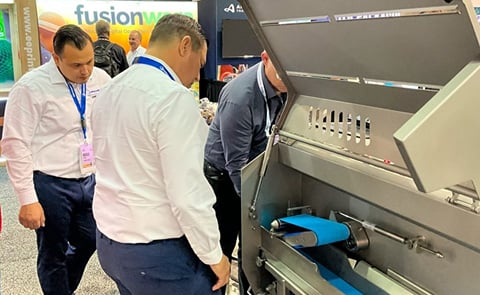
Urschel与KRONEN将在2026年全球果蔬与花卉展上展示切割技术和生产线构建解决方案,包括Little Gem Aspire Dicer和GS 10-2 Slicer,以及用于清洗、干燥和去皮环节的设备。
九月 02, 2026
Ellips Launches CleanFlow Pre-Sorter to Remove Stones, Clods and Defects Before Grading
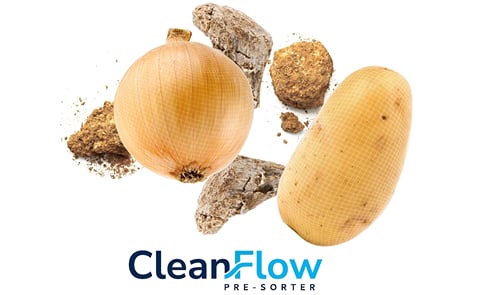
Ellips introduces the CleanFlow Pre-Sorter, using True-AI to remove stones, clods and defects before potato and onion storage or grading, handling up to 120 t/h while reducing equipment wear, storage losses and manual labour.
八月 16, 2026
Laser Sorting Raises the Bar for Quality and Food Safety in Potato Products
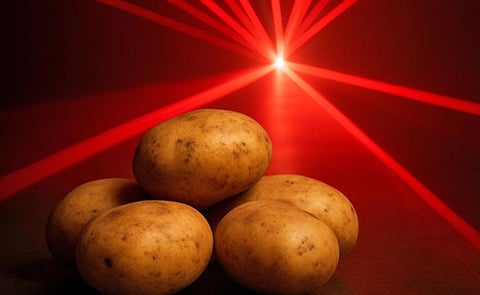
Optimum Sorting's laser technology detects hidden defects, foreign materials, wet centers, soft rot and solanine in potatoes, fries and chips, delivering high-precision sorting with 0.3 mm resolution and up to 3,333 scans per second.