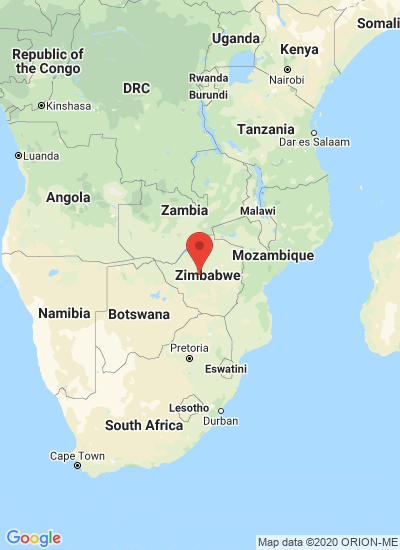
Zimbabwe increased average potato yields to 29 tonnes per hectare during the 2025/26 summer season as the country works to expand production through improved seed, irrigation, storage, and processing capacity.
Zimbabwe Increases Potato Yields as Winter Expansion Faces Seed and Infrastructure Challenges

Zimbabwe's 2025/26 summer season has produced 100,055 tonnes of Irish potatoes from 3,450 hectares, achieving an average yield of 29 tonnes per hectare. This marks an improvement from the previous season's 26 tonnes per hectare on a smaller planted area. The results confirm that Zimbabwean potato farmers, when they have access to adequate certified seed, fertilizer, and irrigation, are achieving yield levels that place them within the competitive range of commercial potato production globally.
However, with only 3,450 hectares under production against a 2026 winter target of 9,000 hectares, the sector remains well below the scale required to become commercially transformative for the major potato-growing regions of Manicaland, Mashonaland East, and the Midlands.
Yield improvement reflects better seed and growing conditions
A yield of 29 tonnes per hectare is significant within the sub-Saharan African potato sector. Zimbabwe's historical average has been approximately 20 tonnes per hectare, reflecting long-standing underperformance compared with the production potential of the country's highland regions. The Nyanga production zone, located in the Eastern Highlands, offers favorable altitude, temperature variation, and soil conditions that consistently support higher yields.
The region is also home to the Seed Services Institute, where Zimbabwe's certified seed potato multiplication program is centralized. The improvement from 26 tonnes per hectare in 2024/25 to 29 tonnes per hectare in 2025/26 reflects a combination of favorable rainfall, improved variety selection among participating farmers, and expanded use of certified seed.
Potatoes offer multiple harvests and higher revenue potential
The crop's commercial importance extends well beyond total production. Short-season potato varieties such as BP1 can be grown up to three times per year under irrigation, providing significantly greater production flexibility than crops such as maize, wheat, or tobacco. Farmers with access to irrigation in areas such as Nyanga, Mutare, and Makoni can generate three separate revenue cycles from the same land within a single year. Historically, potatoes have also delivered stronger returns per tonne than maize when South African imports are effectively managed through tariff protection.
Winter production target requires major expansion
Zimbabwe's 2026 winter production plan targets 9,000 hectares under potato cultivation and 243,850 tonnes of production. Compared with the summer season's 3,450 hectares, achieving this objective requires expanding planted area by approximately 161% within a single production cycle. At the confirmed summer yield of 29 tonnes per hectare, a 9,000-hectare crop would produce approximately 261,000 tonnes, broadly consistent with the official production target after accounting for normal seasonal yield differences. Such an expansion would require either a substantial number of farmers switching from other winter crops to potatoes, significant increases in irrigated potato acreage by existing growers, or a combination of both.
Seed supply remains the primary production constraint
Zimbabwe's potato industry continues to face several long-standing constraints, including: Shortages of certified seed Limited irrigation infrastructure Poor disease control Limited storage capacity Insufficient processing facilities Restricted access to production capital Among these, certified seed availability remains the most technically significant challenge. Zimbabwe's seed potato system is centralized through the Seed Services Institute in Nyanga under the Plant Pests and Diseases Regulations.
Certified seed multiplication is confined to the highland quarantine zone to minimize the risk of introducing potato tuber moth and other destructive pests into commercial production. While this quarantine system is essential for maintaining seed quality, it also limits how quickly certified seed production can expand. Increasing seed availability requires multiple growing seasons, making rapid expansion difficult without either importing seed or accepting quality compromises that could increase disease risk.
South African imports continue to influence market economics
Competition from South African potato imports remains one of the biggest commercial challenges facing Zimbabwean producers. According to the chairperson of the Zimbabwe Potato Council, declining domestic production has been linked to the influx of cheaper South African potatoes. South African growers benefit from larger production scale, more advanced irrigation systems, integrated seed multiplication, and lower production costs.
Imported potatoes reportedly reach Harare wholesale markets at approximately USD 400–500 per tonne, while Zimbabwean production costs are estimated at USD 600–800 per tonne. Without tariff protection or quality premiums supported by grading, storage, and packaging infrastructure, domestic producers struggle to compete on price alone. The Government declared Irish potato a national strategic food security crop in 2012, and tariff protection has periodically been introduced. However, inconsistent implementation has created uncertainty for farmers making long-term investments in certified seed, fertilizer, and irrigation.
Processing could transform the sector
Perhaps the greatest opportunity for Zimbabwe's potato industry lies in expanding domestic processing capacity. Fresh potatoes are highly perishable, subject to price volatility, and vulnerable to import competition. Processed potato products—including potato chips (crisps), French fries, dehydrated flakes, and frozen potato products—offer greater shelf life, stronger branding opportunities, and better protection through import substitution.
Zimbabwe's fast-food industry represents one of the country's most accessible domestic processing markets. Simbisa Brands, through its Chicken Inn, Pizza Inn, and Fish Inn restaurant chains, serves potato products across major urban centers and many secondary towns. A domestic supply chain linking potato producers in Manicaland and Mashonaland East with Simbisa's procurement operations could reduce reliance on imported processed potato products while providing farmers with the stable demand needed to justify investments in irrigation and commercial-scale production.
Looking ahead
Zimbabwe's 100,055-tonne summer harvest demonstrates that the country's potato production system can achieve competitive yields when supported by quality seed, irrigation, and favorable growing conditions. The 243,850-tonne winter production target represents the sector's ambition. Whether that ambition becomes sustainable will depend on expanding certified seed production, improving irrigation, developing storage and processing infrastructure, ensuring consistent tariff policy, and strengthening commercial supply chains that connect growers with domestic food processors.
Like to receive news like this by email? Join and Subscribe!
Get the latest potato industry news straight to your WhatsApp. Join the PotatoPro WhatsApp Community!

相关新闻

九月 07, 2026
Calbee Potato Harvest Ceremony 2026 Highlights Stronger Hokkaido Potato Quality and Yield
Calbee Potato expects Hokkaido’s 2026 processing potato crop to reach 240,000–250,000 tons, with better quality and yields than 2025. Favorable temperatures and rainfall have boosted growth, although heavy rain remains a major harvest risk now.

九月 07, 2026
Aardappeldemodag 2026 Draws Over 4,500 Visitors as Dutch Potato Sector Faces Year of Extremes
Aardappeldemodag 2026 brought over 4,500 visitors to Westmaas amid a challenging year for the Dutch potato sector. The event focused on market pressures, extreme growing conditions, knowledge sharing, machinery and innovation.

九月 07, 2026
EUROPLANT与Finpom强调芬兰种薯优势,应对欧洲日益加剧的病毒压力
Finpom强调芬兰北部在高等级种薯生产方面的优势,因为气候变化提高了欧洲的病毒风险,同时通过LARISSA、JUVENTA、Filipa、FAVOLA和INA扩展了其EUROPLANT产品组合。