

Meet the Tomato Tuber Moth: An Emerging Global Pest
The tomato tuber moth, scientifically known as Phthorimaea operculella (Zeller) (Lepidoptera: Gelechiidae) is one of the most destructive insect pests affecting solanaceous crops worldwide. Although commonly referred to as the tomato tuber moth, it is more widely recognized as the potato tuber moth (PTM) or potato tuberworm because of the extensive economic losses it causes in potato production. The pest attacks both field grown and stored crops making it particularly challenging to manage. Its ability to infest multiple plant parts including leaves, stems and tubers contributes significantly to its economic importance.
The species is considered cosmopolitan and has been reported in more than 90 countries across tropical, subtropical and Mediterranean climates. It is especially prevalent in regions where potatoes and tomatoes are cultivated throughout the year. The pest has established populations in Africa, Asia, Europe, North and South America and Oceania. Its adaptability to diverse environmental conditions has enabled it to spread rapidly across potato growing regions worldwide.
Tomato tuber moth infestations can result in severe yield reductions and significant quality deterioration. In potatoes, larvae tunnel into developing and harvested tubers, creating galleries that reduce market value and increase susceptibility to secondary infections by fungi and bacteria. In tomatoes and other host plants, larvae feed within leaves and stems, reducing photosynthetic capacity and weakening plant vigor. Under severe infestations, crop losses may exceed 50% in the field and reach nearly 100% in poorly managed storage facilities.
The pest's growing importance is linked to climate change, increased international trade and the expansion of potato cultivation into warmer regions. Higher temperatures accelerate insect development allowing more generations to occur annually. Furthermore, inadequate storage facilities and poor post-harvest management practices create favorable conditions for population growth. As a result, Phthorimaea operculella has become a major concern for potato and tomato growers, researchers and agricultural policymakers worldwide.
The Hidden Threat of Tomato Tuber Moth to Potato Growers
Taxonomy and Identification of Phthorimaea operculella
Phthorimaea operculella belongs to the family Gelechiidae within the order Lepidoptera. The species was first described by Zeller and is classified among a group of small moths known for their leaf mining and boring habits. Accurate identification is essential because the pest's symptoms can sometimes be confused with those caused by other insect species, diseases or physiological disorders. Early detection allows growers to implement timely management strategies and minimize crop losses.
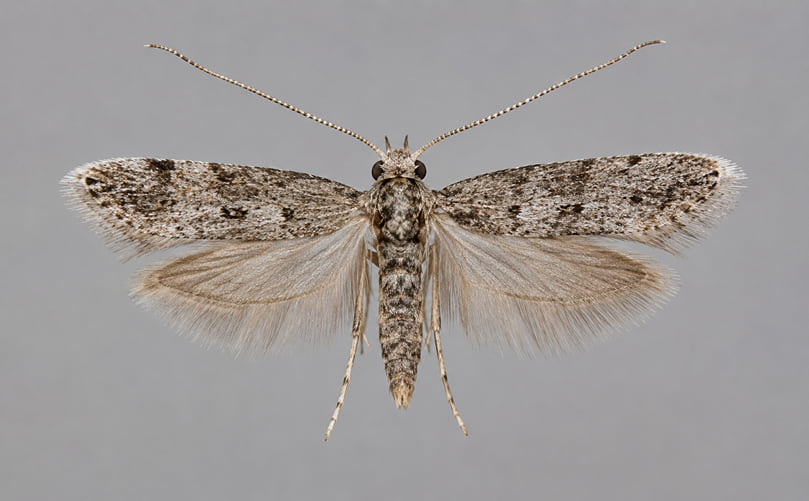
Adult moths are small, slender insects with a body length of approximately 10 mm and a wingspan ranging from 12 to 15 mm. Their forewings are narrow and grayish brown with dark speckles and characteristic markings, while the hindwings are lighter in color and fringed with long hairs. Females often display an X-shaped pattern on their forewings, whereas males typically have two or three dark spots. Adults are primarily nocturnal and remain hidden during the day becoming active at dusk for mating and egg laying.
The eggs are tiny, oval and smooth measuring about 0.4–0.6 mm in length. Freshly laid eggs appear pearly white or creamy yellow and gradually darken before hatching. Females deposit eggs individually or in small groups on the undersides of leaves, stems, soil surfaces, plant debris and exposed potato tubers. Their small size makes them difficult to detect without careful inspection.
Larvae are the most damaging stage of the insect's life cycle. Newly hatched caterpillars are pale yellowish white with dark brown heads, while mature larvae become greenish, pinkish or grayish white and reach approximately 10–12 mm in length. They create characteristic mines in leaves, tunnels in stems and galleries within tubers. Pupae are initially cream colored and later turn brown as they mature. Pupation occurs within silken cocoons found in soil cracks, plant debris, storage structures or occasionally inside damaged tubers. Monitoring for leaf mines, frass deposits, wilting shoots and tuber entry holes combined with pheromone trapping, provides effective early detection.
Host Plants of Tomato Tuber Moth: Understanding Its Preferred Targets
The tomato tuber moth primarily attacks members of the Solanaceae family and is considered an oligophagous pest due to its preference for a relatively narrow range of host plants. Among all hosts, potato (Solanum tuberosum) is the most economically important because it supports pest development both in the field and during storage. The ability of larvae to infest underground tubers makes potatoes particularly vulnerable to damage.
Tomato (Solanum lycopersicum) is another major host and serves as an important source of food and reproduction for the pest. Larvae feed on leaves, stems, fruits and other plant tissues, creating mines and tunnels that reduce plant productivity. Eggplant (Solanum melongena), pepper (Capsicum spp.) and tobacco (Nicotiana tabacum) are also commonly attacked, especially in regions where these crops are grown in close proximity to potatoes.
Several wild solanaceous species act as alternative hosts and reservoirs for pest populations. Black nightshade (Solanum nigrum), jimsonweed (Datura stramonium) and other weeds provide suitable habitats where the insect can survive between cropping seasons. These alternative hosts often contribute to population persistence and can serve as sources of infestation for commercial crops.
More than 60 plant species have been reported as potential hosts of P. operculella. However, potatoes and tomatoes remain the most severely affected crops. The pest's broad host range enhances its ability to survive under diverse agricultural conditions and complicates management efforts. Effective weed control and crop sanitation are therefore important components of integrated pest management programs aimed at reducing pest reservoirs and minimizing reinfestation.
The Life Cycle of Tomato Tuber Moth: From Egg to Destructive Pest
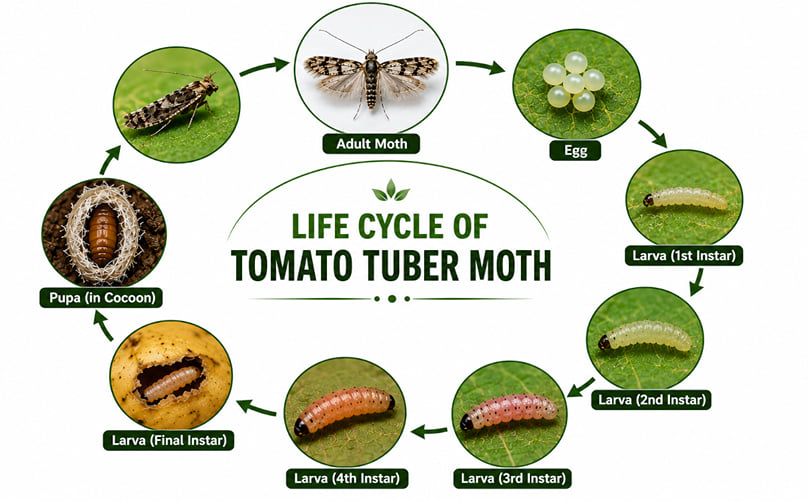
The life cycle of Phthorimaea operculella consists of four distinct stages: egg, larva, pupa and adult. Developmental duration varies depending on temperature, humidity and host plant quality. Under favorable environmental conditions, the insect can complete its life cycle within three to five weeks allowing multiple generations to occur each year. This rapid reproductive capacity is one of the key reasons for its pest status.
Female moths can lay between 50 and 200 eggs during their lifetime although fecundity may exceed 250 eggs under optimal conditions. Eggs are deposited on leaves, stems, soil surfaces, plant debris or exposed tubers. The incubation period typically ranges from 3 to 9 days with higher temperatures accelerating embryo development. Newly hatched larvae immediately begin searching for feeding sites and quickly penetrate plant tissues.
The larval stage consists of four instars and represents the period during which economic damage occurs. Larvae feed within leaves by creating mines, bore into stems and tunnel extensively through potato tubers. Feeding activity generally lasts between 8 and 24 days depending on environmental conditions. The concealed feeding habit protects larvae from natural enemies and reduces the effectiveness of contact insecticides making management more challenging.
After completing development, mature larvae leave feeding sites and pupate in silken cocoons located in soil cracks, plant residues, storage structures or occasionally within tubers. The pupal stage may last from 6 to 30 days. Adults emerge, mate shortly after emergence and typically live for 7–15 days. Optimal development occurs between 25 and 30°C, while temperatures above 32–35°C or prolonged exposure to cold conditions can negatively affect survival. Because the species lacks a true diapause stage, populations can remain active throughout the year in warm climates, producing between 2 and 8 or more overlapping generations annually. This continuous reproductive potential makes the tomato tuber moth a persistent and economically significant pest of potato production systems worldwide.
Understanding the Life Cycle and Development of Tomato Tuber Moth
From the Andes to the World: The Global Expansion of Tomato Tuber Moth
The tomato tuber moth, Phthorimaea operculella (Zeller) is a cosmopolitan insect pest believed to have originated in the Andean regions of South America, particularly Peru and Bolivia, which are recognized as the center of potato domestication. From its native range, the pest has spread worldwide through the movement of infested potato tubers, seed potatoes and other solanaceous planting materials. Today, it is established in more than 90 countries and is considered one of the most important insect pests of potatoes globally.
The pest occurs throughout tropical, subtropical and Mediterranean regions where environmental conditions favor its development. It is widely distributed across South America, Central America, North America, Africa, Asia, Australia and parts of Europe and Oceania. Major potato producing countries affected by the pest include India, China, Pakistan, Egypt, Kenya, Peru and several Mediterranean nations. In the United States, the pest has been reported in numerous states, particularly in warmer regions where climatic conditions support continuous development.
Climate change is contributing significantly to the expansion of the tomato tuber moth. Rising temperatures, milder winters and changing rainfall patterns are enabling the pest to establish populations in areas previously unsuitable for its survival. Predictive climate models indicate that by 2050, the species may expand further into temperate potato growing regions, resulting in increased population densities and a greater number of generations per year.
International trade also plays a major role in the long-distance dispersal of the pest. Infested potato tubers transported for consumption, processing or planting can introduce the insect into new regions. Although cold winters still limit permanent outdoor establishment in some high latitude areas, the pest can survive in storage facilities, protected cultivation systems and favorable microclimates. Consequently, strict phytosanitary regulations and quarantine measures remain essential for preventing further spread and protecting potato production systems worldwide.
Why Tomato Tuber Moth Is an Increasing Threat to Global Potato Production
Phthorimaea operculella is becoming an increasingly important pest due to climate change, expanding potato cultivation and growing international movement of planting material and agricultural commodities. Warmer temperatures can accelerate development, shorten generation times and increase annual population growth in many regions.
Climate-based prediction models suggest that suitable habitats for the pest may expand into previously less favorable areas, increasing the risk of establishment and economic damage. Increased trade in seed potatoes and other solanaceous crops also facilitates long-distance dispersal and accidental introductions.
The concealed feeding behavior of larvae often allows infestations to remain undetected until significant damage has occurred. In addition to direct feeding losses, larval tunneling creates entry points for secondary pathogens, reducing marketability and storage quality.
The combination of expanding distribution, insecticide resistance and storage related losses makes P. operculella a growing threat to potato production, food security, and international trade. Strengthening phytosanitary measures, research efforts and IPM adoption will be critical for future management.
Are Tomato Tuber Moth and Potato Tuber Moth the Same Pest?
The terms "tomato tuber moth" and "potato tuber moth" generally refer to the same species, Phthorimaea operculella (Zeller). The different common names reflect the crop on which damage is most commonly observed rather than any biological or taxonomic difference. The species attacks a wide range of solanaceous hosts, including potato, tomato, eggplant, tobacco and several wild relatives.
The insect exhibits the same life cycle, host preferences, feeding behavior and management requirements regardless of whether it is infesting tomato or potato crops. Larvae can mine leaves, bore into stems, tunnel through potato tubers and occasionally damage tomato fruits. Because of these similarities, monitoring and management strategies are largely the same across affected crops.
However, P. operculella should not be confused with other potato tuber moth species such as Symmetrischema tangolias or Tecia solanivora, which differ in geographic distribution, host range and management requirements. Accurate identification is essential for implementing appropriate monitoring, quarantine and control measures.
How Tomato Tuber Moth Damages Potato Plants and Tubers
The larval stage of Phthorimaea operculella is responsible for all economically significant damage. Newly hatched larvae initially feed within leaves, creating irregular mines between the upper and lower epidermal layers. These leaf mines reduce photosynthetic activity and weaken plant growth, although foliar injury alone rarely causes severe yield losses unless infestations are exceptionally high.
As larvae mature, they may tunnel into stems and petioles, disrupting water and nutrient transport within the plant. Stem feeding often results in wilting, drying of shoots and reduced plant vigor. Such damage can be particularly severe in young potato plants, where growing points may be destroyed.
The most destructive injury occurs when larvae bore into developing potato tubers. Entry is often facilitated through exposed tubers, soil cracks or direct oviposition on tuber surfaces. Larvae create extensive galleries filled with frass, silk and feeding debris, rendering tubers unsuitable for fresh markets and processing industries.
Tuber damage also creates entry points for secondary fungal and bacterial pathogens leading to rot and rapid deterioration. Under severe infestations, field losses may range from 30% to 70%, while post-harvest losses in poorly managed storage facilities can approach 100%. The pest's ability to damage crops both before and after harvest makes it one of the most economically important potato pests worldwide.
Recognizing Tomato Tuber Moth Infestations in the Field
Early infestations are often identified by the presence of leaf mines appearing as translucent blotches or irregular tunnels within leaf tissues. As feeding progresses, mined areas may dry out, collapse and develop visible holes. Severe infestations can reduce canopy development and overall plant vigor.
Larval feeding within stems and petioles may cause wilting, shoot dieback and stunted growth. Dark colored frass and silk webbing are commonly found near feeding sites and serve as useful diagnostic indicators. Fields with high infestations often exhibit patchy growth and premature plant decline.
Potato tubers infested by tomato tuber moth larvae typically display small entry holes, often surrounded by frass and silk. Internal inspection reveals winding tunnels filled with larvae, pupae and feeding residues. Secondary infections frequently develop within damaged tissues, accelerating tuber deterioration.
Effective field diagnosis requires a combination of visual scouting and monitoring tools. Regular inspections should focus on identifying leaf mines, stem damage, frass deposits and tuber injury. Pheromone traps placed throughout fields and storage facilities provide valuable information on adult moth activity and population trends. Early detection is essential because larvae remain concealed within plant tissues making control more difficult after infestation becomes established.
The Economic Cost of Tomato Tuber Moth Infestations
The tomato tuber moth causes significant economic losses throughout the potato value chain. Under severe infestations, field yield reductions commonly range between 30% and 70%, depending on environmental conditions, crop management practices and infestation levels. In storage facilities lacking proper protection measures, losses may reach 100%.
Apart from direct yield reduction, damaged tubers suffer substantial declines in market value. Tunnels, frass contamination, and associated rots make potatoes unacceptable for fresh consumption, processing and seed production. Even minor infestations can lead to rejection by buyers and exporters due to quality concerns.
Additional financial burdens arise from increased pest management costs, including monitoring, insecticide applications, storage improvements, sanitation measures and labor for sorting damaged tubers. These expenses can significantly reduce profitability, particularly for smallholder farmers.
The pest also affects international trade because many countries enforce strict phytosanitary requirements regarding potato tuber moth infestations. Export restrictions, quarantine regulations and market access limitations contribute to substantial economic losses. Consequently, the pest remains a major challenge for global potato production and food security.
Environmental and Agronomic Factors Driving Infestations
Tomato tuber moth populations develop most rapidly under warm and dry environmental conditions. Temperatures between 20°C and 30°C are particularly favorable for development, reproduction and survival. Under these conditions, multiple overlapping generations can occur throughout the growing season.
Dry weather promotes soil cracking, exposing potato tubers and allowing larvae easier access for infestation. Inadequate irrigation and poor soil moisture management can therefore increase pest pressure. Similarly, shallow planting and insufficient earthing-up expose tubers to ovipositing females.
Continuous availability of host plants supports year-round population growth. Volunteer potatoes, solanaceous weeds, overlapping cropping cycles and crop residues provide reservoirs that sustain pest populations between seasons. Poor field sanitation further increases infestation risk.
Storage conditions also play a crucial role. Warm temperatures, poor ventilation, inadequate hygiene and the mixing of infested and healthy tubers facilitate rapid pest multiplication. Climate change and increasing global temperatures are expected to further enhance conditions favorable for tomato tuber moth outbreaks.
Monitoring Tomato Tuber Moth: The Key to Early Control
Monitoring is a critical component of integrated pest management programs for tomato tuber moth. Regular field scouting should be conducted throughout the growing season to identify early signs of infestation, including leaf mines, stem damage, frass accumulation and wilting symptoms.
Pheromone traps are among the most effective monitoring tools available. These traps attract male moths and provide early warning of pest activity before visible crop damage occurs. Trap catches can help determine pest population trends and guide management decisions.
In storage facilities, routine inspections should include checking for adult moth activity, silk webbing, damaged tubers and signs of larval feeding. Random sampling and cutting of stored tubers can help detect hidden infestations before populations become widespread.
Advanced monitoring approaches increasingly utilize temperature-based phenology models, geographic information systems (GIS) and digital forecasting tools. These technologies improve prediction accuracy and support timely interventions. Consistent monitoring enables growers to implement control measures before economic damage thresholds are exceeded, thereby improving overall pest management effectiveness.
Integrated Pest Management (IPM) for Potato Tuber Moth
Integrated Pest Management (IPM) for the potato tuber moth, Phthorimaea operculella is a sustainable approach that combines cultural, biological, behavioral and chemical control measures to keep pest populations below economically damaging levels while minimizing environmental impact and reducing reliance on insecticides. Because the larvae feed internally within leaves, stems and tubers, no single control method provides adequate protection. Effective management requires integrating field and storage practices as low infestation levels at harvest significantly reduce post-harvest and storage losses.
Cultural Control: Cultural practices form the foundation of potato tuber moth management. Growers should use certified pest free seed tubers, rotate potatoes with non-host crops and eliminate volunteer potatoes and solanaceous weeds that can serve as alternative hosts. Deep planting and regular earthing up are particularly important, ensuring that developing tubers remain covered by at least 5–8 cm of soil, which reduces access by egg-laying females and newly hatched larvae. Timely vine destruction before harvest and prompt harvesting helps minimize field infestations. Proper irrigation management is also essential as it prevents soil cracking that can expose tubers to moth attack.
Biological Control: Biological control involves conserving and promoting natural enemies of the potato tuber moth. Important parasitoids include Copidosoma koehleri, Chelonus spp. and Trichogramma spp., which attack various life stages of the pest. Predatory insects, entomopathogenic nematodes, entomopathogenic fungi and microbial insecticides based on Bacillus thuringiensis (Bt) can also contribute to population suppression. In addition, granulovirus (GV)-based biopesticides have shown effectiveness against potato tuber moth larvae. Avoiding unnecessary applications of broad-spectrum insecticides helps preserve these beneficial organisms and supports long-term biological control.
Behavioral Control: Behavioral management relies heavily on sex pheromone technology. Pheromone traps are widely used to monitor adult moth populations, detect infestations early and guide treatment decisions. In some production systems, pheromone-based mass trapping or mating disruption techniques can help reduce pest populations. Monitoring data enable growers to make informed management decisions rather than relying solely on calendar-based insecticide applications.
Chemical Control: When pest populations exceed economic thresholds, selective insecticides may be required. Products belonging to the diamide, spinosyn and other targeted insecticide groups are generally most effective when applied against eggs and newly hatched larvae before they enter plant tissues. Applications should be guided by monitoring results and local recommendations. Rotating insecticides with different modes of action is critical for delaying resistance development and maintaining long-term efficacy.
Host Plant Resistance: Host plant resistance is an emerging component of potato tuber moth management. Researchers continue to evaluate potato germplasm for natural resistance or tolerance to infestation. Advances in plant breeding and biotechnology may contribute to the development of varieties with improved resistance providing an additional tool within integrated management programs.
Storage Management: Because potato tuber moth can continue developing in stored potatoes, storage hygiene is a critical component of IPM. Storage facilities should be cleaned thoroughly before use and infested tubers should be removed promptly. Maintaining insect proof storage structures and using pheromone monitoring can help prevent post-harvest infestations and reduce storage losses.
Area Wide Management: Area wide management programs involving neighboring growers are often highly effective because adult moths can disperse between fields and storage facilities. Coordinated monitoring, sanitation and control efforts across a production region can significantly reduce overall pest pressure.
Storage Management and Post-Harvest Protection of Potato Tubers
Post-harvest management is essential because P. operculella can continue breeding in stored potatoes, causing severe losses under favorable conditions. Infestations frequently originate in the field and intensify during storage when sanitation and environmental conditions are inadequate.
Tubers should be properly cured immediately after harvest at approximately 10–15°C with adequate ventilation for 10–14 days. Curing promotes wound healing and reduces potential entry points for larvae and secondary pathogens. Storage facilities must be cleaned and sanitized before loading, with all crop residues, debris and infested tubers removed.
Storage structures should be insect proof with screens installed on ventilation openings, doors and windows to prevent adult moth entry. Maintaining storage temperatures below 10–13°C, where feasible, significantly slows insect development and reproduction. Good ventilation and proper tuber handling further reduce infestation risks.
Monitoring should include pheromone traps, routine visual inspections for webbing, frass, exit holes and adult moth activity as well as periodic cutting of tubers to detect hidden infestations. Any infested lots should be removed immediately to prevent spread.
Protective treatments such as Bt formulations, granulosis virus products, botanical materials including neem-based products and certain mineral oils may provide additional protection when applied appropriately. Care should be taken to keep clean and suspect tubers separate throughout storage and distribution.
An integrated storage strategy combining sanitation, environmental management, monitoring and selective protective treatments consistently provides better results than reliance on chemical treatments alone while preserving tuber quality for fresh consumption, seed and processing purposes.
Resistance Development and Emerging Control Challenges
Insecticide resistance represents one of the most significant challenges in managing P. operculella. Populations in several potato growing regions have developed resistance to organophosphates, carbamates, pyrethroids and other insecticide groups due to repeated applications and strong selection pressure. Resistance mechanisms include both target site modifications and enhanced metabolic detoxification.
The pest's biology further complicates management. Larvae feed within plant tissues and tubers, where they are protected from many contact insecticides. Multiple overlapping generations, continuous host availability, volunteer plants and survival in storage facilities enable rapid population recovery and persistence.
Climate change may increase management difficulties by expanding the pest's geographic range and increasing the number of annual generations in suitable regions. In addition, limited access to monitoring tools, biological control agents and technical support can restrict adoption of IPM programs, particularly among smallholder farmers.
Effective resistance management requires rotating insecticides according to Insecticide Resistance Action Committee guidelines, reducing unnecessary pesticide applications and integrating cultural, biological and behavioral control measures. Continued research into advanced biopesticides, pheromone technologies and novel control methods is essential to maintain sustainable management options.