
Earlier in his career, Christopher Wynne put his Russian expertise to work researching arms proliferation for the American government. Now he’s engaged in geopolitics of another sort: deploying American fast food for the emerging Russian middle class.
Mr. Wynne is the top franchisee in Russia for the Papa John’s Pizza chain. His competitors include the American chains Sbarro and Domino’s, and a Russian upstart, Pizza Fabrika. But so far, compared with the largely saturated United States market for fast food, Mr. Wynne says he is finding plenty of demand.
“I could succeed in my sleep there is so much opportunity here,” said Mr. Wynne, who has just opened his 25th Papa John’s outlet in Russia, doubling the number in the last year.
American fast food has been going global for years, of course. And China and India continue to be big expansion markets. But lately, the industry is finding a growing appetite for its fare in Russia — not only pizza, but Burger King’s Whoppers, Cinnabon’s Classic Rolls and Subway’s barbecue pulled pork sandwiches, among others.
Paving the way has been Russia’s development in many cities of the modern infrastructure needed for fast food to flourish — including malls with food courts, highways with drive-through locations, and specialty suppliers of frozen foods and packaging.
Moreover, Russian consumers are increasingly affluent, partly because of the trickle down from the nation’s lucrative oil exports. And though they still trail far behind the average household income of Americans — $43,539 in the United States versus $7,276 here — Russian consumers tend to have a large portion of their money for discretionary spending.
They are unburdened by the hangover of consumer debt that has curbed American purchasing power. Nor do Russians have high medical bills because the health care system, if flawed, is largely socialized. The income tax is a flat 13 percent. And a majority of Russians own property mortgage-free, as a legacy of the mass privatization of apartments in the 1990s.
As a result, the fast-food chains find they can charge higher prices in Russia than in America. The average check at a Russian fast-food outlet — $8.92 according to research by a Wendy’s franchisee here — is significantly higher than the United States average of $6.50.
Russia becomes a magnet for US fast-food chains
¿Te gustaría recibir noticias como esta por correo electrónico? ¡Únete y suscríbete!
Get the latest potato industry news straight to your WhatsApp. Join the PotatoPro WhatsApp Community!
Empresa Destacada


Noticias relacionadas

Agosto 07, 2026
El índice de precios de los alimentos de la FAO sube ligeramente en julio como resultado del fortalecimiento de los precios de los cultivos
El índice de precios de los alimentos de la FAO* se situó en julio de 2026 en un promedio de 131,1 puntos, es decir, 0,7 puntos (un 0,6 %) por encima del nivel de junio. Los aumentos en los índices de los precios de los cereales
Agosto 07, 2026
El índice de precios de los alimentos de la FAO sube en agosto en un contexto de aumentos generalizados, en particular del azúcar
El índice de precios de los alimentos de la FAO* se situó en agosto de 2026 en un promedio de 133,3 puntos, es decir, 2,5 puntos (un 1,9 %) por encima del nivel revisado de julio.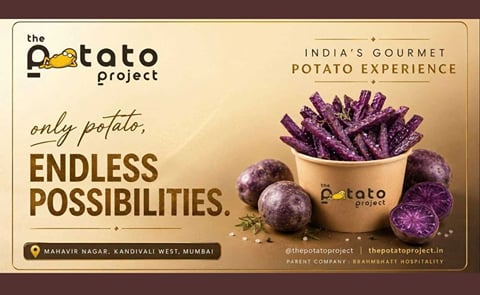
Julio 30, 2026
The Potato Project opens first flagship gourmet potato restaurant in Mumbai
The Potato Project will open its first flagship outlet in Mumbai on 31 July, introducing a gourmet potato-focused QSR concept. Built around white potato, purple potato and yam, the brand plans to expand across India and into international markets.