Foodservice operators are busy looking over their shoulders to guard against other restaurateurs who are threatening to grab market share from them, but they may be turning a blind eye to another equally aggressive form of competition in the form of grocery, convenience and drug stores.
Experts participating in the MUFSO panel Stealth Competition: Who’s After Your Share of the Market? cautioned attendees in Dallas that this new wave of competition is employing lessons learned from restaurant operators themselves and using them to lure away potential customers.
“Home-meal replacement has faded away in the restaurant side of the business,” said Steven Johnson, Grocerant Guru, Foodservice Solutions and panel moderator. “But in grocery stores, convenience stores and retail drug stores, it never faded away. It was studied and tested, and implemented.”
To lure the mobile, multitasking customer, such nontraditional competitors are offering a wider range of food items, like freshly made sandwiches, wraps, salads, fresh fruit, beverages, heat-and-eat dishes and even specialty items like sushi — which Johnson noted is in test at about 10 Walgreen’s locations in major urban areas (in the US).
The nontraditional competitors are well financed and pervasive as well. “Most of you are used to startups with two or four or six units coming after your business,” Johnson said. “Now you’ve got Walgreen’s and Duane Reade, with 7,500 [units], as a true threat to your business. Walgreen’s also has over $78 billion in sales.”
Nontraditional competitors threaten restaurant market share

¿Te gustaría recibir noticias como esta por correo electrónico? ¡Únete y suscríbete!
Get the latest potato industry news straight to your WhatsApp. Join the PotatoPro WhatsApp Community!
Noticias relacionadas

Agosto 07, 2026
El índice de precios de los alimentos de la FAO sube ligeramente en julio como resultado del fortalecimiento de los precios de los cultivos
El índice de precios de los alimentos de la FAO* se situó en julio de 2026 en un promedio de 131,1 puntos, es decir, 0,7 puntos (un 0,6 %) por encima del nivel de junio. Los aumentos en los índices de los precios de los cereales
Agosto 07, 2026
El índice de precios de los alimentos de la FAO sube en agosto en un contexto de aumentos generalizados, en particular del azúcar
El índice de precios de los alimentos de la FAO* se situó en agosto de 2026 en un promedio de 133,3 puntos, es decir, 2,5 puntos (un 1,9 %) por encima del nivel revisado de julio.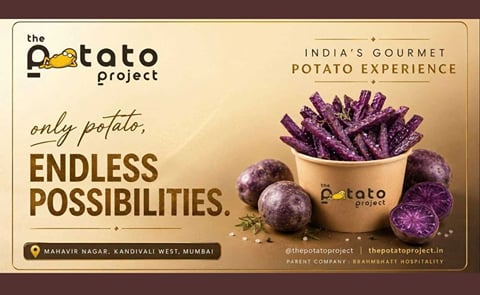
Julio 30, 2026
The Potato Project opens first flagship gourmet potato restaurant in Mumbai
The Potato Project will open its first flagship outlet in Mumbai on 31 July, introducing a gourmet potato-focused QSR concept. Built around white potato, purple potato and yam, the brand plans to expand across India and into international markets.