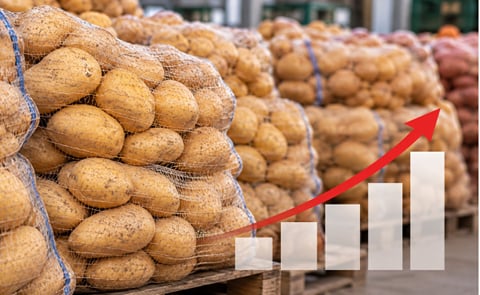
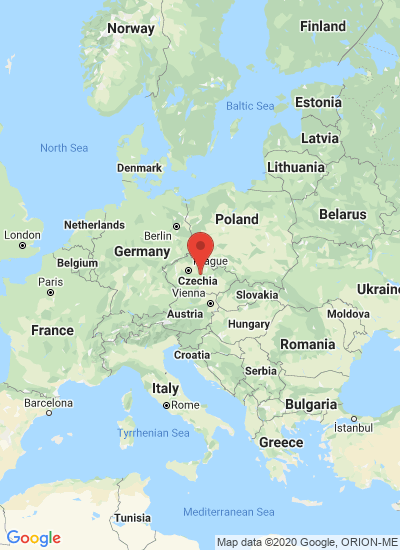
A potato field under hot summer conditions reflects the challenges facing Europe's 2026 potato crop. Wyma Solutions highlights post-harvest grading, washing and handling solutions to help processors manage greater crop variability.
Wyma Solutions highlights post-harvest strategies for Europe's heat-stressed potato crop
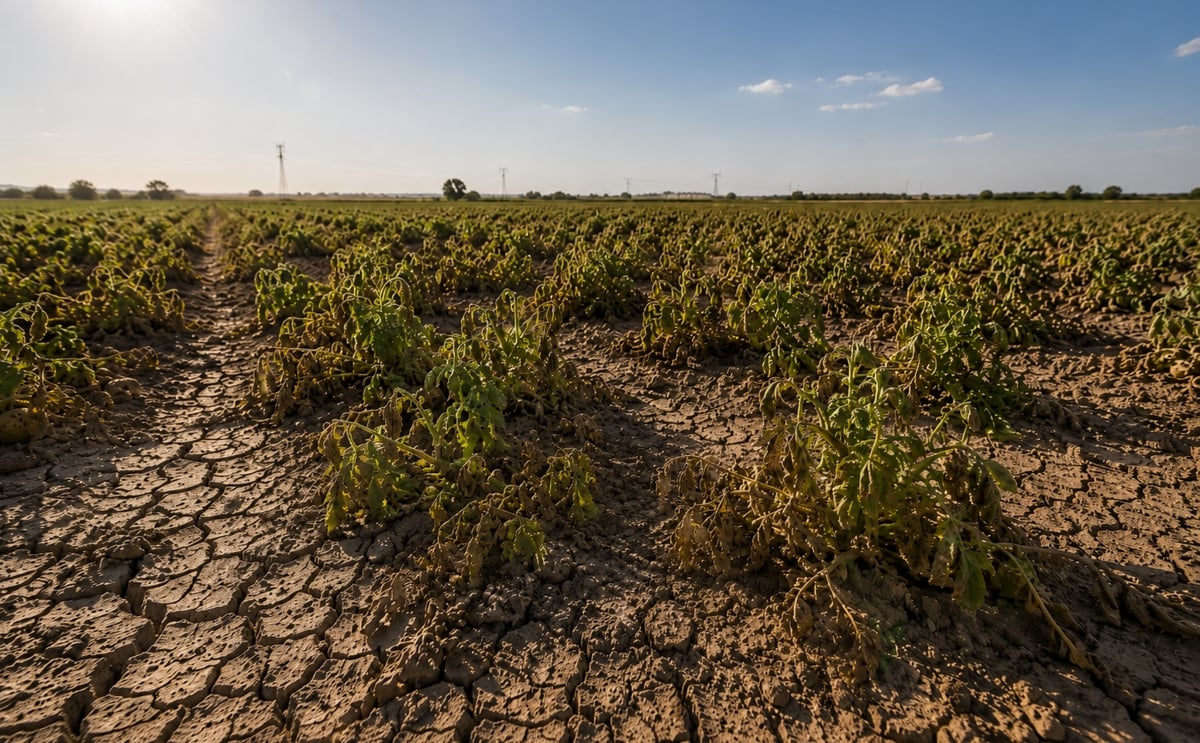
Europe's potato growers are no strangers to a difficult season, but the pattern emerging in 2026 is a reminder of how directly weather volatility now translates into processing and quality challenges further down the chain. Record-breaking early-summer temperatures across central and western Europe, combined with depleted soil moisture in several key growing regions, are putting pressure on tuber development at exactly the stage when crops are most vulnerable.
Why Heat at the Wrong Time Causes Lasting Damage
Potatoes are a cool-season crop. Growth is typically strongest around 18°C, and once daily temperatures climb past the high 20s, tuber bulking can slow or stop altogether. The complication isn't just heat on its own - it's heat combined with crop stage. When extreme temperatures coincide with tuber initiation or bulking, plants can respond by favouring above-ground canopy growth over the tuber itself, or by triggering secondary growth once cooler, wetter conditions return. The result is often a less uniform crop: more knobbing, more pressure bruising, more variation in size and shape, and a higher proportion of tubers that don't meet retail specification.
Water availability compounds the problem. Where soil moisture reserves are already low, rising crop water demand during a heatwave accelerates stress rather than buffering it. Growers able to irrigate are seeing higher water costs and tighter allocation decisions; those without reliable irrigation access are facing reduced yield potential outright. Either way, the crop that eventually arrives at the packhouse is likely to be more variable than usual - in moisture content, in size distribution, and in the prevalence of physiological defects.
What This Means Once the Crop Reaches the Line
A more variable intake has knock-on effects throughout post-harvest handling. Grading lines need to work harder to separate quality tiers accurately. Washing systems need to cope with inconsistent soil and moisture loads without compromising throughput. And because heat-stressed crops are often harvested under tighter timing windows - growers moving quickly to get tubers off heat-affected ground - packhouses can find themselves processing larger volumes in shorter bursts, with less margin for manual sorting to catch defects.
This is precisely the scenario where investment in automated grading and consistent, water-efficient processing pays off. Rather than reacting to a difficult season machine by machine, it's worth looking at how the line as a whole responds to variability.
How Wyma's Line Solutions Help Manage Crop Variability
Wyma designs post-harvest equipment specifically to handle the kind of inconsistency that seasons like this one produce.
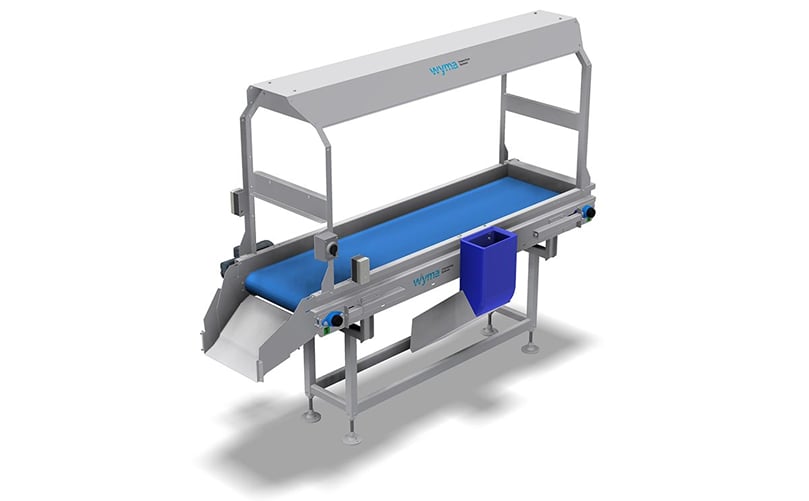
Wyma Belt Inspection Conveyor
Optical grading is one of the most effective tools for managing a season with higher defect rates. Rather than relying on manual sorters to catch shape irregularities, knobbing, or surface blemishes under time pressure, optical systems apply consistent detection criteria across the full volume of intake, separating product by size, shape, and quality far more reliably than the human eye alone - particularly valuable when a crop is producing more out-of-spec tubers than usual.
Water-efficient washing and recycling systems matter more in a season defined by water stress. With growers already under pressure to manage irrigation carefully, packhouses benefit from washing equipment designed to minimise water consumption and support water recycling within the line, reducing the operational burden at a time when water is a scarcer, more closely managed resource across the supply chain.
Robust, high-throughput infeed and conveying systems help packhouses manage the compressed harvest windows that often follow a heat event, moving larger volumes through the line without sacrificing gentle handling - important for a crop that may already be more susceptible to bruising and skin damage after a stressful growing season.
Automation across the line reduces dependence on manual labour at exactly the point when speed and consistency matter most, helping processors maintain throughput and quality standards even when the incoming crop is harder to work with than in an average year.
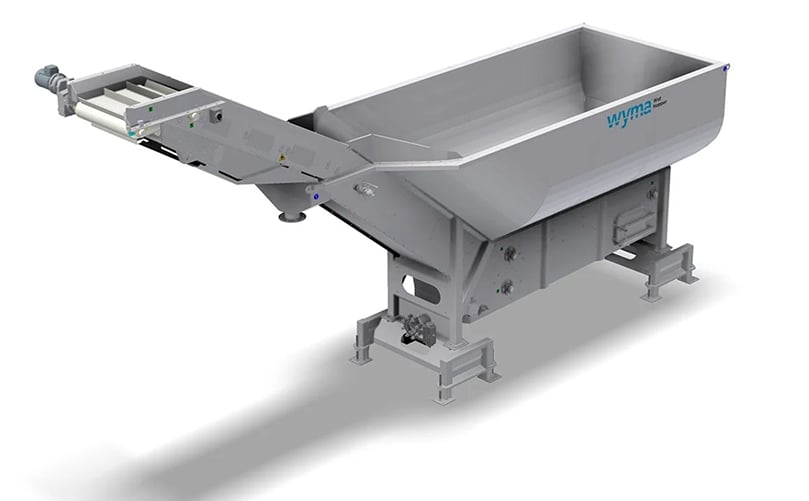
Wyma Clean Wet Hopper
Preparing for a variable 2026 potato harvest
The next few weeks of field assessments across Spain, France, Germany, the Netherlands, Belgium, and Poland will determine how significant this season's heat and water stress turns out to be for the European potato crop. What's already clear is that growers and processors who can absorb variability - in tuber quality, in moisture, in harvest timing - will be better positioned to protect yield value through to market.
For packhouses preparing for a season with more unpredictable intake, now is a good time to review where automated grading, water efficiency, and gentle, high-capacity handling can help build resilience into the line. Wyma works with vegetable processors across the globe to design and install line solutions tailored to the specific challenges of each season and each site.
¿Te gustaría recibir noticias como esta por correo electrónico? ¡Únete y suscríbete!
Get the latest potato industry news straight to your WhatsApp. Join the PotatoPro WhatsApp Community!
Empresa Destacada

Productos


Noticias relacionadas
Septiembre 30, 2026
FAM STUMABO amplía la flexibilidad de la SureTec 240P para procesar patatas y boniatos
FAM STUMABO actualizó la alimentación de la SureTec 240P para procesar patatas y boniatos de hasta 200 mm de diámetro, mejorar la orientación del producto, maximizar la longitud de las patatas fritas y simplificar la puesta a punto.
Septiembre 28, 2026
Urschel y KRONEN presentarán soluciones integradas para líneas de procesamiento de alimentos en The Global Produce and Floral Show 2026
Urschel y KRONEN presentarán soluciones de corte y de creación de líneas en The Global Produce and Floral Show 2026, entre ellas la Little Gem Aspire Dicer y la GS 10-2 Slicer, junto con equipamiento para lavado, secado y pelado.
Septiembre 12, 2026
Urschel presentará el Dicer Little Gem Aspire en Tecno Fidta 2026
Urschel presentará su Dicer Little Gem Aspire™ en Tecno Fidta 2026 en Buenos Aires, Argentina, del 15 al 18 de septiembre. El dicer compacto está diseñado para el corte continuo de productos agrícolas y la optimización de las operaciones de procesamiento de alimentos.