
Tolsma-Grisnich's Optica S optical sorting machine is designed to remove unwanted materials and quality defects before potatoes and onions enter storage.
Tolsma-Grisnich Introduces Optica S Optical Sorter to Improve Potato Storage Efficiency

Tolsma-Grisnich has introduced the Optica S, a new optical sorting machine designed to improve crop quality, maximise storage capacity and make store loading more efficient. By identifying and removing unwanted materials and quality defects before crops enter storage, the machine aims to help growers store cleaner potatoes and onions, reduce waste and improve returns from every batch.
The Optica S represents a shift in the timing of optical sorting, moving the process from a later stage of crop handling to the beginning of storage. Instead of waiting until after storage to remove stones, soil, clods and defective produce, the machine allows growers to address these issues during store loading.
According to Tolsma-Grisnich, the result is cleaner produce entering storage, more efficient use of available storage space and the potential for higher returns from marketable crops.
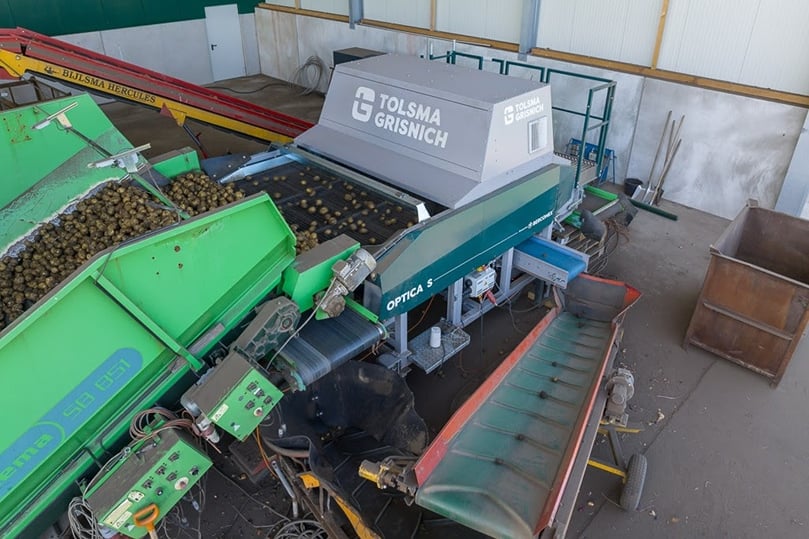
The Optica S can be integrated into an existing potato or onion store-loading line to sort crops before storage.
Removing unwanted material before storage
Every load entering a potato or onion store can contain more than marketable produce. Soil, stones, clods and hidden quality defects occupy valuable storage space and can affect the quality of the stored crop.
The Optica S uses optical detection technology to identify and automatically reject unwanted material and selected quality defects before the crop enters the store. Its detection capabilities include stones, clods, rot, Fusarium in onions, major external surface defects and foreign objects.
By removing these materials at intake, the machine helps ensure that storage capacity is used for valuable produce rather than unwanted material.
Tolsma-Grisnich describes the approach as a way to achieve cleaner products, better storage and higher returns by making sorting decisions earlier in the handling process.
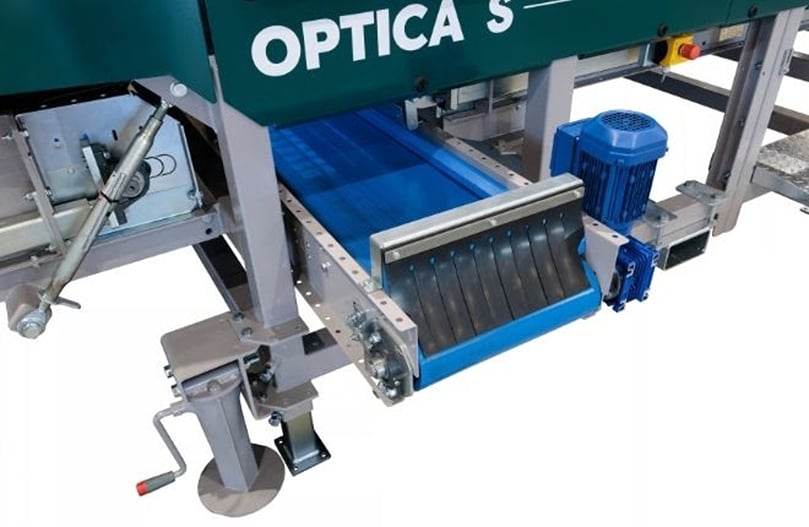
The Optica S combines optical quality sorting with size grading and product separation.
Cleaner, smarter and faster sorting
The Optica S combines several functions in one machine, bringing together optical quality sorting, intelligent size grading and product separation.
- Cleaner: The system removes unwanted materials and quality defects before storage, helping reduce loose soil and other contaminants entering the store.
- Smarter: Optical quality sorting is combined with intelligent size grading and product separation, supporting a more integrated approach to crop handling.
- Faster: By combining these operations, the Optica S is designed to improve store-loading efficiency and reduce labour requirements during one of the busiest periods of the agricultural season.
Tolsma-Grisnich states that the machine can achieve capacities of up to 80 tonnes per hour, supporting high-throughput store-loading operations.
More net storage capacity and less waste
One of the principal benefits of sorting before storage is the potential to make better use of available storage capacity.
Soil, stones, clods and rejected produce can occupy space that would otherwise be available for marketable crops. Removing these materials before storage increases the proportion of valuable produce entering the store.
According to the company, greater net storage capacity means more room for the crop that generates commercial value. The approach is intended to improve the efficiency of the overall storage process while reducing the amount of unwanted material stored alongside the crop.
The company positions this as a broader improvement in storage management rather than simply an upgrade to sorting equipment.
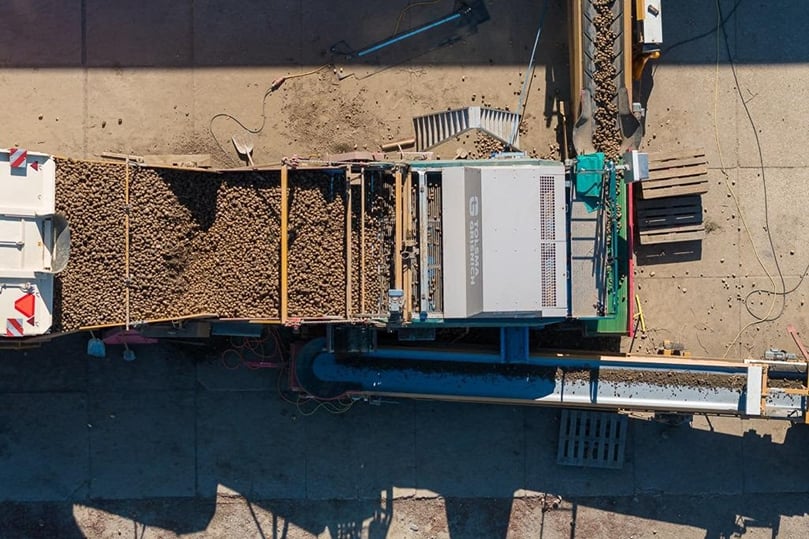
Sorting unwanted materials before storage helps growers reserve more storage space for marketable crops.
Designed for demanding farming conditions
Tolsma-Grisnich has developed the Optica S as a robust machine for everyday agricultural operations. It is designed for direct integration into an existing store-loading line and can also be connected to the receiving hopper.
A key component of the system is its screening web, which removes loose soil before the crop reaches the optical sorting stage. This creates a cleaner product flow and supports accurate sorting.
The screening web is also designed to handle batches containing stones more effectively than a flat PVC belt, which can be vulnerable to damage from sharp stones. This construction feature is intended to improve suitability for demanding intake conditions and support reliable daily operation.
The machine is designed around the practical requirements of store loading, combining robust construction with straightforward operation.
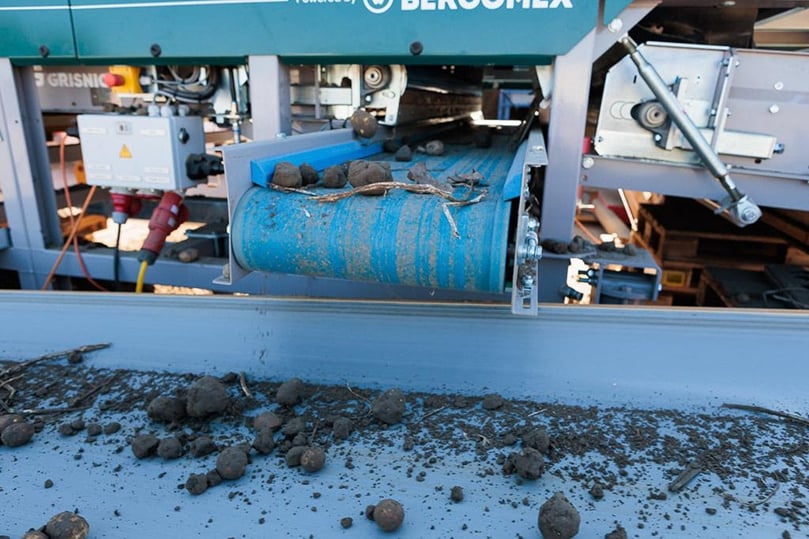
Tolsma-Grisnich's Optica S is designed for demanding crop-intake conditions, supporting efficient potato and onion handling before storage.
Optical detection and intuitive operation
The Optica S integrates optical quality sorting with an intuitive touchscreen interface. A dedicated setup assistant guides operators through configuring the machine, helping make the setup process more straightforward and supporting correct operation.
Its optical sorting capabilities cover the detection of clods, stones, rot, Fusarium in onions, major external surface defects and foreign objects.
By combining these detection functions with size grading and product separation, the Optica S brings several sorting operations together in one solution.
The touchscreen and setup assistant are intended to make the technology accessible to operators while simplifying the process of configuring the machine for operational requirements.
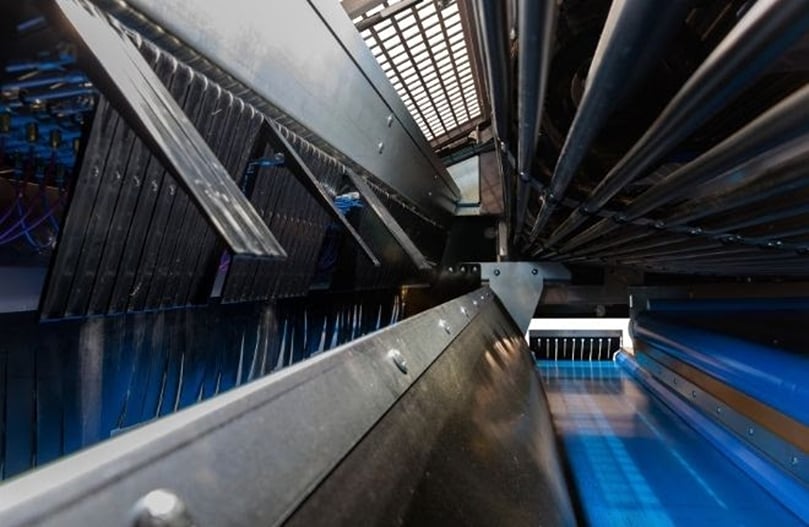
The Optica S combines optical detection and sorting functions to identify unwanted materials and selected quality defects before crops enter storage.
Optimising the complete storage process
Tolsma-Grisnich presents the Optica S as a solution designed to improve several stages of the storage process, from intake to subsequent sorting.
The company identifies five key benefits:UL>
- Cleaner potatoes: Removing soil and unwanted materials before storage reduces the amount of non-marketable material entering the store.
- More net storage capacity: By reducing the space occupied by waste materials, growers can use more of their available storage capacity for marketable crops.
- Less crop damage: A crop-friendly handling line is designed to help protect potatoes throughout their journey from intake to storage.
- Faster store loading: The machine is designed to support higher throughput and lower labour requirements during peak seasonal operations, with stated capacities of up to 80 tonnes per hour.
- More efficient sorting after storage: Removing unwanted materials at intake results in a cleaner batch entering the store. The overall concept is designed to enable higher sorting capacity after storage.
These benefits reflect the company's emphasis on integrating sorting into the wider storage strategy rather than treating it as an isolated operation.
Moving from conventional sorting to smart sorting
The introduction of the Optica S reflects a different approach to crop storage. Traditionally, some unwanted materials and quality defects are removed during sorting after storage. Tolsma-Grisnich's approach is to identify and reject these materials at the beginning of the process.
This changes the focus from simply filling a store to optimising the quality and value of the crop placed inside it.
By combining optical detection, size grading, product separation and a screening web, the Optica S is designed to help growers improve the efficiency of intake operations while making better use of storage capacity.
The company sees early sorting as an opportunity to reduce waste, improve crop handling and create a cleaner starting point for subsequent storage and sorting operations.
A new standard for optical sorting
With the Optica S, Tolsma-Grisnich is bringing optical sorting technology to the start of the storage process. The machine is designed to remove unwanted materials and quality defects before crops enter storage, helping growers focus storage space on produce with commercial value.
Its combination of optical quality sorting, intelligent grading, robust construction, touchscreen operation and throughput of up to 80 tonnes per hour is intended to support more efficient store loading under real-world farming conditions.
The central message behind the new machine is that sorting should begin before storage, not only after it. By making that change, Tolsma-Grisnich aims to help growers achieve cleaner products, better storage utilisation and higher returns.
Like to receive news like this by email? Join and Subscribe!
Get the latest potato industry news straight to your WhatsApp. Join the PotatoPro WhatsApp Community!
Highlighted Company

Products
Related News

October 26, 2026
Urschel to Showcase New Little Gem Aspire Dicer and Precision Cutting Equipment at CIBUS TEC 2026
Urschel will showcase its new Little Gem Aspire Dicer and precision cutting equipment at CIBUS TEC 2026 in Parma, Italy, October 27–30, featuring live demonstrations and solutions for efficient food processing.

October 26, 2026
Tong Engineering Invests in Advanced Tube Laser Technology to Enhance Manufacturing Quality
Tong Engineering has invested in 6kW tube laser technology to enhance manufacturing precision and efficiency, improve assembly accuracy and strengthen its commitment to quality and engineering excellence.

October 22, 2026
JADCO Completes French Fries Production Line Expansion, Boosting Capacity by 50%
JADCO has completed its French fries production line expansion in Saudi Arabia, increasing production capacity by 50%. The project included new technologies and process upgrades, with Kiremko and other partners supporting delivery.