

Potato Bud Midge: A Hidden Pest with Significant Economic Impact
The bud midge, Prodiplosis longifila Gagné (Diptera: Cecidomyiidae) is a small, highly polyphagous gall midge that is an important pest of several vegetable crops. Although it belongs to the gall midge family, it generally does not induce true galls like many other cecidomyiid species. Instead, the damaging larval stage feeds on the epidermal tissues of tender buds, growing points, flowers and young shoots or fruits causing significant injury to developing plant tissues.
In potato, bud midge is particularly destructive during the vegetative growth stage. Larval feeding damages terminal and lateral buds, resulting in distorted plant growth, twisted or winding stems, blackening of young tissues, reduced branching and overall plant stunting. Severe infestations during the first 50 days after plant emergence can significantly reduce tuber initiation and final yield, whereas infestations occurring after flowering generally have a much smaller impact on tuber production.
The pest is considered a major insect pest of Solanaceae crops, including potato, tomato and peppers as well as asparagus throughout the Neotropical region. Under unmanaged conditions, infestations have been reported to cause yield losses exceeding 50%. Population development is strongly influenced by environmental conditions with high temperatures and humidity favoring rapid reproduction and increasing the risk of outbreaks, particularly during warm climatic events such as El Niño.
Globally, P. longifila is primarily distributed in tropical and subtropical potato growing regions of the Americas. However, its wide host range, short life cycle and potential to spread through infested planting material, soil or fresh produce have led to its recognition as a potential invasive quarantine pest. It is listed on the EPPO A1 List and included in Annex II A of the European Union plant health regulations, reflecting its potential threat to vegetable production and protected cultivation systems such as greenhouses.
Because the larvae feed within protected plant tissues, they are difficult to target with insecticides making early detection, regular crop monitoring and integrated pest management (IPM) essential for effective and sustainable control.
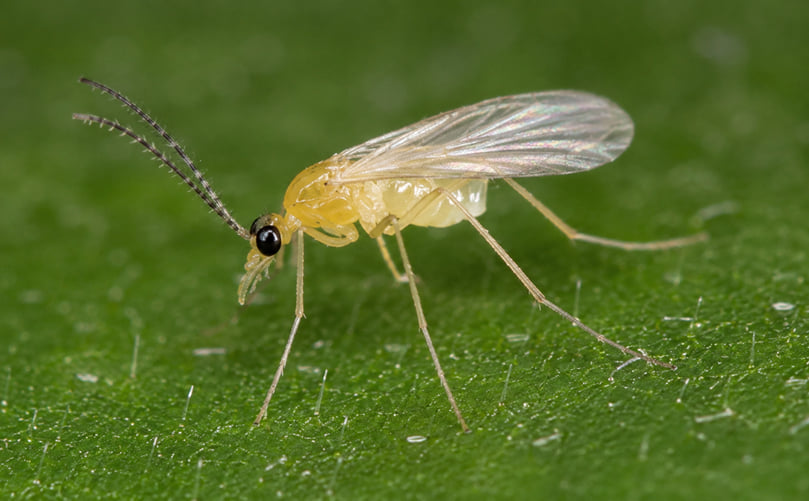
Potato Bud Midge (Prodiplosis longifila) Adult
Taxonomy and Classification of Potato Bud Midge
Kingdom: Animalia, Phylum: Arthropoda, Class: Insecta (Hexapoda), Order: Diptera (true flies), Family: Cecidomyiidae (gall midges; subfamily Cecidomyiinae), Genus: Prodiplosis, Species: Prodiplosis longifila Gagné (described/recognized in the context of Peruvian collections in the early 1980s with earlier misidentifications, e.g., as Contarinia spp.)
Common names: Bud midge, citrus gall midge (referring to damage on Tahiti lime), tomato black midge (in some regions) or similar local vernacular names.
Taxonomic notes: Populations associated with different hosts (e.g., Solanaceae vs. citrus) may represent a cryptic species complex rather than a single polyphagous entity. Taxonomic revision is ongoing. Identification of males relies on genitalia, antennae and wing venation. Molecular tools (COI barcoding, ITS2) aid differentiation from similar cecidomyiids like Dasineura or Contarinia.
Identification of Potato Bud Midge
Adult: The adult bud midge is very small, measuring approximately 1.5 mm in body length with females being slightly larger than males. It has a delicate, soft, slender body that is pale white to yellowish in color with a black head and large, dark compound eyes. The legs are long and slender, while the wings are comparatively large relative to the body, with reduced venation a slightly curved R5 vein beyond the apex and are covered with small dark setae. The antennae are sexually dimorphic with males possessing moniliform antennae consisting of 14 flagellomeres, each with two nodes, whereas females have filiform antennae with approximately 21 segments. Females are distinguished by a long, retractable ovipositor. Adults are crepuscular and weak fliers.
Egg: The eggs are tiny, elongated and transparent (hyaline) when laid, measuring approximately 0.26 mm long × 0.09 mm wide. They possess a shiny chorion covered with a thin mucilaginous coating. Eggs are laid singly or in small groups of approximately 13 eggs in protected sites, such as bud axils, beneath the sepals or calyx on stamens and styles or on other young plant tissues.
Larva (Maggot): The larva is legless and possesses piercing sucking mouthparts. It passes through three larval instars during its development.
The first instar is translucent at hatching and gradually becomes white, measuring approximately 0.40–0.92 mm in length. At this stage, it has a single pair of spiracles located on the eighth abdominal segment.
The second instar is white and measures approximately 0.76–1.85 mm in length. It is more mobile and causes greater damage than the first instar. Spiracles are present on the prothorax and abdominal segments.
The third instar is orange in color and measures approximately 1.15–1.90 mm in length. It is characterized by a distinctive clove shaped sternal spatula located on the ventral side of the prothorax. When fully mature, the larva is capable of jumping by using an arc-like propulsion mechanism, allowing it to travel approximately 6–8 cm to reach the soil for pupation.
Pupa: The pupa measures approximately 0.85–1.00 mm in length. It is pale yellow when newly formed, but the head and thorax gradually darken to black before adult emergence. Pupation usually occurs in the upper layers of the soil, where the pupa becomes covered with adhering soil particles. Occasionally, if mature larvae do not reach the soil, pupation may occur in whitish cocoons on the foliage.
Field Diagnosis: Field diagnosis is based on the presence of white or orange larvae within buds or necrotic and distorted plant tissues. Adult bud midges are rarely observed because of their extremely small size and crepuscular habits.
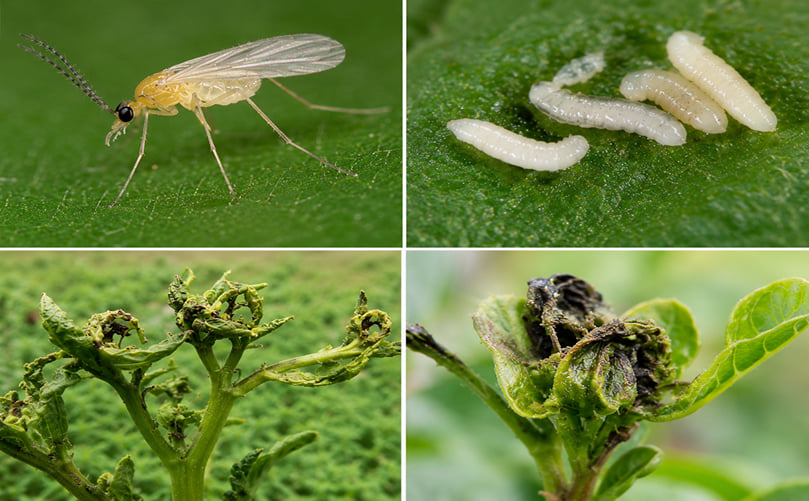
Identification of Potato Bud Midge (Prodiplosis longifila)
Distribution of Potato Bud Midge
Prodiplosis longifila is native to the Americas and has an established presence in several countries across North and South America. In North America, it has been reported from the United States, including Florida, where it was first reported in 1934 on wild cotton as well as Virginia, although its distribution is generally limited to the southern regions of the country.
In South America, the species is widely distributed in Colombia, particularly in the Andean region at elevations ranging from 739 to 2,168 m above sea level (m.a.s.l.), including Valle del Cauca, the coffee growing zone and other expanding areas. It is also found in Ecuador, where it occurs in the coastal and inter-Andean valleys at elevations of approximately 1,000–1,700 m and in Peru, especially in the coastal valleys, including Cañete and surrounding regions.
Possible historical records from the West Indies and the Caribbean have been reported; however, some of these are considered misidentifications. P. longifila is regarded as a potential invasive species with the capacity to establish in suitable warm and humid climates worldwide, including protected cultivation systems such as greenhouses in Europe and other regions. Ecological niche models indicate that its distribution is influenced by factors such as altitude, temperature seasonality and precipitation patterns, while climate change may increase the extent of suitable habitats.
The species spreads primarily through human assisted pathways, including the movement of infested planting material, soil, cut plant parts and produce carrying eggs or larvae.
Host Plants of Potato Bud Midge
Prodiplosis longifila is a highly polyphagous insect and has been recorded on dozens of plant species belonging to different plant families. However, its greatest economic impact is concentrated on a relatively small number of cultivated crops.
In the context of potato production, the primary and most economically important host is potato (Solanum tuberosum), where the larvae feed on buds and growing points. Other major economic hosts include tomato (Solanum lycopersicum), sweet and hot peppers (Capsicum spp.) and asparagus (Asparagus officinalis).
The species also attacks several other cultivated crops, including Tahiti lime and other citrus species (Citrus latifolia and Citrus aurantiifolia), onion (Allium cepa), watermelon, melon, cucumber, artichoke, soybean, beans (Phaseolus spp.), castor bean, grape, papaya and spinach among others.
In addition to cultivated crops, P. longifila utilizes numerous wild and alternate host plants, including Datura stramonium, Physalis spp., Solanum nigrum, Amaranthus spp., and Chenopodium spp. These weeds and wild plants serve as important reservoirs between cropping seasons, facilitating the survival and dispersal of the pest.
Life Cycle of Potato Bud Midge
Prodiplosis longifila is a multivoltine species with a short developmental period, allowing rapid population buildup under warm conditions.
Egg: Females lay transparent, elongated eggs either singly or in small masses on buds, beneath the sepals or calyx on flowers, young shoots or in leaf axils. The eggs hatch within 1–2 days, with an average incubation period of approximately 1.2 days on tomato under typical field and laboratory temperatures.
Larva: The larva passes through three instars, with a total larval period of approximately 7–9 days. The first instar is translucent to white and lasts about 2.5 days. The second instar is white, lasts approximately 2.7 days and is the most mobile and damaging stage. The third instar is orange, lasts about 2.8 days and is capable of jumping. Mature third instar larvae jump to the soil for pupation or occasionally form cocoons on the foliage.
Pupa: The prepupal stage lasts approximately 1.5 days, followed by a pupal stage of about 4–10 days with an average duration of 6 days. Pupation usually occurs in the upper layer of the soil, where the pupa becomes covered with soil particles although it may occasionally occur on plant parts. The complete development from egg to adult takes approximately 10–20 days, occurring more rapidly on citrus (7–10 days) and averaging about 14 days on tomato.
Adult: Adults are short-lived, surviving for 1–2 days without food and up to 3–5 days or longer when nectar or other sugar sources are available. They usually emerge during the late afternoon or evening with crepuscular activity peaking between 17:00 and 23:00. Females lay eggs soon after mating.
Generations and Seasonal Occurrence: Under favorable tropical and subtropical conditions, P. longifila can complete 18–22 generations per year, as reported in Peru on asparagus, depending on temperature and host availability. The species primarily overwinters as pupae in the soil. Population peaks generally coincide with warm, humid conditions and the early stages of crop development. In potato, the life cycle is synchronized with the vegetative growth stage with overlapping generations occurring in continuous or multiple cropping systems.
Biology, Behavior and Ecology of Potato Bud Midge
Feeding Behavior: The larvae, particularly the second instar, use their piercing sucking mouthparts to scrape and suck juices from the epidermal tissues of buds, growing points, flowers and small fruits. Feeding occurs within protected sites, such as inside buds or beneath the calyx making the larvae difficult to reach with contact insecticides. In most cases, Prodiplosis longifila does not induce true gall formation.
Reproduction: Adults require humid conditions and often feed on nectar, pollen or other sugar sources, which increase their longevity and fecundity. The sex ratio is approximately 1:1. Females preferentially lay eggs on plants at the budding or flowering stage. Although adults have a short lifespan, their rapid reproductive turnover contributes to rapid population growth.
Seasonal Activity: Adults are crepuscular with peak activity occurring during dusk. Populations increase rapidly during warm, humid seasons and decline under cool or dry conditions. In potato, the most critical period for infestation is the first 35–50 days after plant emergence.
Environmental Conditions Favoring Infestation: Warm temperatures accelerate insect development, while high relative humidity, irrigation or rainfall that maintains tender, succulent plant growth and the presence of flowers or buds favor infestation by attracting adults. Population outbreaks have been associated with El Niño and high temperature conditions in Peru. Protected cultivation, such as greenhouses can support year-round activity.
Survival Mechanisms: The species survives adverse conditions primarily through pupae in the soil, which are relatively resistant to desiccation. Its highly polyphagous nature enables the use of wild and weed hosts as reservoirs between crops. Mature larvae are capable of jumping to the soil for pupation and the short life cycle allows populations to recover rapidly following disturbances.
Dispersal: Adults are weak fliers and are responsible mainly for local spread within fields. Long-distance dispersal occurs primarily through human assisted movement of infested transplants, soil and produce. The concealed nature of the egg and larval stages also facilitates accidental transport.
Population Dynamics: Population density increases markedly after crop flowering as adults are attracted to flowers. Overlapping generations enable rapid population buildup when infestations are not effectively managed. Field monitoring has shown higher larval populations during later sampling periods, even in some insecticide treated crops. Natural enemies including parasitoids and predators, contribute to population regulation but are often insufficient to provide effective control in intensive production systems.
Nature of Damage Caused by Potato Bud Midge
Larvae of Prodiplosis longifila feed by scraping the epidermal tissues of young plant parts, causing localized necrosis, tissue death and physiological disruption. In potato, they primarily attack buds and growing points, resulting in bud abortion, distorted or winding stems, blackening of affected tissues and loss of apical dominance. This damage reduces branching, canopy development and photosynthetic capacity, ultimately leading to a reduction in tuber number and size.
No direct feeding on potato tubers has been reported. However, the feeding damage creates necrotic tissues that can increase the plant's susceptibility to secondary fungal infections with lesions that may resemble Botrytis infection. In other host crops, P. longifila causes flower and fruit drop, fruit scarring (caregato) in tomato, stunted spears in asparagus and bud abortion in citrus.
Damage is most severe on young, vigorously growing plants under warm environmental conditions. Because the larvae feed within protected plant tissues, they are difficult to reach with many contact insecticides making effective control more challenging.
Symptoms of Bud Midge Infestation in Potato
Symptoms of infestation progress with increasing larval feeding and population density. Early infestations are often difficult to detect because larvae remain concealed within terminal buds, leaf axils and other protected growing points. Bud midge damage can be distinguished from fungal diseases or other pests by the presence of small white to cream colored larvae inside affected tissues.
Early Symptoms: Early symptoms are subtle and include the presence of tiny white larvae within buds and leaf axils, slight browning or wilting of tender growing tips and mild distortion or curling of young leaves and shoots. At this stage, damage is usually localized and requires close inspection for detection.
Moderate Symptoms: As larval feeding intensifies, buds and young leaves become noticeably distorted and fail to develop normally. Tender stems may twist, become blackened or develop winding growth. Flower buds often turn brown, become necrotic and drop prematurely. Necrotic lesions may appear on young tissues, lateral branching is reduced and plant growth becomes uneven. In susceptible hosts such as peppers and other Solanaceae, developing fruits may stop growing or undergo abnormal color changes (for example, changing from green to purplish or fuchsia).
Severe Symptoms: Heavy infestations result in severe stunting, loss of canopy development and widespread death of terminal buds, giving affected plants a blackened appearance. Plant vigor declines significantly leading to major yield losses. In some host crops, severe infestations may also cause corky or scab like surface lesions ("caregato"-type scarring) on fruits.
Symptoms on Different Plant Parts:
- Buds and Growing Points: These are the primary feeding sites. Feeding causes abrasion, tissue necrosis, bud abortion, deformation and death of the growing point, resulting in distorted plant growth.
- Leaves: Young leaves become curled, twisted, distorted, blackened and fail to expand normally. Under heavy infestations, leaves may dry prematurely.
- Stems: Tender stems become twisted, stunted and blackened, particularly near the growing points.
- Flowers: Flower buds develop browning and necrosis and frequently abort or drop prematurely. These symptoms can resemble those caused by Botrytis gray mold making careful inspection for larvae essential.
- Tubers: Bud midge larvae do not feed directly on potato tubers. However, severe damage to shoots, leaves and growing points reduces photosynthesis and canopy development, resulting in fewer and smaller tubers.
Characteristic Field Symptom in Potato: In potato fields with high larval populations, extensive feeding causes terminal buds, young leaves and growing points to turn black. When infestations are severe, the accumulation of blackened foliage can make affected plants or patches of the field appear black from a distance, which is a characteristic symptom of heavy bud midge infestation.
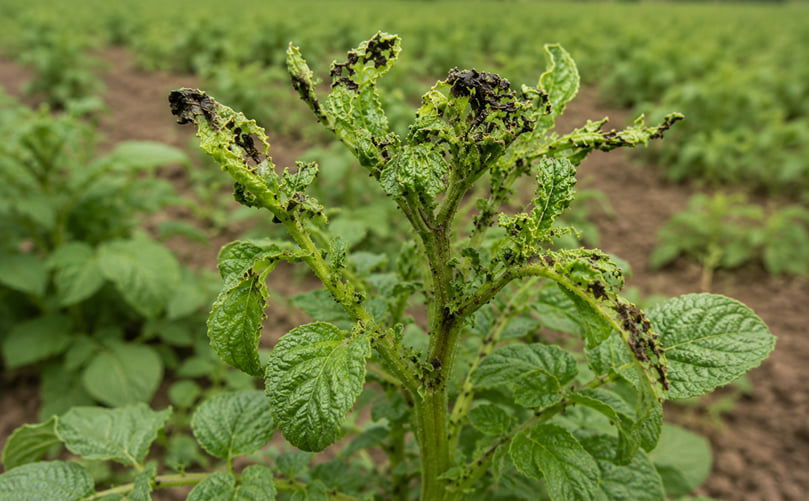
Symptoms of Potato Bud Midge (Prodiplosis longifila) Infestation
Economic Impact of Bud Midge Infestation
Prodiplosis longifila is one of the most important early-season pests of potato and other Solanaceae crops in endemic areas, causing yield losses of more than 50% if left uncontrolled. Damage to terminal buds reduces plant establishment, canopy development and tuber set. Quality losses include deformed plants, reduced marketable tubers and increased susceptibility to secondary infections.
In Peru and Colombia, the pest significantly affects potato, tomato and asparagus production. Marketability declines because of uneven crop stands, reduced tuber size and poor quality. Economic thresholds are generally based on field scouting, such as the percentage of infested buds with control measures recommended early in the infestation. Management costs, including seed treatments and insecticide applications, increase the economic burden, particularly for smallholder farmers. As a quarantine pest, P. longifila also poses trade risks and may result in substantial economic losses if introduced into new production regions.
Monitoring and Scouting for Bud Midge in Potato
Effective monitoring is essential because the early life stages are concealed within plant tissues and populations can increase rapidly.
Field Scouting: Conduct systematic inspections of young plants using random or transect sampling. Focus on terminal and lateral buds, growing points and leaf axils for the presence of eggs, larvae or feeding symptoms. Monitoring is especially important during the first 50 days after crop emergence.
Inspection Frequency: Inspect fields weekly or more frequently during warm weather and the early stages of crop growth.
Sampling Methods: Dissect buds to count larvae and visually estimate the percentage of infested buds or plants. Beat sampling or gently shaking plants can also be used to dislodge larvae for detection.
Sticky Traps: Use colored sticky traps at canopy height to monitor adult populations. White, red and black traps have been reported as attractive and are most useful for identifying periods of peak adult activity, particularly during dusk.
Monitoring Adults: Monitor adult emergence through evening observations or sticky traps during peak activity periods.
Monitoring Larvae: Direct larval counts within buds provide the most reliable assessment of infestation. The percentage of infested buds is the best indicator of larval population levels.
Record Keeping and Action Threshold: Record infestation levels, weather conditions and crop growth stage to support management decisions. Action should be taken as soon as larvae or early damage are detected because populations can increase rapidly. Where available, monitoring can be combined with degree day or crop phenology models.
Integrated Pest Management (IPM) of Bud Midge in Potato
Integrated Pest Management (IPM) for Prodiplosis longifila combines preventive, cultural, mechanical, biological, botanical and selective chemical control measures. Since larvae feed within concealed plant tissues, IPM emphasizes early-season protection and regular monitoring to prevent population buildup.
Cultural Management: Promote vigorous plant growth through balanced fertilization, the use of high-quality seed with strong sprouts, timely irrigation and biostimulants to help plants tolerate early damage and increase larval exposure to desiccation and natural enemies. Maintain an optimal planting density and adopt east west row orientation to improve sunlight penetration and reduce humidity and favorable microclimatic conditions. Practice crop rotation with non-host crops by avoiding consecutive cultivation of Solanaceae or asparagus. Adjust planting dates to avoid peak pest activity, control weeds especially broadleaf host species and remove volunteer plants. Destroy crop residues and infested plant material after harvest to reduce carry over populations.
Mechanical Control: Manually remove infested buds and shoots during the early stages of infestation. Deep plowing after harvest helps expose and destroy soil dwelling pupae. In severe infestations, prune affected plant parts where practical although this method has limited applicability in large-scale potato production.
Biological Control: Egg-larval parasitoids such as Synopeas spp. (Platygasteridae) can achieve 16–20% parasitism in some areas. Predators including lacewings (Chrysoperla spp.) and damsel bugs (Nabis capsiformis) attack late-instar larvae and pupae. Entomopathogenic fungi such as Beauveria bassiana and Metarhizium anisopliae have produced 70–80% mortality in trials, while entomopathogenic nematodes such as Heterorhabditis spp. have shown approximately 80% pathogenicity against larvae and pupae. Other microbial agents, including Paecilomyces spp., have also demonstrated promising results, particularly in asparagus and protected cropping systems.
Botanical Control: Neem-based products and other plant extracts can be used as botanical control options. Sulfur dust acts primarily as an adult repellent has low toxicity to larvae and is most effective when applied during the late afternoon coinciding with peak adult activity.
Chemical Control: Systemic insecticide seed treatments, such as imidacloprid, provide more than 35 days of early-season protection with relatively limited impact on natural enemies. Foliar applications may include translaminar or systemic insecticides as well as dust or powder formulations applied to the soil or lower plant canopy. Combinations such as chlorpyrifos + alphacypermethrin and vegetable or mineral oils have also been used. Applications should target adults or young larvae rather than follow calendar-based spray schedules. Rotate insecticides with different IRAC modes of action to reduce the risk of resistance development, and always follow pre-harvest intervals, personal protective equipment (PPE) requirements and measures to minimize impacts on beneficial organisms.
Integrated IPM Strategy: Successful management of P. longifila relies on regular monitoring, with cultural practices serving as the foundation of the IPM program and biological and chemical control measures used as complementary tools. In Peru and Colombia, integrated programs combining seed treatments, cultural practices and biological control form the core management strategy.
Resistance Management Strategies for P. longifila
Insecticide resistance develops rapidly in P. longifila due to its short life cycle, high reproductive rate, multiple generations and repeated exposure to insecticides in intensive vegetable production systems. Field evidence has shown reduced efficacy of certain insecticides (e.g., spiromesifen and spirotetramat) in tomato.
- Follow IRAC mode-of-action rotation by alternating insecticide groups across generations and seasons (e.g., avoid consecutive applications of the same class, such as neonicotinoids or diamides).
- Avoid repeated use of the same active ingredient or insecticide mixtures with similar modes of action.
- Integrate non-chemical management practices, including cultural and biological control methods to reduce selection pressure.
- Apply insecticides at the recommended label rates using proper application timing and techniques.
- Monitor insecticide efficacy through regular field scouting or bioassays and report suspected resistance where appropriate.
- Encourage community level coordination in regions with continuous vegetable cultivation to reduce resistance development.
Integrated Pest Management (IPM) is the most sustainable approach for delaying insecticide resistance while maintaining effective pest control.
Diagnosis and Differentiation from Similar Pests
Diagnosis of P. longifila: Diagnosis is confirmed by the presence of small white-to-orange larvae within flower buds, flowers or other feeding sites, along with characteristic symptoms such as bud distortion, tissue necrosis and flower abortion. Adults are rarely observed in the field due to their small size and short lifespan. Species level identification may require microscopic examination of male genitalia and antennae or molecular techniques such as DNA barcoding using COI or ITS2 markers. Third instar larvae may exhibit a characteristic jumping behavior when disturbed.
Differentiation from Aphids: Aphids are soft bodied, pear-shaped insects that form colonies on leaves and stems. They produce honeydew and are important vectors of plant viruses. Unlike P. longifila, aphids do not produce jumping larvae or cause bud specific feeding damage.
Differentiation from Thrips: Thrips are tiny, slender insects with rasping sucking mouthparts that produce silvery streaks or patches on leaves and flowers. They are commonly found in flowers, but their feeding pattern, associated frass and characteristic silvering differ from the bud damage caused by P. longifila.
Differentiation from Leafhoppers and Psyllids: Leafhoppers and psyllids have active, jumping adults and nymphs. Their feeding causes yellowing, curling or hopperburn, while psyllids may also transmit diseases such as zebra chip in potato. Their life stages and feeding symptoms differ from those of P. longifila larvae.
Differentiation from Stem Borers: Stem borers have larger larvae that tunnel inside stems, producing frass filled exit holes and causing internal stem damage and shoot wilting. In contrast, P. longifila larvae primarily feed within buds and flowers.
Differentiation from Other Gall Midges: Other gall midges, including species of Contarinia and Dasineura, have larvae that closely resemble those of P. longifila. Accurate identification often requires expert examination of morphological features such as antennae, sternal spatula and male genitalia or molecular identification techniques. Some species induce true galls, while differences in host plants and symptom expression also aid identification (e.g., Dasineura species on pepper).
Distinguishing from Fungal Diseases: Symptoms caused by P. longifila may resemble fungal diseases such as Botrytis infection on flowers. The presence of larvae within affected buds or flowers is essential for confirming insect damage and distinguishing it from fungal infection.
Research Advances and Emerging Technologies for P. longifila Management
Ongoing research focuses on improving early detection, outbreak forecasting and sustainable management of P. longifila while reducing reliance on chemical insecticides.
AI-Based Pest Detection: Artificial intelligence (AI)-based image recognition systems are being developed to identify infestation symptoms and larvae directly from smartphone images, enabling rapid field diagnosis and decision making.
Drone Monitoring and Remote Sensing: Drone mounted multispectral and hyperspectral sensors are being evaluated for the early detection of crop stress, including bud distortion, wilting and stunting associated with P. longifila infestations over large production areas.
Digital Scouting and Decision Support Systems: Digital scouting applications enable real-time field data collection, pest threshold alerts and decision support for timely interventions in vegetable production systems.
Precision Agriculture: Precision agriculture technologies support variable-rate insecticide applications and targeted spraying based on pest distribution maps, reducing unnecessary pesticide use and improving application efficiency.
Biological Control Innovations: Research is advancing the mass rearing and field release of Synopeas parasitoids along with improved formulations of entomopathogenic fungi and entomopathogenic nematodes to enhance their field performance and persistence.
RNA Interference (RNAi) Technology: RNA interference (RNAi) is being investigated as a species-specific pest management approach by silencing essential genes in P. longifila. Although still in the exploratory stage for cecidomyiid pests, it shows promise for future integrated pest management programs.
Semio-chemical and Pheromone Research: Research is underway to identify attractants, repellents and other semio-chemicals that could improve pest monitoring, trapping and the timing of control measures. Although still limited, these studies show considerable potential.
Climate-Based Forecasting Models: Ecological niche models and phenology-based forecasting systems that incorporate temperature, humidity, rainfall and altitude are being developed to predict pest outbreaks, seasonal population dynamics and potential invasion risk.
Host Resistance and Climate Change Research: Additional research focuses on developing less susceptible potato and other host crop varieties, assessing the effects of climate change on pest distribution and abundance and validating Integrated Pest Management (IPM) strategies across different agroecological regions.
Current research emphasizes sustainable, technology driven pest management approaches that improve detection, reduce dependence on chemical insecticides and address the quarantine and invasive potential of P. longifila.