

Understanding Sterilized (Canned) Potato Products: From Processing to Shelf Stability
Sterilized (canned) potato products refer to fully cooked, ready-to-eat potatoes that are preserved in hermetically sealed, airtight containers such as metal cans, glass jars or flexible retort pouches through a rigorous thermal sterilization process. This process achieves commercial sterility defined by the U.S. Food and Drug Administration (21 CFR 113.3) as the condition obtained by the application of heat (or heat combined with other treatments) that renders the food free of microorganisms capable of reproducing under normal non-refrigerated storage and distribution conditions as well as viable microorganisms (including spores) of public health significance such as Clostridium botulinum. The Codex Alimentarius Commission provides a closely aligned definition emphasizing the destruction of microorganisms that could grow at typical storage and distribution temperatures.
Unlike fresh potatoes which are perishable and have a shelf life of only a few weeks, frozen potatoes require a continuous cold chain and may experience texture degradation upon thawing and chilled products have a limited shelf life of days to weeks. In contrast, sterilized canned potato products are shelf stable at ambient temperatures for 1–5 years without refrigeration. They are ready-to-eat upon opening or require only brief reheating making them highly convenient for consumers.
Thermal sterilization the core preservation method involves heating sealed containers in industrial retorts (pressure vessels) at 115–140°C for 30–55 minutes depending on container size, product type and fill conditions. Since potatoes are classified as low-acid foods (equilibrium pH > 4.6 and water activity > 0.85), they require a full “botulinum cook” to ensure safety and prevent the risk of botulism.
This process not only destroys spoilage organisms and pathogens but also inactivates enzymes, resulting in a safe, stable and nutritious product suitable for long-term storage, global distribution, emergency food supplies and convenience-based consumption.
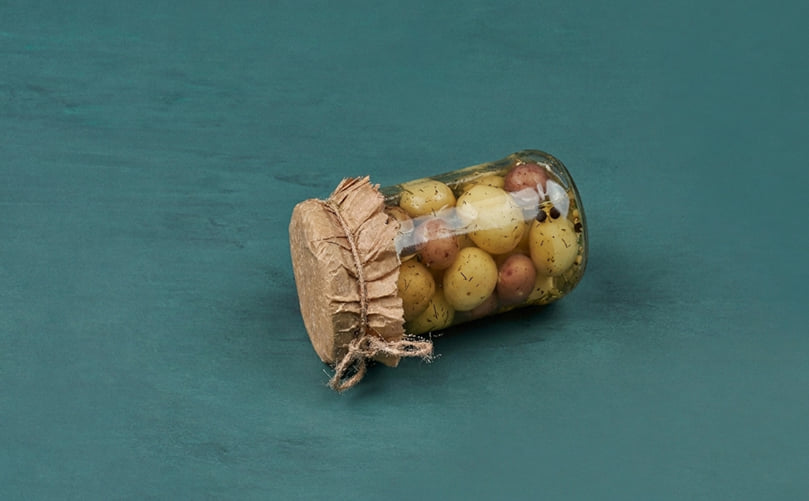
Fully Cooked Canned Potatoes: Long Shelf Life and Safe Consumption
Canned sterilized potato products can be classified from multiple perspectives to meet diverse market needs and applications.
By form: These products are available in a wide range of physical formats including whole baby or small potatoes (often marketed as premium or “new” potatoes) as well as sliced, diced, wedges, strips and mashed or pureed forms. Specialty cuts such as halves or quarters are also produced to suit specific culinary uses and recipe requirements.
By formulation: Formulations vary based on intended flavor and usage. Plain variants are typically packed in water or light brine to maintain a neutral taste. Brined products contain approximately 2–3% salt solution for improved flavor and slight preservation benefits. Seasoned options include added herbs, spices, garlic or onions, while ready meal formats combine potatoes with rice, sauces, oils or condiments to create convenient, complete side dishes. Some products also incorporate flavors such as butter or mixed herbs to enhance consumer appeal.
By packaging: Packaging formats are selected based on shelf life, cost and target market. Rigid metal (tinplate) cans are the most widely used due to their durability and cost effectiveness across both retail and institutional segments. Flexible retort pouches made from multilayer films with aluminum or EVOH barriers, offer lightweight, space efficient and microwaveable alternatives. Glass jars are typically used for premium products, providing visual appeal and targeting organic or niche markets. Additionally, bulk catering tins are designed for foodservice applications.
By end-use: End use segmentation includes retail or consumer packs intended for convenient home consumption, foodservice or HoReCa applications where quick preparation is essential and industrial uses where potatoes serve as ingredients in soups, stews and ready meals. There is also a category for institutional and specialty applications, such as military rations, emergency food supplies and export-oriented products.
This multi-dimensional classification enables manufacturers to optimize product characteristics such as texture retention, flavor profile, shelf stability and logistical efficiency, while effectively targeting different market segments.
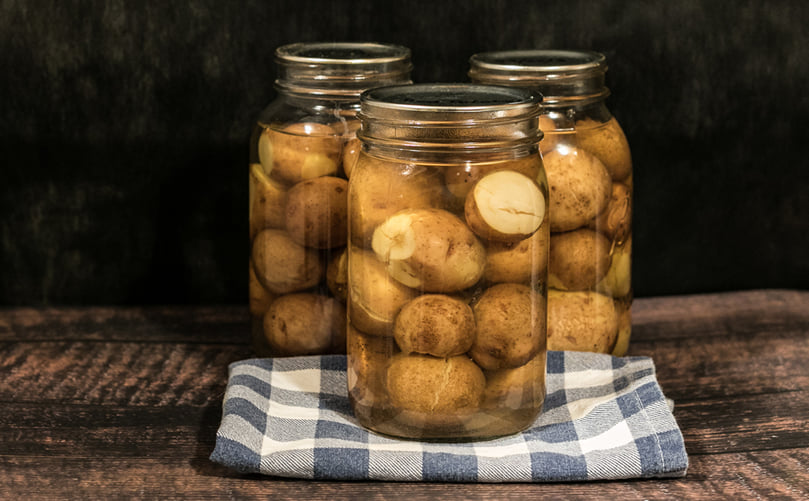
Processed and Preserved: Canned Potatoes for Extended Storage
Optimizing Raw Material Selection for High Quality Sterilized Potato Products
Raw material selection is a critical factor in ensuring consistent texture, color, processing performance and safety in sterilized potato products. Processors generally prioritize waxy or boiling type potatoes, which are characterized by low-to-medium starch content and high moisture levels. These varieties retain their shape and firmness during peeling, cutting, blanching and high temperature sterilization, unlike floury or mealy types that tend to disintegrate and produce a mushy texture.
Specific gravity which reflects the dry matter content of potatoes is an important quality parameter in selection. Varieties with low specific gravity (below 1.069, corresponding to approximately 16–18% dry matter) produce a waxy to slightly soft texture that is highly suitable for canning. Medium specific gravity ranges (1.070–1.079 or 18–20% dry matter) offer acceptable to good processing performance with improved yield. In contrast, high specific gravity potatoes (above 1.080) which are rich in starch are generally avoided for sterilized products due to their tendency to break down during processing.
Reducing sugar content particularly glucose and fructose must also be controlled. Ideally, levels should remain below 0.1–0.3% on a fresh weight basis (or less than 3% of dry matter) to minimize non-enzymatic browning through the Maillard reaction during thermal processing. Although browning is less critical than in fried products excessive sugar levels can still negatively affect color and visual quality.
Uniformity in tuber size and shape is essential to ensure even heat penetration during sterilization, which directly impacts product safety and consistency. Commonly used in include waxy red potatoes such as Red Pontiac and Norland as well as round white types. Some all-purpose varieties like Kennebec and Yukon Gold may be used with caution as they can soften under intense processing conditions. High starch varieties such as Russet Burbank are generally unsuitable due to excessive breakdown during sterilization.
Several defects must be carefully screened out during raw material selection. Greening caused by exposure to light leads to the accumulation of chlorophyll and the toxic compound Solanine resulting in bitterness and potential health risks at elevated levels. Bruising can trigger enzymatic browning due to the activity of Polyphenol oxidase negatively affecting appearance. Physiological disorders such as hollow heart often caused by rapid growth or environmental stress create internal cavities that reduce fill weight and compromise texture.
Additional rejection criteria include mechanical damage, disease infection, sprouting and shriveling. Only fresh, mature, firm and blemish free tubers sourced from disease free fields are accepted for processing. Overripe or damaged lots are strictly rejected to maintain product yield, safety standards and overall sensory quality.
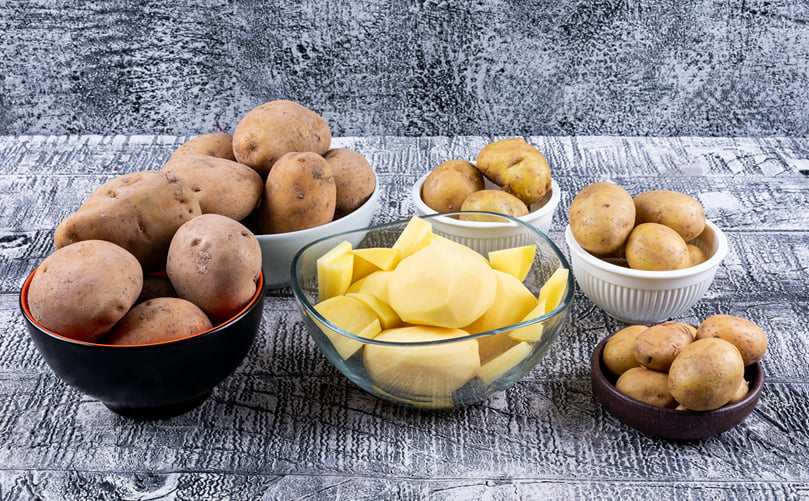
Raw Material Selection for High-Quality Canned Potato Processing
Efficient Pre-processing Operations for High Quality Sterilized Potato Products
Pre-processing operations prepare raw potatoes for efficient sterilization while maximizing yield, uniformity and overall product quality. Each step is designed with a specific purpose to ensure consistency and safety in the final product.
Washing and sorting: Freshly harvested tubers are thoroughly washed using flume systems or rotary washers with potable water to remove soil, stones and other foreign materials. This is followed by sorting, either manually or through optical grading systems, based on size, shape and external quality. Proper sorting ensures uniformity, which is essential for consistent peeling, cutting and heat penetration during later processing stages.
Peeling: Peeling removes the outer periderm (skin) and improves both safety and appearance. Several industrial methods are used. Steam peeling is the most preferred technique due to its high yield and minimal flesh loss. In this method, potatoes are exposed to high pressure steam for a short duration and the sudden pressure release loosens the skin, which is then removed using brushes or water jets. Lye peeling involves immersing potatoes in a hot sodium hydroxide solution to soften the skin followed by washing and neutralization; while efficient for continuous operations, it requires careful wastewater treatment. Abrasive or knife peeling methods are less common in large scale processing. Overall, peeling also helps reduce surface microbial load and contaminants.
Trimming and grading: After peeling, potatoes are inspected and trimmed to remove defects such as eyes, bruises, green patches and hollow heart. This step may be carried out manually or with mechanical assistance. Grading by size ensures uniformity in the final product, which is critical for even filling and thermal processing. Proper trimming and grading also support compliance with quality standards, such as U.S. Grade A, which require good color, texture and minimal defects.
Cutting: Depending on the product specification, potatoes are cut into slices, dices, wedges or maintained as whole units in the case of baby potatoes. Typical piece sizes range from approximately 1–2 inches to ensure uniform heat transfer. Consistency in size is crucial to avoid under processing, especially at the thermal “cold spot” within larger or irregular pieces, which could pose food safety risks. After cutting, pieces are usually held in cold water to minimize enzymatic browning caused by Polyphenol oxidase.
All pre-processing steps are conducted under strict hygiene protocols following GMP and HACCP guidelines to reduce microbial load prior to blanching and filling. The outcome of these operations is clean, defect free and uniformly sized potato material optimized for safe and efficient downstream sterilization.
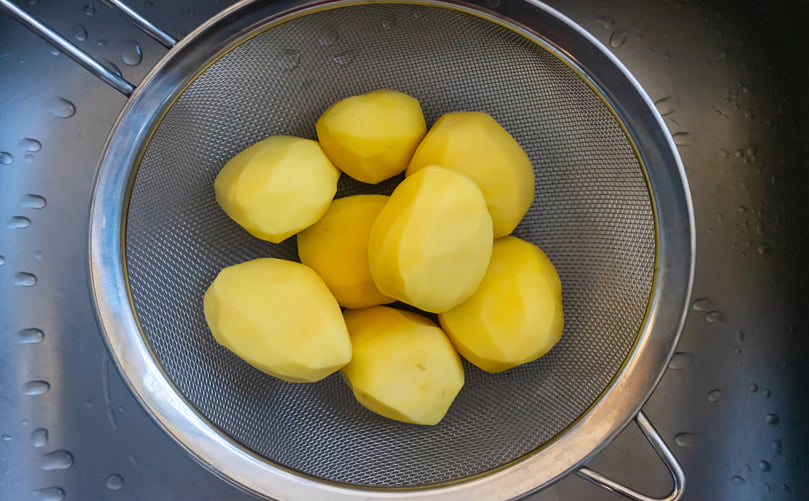
Freshly Peeled Potatoes Prepared for Processing
Blanching: A Critical Step for Quality and Stability in Sterilized Potato Processing
Blanching is a vital hydrothermal pre-treatment step in sterilized potato processing, typically carried out after cutting (and occasionally before). It involves exposing potato pieces to hot water (generally 80–100 °C) or steam for a short duration, usually between 2 and 10 minutes. The exact time and temperature depend on factors such as piece size, potato variety and the desired final texture. For example, diced or sliced potatoes are commonly blanched for about 3–5 minutes at around 95 °C, while whole baby potatoes may require longer exposure. Immediately after blanching, the product is rapidly cooled using cold water or air to stop further cooking and prevent over softening.
Blanching serves several essential functions in ensuring product quality and stability. One of its primary roles is enzyme inactivation. It effectively deactivates heat sensitive enzymes such as Polyphenol oxidase, which is responsible for enzymatic browning, as well as peroxidase and catalase. Among these, peroxidase is often used as an indicator of blanching efficiency due to its relatively high heat resistance. Proper enzyme inactivation prevents discoloration, off-flavors and quality deterioration during subsequent sterilization and storage.
Another key function of blanching is texture stabilization. The process causes partial gelatinization of surface starch and conversion of protopectin into pectin, which helps firm the outer layers while maintaining the structural integrity of the potato pieces. This reduces the risk of sloughing or excessive softening during high temperature sterilization ensuring a desirable final texture.
Blanching also aids in the removal of intercellular air and excess surface starch. This improves the clarity of the packing medium (such as brine), minimizes foaming during filling and enhances uniform heat transfer during sterilization. Additionally, blanching acts as a pre-heating step, raising the internal temperature of the product to approximately 60–80 °C. This reduces the overall thermal load required in the retort, thereby improving energy efficiency.
Further benefits include a slight reduction in microbial load and the leaching of some reducing sugars, which helps in minimizing non-enzymatic browning reactions such as the Maillard reaction, thereby supporting better color retention.
In industrial practice continuous steam or hot water blanchers are preferred due to their high throughput, uniform processing and lower nutrient loss compared to batch systems. However, careful control is essential, as over blanching can lead to excessive softening, loss of water-soluble nutrients (particularly vitamin C) and reduced product yield. While advanced techniques such as ultrasound assisted or acidified blanching are being explored, conventional hot water or steam blanching remains the standard method for processing canned potato products.
Filling Media and Additives for Sterilized Potato Products
After blanching potato pieces are filled into containers along with a suitable filling medium that completely covers the product. Typically, the formulation consists of about 80–90% solids by weight with the remaining portion as liquid medium. This filling medium plays a crucial role in ensuring uniform heat transfer during sterilization, enhancing flavor and preserving overall product quality.
The most commonly used filling medium is brine, which is a salt solution containing approximately 2–3% Sodium chloride. Brine improves flavor, provides a mild antimicrobial effect and helps in density matching, which facilitates efficient heat penetration. For low sodium or “no-salt-added” products, plain hot water may be used as an alternative. In premium or value-added products, seasoned or flavored media are incorporated including herbs, spices, garlic, onions or butter flavored oils to enhance sensory appeal.
Several additives are included in controlled and regulated quantities to maintain product quality. Calcium salts such as Calcium chloride, calcium citrate or calcium lactate are typically added at levels of 0.1–0.5%. These compounds help maintain firmness by strengthening cell wall structure through pectin cross linking thereby counteracting the softening effects of high-temperature sterilization. This is especially important for diced or sliced potato products.
Acidulants like Citric acid and Ascorbic acid are added in small amounts to slightly adjust pH and reduce browning reactions. However, potatoes remain classified as low acid foods (pH above 4.6), which means they still require full thermal sterilization. Anti-browning agents primarily ascorbic acid or erythorbic acid act as antioxidants to prevent both enzymatic and non-enzymatic discoloration. The use of sulfites has been largely discontinued due to allergen concerns and strict regulatory limitations.
Other optional additives may include chelating agents such as EDTA in certain regions as well as natural flavors aligned with clean label trends. These additives help stabilize color, flavor and overall product integrity.
Fill weight and headspace are carefully controlled according to regulatory standards to ensure consistency and safety. Maintaining the correct drained weight prevents under filling, which could affect processing efficiency and lead to defects such as container deformation (paneling). Hot filling is commonly practiced, where the filling medium is added at temperatures of approximately 80–90 °C. This helps in exhausting air from the container, improving vacuum formation and enhancing overall process efficiency.
Exhausting and Vacuum Formation in Sterilized Potato Processing
Exhausting is a crucial operation carried out immediately after filling and prior to final sealing. It involves the removal of entrapped air, dissolved gases and oxygen from both the product and the headspace of the container. This step is essential for ensuring product stability, safety and extended shelf life in sterilized potato products.
The primary purpose of exhausting is to minimize oxidative reactions that can lead to discoloration, rancidity and flavor deterioration during storage. By eliminating air pockets it also improves heat transfer efficiency during retorting as air can act as an insulating barrier. Additionally, removing gases reduces the risk of container swelling or deformation caused by gas expansion at high processing temperatures. Most importantly, exhausting facilitates the formation of a vacuum which helps maintain hermetic seal integrity prevents post-process contamination and enhances shelf stability.
Several methods are used in industrial practice. Steam exhausting is the most widely adopted technique, where filled containers pass through a steam chamber or exhaust box maintained at approximately 90–100 °C for about 5–10 minutes. The steam displaces air and as the contents heat up, expanding vapors help expel residual gases. Mechanical vacuum systems are also used, particularly for flexible pouches or certain canning lines, where vacuum pumps actively remove air before sealing. Another common approach is hot fill exhausting in which the product and filling medium are introduced at elevated temperatures allowing a natural vacuum to form upon cooling.
The target vacuum level immediately after sealing is typically in the range of 10–20 inches of mercury (Hg) depending on the container type and product characteristics. Following thermal sterilization and rapid cooling, further contraction of the contents increases the vacuum, often reaching final levels of 15–25 inches Hg. This hermetic condition is closely monitored as a critical control point under HACCP protocols.
Inadequate exhausting can lead to several defects including hydrogen swelling, internal corrosion of containers and reduced shelf life. Therefore, precise control of exhausting conditions is essential to ensure product quality, safety and long-term stability.
Sealing Technology for Hermetic Integrity in Sterilized Potato Products
Sealing is a critical operation that ensures a hermetic (airtight) closure maintaining commercial sterility throughout the product’s shelf life. This step is performed immediately after exhausting using high-speed rotary or inline seamers and it plays a vital role in preventing post-process contamination.
For metal cans, which are the primary packaging format, double seaming is the industry standard method. This is a purely mechanical process that forms a hermetic seal without relying solely on heat or adhesives. The technique interlocks five layers of metal three from the can end (lid curl) and two from the can body flange. A food grade sealing compound, typically a rubberized latex or plastisol is incorporated to fill microscopic gaps and ensure airtightness. The process occurs in two stages: during the first operation, rollers tuck the lid curl under the body flange to form initial hooks; during the second operation, rollers compress and tighten the seam to achieve proper overlap and sealing integrity. Seam parameters such as height, width, overlap, body hook and cover hook are precisely controlled and routinely verified through teardown inspections.
In the case of retort pouches, sealing is achieved through heat sealing of multilayer laminates, where the inner polypropylene layer is fused at temperatures typically ranging from 150–200 °C under controlled pressure. For glass jars, twist-off or lug caps fitted with plastisol compounds are used to create a vacuum seal upon cooling.
Seal integrity is of utmost importance as any defect such as cut-over, false seams or voids in the sealing compound can allow microbial ingress. This may result in spoilage or serious food safety risks including contamination by Clostridium botulinum. Therefore, sealing is treated as a critical control point under HACCP systems. Quality assurance involves visual inspection, pressure testing and destructive seam analysis on a routine basis. Modern seaming equipment can achieve reliability levels exceeding 99.9% at high production speeds.
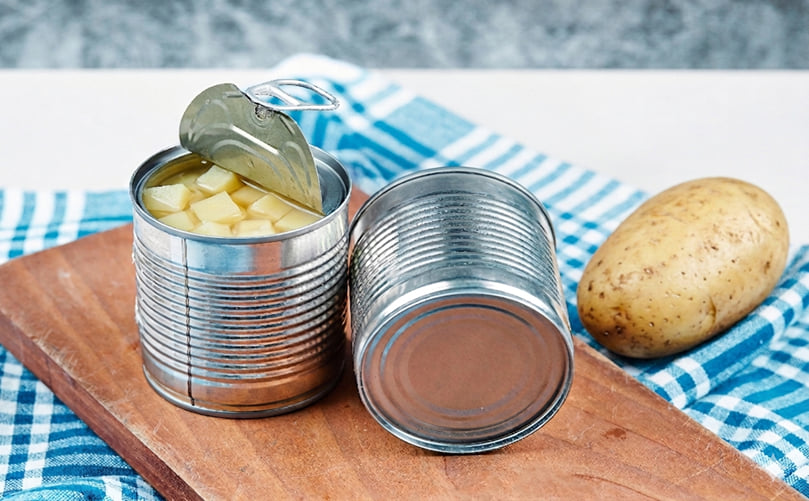
Shelf-Stable Potato Products in Airtight Cans
Thermal Sterilization: Core Processing for Commercial Sterility
Thermal sterilization is the most critical step in the production of canned sterilized potato products as it ensures commercial sterility by effectively destroying pathogenic and spoilage microorganisms. This process is carried out in retorts (pressure vessels) using saturated steam, water spray or steam air mixtures at temperatures typically ranging from 115 to 140 °C. Overpressure is maintained during processing to counterbalance internal pressure buildup within containers and prevent deformation or rupture.
Retort systems can be broadly classified into batch and continuous types. Batch retorts may operate under static or agitated conditions with agitation (such as end-over-end or axial rotation) significantly improving heat transfer and reducing processing time, especially for diced or smaller potato pieces. Continuous systems including hydrostatic towers and reel and spiral retorts are used in large scale operations for consistent and high throughput processing.
Heat penetration within the container occurs primarily through conduction as solid potato pieces restrict fluid movement. Limited convection may occur in the surrounding brine or liquid medium. The uniformity of heat transfer depends on several factors including container size, fill ratio and whether agitation is applied. A key concept in process design is the “cold spot,” which represents the slowest heating location within the container typically the geometric center or the center of the largest potato piece. During validation, this point is monitored using thermocouples to ensure adequate heat treatment.
The effectiveness of sterilization is expressed in terms of the F₀ value, which represents the equivalent time (in minutes) at a reference temperature of 121.1 °C required to achieve a specific level of microbial destruction. This value integrates the combined effect of time and temperature throughout the heating process.
The primary target microorganism in low acid foods (pH > 4.6 and water activity > 0.85) is Clostridium botulinum, particularly its heat-resistant spores (Type A and B). To ensure safety, the process must deliver sufficient lethality to achieve a 12-log reduction of these spores. In addition to safety, further thermal treatment is applied to eliminate spoilage organisms ensuring product stability over extended storage.
The total process time including come up and holding phases, generally ranges from 30 to 55 minutes or longer, depending on product characteristics, container size and retort conditions. These parameters are rigorously validated through heat penetration studies and inoculated pack testing.
Careful control of sterilization conditions is essential. Over processing can lead to excessive softening, nutrient degradation and loss of product quality, while under processing poses serious food safety risks. Therefore, optimized thermal processing ensures a balance between microbial safety and desirable product texture and quality.
Cooling and Post-Processing for Sterilized Potato Products
Immediately after the holding phase at retort temperature, containers are subjected to rapid cooling to halt further cooking, preserve texture and nutrients and prevent the growth of heat tolerant microorganisms. This step is essential for maintaining both product quality and microbiological safety.
Cooling is typically carried out using pressurized water sprays or immersion systems. Initially, cooling is performed under counter pressure to balance the internal pressure of the container and prevent defects such as seam distortion or paneling. The process continues until the internal product temperature is reduced to below approximately 40–45 °C, usually within 10–20 minutes depending on container size and system efficiency.
A key objective during cooling is to ensure rapid passage through the critical temperature range of 50–60 °C, which is favorable for the growth of thermophilic bacteria. Minimizing the time spent in this range reduces the risk of spoilage caused by organisms that can survive high temperature processing and grow at elevated temperatures.
Following cooling, several post-processing steps are carried out to prepare the product for storage and distribution. Containers are first dried using air knives or drying tunnels to remove surface moisture, which helps prevent external rusting and corrosion in metal cans. Labeling is then performed, typically using inkjet printing or wrap around labels including essential information such as batch number, processing details and traceability codes. The finished products are subsequently packed into cases, palletized and transferred to warehouse storage.
As part of quality assurance, selected samples undergo incubation testing to verify commercial sterility. These samples are held at around 35 °C to detect mesophilic organisms and at approximately 55 °C to identify thermophilic organisms, typically for a period of 7–14 days. This step ensures that no surviving microorganisms are present before the product is released to the market.
The quality of cooling water is also critical; it must be potable and often chlorinated to prevent external contamination of containers. After cooling, the final vacuum within containers is verified and units are inspected for any physical defects or seal failures.
Overall, proper cooling and post-processing are just as important as thermal sterilization itself. Effective control of this stage ensures product safety, preserves sensory and nutritional quality and supports long-term shelf stability.
Advanced Packaging Systems Ensuring Safety and Shelf Stability in Sterilized Potato Products
Sterilized potato products require robust, hermetically sealed packaging systems to maintain commercial sterility, protect against oxygen, moisture and light and withstand the high temperature and pressure conditions of retort processing. The selection of packaging type depends on factors such as cost, durability, consumer convenience, product positioning and logistics.
Tinplate cans remain the most widely used packaging format for canned potato products. These containers are made from low carbon steel coated with tin or in some cases, chromium (electrolytic tinplate). They provide excellent mechanical strength, stackability and long-term durability. To prevent internal corrosion, sulfur staining and metal interaction with the product, cans are coated internally with protective lacquers or epoxy-based linings including BPA free alternatives. External coatings are applied to prevent rust formation. Tinplate cans are fully recyclable and possess magnetic properties that facilitate easy sorting in recycling systems. They are also compatible with high-speed filling and seaming operations. However, their relatively higher weight increases transportation cost and they are susceptible to denting or defects such as hydrogen swelling if coating integrity is compromised.
Retort pouches are a modern alternative that is increasingly used for convenience and premium products. These flexible packages are composed of multilayer laminates designed to endure thermal sterilization. A typical structure includes an outer layer of polyethylene terephthalate (PET) for strength and printability, a मध्य barrier layer of aluminum foil or materials like EVOH for protection against oxygen, light and moisture and an inner layer of cast polypropylene (CPP) for heat sealing and food contact. Retort pouches can withstand temperatures of approximately 121–135 °C and allow faster, more uniform heat penetration due to their thin profile, which can reduce overall processing time compared to rigid containers. Their advantages include significantly lower weight, improved space efficiency, ease of opening and compatibility with microwave heating. However, they require precise overpressure control during retorting to prevent package deformation or rupture.
Glass jars are primarily used for premium, organic or specialty retail segments where product visibility enhances consumer appeal. These jars, made from clear or tinted glass are typically sealed with twist off metal lids lined with plastisol to create a vacuum seal. Glass provides excellent barrier properties and is chemically inert, eliminating the risk of corrosion or interaction with the product. However, it is heavier, more fragile and generally more expensive than other packaging formats, which can limit its use in large scale or export-oriented operations.
All packaging systems must meet strict standards for barrier performance and seal integrity to prevent post-process contamination. Special attention is given to corrosion control as naturally occurring sulfur compounds in potatoes can react with metal surfaces and cause discoloration if protective coatings are inadequate. Ultimately, the choice of packaging depends on the intended market and application tinplate cans for bulk and industrial use, retort pouches for convenience and export markets and glass jars for premium retail products.
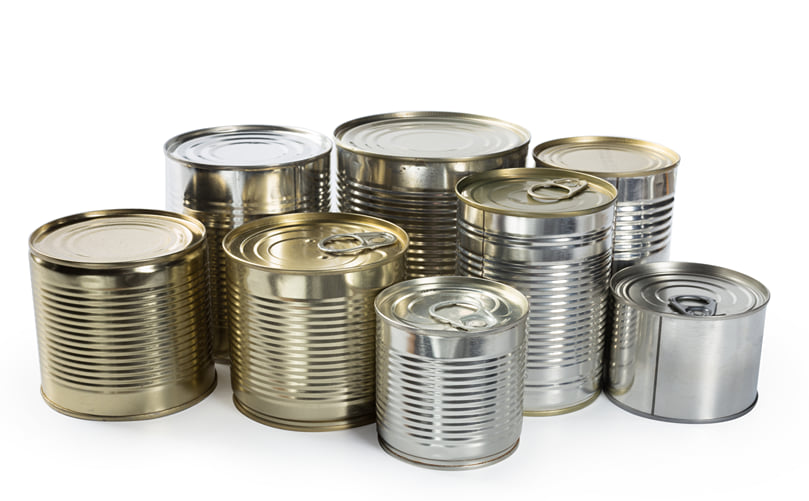
Shelf-Stable Canned Potatoes in Metal Packaging
Shelf Life and Storage Stability of Sterilized Potato Products
Properly processed sterilized potato products typically achieve a shelf life of 1–5 years and in some cases even longer under optimal storage conditions. These products are designed for ambient storage with recommended conditions being a cool, dry and dark environment, ideally below 25 °C. Commercial sterility ensures the absence of viable microorganisms, while hermetic sealing and vacuum conditions help prevent oxidative deterioration and maintain product quality. Shelf stability is validated through both accelerated shelf-life studies and real time storage evaluations.
Several factors influence the stability of these products. Storage conditions play a significant role as elevated temperatures can accelerate chemical reactions such as the Maillard reaction leading to discoloration and flavor degradation. High humidity levels may promote external corrosion in metal containers. Therefore, maintaining storage conditions below 25 °C and relative humidity under 60%, while avoiding direct light exposure is considered optimal.
Seal integrity and vacuum levels are equally critical as they maintain an anaerobic environment within the container. Any loss of vacuum or seal failure can result in oxidation or potential microbial contamination. The formulation and packaging system also contribute to stability; the inclusion of antioxidants, appropriate pH control and the use of high barrier packaging materials help extend shelf life and preserve quality.
Processing adequacy is another key determinant. Achieving the correct thermal lethality ensures inactivation of enzymes and destruction of microbial spores including those of Clostridium botulinum, thereby preventing spoilage and ensuring safety.
Under optimal conditions, the nutritional and sensory qualities of sterilized potato products remain acceptable for approximately 2–4 years or longer. Beyond this period, gradual changes such as slight softening of texture or minor discoloration may occur although these do not typically pose safety concerns.
Compared to fresh potatoes, which have a limited storage life of a few weeks or frozen products that depend on continuous cold chain management, canned sterilized potatoes offer a significant advantage by eliminating the need for refrigeration while maintaining long-term shelf stability.
Spoilage Mechanisms and Quality Defects in Sterilized Potato Products
Spoilage in sterilized potato products is rare when processing follows validated thermal and packaging standards. However, it may still occur due to under processing, post-process contamination or packaging failure. These issues are generally categorized into microbial, chemical and physical defects.
Microbial spoilage primarily results from inadequate thermal processing or contamination after sealing. In low acid foods such as potatoes (pH > 4.6), survival of heat-resistant spores of Clostridium botulinum is the most critical safety concern, as it can lead to toxin production and gas formation, causing container swelling. Thermophilic spoilage may occur due to organisms such as Geobacillus species, particularly if cooling is slow, resulting in defects like flat sour spoilage without significant gas production. Leaker spoilage arises from defects in container sealing, allowing entry of mesophilic microorganisms, which can rapidly multiply and produce gas leading to swollen containers. Although such incidents are extremely rare in modern processing systems, strict control measures are essential to maintain safety.
Chemical spoilage involves deterioration reactions within the product or between the product and packaging. Oxidation can occur if vacuum is lost, leading to discoloration and off flavors. Hydrogen swelling may result from internal corrosion due to reactions between the product and metal surfaces. Additionally, non-enzymatic browning reactions such as the Maillard reaction or residual enzymatic activity can contribute to undesirable color changes over time.
Physical defects are typically related to handling, processing or packaging issues. These include swelling (due to microbial activity or hydrogen gas formation), denting from mechanical damage, leakage and paneling caused by excessive vacuum. Visible indicators of spoilage or defects include bulging lids, leakage or spurting of liquid upon opening, off-odors and excessively soft or degraded texture.
Any container showing signs of spoilage or damage must be considered unsafe and discarded immediately. Adherence to strict quality control systems such as GMP and HACCP ensures that the risk of spoilage remains extremely low and that product safety and quality are consistently maintained.
Quality Control and Testing in Sterilized Potato Processing
Quality control is a fundamental component of food safety systems such as HACCP and is essential for regulatory compliance. Testing is conducted at multiple stages of production to ensure commercial sterility, packaging integrity and consistent sensory quality.
Seam integrity testing is a critical aspect for canned products. Routine visual inspections are performed at regular intervals (typically every 30 minutes or after machine adjustments) to identify visible defects such as cut-over or false seams. In addition, destructive double seam teardown analysis is carried out on sampled containers to measure parameters such as seam height, overlap and body and cover hooks. Non-destructive techniques, including pressure or vacuum decay testing and helium leak detection are also used to assess seal integrity without damaging the container.
Vacuum testing is conducted to verify proper headspace conditions. Adequate vacuum levels indicate effective exhausting and sealing, while low vacuum may signal potential spoilage risks or process inefficiencies.
Microbiological analysis is performed to confirm commercial sterility. This includes incubation testing, where samples are held at approximately 35 °C to detect mesophilic organisms and at 55 °C for thermophilic organisms over a period of 7–14 days. Additional tests such as total plate count and pathogen screening may be conducted when required, particularly for critical hazards like Clostridium botulinum.
Texture and sensory evaluation are also important quality parameters. Instrumental methods are used to measure firmness and drained weight, while trained sensory panels assess attributes such as color, flavor, odor and mouthfeel against predefined product specifications.
Other routine quality checks include pH measurement, fill weight verification, label accuracy and inspection of container condition for dents, corrosion or other defects. Comprehensive records are maintained to ensure full traceability. Modern processing systems aim for near zero critical defects, typically maintaining defect rates below 0.1%.
Nutritional Profile and Retention in Sterilized Potato Products
Thermal sterilization leads to some nutrient losses, particularly among heat sensitive and water-soluble vitamins. However, sterilized potato products still retain a strong overall nutritional profile, especially when considering their convenience and reduced post-harvest losses compared to fresh produce.
Water-soluble vitamins, particularly vitamin C and certain B-complex vitamins, may decrease by approximately 20–50% or more due to heat exposure, leaching into the processing medium and oxidation during blanching and sterilization. In contrast, fat soluble vitamins such as A, E and K, along with carotenoids are generally more stable and may even show improved bioavailability after heat treatment.
Mineral content is largely preserved during processing. Essential nutrients such as potassium, calcium, magnesium and iron remain stable, as they are not significantly affected by heat. In some cases, mineral content may slightly increase due to interactions with the processing medium or packaging materials. Dietary fiber and protein content also remain largely unchanged.
When compared to fresh potatoes, which can lose nutrients during storage and transportation and frozen products, which require continuous cold-chain management, canned potatoes offer a stable and convenient alternative. Although frozen products may initially retain more vitamins, sterilized products often provide comparable levels of bioavailable minerals and antioxidants over time. Sodium content should be considered, particularly in brined products, although low sodium variants are available.
Food Safety Regulations and Compliance in Low Acid Canned Foods
Sterilized potato products fall under the category of low acid canned foods (LACF), defined by a pH above 4.6. These products are governed by strict food safety regulations to prevent microbial hazards and ensure consumer protection.
Implementation of HACCP is mandatory in most regulatory frameworks, with critical control points typically including thermal processing, sealing and cooling stages. In the United States, regulations such as 21 CFR Part 113 require validated thermal processes, detailed record keeping and facility registration.
At the international level, guidelines provided by Codex Alimentarius (e.g., CAC/RCP 1-1969) establish global benchmarks for food safety. These emphasize control of Clostridium botulinum, validation of thermal processes through heat penetration studies and confirmation of commercial sterility.
Compliance with these standards is essential for both domestic distribution and international trade. Failure to meet regulatory requirements can result in product recalls, trade restrictions or market bans.
Industrial Economics of Sterilized Potato Processing
The economics of sterilized potato production are influenced by multiple cost factors with raw material procurement being one of the largest variable costs. Energy consumption is also significant, particularly during retort processing which requires substantial steam generation and thermal energy.
Packaging costs vary depending on the format. Tinplate cans are generally more economical in terms of initial cost but incur higher transportation expenses due to their weight. Retort pouches, while more advanced and sometimes costlier to produce, offer savings in logistics due to their lightweight and compact nature.
Capital investment in processing equipment such as retorts, fillers and seamers is substantial, often reaching several million dollars for large scale facilities. Compared to alternative technologies like high pressure processing, retort systems have lower initial investment but higher ongoing energy costs.
When compared to frozen potato products, sterilized products require higher initial processing energy but offer significant savings in storage and transportation, as they do not depend on cold chain logistics. This contributes to reduced waste and improved supply chain efficiency. Profitability is generally favorable due to long shelf life, scalability and consistent demand. Large scale operations benefit from economies of scale, although smaller retort pouch facilities can be viable in emerging markets. Supply Chain and Logistics Advantages (Refined Version) Sterilized potato products offer significant advantages in supply chain management due to their ambient stability. Unlike fresh or frozen products, they do not require refrigeration, which substantially reduces transportation and storage costs. Cold chain logistics can be several times more expensive than standard dry freight, making ambient stable products highly attractive for global distribution.
These products can be transported over long distances with minimal risk of spoilage, making them suitable for export to remote or developing regions. Their extended shelf life allows for simplified inventory management and longer stockholding periods, reducing food waste compared to perishable alternatives.
Traceability is ensured through batch coding and labeling systems, which facilitate efficient product recalls if necessary. While tinplate cans may present challenges related to weight and denting and retort pouches may be more susceptible to puncture damage, overall logistics efficiency remains superior.
Due to these advantages, sterilized potato products are widely used in emergency food supplies, institutional feeding programs and international trade, where reliability and long-term storage are critical.
Market Trends and Growth Dynamics in Sterilized Potato Products
The market for sterilized (canned) potato products is experiencing steady growth, supported by the broader expansion of the processed potato sector and the rising global demand for convenience foods. The global processed potato products market is projected to grow from approximately USD 43 billion in 2025 to around USD 62.2 billion by 2032, reflecting a compound annual growth rate (CAGR) of about 5.4%. Similarly, the overall potato processing industry is expected to expand from nearly USD 41.6 billion in 2025 to approximately USD 70.5 billion by 2035, with a CAGR of around 5.6%. Sterilized potato products benefit significantly within this growth due to their ambient stability, long shelf life and minimal preparation requirements.
A major driver of this growth is the increasing demand for convenience foods. Consumers are increasingly opting for ready-to-eat and ready-to-heat products that save time and effort, particularly in urban environments with fast paced lifestyles. Sterilized potatoes are widely used in ready meals, soups, salads and side dishes making them highly compatible with this trend. Demand accelerated further following the pandemic as consumers showed a stronger preference for shelf stable food options.
Developing markets are playing a crucial role in market expansion. The Asia-Pacific region, particularly countries like China and India is emerging as the fastest growing market. Rising middle class incomes, increasing urbanization and the adoption of Western dietary habits are driving demand. These countries have also strengthened their domestic processing capacities, transitioning from net importers to increasingly competitive exporters of processed potato products. Other regions, including Latin America, the Middle East and Africa are also witnessing growth due to improving food security initiatives and expanding retail infrastructure.
Another significant trend is the rapid adoption of retort pouch packaging. The global retort pouch market is projected to grow from approximately USD 5.55 billion in 2024 to about USD 10.21 billion by 2033 with a CAGR of around 7%. The broader retort packaging sector is expected to reach nearly USD 82.45 billion by 2032, growing at a CAGR of about 9.2%. Retort pouches offer several advantages over traditional cans including up to 70% weight reduction, improved space efficiency, faster heat penetration, microwave compatibility and reduced transportation costs. These benefits make them particularly attractive for export markets and e-commerce distribution.
Clean label and health-oriented trends are also shaping the market. Consumers are increasingly seeking products with organic certification, reduced sodium content, no artificial additives and BPA free packaging. A significant proportion of new canned vegetable product launches now emphasize clean label attributes including transparent sourcing and natural ingredient profiles. This shift is enabling manufacturers to position sterilized potato products in premium segments while aligning with plant-based and health-conscious consumer preferences.
Overall, the sterilized potato products sector continues to benefit from the expansion of quick service restaurant (QSR) chains, growth in modern retail channels and increasing global trade. With their convenience, stability and adaptability across cuisines, sterilized potatoes remain a key component in the evolving processed food landscape.
Sustainability Considerations in Sterilized Potato Processing
Sterilized potato processing offers several sustainability advantages, particularly through extended shelf life and reduced food waste. However, it also presents challenges related to energy consumption, water usage and packaging materials. Life cycle assessments (LCA) of potato supply chains highlight these trade-offs, showing that while thermal processing is resource intensive, the overall environmental impact can be favorable when considering reduced spoilage and the elimination of cold chain requirements.
Energy consumption is a key consideration, especially during retort sterilization and blanching, which are the most energy intensive stages. Despite this, sterilized products benefit from ambient storage, eliminating the need for refrigeration, which can be 2–5 times more energy intensive in frozen or chilled supply chains. Advances in processing technologies, such as agitated retorts and improved thermal efficiency are helping to reduce energy use. Emerging innovations like microwave assisted thermal sterilization (MATS) further contribute to shorter processing cycles and lower overall energy demand. When evaluated across the full product life cycle, canned potato products can exhibit lower total energy consumption compared to fresh or frozen alternatives due to reduced waste and efficient transportation.
Water usage is another important factor as significant volumes are required for washing, peeling, blanching and cooling operations. However, modern processing facilities increasingly adopt water recycling and reuse systems to improve efficiency. Steam peeling is often preferred over abrasive methods because it minimizes material loss and reduces wastewater generation. Additionally, by-products such as potato peels are increasingly valorized for applications like animal feed, composting or biogas production, contributing to circular resource use. Optimized systems demonstrate that water footprints in potato processing can remain relatively moderate compared to other vegetable processing industries.
Packaging plays a critical role in sustainability. Tinplate cans are highly recyclable with steel being infinitely recyclable and capable of achieving substantial energy savings when recycled. Global recycling rates for steel packaging are often high making it one of the more sustainable options. Retort pouches, while lightweight and efficient in transport, traditionally pose recycling challenges due to their multilayer structure. However, the industry is transitioning toward mono-material, recyclable or bio-based alternatives including innovations such as starch derived adhesives with high biodegradability under industrial composting conditions. Many manufacturers are also incorporating post-consumer recycled (PCR) content into packaging materials. Glass jars provide excellent recyclability and chemical inertness but have higher transportation impacts due to their weight and fragility.
An additional sustainability benefit of sterilized potato products is the significant reduction in food waste compared to fresh potatoes, which are more perishable. The long shelf life allows for better inventory management and lower losses across the supply chain. Furthermore, the adoption of circular practices such as utilizing processing by-products enhances overall resource efficiency.
Overall, the industry is increasingly focused on improving sustainability through energy efficient processing technologies, water conservation strategies and the development of fully recyclable or compostable packaging solutions. These efforts align with broader circular economy goals and the growing demand for environmentally responsible food production systems.
Challenges and Limitations in Sterilized Potato Products
Despite their advantages in convenience, safety and shelf stability, sterilized potato products face several inherent challenges that can limit their wider adoption in certain markets.
One of the primary concerns is texture softening. High temperature retort processing, even when optimized for appropriate lethality (F₀ values), leads to structural changes in potato tissues. The breakdown of pectin and gelatinization of starch during thermal treatment result in a softer texture compared to fresh or minimally processed potatoes. This effect is more pronounced in floury varieties or larger cut sizes. Although the use of calcium salts helps reinforce cell wall structure and improve firmness, it cannot completely prevent texture degradation.
Nutrient loss is another limitation associated with thermal processing. Heat and water sensitive vitamins, particularly vitamin C and some B-complex vitamins can decrease by approximately 20–50% or more due to leaching during blanching and degradation during sterilization. However, minerals such as potassium and magnesium along with dietary fiber, remain largely stable. While sterilized products may appear nutritionally inferior to fresh produce, this difference is often reduced when accounting for nutrient losses that occur during storage and handling of fresh potatoes. Nonetheless, consumer perceptions regarding nutrient loss in canned foods continue to influence purchasing decisions.
High processing costs also present a challenge, especially for smaller manufacturers. Significant capital investment is required for equipment such as retorts, sealing machines and quality control systems. In addition, operational costs related to energy consumption for thermal processing and wastewater treatment contribute to overall production expenses. Although the extended shelf life and elimination of cold chain logistics provide economic advantages, achieving cost efficiency often depends on large scale production.
Consumer perception remains a key barrier. Many consumers associate canned foods with being highly processed or of lower quality compared to fresh alternatives. Preferences for fresh products are often driven by expectations of better taste, texture and perceived health benefits. Concerns about additives and packaging waste can further influence attitudes, even though modern formulations increasingly emphasize clean label ingredients and packaging materials such as tinplate cans are highly recyclable.
Addressing these challenges requires continuous innovation in processing technologies, formulation improvements and effective consumer education to highlight the safety, nutritional value and sustainability benefits of sterilized potato products.
Innovations and Future Scope in Sterilized Potato Processing
The sterilized potato sector is undergoing significant transformation through advancements in thermal processing technologies, texture optimization and sustainable packaging solutions. These innovations aim to improve product quality, enhance nutrient retention, reduce environmental impact and expand application areas across global markets.
One of the most promising developments is Microwave Assisted Thermal Sterilization (MATS). This technology combines 915 MHz microwave energy with pressurized hot water to achieve rapid and uniform volumetric heating. Compared to conventional retorting, MATS significantly reduces processing time, resulting in improved texture, better retention of heat sensitive nutrients and enhanced energy efficiency. It also enables the use of thinner and lighter packaging materials while supporting clean label formulations with minimal additives. Commercial deployment of MATS systems is expanding across regions including the United States, India, Singapore and Australia, demonstrating its growing industrial relevance.
Another emerging technology is Ohmic heating, which uses electrical current to generate heat uniformly throughout the product. This method is particularly suitable for products like diced or mashed potatoes, where consistent heating is critical. Ohmic heating minimizes thermal gradients, thereby preserving texture and nutritional quality and is being explored for integration into continuous processing systems.
Advancements in texture optimization are also playing a key role. The use of agitated retorts, such as end-over-end or axial rotation systems, enhances heat transfer and reduces overall processing time helping to maintain firmness. Additional strategies include enzyme-based treatments, optimized calcium fortification and the development of potato varieties with improved structural properties, such as higher pectin content in waxy types. These approaches collectively address one of the main limitations of sterilized products texture softening.
Sustainability driven innovations are particularly prominent in packaging. The industry is moving toward mono-material, fully recyclable retort pouches and bio-based packaging solutions including films derived from renewable resources such as starch. Increased use of post-consumer recycled (PCR) materials is also being adopted. Furthermore, smart packaging technologies, such as indicators for quality and shelf-life monitoring, are emerging. Reduced material usage is being enabled by gentler processing technologies like MATS, which place less stress on packaging structures.
Looking ahead, the integration of renewable energy sources into processing operations along with the application of artificial intelligence for optimizing retort cycles, represents a significant opportunity for improving efficiency and sustainability. Hybrid processing technologies that combine methods such as MATS with high pressure processing are also being explored to further enhance product quality and safety.
These innovations are expected to address current limitations, support the growing demand for clean label and high-quality foods and expand the application of sterilized potato products into premium ready meals, institutional feeding programs, military rations and global export markets. As a result, sterilized potato products are increasingly positioned as a sustainable, high quality and versatile component of modern food systems.