

Air-Dried Potato Pieces: Quality, Convenience and Shelf Stability
Air dried potato pieces also called hot air dehydrated potato dices, slices, shreds or chunks are minimally processed potato products made by removing moisture from partially cooked potato pieces using controlled hot air circulation. This process reduces the natural moisture content of fresh potatoes (typically 75–80%) to below 8–10%, producing a lightweight, shelf stable ingredient with a storage life of 1–2 years under proper conditions.
Unlike fully mashed or powdered alternatives, air-dried potato pieces preserve much of the original cellular structure, natural bite, flavor and texture. Upon rehydration, they return to firm, intact potato forms suitable for a wide range of culinary applications.
These products differ from other potato forms in several ways. Drum dried flakes or granules are cooked into a mash and dried on heated drums, losing cellular integrity and becoming powdery, suitable mainly for instant mashed potatoes. Freeze dried potatoes, while offering superior porosity and faster rehydration are far more expensive. Frozen diced potatoes or fries require continuous cold chain logistics and have a shorter shelf life. Potato chips in contrast are fried for crispness rather than rehydration.
Air drying offers a cost effective, scalable industrial solution that balances efficiency with quality. It supports convenience foods, foodservice and export markets while helping reduce post-harvest losses.
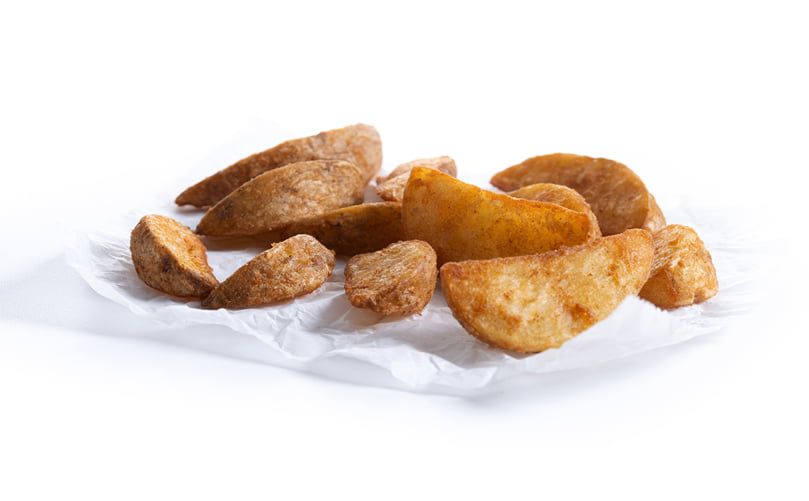
Air-Dried Potato Dices: Flavor and Quality Preserved
Precision Processing Technology for High Quality Air Dried Potato Products
The full industrial processing flow is engineered to ensure uniformity, safety and optimal rehydration performance:
Raw Material Selection:High dry matter potato varieties (18–25% solids, specific gravity 1.08–1.10, reducing sugars <0.1–0.3%) such as Russet Burbank, Yukon Gold, Kennebec, Katahdin or Bintje are preferred. Tubers must be firm, defect free and medium to large in size to enable efficient peeling and cutting.
Washing and Cleaning: Potatoes are thoroughly washed using drum washers or high pressure spray systems to remove soil, debris and surface contaminants.
Peeling and Trimming: Steam or abrasive peeling methods are used, typically resulting in 5–10% material loss. This is followed by trimming, optical sorting and manual inspection to eliminate defects.
Cutting: Tubers are cut into uniform shapes such as slices (3–6 mm thick), dices or cubes (8–12 mm), shreds (thin strands) or chunks. The cut pieces are held in cold water to prevent enzymatic browning and reduce surface starch accumulation. Uniform size is critical for consistent drying.
Blanching: Blanching is carried out using steam or hot water at 75–100°C for 1–6 minutes, depending on piece size and equipment. This step inactivates enzymes (polyphenol oxidase and peroxidase), partially gelatinizes starch, reduces microbial load, leaches excess sugars and improves color stability and rehydration. Optional pretreatments may include sulfite dips, citric acid (0.1–0.3% for 10–30 minutes), or calcium chloride to enhance firmness and control browning. Rapid cooling follows to halt further cooking.
Air Drying (Hot Air Dehydration): This is the core dehydration step, performed using cabinet dryers, continuous belt dryers, tunnel dryers or fluidized-bed dryers. Heated air (typically 60–80°C, or up to 90°C in zoned systems) is circulated at controlled velocity and humidity across the product arranged in a single layer or on conveyors. Moisture removal occurs gradually through constant rate and falling rate drying phases to prevent case hardening. Key parameters include airflow rate (1–5 m/s), temperature zoning, humidity control and drying duration, which varies with piece size and equipment.
Cooling, Sizing and Finishing: The dried product is immediately cooled to room temperature to prevent condensation. It is then screened or milled to achieve uniform size and fines are removed. Final moisture content is maintained below 8–10%.
Packaging: The finished product is packed immediately in moisture proof, airtight packaging to prevent moisture uptake and maintain shelf stability.
This optimized processing sequence ensures a low broken cell count, excellent texture recovery upon rehydration and microbial safety (total plate count <10⁴ CFU/g). Advanced processing lines often incorporate automation for precise control and consistent product quality.
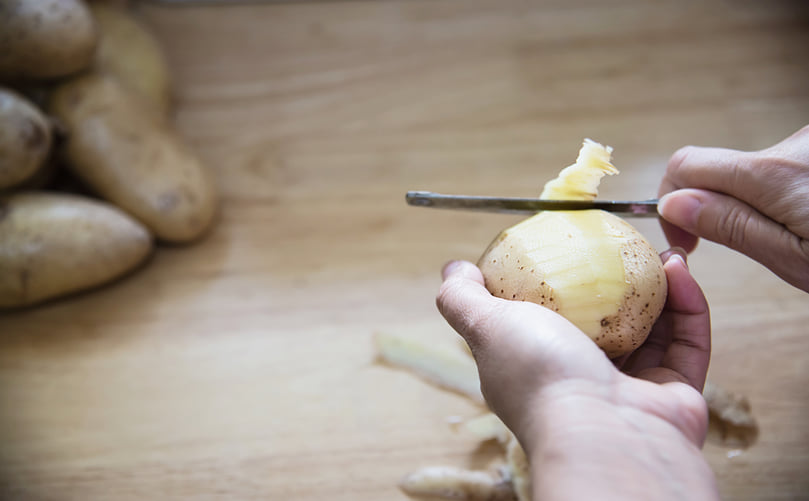
Fresh Potato Slicing with Knife: Pre-Processing Stage for Air Dried Products
Versatile Product Formats of Air Dried Potato Pieces for Diverse Applications
Air-dried potato products are available in multiple standardized formats, each tailored to specific culinary and industrial applications:
Cubes/Dices (typically 8–12 mm or smaller): These are the most versatile forms, rehydrating into firm, well-defined chunks. They are widely used in instant soups, stews, ready-to-eat meals, canned foods, military rations and extruded snack products.
Slices (3–6 mm thick): Flat and uniform, slices are ideal for layered dishes such as casseroles, scalloped potatoes, au gratin preparations and potato salads.
Shreds (long, thin strands): These develop a desirable crisp texture when fried or baked, making them suitable for hash browns, breakfast mixes, potato pancakes and snack extrusion products.
Chunks (larger or irregular cuts): Rustic in appearance, chunks are commonly used in gourmet meal kits, traditional soups and bulk foodservice applications where a homemade texture is preferred.
Sizes and cut specifications can be customized depending on the application. Smaller dices are preferred for rapid rehydration (typically 10–15 minutes), while larger cuts are chosen to retain structure and texture in slow cooked dishes such as stews.
All formats are engineered to maintain a low broken cell count and controlled free starch levels, ensuring minimal stickiness and optimal viscosity. This allows the product to closely mimic the texture and mouthfeel of fresh cut potatoes after rehydration.
Commercial variants may include sulfite free options, kosher certified products and packaging formats ranging from bulk supersacks for industrial use to smaller retail pouches for consumer markets.
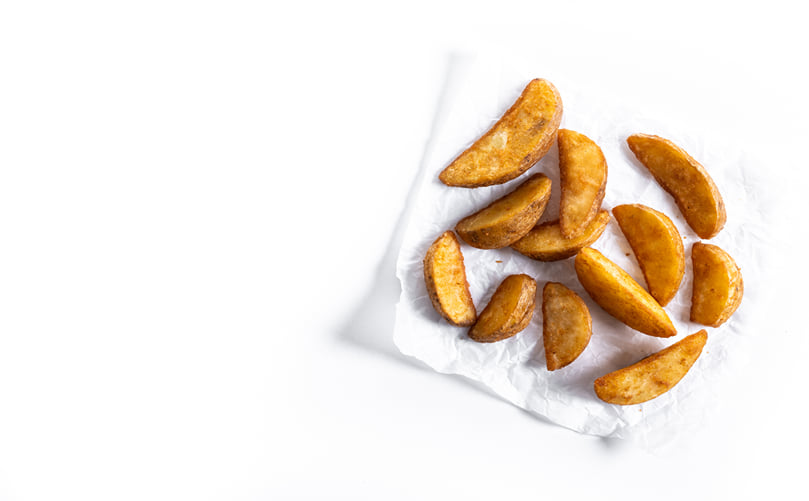
Air-Dried Potato Varieties: Ready-to-Use Formats for Food Applications
Nutritional Profile and Quality Attributes of Air-Dried Potato Products
Air drying enhances the nutritional density of potatoes by removing moisture while preserving structural integrity and key bioactive compounds more effectively than high temperature drum drying or prolonged thermal processing.
On a dry weight basis, air-dried potatoes are rich in potassium (approximately 1,000–1,500 mg per 100 g), dietary fiber, essential minerals and most B-complex vitamins, which are largely retained or concentrated during dehydration. However, heat sensitive vitamin C shows moderate retention, typically around 40–60%. Optimized pretreatments can significantly improve this retention; for instance, soaking in 0.2% citric acid for 20 minutes can increase vitamin C retention up to about 61.6% while also improving color stability. In contrast, conventional water blanching often results in lower retention (around 38–44%) due to leaching losses, while untreated samples may show slightly higher initial retention but suffer from poor final quality due to incomplete enzyme inactivation. Drying temperature remains the most critical factor influencing both moisture reduction and nutrient preservation.
Starch integrity is well maintained, reflected in a very low broken cell count. This ensures minimal release of free soluble starch, contributing to a non-sticky texture and desirable viscosity upon rehydration. The color of the final product typically ranges from light yellow to creamy white, achieved through effective control of enzymatic browning via blanching and reduced non-enzymatic Maillard reactions by maintaining low reducing sugar levels and moderate drying temperatures.
Upon rehydration, air-dried potato pieces exhibit a firm, fresh like texture with a rehydration ratio often exceeding 3:1. Rehydration performance is efficient, typically requiring simmering for 10–20 minutes at around 88°C. Microbial load is significantly reduced during processing, contributing to product safety and extended shelf life.
Key quality parameters include a final moisture content below 10% for storage stability, minimal structural shrinkage and sensory properties that closely resemble fresh potatoes when properly processed. Compared to other dehydration methods, air drying offers a balanced approach, delivering better retention of nutrients and texture than drum drying, while being more cost effective than freeze drying, which is generally reserved for premium applications requiring maximum nutrient preservation.
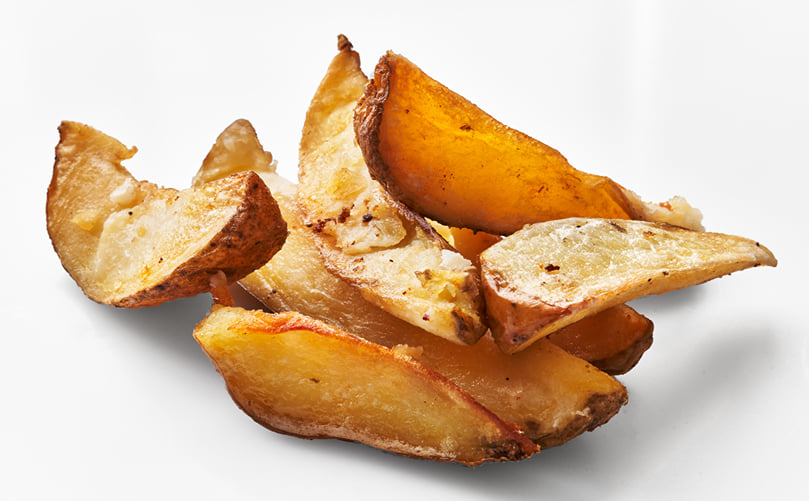
Air-Dried Potato Pieces: Visual Quality, Color and Structural Integrity
Strategic Advantages of Air-Dried Potato Pieces in Modern Food Processing
Significant weight and volume reduction: Air-dried potato pieces are approximately 70–80% lighter and more compact than fresh potatoes, reducing storage and transportation costs while eliminating the need for a cold chain.
Cost-effectiveness and scalability: Hot-air drying is less energy intensive and more economical than freeze drying, making it suitable for large-scale, high throughput industrial production.
Excellent rehydration and texture retention: These products typically achieve a rehydration ratio greater than 3:1, restoring a firm, intact structure with fresh like texture and low broken cell count, outperforming drum dried flakes in chunk-based applications.
Nutritional and flavor preservation: Air drying concentrates key nutrients such as potassium (1,000–1,500 mg per 100 g dry basis), fiber and minerals, while retaining a high proportion of flavor (around 80–90%), despite some loss of heat sensitive nutrients.
Versatility and convenience: Ready-to-use without washing, peeling or cutting, these products are ideal for instant formulations, offer year-round availability, reduce microbial load and help utilize processing grade raw materials efficiently.
Sustainability advantage: Air-dried potato products require less energy for storage and transportation compared to frozen alternatives, contributing to lower overall environmental impact and supporting clean label and convenience food trends.
Key Limitations and Processing Challenges of Air-Dried Potato Pieces
Energy consumption: Air drying is a thermal energy intensive process, requiring the heating and circulation of large volumes of air. A significant portion of energy (up to 35–40%) can be lost through exhaust systems, although overall costs remain lower than freeze drying.
Potential nutrient and quality losses: Exposure to heat can reduce heat sensitive nutrients, particularly vitamin C, which may decline by up to 50% without optimized pretreatments. Inadequate process control can also lead to minor changes in flavor and color.
Rehydration limitations: Compared to freeze dried products, air-dried potato pieces rehydrate more slowly and less completely, typically requiring 10–20 minutes of simmering. In some applications, the original fresh texture may not be fully restored.
Physical defects: Improper drying conditions can lead to issues such as excessive shrinkage (greater than 20% volume loss), case hardening (formation of a hard outer layer that traps internal moisture), uneven drying or surface cracking.
Raw material dependency: The process requires high dry matter potato varieties (18–25% solids) with low reducing sugar content (below 0.1–0.3%). Variability in raw material quality due to growing or harvest conditions can impact consistency and final product quality.
Browning and off-flavors: Both enzymatic browning (caused by polyphenol oxidase) and non-enzymatic browning (Maillard reactions) must be carefully controlled through blanching and appropriate pretreatments. Variations in particle size can further contribute to inconsistent color and flavor.
Processing challenges: Air drying involves longer processing times (several hours compared to seconds in drum drying), requires higher capital investment for controlled drying systems and may face consumer perception challenges in markets sensitive to processed foods.
Industrial Applications and End Use Versatility of Air-Dried Potato Pieces
Air-dried potato pieces are widely used in convenience and value added food products due to their rapid rehydration, firm texture and ease of handling.
Instant and canned soups and stews: Cubes or dices are commonly used to provide texture and body. They can be added directly and typically rehydrate within 10–20 minutes during cooking.
Ready-to-cook meal kits and casseroles: Slices and chunks are ideal for dishes such as scalloped potatoes, au gratin preparations, pot pies and other layered recipes, offering shelf stable convenience.
Foodservice and institutional use: These products are extensively used in cafeterias, catering operations and restaurants for preparing hash browns, potato salads and side dishes, significantly reducing labor and preparation time.
Military rations, emergency foods and outdoor meals: Due to their lightweight and long shelf life, air-dried potato pieces are suitable for field rations, emergency supplies and backpacking meals.
Snacks and extruded products: Shreds are used in snack formulations including crunchy toppings, extruded pellets and breakfast mixes. They are often rehydrated and then fried or baked to achieve the desired texture.
Other applications: Additional uses include incorporation into canned vegetable mixes, dehydrated soup blends, bakery formulations as thickeners or binders, lower grade applications in animal feed and gourmet meal kits requiring a rustic appearance.
The standard rehydration process involves covering the product with water, heating to approximately 88°C, and simmering for 10–20 minutes until tender. The exact time depends on the size and cut of the pieces as specified by suppliers. Properly rehydrated pieces regain a shape, texture and appearance similar to fresh cut potatoes with minimal free soluble starch and a low broken-cell count.
Optimized Packaging and Storage Practices for Air-Dried Potato Products
Proper packaging is critical to maintain the target moisture content below 8–10% and to prevent moisture reabsorption, oxidation and pest infestation.
Packaging materials: Moisture proof and high barrier materials are recommended including multi-layer laminated pouches (such as foil laminated or Mylar), rigid plastic containers, glass jars and vacuum sealed bags. For enhanced shelf stability, nitrogen flushing or the use of oxygen absorbers (typically 300–500 cc per gallon capacity) helps reduce oxygen levels and slow oxidation. Vacuum sealing and heat sealed barrier packaging is commonly used for both bulk industrial packs (such as supersacks) and retail formats.
Pre-packaging handling: Before final packaging, the dried product must be completely cooled to ambient temperature to prevent condensation. Conditioning is also essential, where the product is held in sealed containers for a few days to allow uniform moisture equilibration throughout the batch.
Storage conditions: Air-dried potato products should be stored in cool, dry and dark environments. Ideally, temperatures should remain below 21°C, with relative humidity below 60%, to maintain product stability and prevent quality degradation caused by moisture or light exposure.
Shelf life: Under proper storage conditions, air-dried potato pieces typically have a shelf life of 1–2 years. When packaged using vacuum sealing, Mylar bags and oxygen absorbers, the shelf life can be extended significantly, potentially reaching 10–30 years in specialized long-term storage scenarios.
Handling precautions: Products should not be stacked in a manner that causes crushing or structural damage. Exposure to temperature fluctuations, moisture or pests should be avoided. Using portion-controlled packaging can help minimize air exposure after opening.
Quality monitoring: Regular inspection for signs of spoilage such as off-odors, discoloration or moisture buildup is recommended to ensure product integrity.
Following these packaging and storage practices helps preserve color, texture, rehydration capacity and nutritional quality throughout the product’s commercial shelf life.
Comparative Analysis of Air-Dried Potato Pieces with Other Potato Products
Air-dried potato pieces occupy a practical middle ground among various potato processing formats, balancing cost, quality and functionality.
Compared to freeze dried potatoes: Air-dried products are significantly more cost effective and better suited for large scale production due to lower energy and equipment requirements. Freeze dried potatoes, however, offer superior rehydration (even in cold water), better retention of nutrients and flavor, minimal shrinkage and a longer shelf life (several years compared to 1–2 years for air-dried). While air-dried potatoes maintain good structure and texture, they require longer rehydration and may experience slightly higher nutrient loss. They are ideal for everyday food applications, whereas freeze dried products are typically used in premium segments such as camping, military or space foods.
Compared to frozen potatoes (dices or fries): Air-dried potatoes eliminate the need for cold chain logistics, resulting in major cost and energy savings during storage and transportation. They also offer longer shelf life and easier handling. However, they require a rehydration step before use. Frozen potatoes provide direct use convenience but come with higher storage and transportation costs and greater environmental impact due to refrigeration requirements.
Compared to potato flakes or granules (drum dried): Air-dried pieces retain intact cellular structure and provide a firm, chunky texture, making them suitable for soups, stews and casseroles. In contrast, flakes and granules have a high level of cell rupture, leading to rapid hydration and a smooth, mashed consistency. While flakes are ideal for instant mashed potato applications, air-dried pieces are more versatile in applications requiring visible potato structure.
Compared to fresh potatoes: Air-dried products eliminate the need for washing, peeling and cutting, reducing labor and preparation time. They also minimize spoilage and overcome seasonal availability issues, ensuring consistent quality and reduced waste. However, they involve processing costs and may have minor nutrient losses compared to fresh potatoes.
Overall, air-dried potato pieces provide an optimal balance of cost, storage stability and versatility, making them highly suitable for industrial and convenience food applications while still delivering a fresh like texture upon rehydration.
Global Market Trends and Leading Companies in Dehydrated Potato Products
The global dehydrated potato products market, which includes air-dried potato pieces such as dices, slices, shreds and chunks along with flakes and granules is experiencing steady growth driven by increasing demand for convenience foods, ready-to-eat meals, snacks, soups and foodservice applications.
As per recent estimates, the market was valued at approximately USD 8.26 billion in 2025 and is projected to grow from USD 8.84 billion in 2026 to around USD 15.76 billion by 2034, registering a compound annual growth rate (CAGR) of about 7.49%. Other industry assessments estimate the market size in 2024 at around USD 6.3–7.1 billion with projected growth rates between 5% and 6.8% through 2032–2033. Despite slight variations, all projections indicate consistent annual growth of 5–7.5%, supported by urbanization, changing dietary habits, rising demand for plant-based and convenience foods and expansion of e-commerce channels.
Asia Pacific dominates the global market, accounting for approximately 63.23% share in 2025 (around USD 5.22 billion). This growth is driven by large-scale potato production in countries like China and India, increasing contract farming, expansion of the HoReCa sector and strong demand for affordable, shelf stable ingredients. China leads in dehydrated potato flakes and powders, while India is witnessing rapid growth in foodservice demand. Europe holds about 21.95% of the market, supported by strong processing industries, while North America accounts for around 5.42%, with the United States projected to reach approximately USD 958.22 million by 2032. Latin America and the Middle East & Africa represent smaller but steadily growing markets.
International trade in dehydrated potato products is highly efficient due to the 70–80% reduction in weight and volume, which eliminates the need for refrigeration and significantly reduces transportation costs. Major producing and exporting countries include the United States, Netherlands, Germany, Belgium and Canada, with increasing contributions from China and India. The United States alone processes roughly 15% of its potato production into dehydrated products. Global imports have also increased in recent years, supporting food aid programs, snack manufacturing and international supply chains. Additionally, reduced post-harvest losses (typically 20–40%) and year-round availability enhance market stability and trade resilience.
The industry is moderately consolidated with several key players dominating the global market through strong supply chains, product innovation and export capabilities. Leading companies include McCain Foods, Lamb Weston, Basic American Foods, Idahoan Foods, Pacific Valley Foods, Augason Farms, Idaho Supreme Potatoes, Birkamidon Rohstoffhandels GmbH, J.R. Short Milling and Rixona B.V.
These companies maintain their market position through integrated supply chains, innovation in product formats such as dices and shreds for soups and snacks and strong global distribution networks. Increasing focus on clean label products, organic offerings and protein fortified variants is further shaping the competitive landscape.
Sustainable and Energy Efficient Processing of Air-Dried Potato Products
Air-dried potato pieces offer strong sustainability advantages compared to many alternative potato products, primarily by eliminating the need for energy intensive cold-chain logistics and reducing the overall environmental footprint.
Life cycle assessments indicate that dehydrated potato products emit approximately 0.65 kg CO₂-equivalent per kg, compared to about 1.21 kg CO₂-equivalent per kg for frozen fries. This reduction is largely due to the absence of refrigeration, significant weight and volume reduction (around 70–80%) and minimized post-harvest and processing losses. Although hot-air drying is still a thermal energy intensive process, it consumes considerably less energy than freeze drying, typically requiring 2–5 kWh per kg of water removed compared to 5–10 kWh for freeze drying. However, some inefficiencies remain, such as 35–40% energy loss through exhaust air.
Key efficiency advantages include the effective utilization of surplus or lower grade raw materials, which helps reduce post-harvest losses by approximately 20–40%. The compact nature of air-dried products lowers storage and transportation requirements, thereby reducing fuel consumption and associated emissions. Additionally, reduced microbial load and extended shelf life contribute to lower food waste, often without the need for chemical preservatives.
Recent technological innovations are further improving sustainability outcomes. Solar assisted and hybrid drying systems including solar vacuum, solar biomass and IoT-integrated indirect solar dryers, significantly reduce dependence on fossil fuels while maintaining product quality. These systems can also shorten drying times and often achieve economic payback within 1–2 years.
Advanced drying technologies such as heat pump drying, microwave assisted drying and superheated steam drying enhance energy efficiency through improved heat recovery. Furthermore, pretreatment techniques like ultrasound and pulsed electric field treatments help accelerate moisture removal, reducing specific energy consumption by approximately 12–20%.
Optimized hybrid drying systems can lower CO₂ emissions by up to 20% compared to conventional hot-air drying, achieving reductions of around 0.45–0.52 kg CO₂ per kg of product. The integration of renewable energy sources and heat recovery systems addresses key limitations of thermal drying, positioning air dried potato pieces as a low carbon, climate resilient solution that supports sustainable food systems, particularly in regions with limited infrastructure.
Future Scope and Technological Innovations in Air-Dried Potato Products
The future of air-dried potato pieces is centered on smarter processing, improved efficiency and value added product development aligned with clean label, functional food and sustainability trends.
Hybrid drying technologies: Advanced combinations such as infrared hot air, microwave assisted drying, ultrasound pretreatment and radiofrequency systems enable faster and more uniform drying. These approaches can reduce drying time and energy consumption by approximately 12–30%, improve retention of nutrients such as vitamin C and other bio-actives, minimize shrinkage and enhance texture and rehydration performance while avoiding case hardening. Modern optimization models are also being used to balance product quality and energy efficiency for large scale industrial applications.
Automation and digital integration: The integration of artificial intelligence, IoT-based monitoring systems and Industry 4.0 technologies allows precise control of temperature, humidity and airflow. These systems improve consistency, traceability and product quality while reducing labor requirements and processing losses.
Product innovation: There is increasing development of value-added products such as protein fortified air-dried potato pieces, organic and clean-label variants and functional food ingredients including vegan thickeners and sports nutrition applications. Convenient formats such as bite-sized snacks are also emerging. In parallel, breeding efforts are focusing on potato varieties with higher dry matter content, improved storability and greater climate resilience to enhance processing efficiency.
Sustainability advancements: Emerging technologies such as pulsed electric field and ultrasound treatments are being used to improve processing efficiency and reduce undesirable compounds such as acrylamide in downstream applications. The adoption of renewable energy powered dryers and sustainable, high barrier packaging materials is further reducing environmental impact. Technologies such as superheated steam drying and vacuum assisted drying are also being explored for near zero emission processing in premium product lines.
These innovations are expected to expand the application of air-dried potato products into premium ready meals, plant-based food systems and global export markets. Over the coming decade, air-dried potato pieces are likely to gain a larger share in high value segments by offering an optimal balance between cost, quality and sustainability compared to more expensive alternatives such as freeze-dried products.


