
Ingredients in Potato Processing and Potato Products
Potatoes are the primary raw material for products such as French fries, potato chips, coated potato products, dehydrated potato products and potato-based snacks. Depending on the product and manufacturing process, processors may also use ingredients, food additives, processing aids and processing media to achieve specific product characteristics and maintain consistent production performance.
These materials can influence colour, texture, crispness, flavour, coating performance, moisture migration, frying performance, foam control, stability and overall product consistency. Their use varies according to the potato product, processing technology, formulation, target market and applicable food regulations.
The terms ingredient, food additive and processing aid are related but are not interchangeable. In general, an ingredient is a substance used as part of a food formulation. Under the Codex definition, a food additive is a substance intentionally added to food for a technological purpose that results or may reasonably be expected to result, in the substance or its by-products becoming a component of the food or otherwise affecting its characteristics. A processing aid is intentionally used during processing to fulfil a technological purpose and may result in unavoidable residues or derivatives in the finished food.
The exact legal classification, permitted use, maximum level and labelling treatment can differ between jurisdictions. Codex provides an international reference through the General Standard for Food Additives (GSFA, CXS 192-1995), but manufacturers must also comply with the regulations of the countries in which their products are manufactured or marketed.
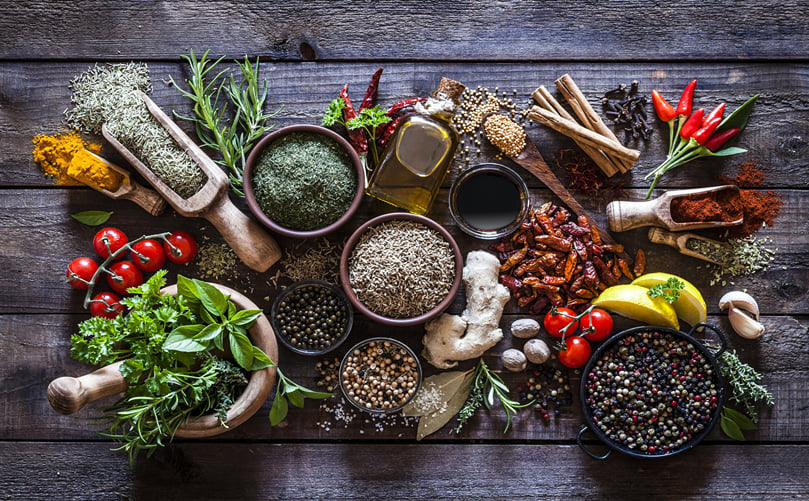
Ingredients, Food Additives and Processing Aids Used in Potato Processing and Potato Products
The Role of Ingredients and Processing Materials in Potato Processing
Ingredients and processing materials are not used simply to change the taste of potato products. In industrial potato processing, they can form part of a controlled system designed to achieve consistent quality from raw potato to finished product.
A typical French fry or potato chip process may involve raw-material preparation, washing, peeling, cutting, blanching, treatment, drying, frying, seasoning, freezing or cooling and packaging. Depending on the product, ingredients, additives or processing aids may be introduced at one or more of these stages.
Their functions can include:
- Controlling or modifying colour development
- Supporting desired texture and crispness
- Improving coating adhesion
- Influencing moisture and oil migration
- Providing flavour and aroma
- Supporting frying performance
- Controlling foam in specific processing systems
- Supporting consistency between production batches
- Protecting susceptible food components from oxidation where permitted and appropriate
- Supporting specific technological or processing requirements
The performance of these materials cannot be considered independently of the raw potato and processing conditions. Potato variety, dry matter, reducing sugar concentration, moisture content, maturity, storage history, blanching conditions, cutting dimensions, drying, frying temperature and frying time can all influence the final product.
This is particularly important for fried potato products because raw-material composition and processing conditions affect colour, texture, oil content and acrylamide formation. The U.S. Food and Drug Administration (FDA) identifies potato products such as French fries and potato chips among important dietary sources of acrylamide.
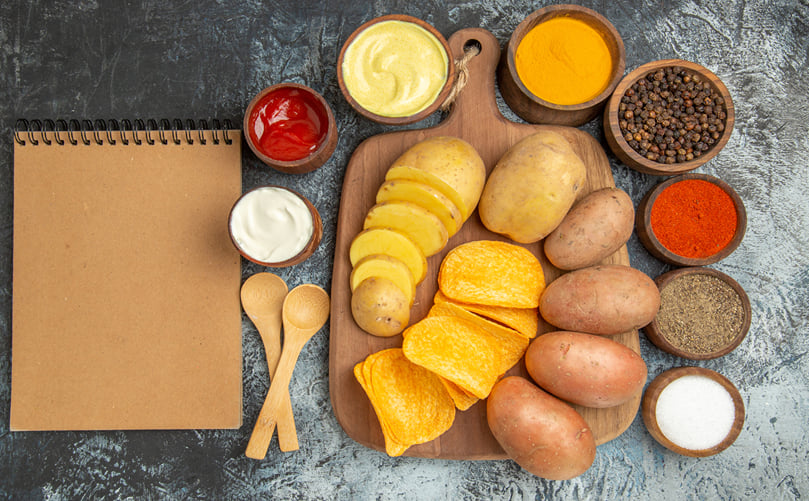
Role of Ingredients and Processing Materials in Industrial Potato Processing
Main Ingredient and Processing Material Groups Used in Potato Products
Ingredient systems differ considerably between potato products. A frozen French fry, potato chip, coated fry and dehydrated potato product do not necessarily require the same formulation or processing materials.
Frying Oil:Frying oil is a fundamental processing medium for fried potato products rather than an ingredient in every regulatory or formulation context. It transfers heat to the potato and contributes to flavour, aroma, surface characteristics and mouthfeel.
During frying, water is removed from the potato while the product develops a dehydrated outer region and a cooked interior. Oil uptake is influenced by several factors, including product geometry, moisture loss, potato composition, frying conditions and the characteristics of the frying medium.
For industrial processors, frying-oil selection is therefore closely connected with both product quality and process management. Important considerations include oxidative stability, fatty-acid composition, flavour, thermal performance, availability, cost and performance during repeated heating.
Frying oil should also be considered together with upstream processing. Potato variety, dry matter, reducing sugars, blanching, drying and frying conditions can all influence the final product and its oil content.
Enzymes: Enzymes are used in selected potato processing applications because they catalyze specific biochemical reactions. Depending on the enzyme preparation, intended use and jurisdiction, an enzyme may be regulated as a processing aid, food additive or under another regulatory framework.
Many enzyme preparations used in food processing are treated as processing aids when they perform a technological function during processing and are not intended to have a technological effect in the finished food. Codex notes that provisions for processing aids, including most enzyme preparations are not included in the General Standard for Food Additives (GSFA).
Enzyme applications therefore need to be evaluated according to the particular enzyme, processing stage, technological objective and regulatory requirements of the target market.
Defoaming Agents: Foam can develop in food processing systems because of agitation, air incorporation and the presence of surface-active components. Excessive foam can interfere with equipment operation, process control and production efficiency.
Defoaming or antifoaming agents may therefore be used in selected potato processing operations where foam needs to be controlled.
Their use is process specific. Not every potato product requires a defoaming agent and the permitted substances, conditions of use, regulatory classification and labelling requirements depend on the particular application and market.
Where a defoaming agent is used as a processing aid, the regulatory treatment may differ from that of an additive that remains in the food and performs a technological function in the finished product.
Potato Batters and Coatings: Batters and coatings are particularly important in coated French fries and other coated potato products.
A coating formulation may contain combinations of starches, flours, hydrocolloids, seasonings and other functional ingredients. The formulation is designed to form an appropriate layer on the potato surface and remain sufficiently attached during subsequent processing, freezing, handling and final cooking.
Depending on the formulation, coatings can influence:
- Adhesion to the potato surface
- Crust formation
- Crispness
- Surface appearance
- Moisture movement
- Oil uptake
- Texture after final cooking
- Stability during frozen storage and handling
Coating performance depends not only on individual ingredients but also on batter viscosity, hydration, solids content, potato surface characteristics, application method, drying, pre-frying, freezing and final frying.
FDA guidance notes that some French fries are treated with batter coatings containing combinations of flours, starches, hydrocolloids or other ingredients to improve characteristics such as texture, flavour, structure and heat retention. The guidance also notes that some batter systems may influence acrylamide formation, making evaluation of the complete formulation important.
Flavours and Seasonings: Flavours and seasonings provide the sensory identity of many potato products. They are especially important in potato chips, savoury potato snacks, seasoned fries and other ready-to-eat products.
Seasoning systems may contain salt, spices, herbs, flavouring substances, flavour enhancers and other components. Their composition depends strongly on the product formulation and target market.
Flavour preferences vary considerably between regions. Potato products may range from lightly salted chips to products containing cheese style flavours, barbecue, chilli, herbs, onion, garlic, vinegar or regionally preferred spice profiles.
Seasoning performance also has technical considerations. The seasoning should distribute consistently over the product surface, adhere adequately and maintain its desired sensory properties during processing, packaging and storage.
Under the Codex food category system, food category 15.1 covers savoury snacks based on potato, cereal, flour or starch from roots and tubers, pulses and legumes. Examples include potato chips and other savoury snacks, with or without added flavourings.
Sodium Acid Pyrophosphate (SAPP): Is a phosphate-based ingredient used in selected potato processing systems, particularly where control of discoloration is required.
Colour is an important quality characteristic in French fries and other processed potato products. Excessive darkening can negatively affect appearance and consumer acceptance. SAPP can be used in certain processing systems to help control undesirable discoloration.
SAPP has also been investigated as one component of acrylamide mitigation strategies for French fries. FDA's industry guidance identifies SAPP among the measures that may help reduce acrylamide formation under appropriate processing conditions.
However, SAPP should not be presented as a standalone solution for acrylamide control. Acrylamide formation depends on several factors, including reducing sugar concentration, asparagine, potato characteristics, blanching and frying conditions.
Starches, Flours and Hydrocolloids: Starches, flours and hydrocolloids form an important group of functional materials in coated potato products.
Starches can contribute to viscosity, film formation and coating structure. Flours can contribute solids and influence the physical properties of a batter. Hydrocolloids can modify water binding, viscosity, film formation and coating characteristics.
Their performance depends on factors such as concentration, particle size, hydration, batter temperature, processing conditions and interactions with other formulation components.
For coated French fries, the objective is not simply to produce a thick coating. The coating needs to provide an appropriate balance between adhesion, crispness, appearance, moisture management and frying performance while remaining suitable for industrial processing.
Coating composition can influence heat transfer and moisture movement during frying and can consequently affect texture and oil migration.
Salt, Acids, Sugars and Other Functional Ingredients: Other ingredients may be used depending on the product formulation and processing system.
Salt is one of the most widely used seasoning ingredients in potato products and contributes primarily to taste. It can also affect the overall formulation and sensory balance of the finished product.
Acidulants and pH-control ingredients may be used in selected formulations or processing systems where acidity or pH needs to be controlled.
Sugars or dextrose may be included in some formulations and can influence flavour and colour development. However, the naturally occurring reducing sugars in potatoes are particularly important in fried potato processing because they participate with asparagine in Maillard reactions associated with browning and acrylamide formation.
Antioxidants may be used in appropriate food systems to help protect susceptible components from oxidation, subject to applicable regulatory requirements.
Emulsifiers and stabilizers may be used in selected formulations to improve dispersion, stability, texture or processing performance.
These materials are not universal components of potato products. Their use depends on the product formulation, manufacturing process, desired technological effect and applicable regulations.
Ingredients and Processing Materials Used in Different Potato Products
Ingredient requirements vary considerably according to the type of potato product, the manufacturing process, the desired product characteristics and the target market. Some materials are incorporated into the formulation as ingredients, while others may be used as processing aids or processing treatments.
French Fries: French fries are particularly sensitive to the interaction between potato raw material and processing conditions. Manufacturers generally seek a balance between a crisp exterior, a soft and mealy interior, desirable golden colour, appropriate oil uptake and good flavour.
Depending on the product and processing system, materials used in French fry production may include frying oil, blanching or colour control treatments, coating ingredients for coated products and other functional ingredients or processing aids. Not all French fries require additional ingredients beyond those necessary for processing and frying.
Commercial frozen French fries commonly pass through several processing stages, which can include washing, peeling, cutting, blanching, colour control, drying, par-frying, freezing and packaging. The exact sequence varies between manufacturers and product specifications. Therefore, any ingredient or processing aid used at one stage needs to be compatible with subsequent processing, freezing, storage and final cooking.
Raw potato quality is also important. Cultivar, dry matter, reducing sugar concentration, storage conditions and processing conditions can influence fry colour, texture, oil uptake and acrylamide formation. FDA guidance identifies reducing sugars as an important factor in acrylamide formation in potato products and recommends approaches that consider both raw material and processing conditions.
Potato Chips: Potato chips are generally manufactured by washing and slicing potatoes, followed by treatments such as rinsing or other process controls, frying and seasoning. Frying oil and seasoning systems are therefore important components of the finished product.
The formulation and processing requirements depend on whether the product is a plain salted chip, flavoured chip or another specialty product. Seasoning systems may contain salt, spices, flavourings and other permitted ingredients or additives, depending on the formulation and applicable regulations.
Raw-material quality is particularly important for chip production. Potato cultivar, reducing sugar concentration, maturity, storage conditions and frying conditions can influence chip colour and acrylamide formation. Acrylamide can form during high temperature cooking through reactions involving reducing sugars and the amino acid asparagine. FDA identifies potato products, particularly French fries and potato chips, as important dietary sources of acrylamide.
For this reason, manufacturers control both raw material composition and processing conditions to achieve the desired colour and flavour while managing acrylamide formation. FDA guidance specifically identifies reducing sugar management, potato variety and storage conditions among factors that can influence acrylamide formation in potato products.
Coated Potato Products: Coated potato products, including coated fries and other speciality potato products, require a coating system designed to provide the desired adhesion, texture, appearance and cooking performance.
Depending on the product, coating formulations may contain ingredients such as starches, flours, modified starches, hydrocolloids, seasonings and other functional components. These ingredients can be selected to control batter or slurry viscosity, coating adhesion, crispness and structural stability during processing, freezing and final cooking.
Coating formulation is closely connected with frying performance. The coating can influence moisture loss, heat transfer, crust formation and oil uptake during cooking. Consequently, coating systems are normally designed together with the potato raw material, frying conditions and final cooking method rather than being considered independently.
The exact formulation varies substantially between products. A coated French fry, for example, may require a different coating system from a breaded or battered potato product.
Potato Snacks: Potato-based snacks represent a broad group of products with different formulations and manufacturing methods. They include conventional potato chips as well as extruded, formed, pellet-based and other savoury snacks containing potato or potato derived ingredients.
Depending on the product, formulations may contain potato, potato flakes or powders, starches, flours, frying oils, salt, spices, seasonings, flavours, colours and other functional ingredients or permitted food additives.
Codex classifies “Snacks – potato, cereal, flour or starch based (from roots and tubers, pulses and legumes)” under food category 15.1. The category includes savoury snacks such as potato chips and other potato, cereal, flour or starch-based snacks. The Codex classification is primarily used for determining applicable food additive provisions; it should not be interpreted as meaning that every product in this category has the same formulation.
Dehydrated Potato Products: Dehydrated potato products include potato flakes, granules, powders and other dried potato ingredients produced by removing moisture from processed potato material. These ingredients are used in applications such as instant mashed potatoes, soups, sauces, prepared foods, snack products and other manufactured foods.
The processing method and formulation depend on the required functional properties of the final dehydrated ingredient. Important characteristics can include rehydration behaviour, texture, viscosity, flavour, colour, water absorption and storage stability.
Some dehydrated potato products are manufactured primarily from potatoes without a complex formulation, while others may contain additional ingredients or processing aids to achieve specific functional or sensory properties. Depending on the intended application, manufacturers may use ingredients such as emulsifiers, stabilizers, antioxidants, seasonings or other permitted components.
Dehydrated potato ingredients can be supplied to retail, foodservice and industrial food manufacturers, where their functional requirements may differ according to the final application. Therefore, ingredient selection is generally determined by the required performance of the finished product rather than by a single standard formulation.
The Role of Potato Raw Material in Product Quality
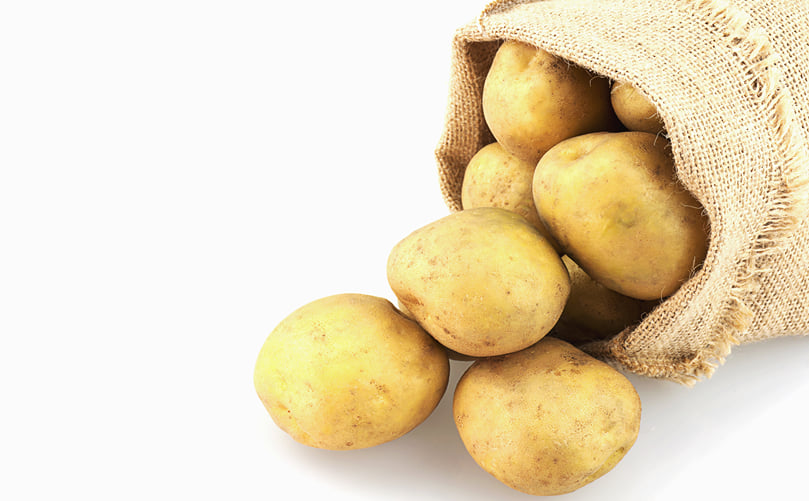
Ingredients and processing aids cannot compensate for every limitation in the raw potato. The quality and composition of the potato itself establish an important starting point for processing and can strongly influence the performance and quality of the finished product.
Cultivar, maturity, dry matter, reducing sugar concentration, moisture content and storage conditions can affect how potatoes respond to operations such as blanching, frying, drying and freezing. These characteristics can influence important product attributes, including colour, texture, oil uptake and processing yield.
Reducing sugars are particularly important in high temperature potato processing. During frying and other high temperature cooking processes, reducing sugars can participate in Maillard reactions with the amino acid asparagine, contributing to browning and the formation of acrylamide.
Storage management is therefore an important part of maintaining processing quality and managing acrylamide formation. In susceptible potato cultivars, storage at excessively low temperatures can cause cold induced sweetening, in which reducing sugars accumulate. When these potatoes are subsequently fried or otherwise exposed to high temperatures, the elevated sugar concentration can contribute to darker colour and increased acrylamide formation.
For this reason, ingredient selection should be considered as one component of a broader raw material, storage and process control strategy. Selecting an appropriate potato cultivar and managing maturity, storage conditions, reducing sugars and processing parameters are often just as important as selecting the appropriate ingredients or processing aids.
Potato Raw Material Quality: Variety, Storage, Reducing Sugars and Processing Performance
Acrylamide Formation and Mitigation in Potato Products
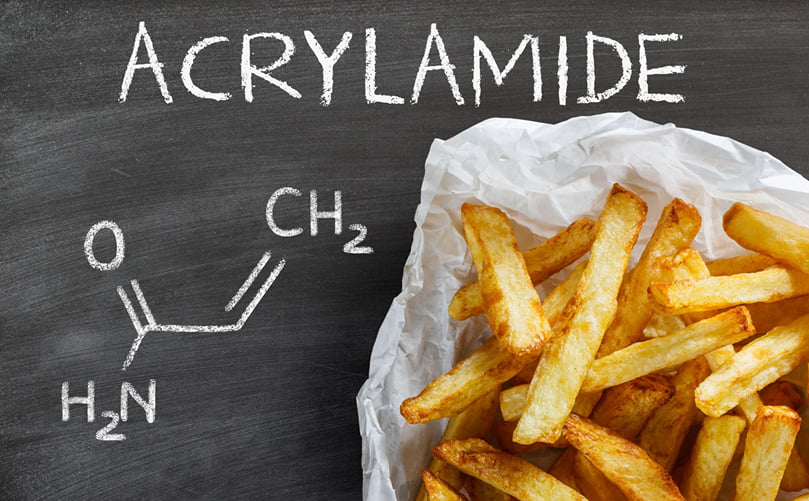
Acrylamide is a process contaminant that can form in certain plant-based foods during high temperature cooking, including frying, roasting and baking. In potato products, acrylamide forms primarily through a reaction between reducing sugars and the amino acid asparagine during high temperature processing.
Potato products such as French fries and potato chips are among the food categories in which acrylamide formation is particularly relevant. The amount formed can be influenced by the composition of the raw potato as well as by processing conditions and in some products, the formulation or ingredients used during processing.
Important factors that can influence acrylamide formation in potato products include:
- Potato variety and raw material composition
- Maturity and physiological condition of the potatoes
- Storage conditions
- Reducing sugar concentration
- Asparagine concentration
- Washing or soaking treatments
- Blanching conditions
- Product size and dimensions
- Frying temperature
- Frying time
- Final moisture content
- Degree of browning
- Formulation and coating composition
For French fries, FDA guidance identifies several approaches that may help reduce acrylamide formation, including appropriate raw material management, changes to blanching practices, control of product dimensions and evaluation of dip or batter ingredients. Sodium acid pyrophosphate (SAPP) is also identified as a potential processing measure for reducing acrylamide in French fries. However, the suitability of any particular intervention depends on the product and processing system.
Cooking conditions are particularly important because acrylamide formation generally increases with greater cooking severity, including higher temperatures and longer cooking times. For cut potato products such as French fries and potato slices, FDA advises cooking to a golden-yellow rather than brown colour, as darker brown areas tend to contain more acrylamide.
Ingredient or coating selection should therefore be evaluated as part of the complete manufacturing process. Some formulation components may help achieve the desired product characteristics or may contribute to acrylamide mitigation, while others may have little effect or could potentially influence acrylamide formation. FDA recommends evaluating batter ingredients for their potential contribution to acrylamide formation rather than assuming that a coating ingredient will automatically reduce it.
Acrylamide management is therefore best approached as an integrated raw material, formulation and process control strategy rather than as a problem that can be solved by adding a single ingredient. Managing potato composition and storage, selecting appropriate processing conditions and evaluating relevant ingredients or processing aids together can help manufacturers balance acrylamide reduction with colour, texture, flavour and other product quality requirements.
Acrylamide Formation and Mitigation in Potato Products
Selecting Ingredients for Industrial Potato Processing
Ingredient selection in industrial potato processing is a technical and commercial decision, rather than simply a matter of choosing the lowest cost material. Processors generally evaluate ingredients, additives and processing aids based on their intended technological function, compatibility with the manufacturing process, product quality, regulatory requirements, consumer expectations and supply-chain considerations.
Functional Performance: An ingredient or processing aid should provide the intended technological function at an appropriate use level under the actual processing conditions. Performance may depend on factors such as potato variety, raw material composition, processing temperature, processing time, pH, moisture and the characteristics of the finished product.
Compatibility With the Process: Ingredients need to be compatible with the equipment and processing conditions used in the plant. For example, a coating system for frozen French fries needs to perform consistently during batter preparation and application, drying or setting, par-frying, freezing, storage and final frying. Ingredients should also be suitable for the intended process without causing undesirable effects such as excessive foaming, poor adhesion, processing instability or equipment problems.
Product Quality: The selected ingredient system should help the finished product meet defined quality specifications. Depending on the potato product, these may include colour, texture, crispness, flavour, appearance, coating adhesion, moisture, oil uptake and overall eating quality.
Regulatory Compliance: Regulatory requirements are an essential consideration when selecting food additives and other functional ingredients. The permitted substances, functional classes, conditions of use, maximum use levels and labelling requirements can differ between countries and in some cases, between food categories.
The Codex General Standard for Food Additives (GSFA) provides an international reference for food additives adopted by the Codex Alimentarius Commission. It includes information such as additive names, INS numbers, functional classes, food categories and conditions of use.
However, Codex standards should not be treated as a substitute for national or regional legislation. Manufacturers must verify that an ingredient or additive is permitted for the intended use and complies with the applicable requirements in each target market.
Consumer Expectations and Product Positioning: Ingredient selection may also be influenced by consumer expectations and the positioning of the finished product. Factors can include flavour profile, nutritional characteristics, ingredient familiarity, processing approach and market preferences. Claims such as reduced-fat, clean label or other product positioning statements may also affect formulation decisions and require appropriate regulatory and substantiation checks.
Cost and Supply: Commercial formulation decisions also consider ingredient cost and supply reliability. Relevant factors may include purchase price, required dosage, availability, transportation, storage conditions, shelf life, supplier consistency and the ability to maintain a reliable supply at commercial production volumes.
The lowest purchase price does not necessarily represent the lowest overall formulation cost because an ingredient with a higher unit price may perform effectively at a lower use level or provide improvements in processing efficiency and product consistency.
Labelling and Market Requirements: Ingredients and additives must also be evaluated against the labelling requirements of the markets in which the product will be manufactured or sold. An ingredient or additive that is permitted for a particular use in one market may have different conditions of use, naming conventions or declaration requirements in another.
For products intended for multiple markets, manufacturers therefore need to review the applicable food-additive, ingredient and labelling requirements for each destination market before finalizing the formulation.
Food Additives, Ingredients and Processing Aids
The terms ingredient, food additive and processing aid should not be treated as interchangeable.
Codex defines a food additive as a substance that is not normally consumed as a food by itself or normally used as a typical ingredient and is intentionally added for a technological purpose during manufacture, processing, preparation, treatment, packing, packaging, transport or holding. The addition must result or reasonably be expected to result, in the substance or its by-products becoming a component of the food or otherwise affecting its characteristics.
Codex defines a processing aid as a substance or material, excluding equipment and utensils, that is intentionally used during processing to fulfil a technological purpose and may result in unavoidable residues or derivatives in the final product.
This distinction is particularly important in potato processing because some materials are deliberately incorporated into the food formulation, while others are used during a processing operation and are not intended to provide a technological function in the finished food.
Codex's General Standard for Food Additives (GSFA, CXS 192-1995) organizes food additive provisions according to food categories and functional classes. Its database can be searched by additive, INS number, functional class and food category.
For global manufacturers, however, the relevant national or regional legislation must always be checked in addition to Codex references.
Global Regulatory Requirements for Potato Product Ingredients
Potato products are manufactured and marketed under different food regulatory frameworks worldwide. Requirements can therefore vary between the European Union, United States, Canada, United Kingdom, Asia-Pacific, Latin America, the Middle East and Africa.
For products intended for international markets, manufacturers may need to evaluate:
- Permitted food additives and their approved uses
- Maximum permitted use levels or conditions of use
- Functional classes and technological functions
- Specifications, identity and purity requirements
- Requirements applicable to processing aids
- Ingredient and additive declarations
- Allergen labelling requirements
- Nutrition labelling requirements
- Country or region specific restrictions
- Product specific compositional or identity standards
- Requirements for claims, where applicable
The Codex General Standard for Food Additives (GSFA) provides an important international reference for evaluating the use of food additives. However, Codex standards are not a substitute for national or regional legislation and individual markets may establish different permitted additives, conditions of use, maximum levels or labelling requirements.
Because food regulations and additive provisions can change, manufacturers should verify the requirements applicable to the target market using the current legislation and regulatory databases before approving a formulation for commercial production or international distribution.
The Importance of Ingredient Process Interaction
The performance of an ingredient or processing material depends not only on its inherent properties but also on how it interacts with the potato raw material, other ingredients, equipment and processing conditions.
For example, a coating formulation may perform well in laboratory trials but behave differently during industrial scale batter preparation and application, par-frying, freezing, storage and final frying. Similarly, a frying oil with good oxidative stability may not deliver the desired product quality if frying temperature, oil turnover, filtration, raw-material quality or other process conditions are not properly controlled.
For this reason, commercial potato processors generally evaluate ingredients and processing materials in the context of the complete production process rather than in isolation. Performance may depend on factors such as potato variety, dry matter and reducing sugar content, formulation, processing equipment, temperature, residence time, oil management and storage conditions.
The most effective ingredient or processing system is therefore one that delivers the required product characteristics while remaining compatible with the raw material, equipment, processing conditions, applicable regulatory requirements and production economics.