
Advanced Equipment Solutions for Sustainable Potato Storage Systems
Potato storage remains a critical phase in the post-harvest supply chain, where harvested tubers at optimal maturity are preserved to maintain their quality, nutritional profile and commercial value. Globally, post-harvest losses for potatoes can reach 20–40%, with averages of 20–25% reported in major producing regions due to inadequate environmental control that accelerates respiration, transpiration, sprouting and decay.
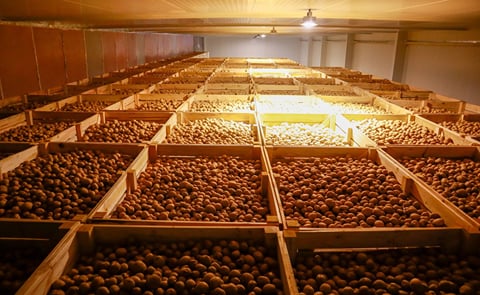
This comprehensive guide explores key equipment categories in modern potato storage, drawing on verified data from industry analyses, AHDB trials and FAO reports. It highlights sustainable, high efficiency technologies for bulk, box and automated storage systems capable of achieving 6–12 months of preservation with losses under 2–5%.
Leveraging advancements in IoT, AI-based monitoring and low GWP refrigerants, the guide emphasizes systems that can cut energy costs by up to 50% while ensuring compliance with evolving environmental regulations such as the U.S. AIM Act.
For seed potatoes, the focus lies on maintaining physiological vigor, whereas for table and processing varieties, it centers on minimizing sugar buildup and storage related defects. The guide also includes regional adaptations, such as solar integrated systems gaining traction in Asia-Pacific markets along with practical implementation strategies for maximizing return on investment (ROI) and long-term sustainability.
Smart Climate-Controlled Potato Storage Infrastructure
Purpose and Role of Equipment in Modern Potato Storage
Equipment in potato storage systems is engineered to create a precisely controlled microenvironment that addresses the tuber’s key physiological challenges namely respiration, which generates heat and carbon dioxide and transpiration, which leads to weight loss and shriveling.
Core components such as ventilation systems, refrigeration units, humidifiers and automated monitoring tools work synergistically to remove field heat (typically 15–25°C at harvest) and gradually transition tubers to optimal storage temperatures (4–13°C). This controlled cooling process enables suberization allowing wounds to heal and delaying dormancy break, which is essential for long-term preservation.
Modern integrated solutions like Tolsma-Grisnich’s intelligent climate control systems automate these operations, reducing manual labor by up to 70% while maintaining uniform temperature, humidity and airflow even in pile depths of 20 feet, as confirmed in field validation trials. These precision systems not only sustain dormancy but also prevent fungal growth and soft rot by regulating airflow and gas balance, ensuring both quality and safety.
Beyond preservation, advanced equipment now employs predictive analytics and AI-driven controls to forecast potential quality declines and adjust parameters proactively, extending the marketable shelf life of potatoes. For large scale storage, modular system designs provide scalability from 500-ton farm level stores to 50,000-ton commercial facilities, enabling customized solutions across production scales.
Ultimately, the purpose of modern potato storage equipment extends beyond preservation it aligns with sustainability and energy efficiency goals, integrating low carbon technologies and renewable powered systems that support global carbon reduction commitments while ensuring economic and operational efficiency.
Importance of Temperature, Humidity, Gas and Airflow Control
Precise environmental control is fundamental to effective potato storage, directly influencing quality, shelf life and market value.
Temperature control is paramount storage temperatures above 10°C can accelerate respiration rates by 2–3 times, promoting sprouting and sugar accumulation (“sweetening”) in processing potatoes, which leads to dark fry color and reduced product quality. Gradual cooling at a rate of 1–2°C per day prevents chilling injuries such as blackheart or internal necrosis maintaining tuber integrity.
Humidity management is equally critical. Maintaining 90–98% relative humidity (RH) minimizes moisture loss and shrinkage, which can exceed 0.5% per month under drier conditions. At the same time, avoiding excessive humidity prevents condensation and fungal growth. According to AHDB trials, optimal RH conditions can reduce weight loss by up to 40%, preserving firmness and appearance.
Gas composition within storage must be carefully regulated. Ideal levels maintain CO₂ below 1,000–3,000 ppm and O₂ above 5%, preventing anaerobic respiration and associated disorders. Ethylene concentrations require close monitoring after dosing to ensure effective sprout suppression without exceeding safety thresholds.
Airflow plays a vital role in maintaining uniform conditions throughout the pile. Air velocities between 0.05–0.2 m/s ensure even heat removal, CO₂ dispersion and moisture balance, eliminating hotspots that could cause localized decay or uneven curing.
Modern systems integrate variable frequency drives (VFDs) in fans, which dynamically adjust airflow based on real time sensor data, achieving 25–30% energy savings. IoT-enabled sensors continuously monitor temperature, humidity and gas parameters, triggering automated responses to correct deviations immediately.
Collectively, these controls maintain physiological stability, reduce post-harvest losses and ensure compliance with food safety standards set by the FDA and EU regulations supporting both sustainability and product consistency throughout extended storage periods.
Goals: Minimizing Sprouting, Rot and Weight Loss in Potato Storage
The central goal of modern potato storage systems is to maintain tuber quality while minimizing physiological and pathological losses. According to FAO global benchmarks, an effective storage setup should achieve less than 1% sprouting incidence under 2% rot development and only 3–5% total weight loss during a six-month storage cycle.
For seed potatoes maintaining a temperature range of 3–5°C with high relative humidity preserves physiological vigor and ensures strong germination potential at planting. In contrast, processing varieties are optimally stored at 7–10°C, which prevents the accumulation of reducing sugars that can lead to dark fry color and quality degradation.
Field-validated AHDB trials have shown that AI-driven ventilation systems can reduce total storage losses by up to 25%, using predictive algorithms that adjust airflow in response to respiration activity. Likewise, rot development can be significantly curtailed by nearly 50% through the use of volatile gas sensors that detect early signs of decay and trigger corrective ventilation or cooling responses.
To limit weight loss, advanced storage designs emphasize airtight insulation, humidity control and moisture retention barriers maintaining optimal turgidity throughout storage. Innovative methods such as ethylene dosing have further improved results providing 80–90% sprout suppression efficiency without leaving chemical residues.
Integrated digital monitoring systems now provide full traceability and help facilities comply with Global G.A.P. and other international standards. Collectively, these measures not only enhance shelf life and reduce waste but also contribute to 10–15% higher profitability aligning with sustainability goals in a crop that exceeds 400 million tons of global annual production.
Ventilation and Aeration Equipment
Role and Efficiency: Ventilation systems act as the respiratory core of potato storage, facilitating 10–20 air exchanges per hour to regulate metabolic heat release, which can reach up to 50 kJ/kg/day and to expel gases such as carbon dioxide and water vapor. These processes typically account for 40–60% of total operational energy costs making energy efficiency a key priority. Modern systems increasingly employ inverter driven motors equipped with variable frequency drives (VFDs), which automatically adjust fan speed according to real time temperature and humidity conditions. This adaptive control reduces power consumption by 30–50%, aligning with Tolsma-Grisnich benchmarks for sustainable operation.
Fan Types and Air Movement: Axial fans, such as the ACM series from Tolsma-Grisnich, dominate high-volume, low-pressure applications in bulk potato piles. These fans deliver between 20,000 and 50,000 cubic meters of air per hour at up to 99% efficiency, ensuring uniform gas exchange while preventing excessive tuber dehydration. In contrast, centrifugal fans are designed for ducted systems that demand higher static pressure to overcome deep pile resistance. These configurations often incorporate Computational Fluid Dynamics (CFD) modeling to optimize airflow pathways, ensuring consistent temperature and gas distribution throughout the storage facility.
Air Distribution Systems: Air distribution within potato storages relies on engineered ducting and floor systems. Half round polyethylene ducts or galvanized plenums, such as those developed by IVI-Air are commonly used for efficient airflow delivery. These are often paired with perforated floors having 10–20% open area, such as Techmark’s Air Cup System, which provides full floor coverage and reduces thermal gradients by up to 40%. The uniform distribution achieved through these designs minimizes localized hot spots and condensation risks.
Control and Filtration Components: To enhance system precision and longevity, modern facilities integrate automated louvers, dampers and air filtration units. Motorized galvanized louvers regulate the intake of fresh air, while MERV-13 and HEPA filters capture dust particles and fungal spores. The inclusion of these filtration systems extends fan and ducting lifespan by approximately 20%, reducing maintenance frequency and improving overall air quality.
System Configurations: Depending on storage design and crop requirements, different ventilation configurations are used. Positive-pressure systems push conditioned air through potato piles for rapid post-harvest drying, typically maintaining airflow velocities around 0.15 meters per second. Negative-pressure systems, on the other hand, gently draw air through the pile in box storages to minimize bruising and dust accumulation. Hybrid models, such as those by Welvent, combine both methods to achieve approximately 15% greater uniformity in temperature and humidity across the storage volume.
Automation and Smart Control: Recent advancements have brought the integration of CFD-based layout modeling, IoT-driven environmental sensors, and VFD-enabled smart cycling. These systems continuously monitor pile density, moisture levels and external climatic conditions to dynamically forecast airflow requirements. Through precise modulation, temperature gradients are maintained below 0.5°C, ensuring an optimal environment that supports long-term potato quality and reduces overall energy demand.
Cooling and Refrigeration Equipment
System Function and Capacity: Refrigeration systems in potato storage are engineered to extract residual field heat and maintain stable temperature setpoints throughout the storage cycle. These systems are typically rated at 20–50 kW per 1,000 tons of storage capacity, depending on insulation quality, ambient temperature and desired cooling rate. Regulatory standards now emphasize the use of low–global warming potential (GWP) refrigerants such as R-454B (GWP 466), replacing phased-out options like R-404A, in line with EPA and EU F-Gas environmental compliance.
Compressor and Condenser Technologies: The heart of the system lies in scroll compressors, commonly supplied by manufacturers such as Heatcraft, which offer high efficiency, compact design and reliability. These compressors are paired with air-cooled condensers in outdoor units to dissipate heat effectively under varied climatic conditions. Inside the facility, finned in-duct evaporators are installed along the ventilation paths to ensure efficient air exchange, achieving up to 95% heat transfer efficiency without disrupting airflow uniformity across potato piles.
System Configurations: Refrigeration configurations vary with operational scale and flexibility needs. Packaged modular units, such as Welvent’s 25–65 kW systems, offer plug-and-play retrofits ideal for seasonal or medium-scale storages, providing scalability from small farms to large industrial setups. In contrast, split systems like those from Kooljet separate the compressor and evaporator units, enabling zoned temperature control—a key advantage for managing distinct areas such as curing chambers and long-term storage zones. This zoned configuration enhances energy optimization by cooling only where and when needed.
Defrost and Condensate Management: To maintain continuous efficiency, defrost cycles are programmed at 6–8 hour intervals, utilizing either electric or hot-gas methods to prevent frost buildup on evaporator coils. Sloped drain channels and relative humidity (RH)-linked condensate pumps effectively remove meltwater while minimizing humidity spikes, which could otherwise promote disease or sprouting within the pile.
Control and Automation: Modern refrigeration systems incorporate proportional–integral–derivative (PID) controllers connected to a network of distributed temperature and humidity sensors, delivering precision control within ±0.5°C. Remote connectivity through mobile and web-based interfaces allows operators to make real-time adjustments during peak harvest or variable weather conditions. Additionally, the integration of variable frequency drives (VFDs) on compressors and inverter-driven fans enables dynamic load modulation, translating to 20–40% energy savings, as evidenced in Carrier Transicold pilot studies.
Sustainability and Emerging Technologies: Sustainability trends in cold storage are advancing rapidly, particularly in the Asia–Pacific (APAC) region. The adoption of propane (R-290) refrigeration systems has demonstrated a 99% reduction in GWP compared to legacy refrigerants, without sacrificing cooling performance. Meanwhile, solar-assisted condenser units are being introduced to supplement power in off-grid or energy-intensive operations, reducing the carbon footprint by up to 25%. These innovations mark a significant step toward environmentally responsible, high-efficiency potato storage.
Temperature, Humidity and Gas Monitoring Systems
Real-time environmental monitoring forms the backbone of proactive potato storage management. IoT-enabled platforms now capture over 1,000 data points daily, issuing SMS alerts for deviations exceeding 5%, in line with Vaisala standards. Wired RTD probes, such as TeleSense’s spear-type designs, penetrate deep into potato piles to provide accurate temperature profiling. Meanwhile, wireless capacitive RH sensors from SenseAnywhere offer ±2% precision and a 10-year battery life, ensuring long-term, maintenance-free operation.
For gas regulation, NDIR-based CO₂ analyzers (measuring in the 0–10,000 ppm range) and paramagnetic O₂ sensors automatically activate ventilation when thresholds such as 1,500 ppm CO₂ or 5% O₂ are reached preventing physiological stress and quality degradation. Electrochemical ethylene sensors (1–100 ppb sensitivity) monitor post-dosing concentrations, maintaining up to 80% sprout suppression without surpassing safe residue limits.
Cloud-integrated data loggers, like Crodeon’s Reporter, store up to five years of trend data, enabling forensic analysis and regulatory auditing. Advanced PLC systems such as Delta DIAView coordinate automated ventilation and refrigeration, while SCADA dashboards provide multi-site visualization and centralized control. AI extensions further enhance decision-making by forecasting anomalies up to seven days in advance through machine learning analysis of historical data.
Integration with blockchain technology strengthens traceability from field to fork, reducing fraud risks by up to 20%. Collectively, these monitoring systems not only minimize post-harvest losses but also enable predictive quality modeling, ensuring optimal market timing and extended storage life.
Sprout-Control and Gas-Management Equipment
The phase-out of CIPC (Chlorpropham) in the EU since 2020 and tightening restrictions in the U.S. and other regions have accelerated the shift toward ethylene-based sprout control, recording a 300% rise in adoption, according to Spud Smart reports. Natural ethylene generators, such as those from Restrain, achieve 80–90% sprout suppression for 4–6 months with zero chemical residues, making them ideal for sustainable and export-compliant storage programs.
For chemical and organic protocols, ULV (Ultra-Low Volume) thermal foggers are used to apply 1,4-Dimethyl naphthalene (DMN) or essential oils, achieving up to 95% fog coverage while maintaining <0.1% surface residues, which aligns with organic certification standards.
Ethylene dosing systems typically generate 10–100 ppm ethylene in situ via catalytic converters, synchronized with circulation fans to ensure homogeneous gas distribution across potato piles up to 20 feet deep. To prevent overexposure, activated carbon scrubbers selectively absorb excess ethylene and CO₂, maintaining concentrations below 3,000 ppm a threshold shown by AHDB trials to preserve fry color and processing quality.
Controlled Atmosphere (CA) systems, employing membrane gas separators, regulate oxygen and carbon dioxide to 2–5% O₂ and 5–10% CO₂, extending storage life by up to 20%. These systems integrate interlocked ventilation controls for operational safety.
Advanced automated dosing platforms, equipped with residue spectrometers, ensure compliance with <0.01 mg/kg residue limits and are linked to ventilation interlocks to prevent accidental gas leaks. AI-driven scheduling systems now optimize ethylene or DMN release based on varietal dormancy profiles, reducing total application frequency by approximately 25%.
To safeguard personnel, comprehensive handling protocols are enforced, including PPE use, gas-zone alarms and restricted access, minimizing exposure risks during high-volume fogging or ethylene release operations.
Curing and Drying Equipment
Post-harvest curing for 10–14 days at 15–20°C and 90–95% relative humidity (RH) promotes periderm healing and reduces rot incidence by up to 50%, as documented in Frontiers in Nutrition studies on root crops. Hot air blowers, equipped with electric or gas-fired heaters and calibrated to 0.1 m/s airflow, ensure uniform temperature distribution without scorching delicate tuber surfaces.
To maintain optimal humidity, ultrasonic humidifiers such as those from Condair deliver fine mist control, while desiccant dehumidifiers (e.g., DA 2400N models) effectively remove excess moisture during the soil-shedding and drying phases. Plenum-fed distribution fans within dedicated curing chambers transition the environment from high-RH curing to moderate 70–80% drying, preventing over-curing, which can soften skins and encourage pathogen invasion.
Curing parameters must be varietal-specific; for instance, red-skinned cultivars require shorter curing durations to avoid surface discoloration. Innovative electrohydrodynamic (EHD) drying systems enhance energy efficiency by up to 30% through the use of ionized airflow, as demonstrated in pilot-scale trials.
In emerging markets, solar-assisted heater systems have reduced operational costs by approximately 20%, offering a sustainable alternative to fuel-based heating. Integration with IoT-based environmental controls enables automated cycle adjustments using wound-healing sensor feedback, ensuring precise and energy-efficient management.
When properly sequenced, the curing and drying phases enable a smooth transition into long-term storage, significantly minimizing total post-harvest losses and maintaining tuber integrity for extended marketing windows.
Handling and Sorting Equipment
Gentle handling systems are critical in preserving tuber quality, limiting mechanical bruising to below 1%, as demonstrated in TOMRA’s automated handling deployments, which also reduce labor requirements by up to 50%.
Receiving hoppers, such as Mayo’s vibration-dampened designs, ensure smooth intake and transfer, feeding screw elevators operating at 50–100 tons per hour without causing impact damage. Modular conveyor belts with cushioned rollers and rotary soil separators remove up to 90% of soil clods through controlled agitation, minimizing skin abrasions.
Downstream, brush washers from Tong Engineering, followed by air-knock dryers, handle 20–40 tons per hour while maintaining the natural periderm integrity essential for extended storage life.
Optical sorting systems, such as TOMRA’s laser and multispectral units, deliver 99% detection accuracy for greening, rot and surface defects, processing 10–20 tons per hour with simultaneous size and weight grading. Sensor-guided diverters and padded transfer chutes further safeguard the tubers, while AI-driven vision systems eliminate abrupt drops, reducing quality claims by up to 40%.
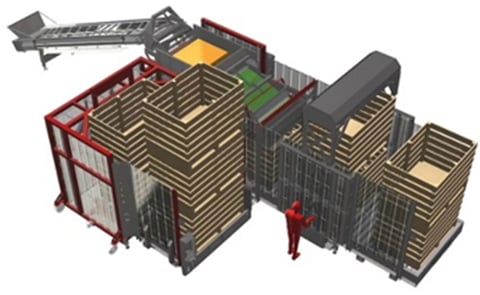
Recent automation advancements include robotic arms for bin stacking and blockchain-enabled lot tracing, providing end-to-end transparency and traceable product movement from field intake to storage bins.
Collectively, these integrated handling and sorting systems maximize throughput efficiency while maintaining premium quality standards, essential for both fresh market and processing-grade potatoes.
Structural and Insulation Equipment
Storage facility design plays a decisive role in maintaining thermal stability and minimizing energy consumption. Effective systems require insulation ratings of R-20 or higher, delivering 5–10% energy savings per inch of insulation, as recommended by University of Idaho post-harvest engineering guidelines. Ceilings are typically rated at R-45 to R-60, while walls maintain R-35 to R-40 to effectively curb heat ingress.
Polyurethane or polyisocyanurate (PIR) insulated panels (4–6 inches thick), such as those from Structall SIPs, provide fire-resistant cores and airtight, seamless seals, enhancing both safety and efficiency. To combat interstitial condensation, 6-mil polyethylene vapor barriers are installed in conjunction with insulated swing doors featuring magnetic gaskets to ensure complete airtightness.
For floor systems, HDPE Q-deck perforated panels with 15% open area offered by BA Products enable under-pile aeration, promoting uniform air circulation. Modular duct systems allow easy retrofits in legacy buildings, improving airflow without structural overhauls.
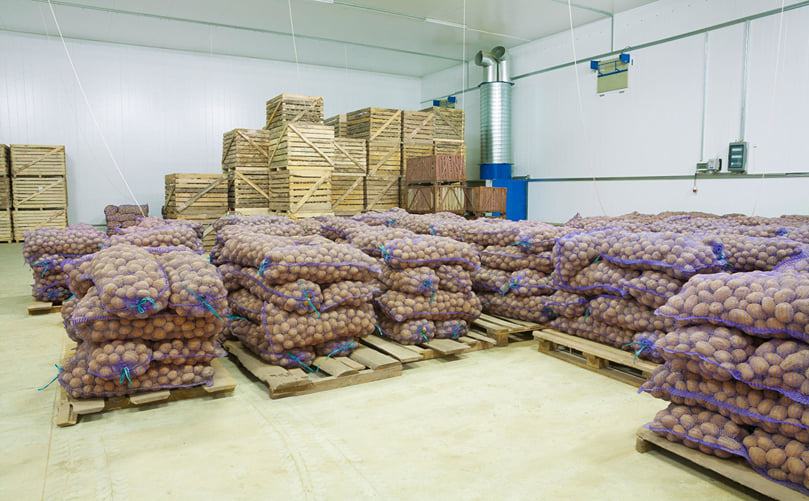
Stackable reusable plastic crates (RPCs) from IFCO, with 360° venting, hold 1–2 tons per bin and reduce internal temperature gradients by up to 30% in bulk or box storage systems. Advanced composite insulation materials incorporating phase-change materials (PCMs) add thermal buffering capacity, stabilizing temperatures during power interruptions or equipment downtime.
In regions prone to seismic activity, structural reinforcements ensure long-term durability and operational safety. Meanwhile, modular prefabricated building designs accelerate construction timelines by up to 40%, enabling rapid deployment of high-performance storage facilities.
Collectively, these structural and insulation components establish the foundation for energy-efficient, durable and temperature-stable potato storage, ensuring consistent quality preservation throughout extended storage periods.
Automation and Control Systems
Modern potato storage operations increasingly rely on automation platforms that integrate data from 50 or more sensors into unified control systems, improving return on investment (ROI) by 15–25% through predictive analytics, according to Cellar Insights reports.
Allen-Bradley PLCs paired with Wonderware SCADA interfaces provide fault-tolerant orchestration across critical subsystems, including ventilation, refrigeration and gas management. IVI Sentinel control panels synchronize environmental sensors with automatic fan and compressor modulation, maintaining temperature gradients below 0.5°C for uniform storage conditions.
Smart scheduling algorithms leverage demand-response integration, automatically shifting energy-intensive operations to off-peak hours, reducing utility costs by up to 20%. Meanwhile, AI-driven platforms such as ATLAS analyze vibration, temperature and current flow data to forecast mechanical failures 7–10 days in advance, cutting downtime by 40% and extending equipment life.
For real-time oversight, mobile dashboards from Crodeon enable geofenced alerts, multi-site monitoring and even VR-based simulation environments for operator training and system visualization.
Emerging blockchain-based pilot systems are further enhancing traceability and environmental compliance, creating a transparent data trail from sensor input to shipment dispatch.
Collectively, these automation and control systems transform conventional storage infrastructure into intelligent, adaptive networks, capable of self-optimizing performance under dynamic climatic and market conditions.
Maintenance, Safety and Utility Equipment
Proactive maintenance programs are crucial to ensuring long-term operational efficiency and safety in storage and processing environments. Routine upkeep extends the average equipment lifespan to 15–20 years, supported by IoT-based maintenance kits that include EC motors, drive belts and MERV-rated filters for predictive replacements before failures occur.
Backup power systems play a critical role in safeguarding perishable goods and automation continuity. Diesel generators (100–500 kW) provide 24–48 hours of standby power, essential in regions with frequent outages, while hybrid systems integrating solar panels help lower overall operating expenses (OPEX) by up to 25%.
Safety infrastructure adheres to NFPA standards, incorporating ionization smoke detectors and Kidde electrochemical CO₂ alarms that activate automatic ventilation once CO₂ levels exceed 5,000 ppm. In bulk storage zones, zoned CO₂ and LEL (Lower Explosive Limit) monitors trigger exhaust fans when concentrations approach 35% LEL, effectively mitigating fire and asphyxiation risks.
For biological and pest safety, UV-C sanitizers, pheromone traps and automated foggers are integrated as part of Integrated Pest Management (IPM) protocols, ensuring periodic disinfection and microbial control.
Remote 5G-enabled diagnostics allow real-time performance monitoring, reducing manual service calls by 30% and enabling quick troubleshooting through predictive analytics. Combined with comprehensive safety training and standard operating procedures (SOPs), these systems ensure operational resilience, worker safety and sustainable energy efficiency across all facility operations.
Leading Companies in Potato Storage Equipment Manufacturing
Global leaders in potato storage equipment manufacturing are driving innovation through energy-efficient, automated, and scalable solutions tailored to diverse climatic and operational needs.
Welvent (UK): specializes in 25–65 kW modular refrigeration systems, offering hireable cooling units for seasonal adaptability and short-term expansion. Their systems are designed for precision air management and optimal humidity control, supporting both small and industrial-scale operations.
Tolsma-Grisnich (Netherlands): remains a front-runner in ACM ventilation and Air Control MAX technologies, delivering up to 36% noise reduction and 25% energy savings compared to conventional systems. Their advanced airflow design ensures uniform temperature gradients and reduced condensation losses.
Frigomekanik (Turkey): manufactures energy-optimized ventilation and refrigeration units engineered to minimize post-harvest weight losses by up to 15%, particularly for potatoes and onions stored under variable ambient conditions.
VDT AgroTech (Netherlands): integrates IoT and automation into smart storage bins, allowing real-time monitoring of temperature, CO₂ and humidity, which enhances product quality and reduces manual supervision.
Kooljet (Canada): focuses on in-duct cooling systems capable of removing field heat (around 10°C reduction) within 24 hours, ensuring rapid stabilization and minimal microbial risk post-harvest.
In the Asia-Pacific region, HimTaj, Frick India and Blue Cold (India) lead in producing PUF-insulated cold rooms that provide reliable, cost-effective solutions for bulk storage and regional packhouses.
Global Market Overview of Potato Storage Systems
The global potato storage systems market, currently valued at around USD 2.1 billion, is projected to expand at a CAGR of approximately 5.3%, underpinned by technological innovation, energy optimization and sustainability initiatives across key producing regions.
Key Growth Drivers: The sector’s growth is driven by the adoption of automation, IoT integration and energy-efficient variable frequency drives (VFDs), which collectively yield up to 30% cost savings and reduce manual labor requirements by nearly 50%. These advancements enable high-capacity facilities to handle greater global volumes with improved precision and traceability.
Regional Market Insights
- Europe (35% market share) continues to dominate, leveraging Dutch-style automated systems and advanced climate control technologies to ensure superior product quality and operational efficiency.
- Asia-Pacific (30% market share) is witnessing rapid expansion, particularly in India and China, fueled by urbanization, rising cold chain investments and agricultural modernization.
- North America is steering toward sustainability-driven retrofits, with the AIM Act accelerating transitions to low-GWP (Global Warming Potential) refrigerants and eco-friendly materials.
Technological & Regulatory Shifts
The transition from CIPC to ethylene-based sprout suppression already complete in the EU and advancing in the U.S. has boosted adoption rates by over 40%. Solutions such as Restrain’s zero-residue ethylene technology, though 20–30% more expensive, offer a greener, compliant alternative that aligns with regulatory mandates and consumer demand for residue-free produce.
Low-emission refrigerants like R-454B and R-290 have emerged as industry standards, achieving up to 99% reduction in greenhouse gas emissions, while solar-integrated systems in the Asia-Pacific region are cutting carbon footprints by nearly 25%.
Emerging Trends and Future Outlook
Next-generation systems are incorporating AI and machine learning to enable predictive shelf-life modeling, potentially extending storage longevity by 20%. Additionally, blockchain integration is driving 95% traceability across the supply chain, enhancing food safety and transparency.
Holistic adoption of these innovations is expected to deliver a 10–15% uplift in ROI, positioning the market for sustained growth and long-term resilience. For customized ROI calculators or region-specific configurations, industry leaders such as Tolsma-Grisnich, VDT AgroTech and Frigomekanik offer tailored consultation and technical solutions to optimize storage economics.