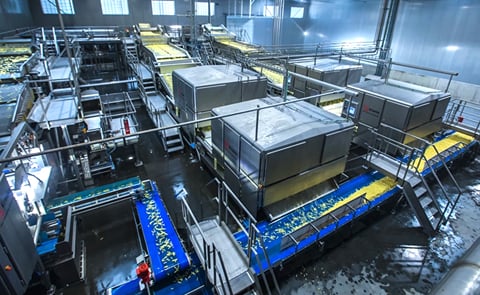

Everything You Need to Know About Turnkey Frozen French Fry Processing Lines
What is a Turnkey Frozen French Fry Processing Line?
A turnkey frozen French fry processing line is a fully integrated, ready-to-operate industrial system that converts raw potatoes into packaged frozen French fries. It includes every stage of production, from raw potato receiving and preparation to cutting, blanching, drying, par-frying, freezing, packaging and cold storage. The entire facility is supplied by a single provider responsible for process design, engineering, equipment supply, installation, commissioning and operator training.
Importance in the Frozen Food Industry: Frozen French fries are one of the largest product categories in the global frozen potato industry. Modern processing lines deliver consistent product quality, improved food safety, extended shelf life and high production efficiency. The combination of par-frying and Individually Quick Frozen (IQF) technology preserves texture, flavor and appearance while reducing product waste and maintaining quality throughout storage and distribution.
Global Market Demand: The global French fries market, largely driven by frozen French fries was valued at approximately USD 17–28 billion in 2025 and is projected to reach USD 24–40 billion by 2030–2032, growing at a compound annual growth rate (CAGR) of approximately 5–6.4%, depending on the market research source. Frozen French fries account for the majority of the market, supported by strong demand from quick-service restaurants (QSRs), retail and foodservice sectors. Market growth is driven by expanding QSR chains, urbanization, increasing disposable incomes, changing consumer lifestyles and rising demand across Asia-Pacific, the Middle East and other emerging markets. Belgium, the Netherlands, the United States and Canada remain major producers and exporters, while significant processing capacity is expanding in countries such as India, China and Egypt.
Why Manufacturers Choose Turnkey Solutions: Manufacturers choose turnkey processing lines because they provide a complete, integrated solution from a single supplier. This approach simplifies project management, reduces technical and commercial risks, shortens installation and commissioning time, ensures compatibility between equipment, optimizes plant layout and production efficiency and provides comprehensive technical support, training and after-sales service. Turnkey solutions are particularly suitable for companies establishing new processing facilities or expanding existing production capacity.
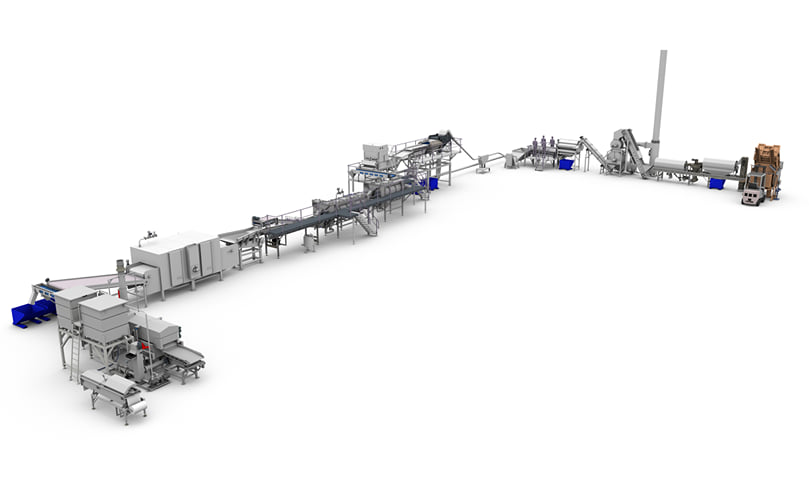
Turnkey Frozen French Fry Processing Line
What Is a Turnkey Frozen French Fry Processing Line?
A turnkey frozen French fry processing line is a fully integrated industrial processing system designed to convert raw potatoes into finished frozen French fries. It is supplied as a complete solution, including process equipment, electrical systems, automation, installation, commissioning, operator training and technical support. Many suppliers also offer performance targets for throughput, product quality and operational efficiency as part of the project agreement.
A typical turnkey line includes integrated processing stages such as potato reception, washing, peeling, sorting, cutting, blanching, drying, par-frying, freezing (typically Individual Quick Freezing (IQF)), quality inspection, weighing, packaging and palletizing. Depending on production requirements, the system may also incorporate optical sorting, metal detection, oil filtration, wastewater treatment, heat recovery and automated storage systems.
How a Turnkey Project Works
A turnkey project generally begins with process design and plant layout development followed by equipment manufacturing, Factory Acceptance Testing (FAT), installation, Site Acceptance Testing (SAT), commissioning and operator training. The project may also include civil engineering coordination, utility integration (such as steam boilers, refrigeration systems, compressed air and water treatment), automation programming and production validation to ensure the line consistently meets agreed product specifications, including fry color, moisture content, oil content, texture and dimensional requirements.
Turnkey Vs. Standalone Equipment
Unlike standalone machines purchased from multiple vendors a turnkey processing line is engineered as a single integrated system. Equipment is designed to work together seamlessly, improving material flow, reducing product damage, minimizing downtime and simplifying maintenance. A single supplier also provides centralized project management, technical support and system responsibility throughout installation and startup.
Key Benefits
- Improved processing efficiency: Integrated automation helps optimize cutting performance, reduce waste and maximize raw potato utilization, although final yield depends on potato variety, quality and process settings.
- Scalability and flexibility: Modular line designs allow future capacity expansion and support the production of different French fry styles, including straight-cut, crinkle-cut, steak fries and coated products.
- Food safety and traceability: Modern turnkey systems are designed to support compliance with international food safety standards through hygienic equipment design, automated cleaning systems, product traceability and quality monitoring.
- Lower total cost of ownership: Energy efficient equipment, process automation, predictive maintenance tools, optimized cleaning cycles and long-term service agreements can help reduce operating costs over the system's lifecycle.
Turnkey frozen French fry processing lines are available from manufacturers in Europe, North America and Asia with configurations tailored to regional production capacities, utility requirements, local regulations and export market standards. Depending on customer requirements, equipment can be designed to support internationally recognized food safety and quality certifications as well as specific market requirements such as Halal or Kosher production practices where applicable.
Applications and End Products
Expanded Product Range Modern frozen French fry processing lines manufacture a wide range of value-added products beyond standard straight-cut fries. These include batter coated fries for enhanced crispiness in ovens and air fryers, seasoned varieties (such as herb or spice coated fries), reduced oil formulations and gluten free products. Sweet potato fries can also be produced although they require modified blanching, frying and freezing conditions due to their higher sugar content and different starch composition.
With minor equipment or tooling adjustments, the same processing line can also manufacture potato wedges, crinkle cut fries, steak fries, shoestring fries, hash browns, potato gems, potato smiles and other formed potato products. Product size, cut style, texture and seasoning profiles are often customized to meet regional consumer preferences. For example, thicker steak fries are more popular in North America, while thinner shoestring fries are widely preferred in many Asian markets.
Applications Across Industries
Frozen food manufacturers and industrial processors: Produce frozen French fries in bulk for food manufacturers, distributors or companies that perform secondary processing, packaging or private label production.
Foodservice suppliers and Quick Service Restaurants (QSRs): Represent the largest market segment, accounting for more than half of global frozen French fry consumption. These products are supplied to fast-food chains, restaurants, hotels, catering companies, schools, hospitals and airlines, where consistent size, texture and frying performance are essential. Bulk packaging typically ranges from 2.5 kg to 10 kg with larger industrial packs also available.
Retail brands and private label manufacturers: Supply consumer-ready frozen fries in packages ranging from approximately 400 g to 2.5 kg for supermarkets and grocery retailers. Products are increasingly designed for oven and air-fryer preparation with resealable packaging and premium seasoning options. Private label products continue to drive growth across Europe, North America and rapidly expanding retail markets in the Middle East and Asia.
Export-oriented processors: Manufacture frozen French fries that meet international quality standards for export markets. Major exporting countries include Belgium, the Netherlands, Canada, the United States, India, China and Egypt, supplying products to destinations across the Middle East, Africa, Asia and Latin America. Export-grade fries must maintain consistent size, color, texture after reheating, low defect levels and uninterrupted cold chain quality throughout storage and transportation.
Additional applications include supplying cloud kitchens, ready-meal manufacturers, institutional caterers and food processors that use frozen French fries as meal components or side dishes. In emerging economies, frozen French fry processing lines also support import substitution, strengthen domestic food processing industries, create employment opportunities, add value to locally produced potatoes and meet growing consumer demand for convenient frozen foods.
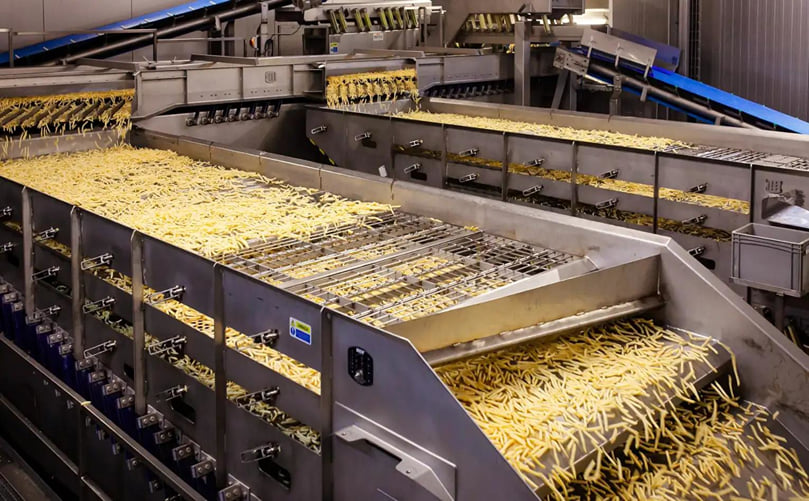
Applications and End Products of Frozen French Fry Processing Lines
Project Planning and Plant Design
Feasibility Study: Comprehensive feasibility studies assess raw material availability and contract farming models, detailed market demand forecasting (including export potential), competitive analysis, Environmental Impact Assessments (EIA) and financial projections incorporating sensitivity analyses for potato price volatility, energy costs and currency fluctuations. For global projects, this also includes regulatory compliance mapping (e.g., FDA, EU or local food authority requirements) and supply chain risk assessment.
Capacity Planning: Capacity ranges from pilot and small-scale plants (under 1 ton/hour) serving regional markets to mega-plants processing 10–30+ tons/hour of raw potatoes. Planning factors include plant utilization rates (typically 70–85% for seasonal crops), shift patterns (one to three shifts) and futureproofing for a 20–30% capacity expansion without major civil works.
Site Selection Criteria
- Proximity to reliable potato growing regions to minimize transportation damage and costs.
- Access to an abundant supply of high-quality water (for washing and blanching) and a reliable power grid (or backup power generation).
- Well-developed logistics infrastructure, including proximity to highways, ports and cold chain networks for domestic distribution and exports.
- Availability of skilled labor for food processing along with favorable local incentives, zoning regulations and environmental compliance.
- Climate resilience (e.g., avoiding flood-prone areas) and sufficient land for future expansion.
Plant Layout: A linear or U-shaped product flow from raw material intake (dirty zone) to finished goods (clean zone) is commonly adopted to maintain hygiene barriers. Key design principles include gravity assisted product flow where possible, adequate space for maintenance and Cleaning-in-Place (CIP) access, segregated waste streams (such as potato peels and starch rich wastewater) and dedicated zones for raw material handling, processing, packaging and storage. Modern plant designs increasingly incorporate digital twin modeling to optimize layouts and facilitate future modifications. The overall plant footprint scales with processing capacity, particularly for IQF tunnels and cold storage facilities.
Process Engineering and Utility Planning: Process engineering includes detailed Piping and Instrumentation Diagrams (P&IDs), mass and energy balance calculations and process simulations to identify and eliminate bottlenecks. Utility planning accounts for peak demand, particularly for steam during blanching and frying and refrigeration during freezing and cold storage. Wastewater treatment is a critical component for meeting environmental regulations and sustainability goals.
Infrastructure Requirements and Hygienic Plant Design: Infrastructure requirements include durable flooring with proper drainage slopes, insulated cold rooms, integrated pest control features and HVAC systems that maintain positive air pressure in clean processing areas. Global best practices emphasize stainless steel construction, sloped surfaces for effective drainage and hygienic designs that facilitate rapid sanitation and maintain low microbial counts. Provisions for future expansion and multi-product flexibility (e.g., switching between coated and uncoated fries) are standard features in competitive international processing facilities.
Raw Material Requirements for Frozen French Fry Production
Suitable Potato Varieties: Selecting the right potato variety is one of the most critical factors influencing frozen French fry quality, processing efficiency, and yield. Processors choose varieties based on regional growing conditions, storage performance, disease resistance and the desired characteristics of the final product.
In North America, Russet varieties such as Russet Burbank, Ranger Russet and Umatilla Russet are widely used because of their long tubers, high dry matter content and excellent frying quality.
In Europe, processors commonly utilize Fontane, Agria, Markies, Innovator and Lady Anna, which offer high yields, good storability and consistent processing performance.
Across Asia, South America and other emerging potato-processing regions, locally adapted cultivars with resistance to diseases such as late blight are increasingly adopted to improve productivity and reduce dependence on imported seed potatoes. Modern breeding programs are also developing climate-resilient varieties with improved drought tolerance, heat tolerance and stable processing quality.
Tuber Quality and Size Specifications: Potatoes supplied for processing should be mature, healthy and free from major defects such as hollow heart, internal browning, blackspot bruising, greening, cracks, rot, insect damage and excessive sprouting.
Most processors prefer tubers with diameters ranging from 50 to 90 mm, depending on the required fry size and customer specifications. Long, uniformly shaped tubers maximize the production of long fries while minimizing trimming losses and waste.
Specific gravity is one of the most important quality parameters and typically ranges from 1.080 to 1.100 for French fry production. It is routinely measured using underwater weight methods or electronic specific gravity equipment as an indicator of dry matter content.
Incoming raw materials are commonly evaluated through supplier scorecards, visual inspections, grading systems and laboratory quality testing.
Dry Matter Content and Reducing Sugar Levels: Dry matter content has a major influence on product quality, processing yield, texture and oil absorption. Potatoes intended for frozen French fries generally require a dry matter content of 20–24% although premium processors often prefer values above 21%.
Reducing sugar concentrations should remain low typically below 0.25% fresh weight, with many processors targeting below 0.15% to minimize excessive browning during frying and reduce acrylamide formation through the Maillard reaction.
Proper storage management is essential to maintain sugar levels. Potatoes are generally stored at 8–10°C for French fry processing with temperature adjusted according to variety and storage duration to avoid cold-induced sweetening. When sugar levels become elevated, potatoes may undergo reconditioning at 12–15°C for several weeks before processing to restore acceptable frying quality.
Quality specifications are established according to processor requirements, customer standards and applicable food safety regulations.
Storage Conditions and Raw Material Inspection: Processing potatoes are commonly stored in bulk warehouses equipped with forced-air ventilation, temperature control, humidity management and in some facilities, controlled atmosphere systems. Under suitable storage conditions, high-quality processing potatoes can typically be stored for 6–10 months, depending on variety and storage technology.
Each incoming lot is inspected for size distribution, external and internal defects, dry matter, specific gravity, reducing sugars, fry color, disease incidence and microbial quality. Modern processing plants increasingly employ automated optical grading systems and digital quality assessment technologies to improve consistency and reduce manual inspection.
Comprehensive traceability systems enable processors to monitor potatoes from certified seed production through cultivation, storage, transportation and processing, supporting food safety, sustainability certifications and export compliance.
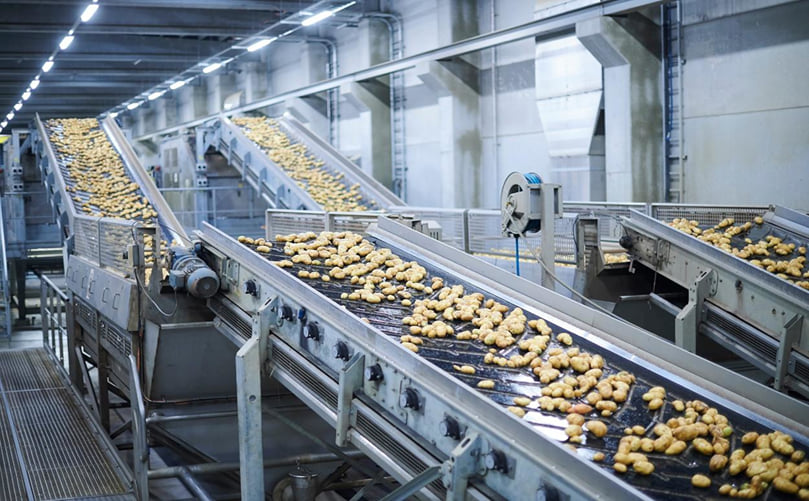
High-Quality Processing Potatoes for Frozen French Fries
Complete Frozen French Fry Processing Line and Equipment
Processing Flow and Operating Parameters
After cutting, size grading separates fries by length and thickness to ensure product uniformity. Following blanching, cooling or leaching steps may be used to remove excess heat and residual reducing sugars, depending on the process design. Par-frying is typically carried out at 170–190°C for 30–90 seconds depending on fry dimensions, product specifications and frying oil type (commonly high-oleic sunflower, canola, palm olein, soybean or blended vegetable oils). Finished frozen fries generally contain 5–10% oil, depending on the product specification. Individual Quick Freezing (IQF) is performed using air temperatures of −35°C to −45°C to rapidly freeze individual fries and minimize clumping. The final product core temperature should reach −18°C or lower before packaging and frozen storage.
Major Equipment and Operating Parameters
Peeling: Steam peelers (high-pressure, short-duration steam exposure) achieve low peel loss (8–15%) compared to abrasive peeling methods and are typically followed by brush washers for complete skin removal.
Cutting: Hydrocutters or precision mechanical knife cutters produce uniform fries, typically 6–12 mm in thickness with minimal breakage and high long-fry yield.
Blanching: Hot water or steam blanchers operate at 70–95°C for several minutes to inactivate polyphenol oxidase, leach reducing sugars, remove excess starch and partially gelatinize starch, improving texture, fry color and reducing oil absorption. Processing time and temperature are optimized according to potato variety and product specifications.
Drying/Dewatering: Air knives, centrifugal dewatering systems or vibratory conveyors remove surface moisture to improve frying efficiency, reduce oil uptake and lower energy consumption.
Par-frying and De-oiling: Continuous fryers incorporate automated oil circulation, filtration, temperature control and oil replenishment systems. De-oiling conveyors, vibratory shakers or air blowers remove excess surface oil before freezing.
Cooling and IQF Freezing: Multi-stage cooling systems reduce product temperature before freezing to prevent condensation. Spiral or straight-belt IQF freezers rapidly freeze individual fries, producing a free-flowing product with minimal clumping.
Sorting and Inspection: Optical or laser sorters remove defective fries based on color, size, shape and foreign materials. Metal detectors and X-ray inspection systems ensure product safety by detecting metallic and other foreign contaminants.
Packaging: Vertical Form-Fill-Seal (VFFS) machines or carton packaging lines pack frozen fries into moisture resistant bags and cartons suitable for frozen storage and distribution.
Equipment is typically manufactured from food grade AISI 304 or AISI 316 stainless steel, designed for Clean-in-Place (CIP) compatibility and compliant with international hygienic engineering standards such as EHEDG and 3-A Sanitary Standards. Modern processing lines are designed to accommodate different potato varieties, production capacities and available energy sources.
Intelligent Automation and Smart Utility Systems
Intelligent Automation and Smart Utility Systems
Modern systems use layered architectures: PLCs for real-time machine control, HMIs for operator interfaces and SCADA for plant-wide supervision with historical trending and alarm management. Industrial IoT (IIoT) sensors enable remote monitoring of critical parameters such as temperature, moisture and oil quality. Vision systems incorporating AI and machine learning detect defects and measure fry color and length in real time, providing process feedback and enabling automatic process adjustments. MES integrates production data with ERP systems for inventory management, OEE tracking and batch traceability. Predictive maintenance utilizes vibration and temperature analytics to reduce unplanned downtime.
Utility Infrastructure and Resource Management
Electricity: Essential for drives, refrigeration and compressed air systems. High-efficiency motors and Variable Frequency Drives (VFDs) are standard for improving energy efficiency.
Water: High consumption for washing, blanching and cooling, typically 5–10 m³ per tonne of finished product, depending on plant design and water recycling systems. Closed-loop recycling with filtration and treatment helps reduce water consumption and wastewater discharge.
Steam: Generated by boilers for peeling and blanching. Heat recovery from exhaust gases and frying operations improves overall energy efficiency.
Compressed Air: Used for pneumatic actuators, cleaning and drying. Dry, oil-free compressed air systems are required.
Refrigeration: Ammonia (NH₃) or CO₂ refrigeration systems are commonly used for freezing and cold storage. Refrigeration is one of the most energy intensive operations, with a strong focus on insulation, heat recovery and energy efficiency.
Boiler and Cooling Systems: High efficiency boilers with low-NOx emissions along with cooling towers or chillers equipped with water treatment systems help prevent scaling and improve operational efficiency.
Wastewater Treatment: Multi-stage treatment systems, including screening, dissolved air flotation (DAF) and biological treatment, handle high organic loads from peels and starch. Many facilities also recover biogas for energy generation.
Global best practices emphasize ISO 50001 energy management systems, water footprint reduction and the integration of renewable energy sources where feasible (e.g., solar assisted heating in sunny regions). Automation also helps optimize utility consumption in real time, supporting lower operating costs and sustainability reporting for international markets.
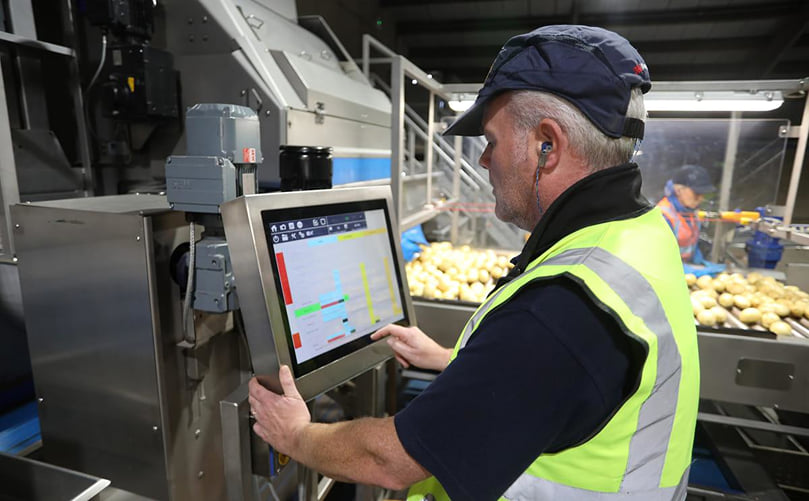
Intelligent Automation and Smart Utility Systems in Frozen French Fry Processing
Packaging, Storage and Cold Chain Management
Packaging Formats: Retail options include 400 g–2.5 kg resealable polyethylene bags or stand-up pouches with high barrier films to prevent freezer burn and moisture migration. Foodservice and industrial applications use 2.5–10 kg bags or larger bulk cartons (typically 20–25 kg) with inner vacuum packed or modified atmosphere packaging (MAP) bags to maintain product integrity. Nitrogen flushing or oxygen scavengers help minimize oxidation. Cartons feature reinforced structures for stacking strength and pallet stability during global shipping. Private-label packaging and custom printing support brand-specific requirements across different markets.
Retail and Foodservice Packaging: Retail packaging emphasizes consumer convenience, including easy-open features, portion control and oven or air fryer friendly designs with graphics highlighting crispiness. Foodservice packaging prioritizes high volume efficiency, tamper evident seals and compatibility with high-capacity commercial fryers. Packaging includes lot numbers, best-before dates, nutritional information, allergen declarations and QR codes for product traceability.
Coding, Labeling, Case Packing and Palletizing: Inline inkjet or laser coders ensure compliance with GS1 standards and regional regulations (e.g., EU, FDA or import requirements). Automated case erectors, case packers and palletizers optimize throughput while incorporating stretch wrapping and corner protectors for export durability. Temperature sensitive indicators or data loggers are often included to monitor cold chain integrity.
Frozen Storage and Cold Chain Distribution: Frozen French fries are stored at −18 °C or below (although some initiatives are exploring −15 °C for energy savings without compromising quality or food safety as microbial growth effectively ceases below −12 °C). Reefer containers and refrigerated trucks use ATP-certified equipment with continuous temperature monitoring via data loggers. Global distribution relies on port-centric cold storage, multimodal transportation and strict protocols to minimize temperature fluctuations during loading and unloading. Under proper storage conditions, frozen French fries have a shelf life of 18–24 months. Cold chain compliance includes HACCP-based validation and export documentation, such as phytosanitary and health certificates.
For international markets, additional considerations include tropical transit conditions, varying regulatory requirements and sustainability driven trends toward recyclable packaging and optimized lower temperature storage practices.
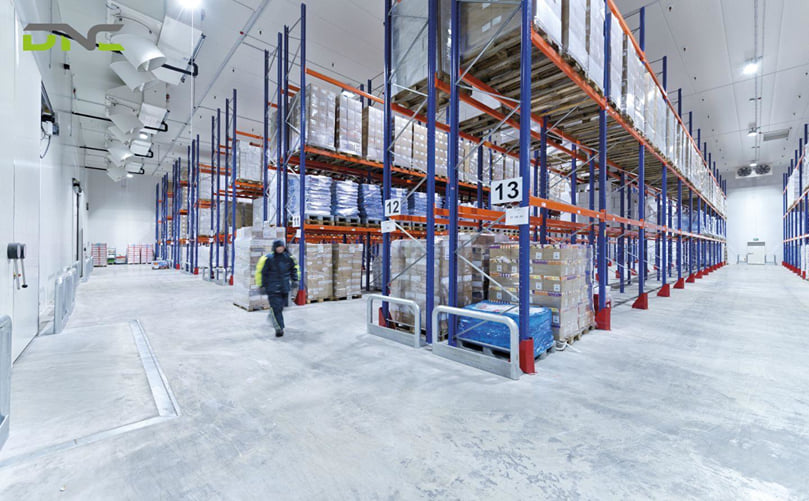
Frozen French Fry Cold Storage Warehouse
Installation, Commissioning and After-Sales Support
Manufacturing and Installation: Equipment is pre-assembled and tested at the supplier's facility before being disassembled for transportation. On-site installation includes rigging, equipment alignment, utility connections (electrical, piping and drainage) and integration with existing plant infrastructure. Specialized teams perform mechanical, electrical and automation work, often utilizing modular skid-mounted systems to accelerate installation timelines.
Utility Integration, Factory Acceptance Testing (FAT) and Site Acceptance Testing (SAT): Factory Acceptance Testing (FAT) verifies equipment functionality, safety interlocks and performance against specified requirements in a controlled environment before shipment. Site Acceptance Testing (SAT) confirms successful integration and operation under actual plant conditions, including load testing, recipe validation and assessment of site-specific environmental factors. Both FAT and SAT generate documented protocols, deviation reports, corrective actions and punch lists.
Trial Production, Operator Training and Documentation: Trial production runs gradually increase throughput to full design capacity using actual raw materials allowing process parameters to be optimized for local potato varieties and operating conditions. Comprehensive operator training covers equipment operation, troubleshooting, preventive maintenance, hygiene practices and safety procedures through hands-on sessions, manuals and digital learning resources. Documentation packages typically include as-built drawings, spare parts catalogs, standard operating procedures (SOPs), maintenance schedules and compliance certificates.
Spare Parts, Preventive Maintenance and Technical Support: Suppliers typically maintain regional inventories of critical spare parts and provide remote diagnostics through IoT-enabled monitoring systems. Preventive maintenance programs increasingly incorporate condition monitoring and predictive analytics to minimize downtime and improve equipment reliability. Long-term support services may include equipment upgrades, performance audits, technical consultations and refresher training programs to sustain Overall Equipment Effectiveness (OEE) and facilitate adaptation to new products or process requirements. Global service networks enable localized technical support for multinational operators.
Production Capacity and Customization
Production Capacity Options
Small scale production lines (100–300 kg/h output) are suitable for startups, pilot plants and local suppliers. Medium capacity lines (500–1,000 kg/h) are designed for regional brands and medium sized processors. Large industrial plants (1,500–5,000+ kg/h) serve national markets, export operations and Quick Service Restaurant (QSR) supply chains. Daily production capacity varies according to operating hours and shifts (e.g., a 1,000 kg/h line can produce hundreds of tonnes per month). Plant footprint, utility requirements and workforce size increase with production capacity, while higher automation levels reduce labor requirements and improve operational efficiency.
Production Line Customization Options
- Different Fry Cuts: Interchangeable cutting blades or cutting heads enable the production of straight-cut, crinkle-cut, shoestring, steak-cut, wedge and other specialty fry shapes.
- Automation Levels: Systems range from semi-automatic configurations with lower capital investment (CapEx) to fully automated continuous production lines with PLC and SCADA control systems.
- Frying Technologies: Options include single stage or two stage frying systems, compatibility with different edible oils and coating applicators for batter coated or seasoned French fries.
- Packaging Configurations: Packaging systems can be customized for retail or bulk foodservice applications, including Modified Atmosphere Packaging (MAP) and various bag and carton sizes.
- Future Expansion: Modular plant designs allow capacity expansion or the addition of new product lines (such as coated fries) without major plant reconstruction. Systems can also be adapted to local utility availability, potato varieties and regulatory requirements, including different energy sources and Halal compliance.
Sustainability and Operational Efficiency
Energy-Efficient Processing and Heat Recovery: Advanced processing systems recover heat from fryers, exhaust gases or refrigeration compressors for preheating process water or generating steam, significantly reducing thermal energy demand. Variable speed drives (VSDs), high-efficiency motors and improved insulation minimize electricity consumption. Free cooling systems and advanced process controls, such as dynamic setpoint adjustments based on product core temperature, further reduce refrigeration energy requirements.
Water Recycling and Oil Management: Closed-loop water management systems recycle and reuse process water through cascading and treatment processes, significantly reducing overall water consumption. Advanced oil filtration systems extend frying oil life, minimizing oil replacement frequency and waste generation. Potato peels and recovered starch are increasingly utilized as valuable by-products for animal feed, biogas production or other value-added applications.
Potato Peel Utilization, Starch Recovery and Wastewater Treatment: Potato peels are commonly used for biogas production or dried for use as animal feed. Starch rich process water is treated to recover starch or processed through anaerobic digestion to generate renewable energy. Biological and physical wastewater treatment systems ensure compliance with stringent environmental discharge regulations while supporting resource recovery and energy generation.
Carbon Footprint Reduction: Carbon footprint reduction strategies include sourcing potatoes from regenerative agriculture systems, integrating renewable energy sources such as solar power, biogas and hydrogen ready boilers and optimizing production processes to improve yield while reducing waste. Additional initiatives, including optimized frozen storage temperatures (where validated) and full life cycle assessments (LCAs) across the supply chain help achieve measurable reductions in greenhouse gas emissions. Leading manufacturers are pursuing net-zero emission targets through integrated improvements in both agricultural production and factory operations.
These sustainability initiatives improve operational efficiency by increasing Overall Equipment Effectiveness (OEE), reducing operating costs and supporting compliance with growing global requirements for transparent, low impact food production, export markets and corporate sustainability reporting.
Investment Considerations and Return on Investment (ROI)
Factors Affecting Project Cost: Total investment varies significantly depending on plant capacity, automation level and location. Small or pilot-scale lines (50–300 kg/h) typically range from USD10,000–USD150,000, primarily covering equipment costs. Medium commercial plants (500–5,000 kg/h output) generally require USD 60,000–USD 600,000+ for turnkey installations, including equipment, installation and basic utilities. Large industrial facilities (multi-tonne per hour capacity with advanced automation and cold storage) may exceed USD1–5 million or more, including civil works, refrigeration systems and export grade infrastructure. Additional investment may include land and site development, water treatment systems, boilers, cold storage facilities and regulatory compliance engineering. Project costs also vary by region due to differences in labor costs, energy prices and import duties, particularly in import dependent markets.
Operating Costs: Raw materials, primarily potatoes and frying oil, account for approximately 60–70% of total operating expenses (OpEx), followed by utilities (energy for frying and freezing), labor, packaging and maintenance. Improving product yield by minimizing peeling and cutting losses, together with effective frying oil management has a direct impact on production costs and profitability. Seasonal fluctuations in potato prices and energy costs remain major operational risks.
Product Yield, Labor Efficiency and Energy Savings: Modern processing lines typically achieve 40–50% or higher finished product yield from raw potatoes through precision cutting, sorting and process optimization. High levels of automation reduce labor requirements with fully automated large-scale plants often requiring only 3–6 operators per shift, compared with higher staffing requirements for semi-automatic systems. Energy recovery systems, variable frequency drives (VFDs) and optimized processing technologies significantly reduce utility consumption, improving competitiveness, particularly in regions with high energy costs.
Return on Investment (ROI): The payback period typically ranges from 1–2 years for efficient small-scale plants serving local or Quick Service Restaurant (QSR) markets to 3–8 years for large export-oriented facilities. Return on investment depends on factors such as high-capacity utilization (>70–80%), strong gross profit margins (25–35%), economies of scale and long-term supply agreements with QSR chains or export customers. Profitability is highly sensitive to raw material costs, production capacity utilization and energy efficiency making detailed financial modeling and scenario analysis essential. Continued global market growth (approximately 5–6% CAGR) further supports long-term investment potential, particularly for value-added frozen potato products.
For international investors, additional considerations include government incentives, export promotion schemes, taxation policies and foreign exchange (currency) risks, all of which should be incorporated into financial feasibility analyses.
Key Advantages of Turnkey Frozen French Fry Processing Lines
Advantages: Turnkey solutions provide fully integrated and optimized processing lines with performance guarantees, reducing project coordination risks and implementation complexity. They enable faster market entry, consistent product quality that meets international standards for export and Quick Service Restaurant (QSR) markets and built-in scalability for future expansion. Single vendor responsibility simplifies troubleshooting, maintenance and system upgrades, while comprehensive after-sales support helps maximize Return on Investment (ROI) by minimizing downtime and improving operational efficiency.
Challenges: In addition to high initial capital investment, manufacturers face challenges in securing a consistent supply of high-quality processing potatoes, which can be affected by climatic conditions and agricultural risks. Export-oriented operations must comply with complex international food safety and regulatory requirements. High energy and utility demands can present operational challenges in regions with limited infrastructure, while advanced automated facilities require skilled technicians for operation and maintenance. Maintaining refrigeration and frying systems under harsh environmental conditions and competing with established market players further increase operational complexity. Production ramp-up may also take longer than expected due to variability in raw material quality and operator learning curves.
Global manufacturers must also address supply chain disruptions, increasing sustainability reporting requirements and evolving consumer preferences, including demand for lower oil products and alternative frozen potato formats.
Choosing the Right Turnkey Supplier
Industry Experience and Engineering Expertise: Prioritize suppliers with extensive experience in potato processing, proven references for projects of similar capacity and operating conditions and in-house engineering capabilities for customized solutions such as hydro-cutting, frying and Individual Quick Freezing (IQF). Suppliers with successful installations ranging from small scale to large industrial projects across multiple regions are generally better equipped to deliver reliable turnkey solutions.
Installed Projects, Equipment Quality and Automation Capability: Request site visits, customer references or detailed case studies of operating processing lines. Evaluate equipment quality based on food-grade construction materials, durability, hygienic design and manufacturing standards. Assess automation capabilities, including PLC/SCADA systems, machine vision, artificial intelligence (AI) and plant wide integration. Performance claims should be verified through factory trials or reference installations whenever possible.
Certifications and Regulatory Compliance: Essential certifications include HACCP, ISO 22000 or FSSC 22000 and BRCGS or IFS Food, depending on customer and market requirements. Additional certifications such as CE marking, FDA compliance, Halal or Kosher certification may be necessary for specific export markets. Always verify that certifications are current and supported by recent audit records.
Global Service Network, Spare Parts Availability and Customer Support: Reliable after sales support should include regional spare parts inventories, remote diagnostics, rapid response service teams, preventive maintenance programs and ongoing operator training. Evaluate the supplier's long-term support capabilities, equipment upgrade options and total cost of ownership. Financial stability, transparent quotations and responsive technical support are important considerations when selecting a turnkey supplier.
Additional evaluation criteria include product traceability systems, sustainability features and the supplier's ability to customize the processing line according to specific products, production capacities and target market requirements, such as coated French fries or emerging regional markets.
The Future of Frozen French Fry Processing
Industry 4.0, Artificial Intelligence (AI), Robotics and Digital Twins: Modern frozen French fry processing plants are increasingly adopting Industry 4.0 technologies. Artificial intelligence (AI) enables real-time process optimization by automatically adjusting operating parameters to accommodate variations in potato quality. AI is also used for predictive maintenance and defect detection through advanced machine vision systems. Digital twins create virtual models of production lines for simulation, process optimization and scenario testing, helping reduce waste and downtime. Robotics are increasingly deployed for repetitive operations such as sorting, packaging and palletizing.
Smart Factories and Vision Inspection: Smart factories integrate Internet of Things (IoT) devices, Manufacturing Execution Systems (MES) and plant wide automation to support data-driven decision making, complete product traceability from farm to consumer and improved Overall Equipment Effectiveness (OEE). AI-powered vision inspection and sorting systems enhance product quality while improving yield by minimizing false rejects and accurately detecting product defects.
Sustainable Processing and Energy-Efficient Technologies: Future developments continue to focus on regenerative agriculture, water and energy recovery, by-product valorization and low emission processing technologies. Emerging innovations include microwave assisted frying to reduce oil uptake, hydrogen ready heating infrastructure and renewable energy integration. Manufacturers are also exploring optimized freezing technologies and validated frozen storage temperature strategies to reduce carbon emissions. Growing consumer demand for healthier products is driving the development of lower-fat French fries, functional coatings and greater supply chain transparency.
Overall, future trends are focused on improving resilience to climate variability, labor shortages and evolving regulatory requirements while enhancing product quality, operational efficiency, sustainability and long-term profitability on a global scale.