
Introduction to French Fry and Potato Specialty Processing Lines
French fry and potato specialty processing lines are highly automated industrial production systems that transform raw potatoes into frozen or ready-to-cook potato products. These lines integrate multiple processing stages, including cleaning, peeling, cutting, blanching, frying (or par-frying), freezing and packaging to produce high volumes of consistent, high-quality products.
They support the frozen food and foodservice industries by supplying quick-prep potato products to restaurants, quick service restaurants (QSRs), retail outlets and institutional markets. These products provide convenience, long shelf life, uniform quality and portion control, making them essential for modern foodservice operations and global supply chains.
Market Growth and Automation Trends
Global demand for processed potato products remains strong driven by urbanization, busy lifestyles, rising disposable incomes, the expansion of quick service restaurants (QSRs) and increasing home consumption of convenience foods. The frozen French fries segment continues to dominate the market. Market estimates vary slightly by source but consistently indicate strong growth. The global French fries market is projected to grow from approximately USD 18–25 billion in the mid-2020s to more than USD 30 billion by the early 2030s, at a compound annual growth rate (CAGR) of approximately 5–6%. The broader potato processing market is larger with an estimated value of USD 40–50 billion and projected to reach USD 60–73 billion over the same period.
Strong demand from the foodservice sector, particularly for frozen products that provide consistency and convenience, continues to drive market growth. Expansion in Asia-Pacific, the Middle East and other emerging markets is creating new opportunities for processors. At the same time, manufacturers continue to innovate with coated and seasoned fries as well as specialty shapes to differentiate their product offerings.
Automation trends focus on improving efficiency, reducing labor requirements, enhancing product quality and supporting sustainability. Advanced machinery, including optical sorters, AI-driven defect detection, automated peeling and cutting equipment and IoT-enabled predictive maintenance systems is becoming increasingly common in modern processing plants. Pulsed Electric Field (PEF) technology improves yield and texture while reducing oil uptake and energy consumption with a typical payback period of one to two years. Modern facilities also incorporate heat recovery systems in fryers, water recycling technologies and other sustainable practices to reduce their environmental footprint.
Leading potato processors, including McCain, Lamb Weston and Simplot, continue to focus on high throughput production, minimal waste and global export capability with by-products often being repurposed. China has rapidly expanded its production capacity and has become a net exporter of frozen French fries.
What Are French Fry Processing Lines?
Definition: French fry processing lines are continuous, systems of specialized equipment designed to convert raw potatoes into par-fried (partially fried) and frozen French fries, including straight cut fries and other variants, on an industrial scale. These processing lines handle every stage of production from raw potato receiving to final packaging with capacities often reaching several tonnes per hour.
Purpose: The primary purpose of French fry processing lines is to maximize efficiency, ensure product consistency, maintain food safety, optimize yield and reduce production costs. These lines minimize manual labor, reduce waste, produce fries with uniform color and texture, extend shelf life through freezing and comply with stringent quality and regulatory standards for global distribution. They also enable year-round production, independent of seasonal potato harvests.
Products Manufactured: French fry processing lines manufacture a wide range of products, including standard straight-cut fries in various thicknesses, such as shoestring, regular cut and thick cut fries. They also produce coated and seasoned fries that are battered or spiced to improve crispiness and flavor retention, particularly for oven and air fryer preparation. In addition, these lines can manufacture crinkle cut fries, which are often considered a specialty French fry product. Processing by-products and side streams are commonly utilized in the production of potato flakes, starch and other potato products.
For detailed information about complete turnkey production systems, processing equipment, plant layouts, capacities, automation technologies and leading equipment manufacturers, see our guide on Complete Turnkey Lines for Frozen French Fries.
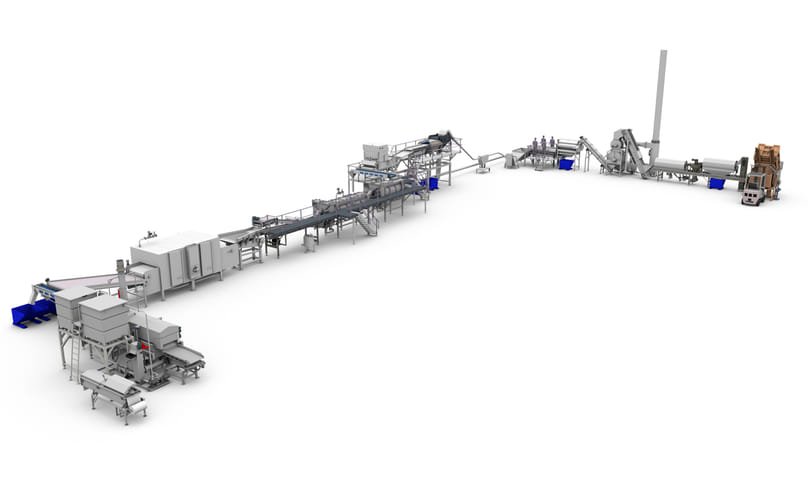
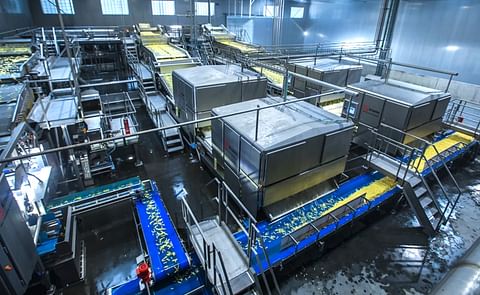
Automated Frozen French Fries Production Line
What Are Potato Specialty Processing Lines?
Potato specialty processing lines are integrated production systems, or modular extensions of French fry processing lines designed to manufacture a wide range of value-added potato products beyond conventional French fries. While these lines often share the same initial processing stages, such as washing and peeling, they differ in their cutting, forming, cooking, coating, frying, freezing and finishing operations depending on the final product. Many formed potato products use potato flakes, shredded potatoes or mashed potatoes as their primary raw material.
Potato specialty processing lines are designed to provide high production flexibility allowing rapid changeovers between different product shapes and sizes. These lines incorporate advanced forming technologies, coating systems and automated process controls to improve product quality, crispiness, texture and production efficiency. They cater to a wide range of market segments, including breakfast products, appetizers, snacks, foodservice and products tailored to regional and international consumer preferences.
Globally, North America and Europe lead in advanced potato processing technologies and product diversity, while emerging markets continue to expand production of both standard and specialty potato products. Sustainability, including improved water and energy efficiency, by-product utilization and increased automation has become a universal priority across the potato processing industry.
For detailed information about turnkey production systems, processing equipment, process flow, plant capacities, automation technologies and leading equipment manufacturers, click here to read our guide on Complete Turnkey Lines for Potato Specialty Products.
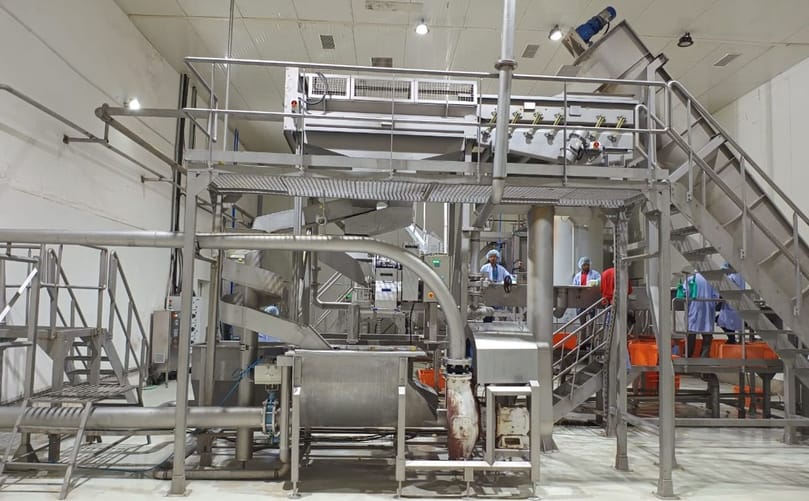
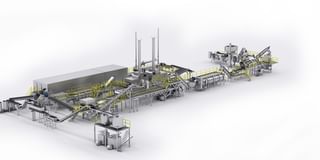
Potato Specialty Processing Line