Understanding Turnkey Solutions in Food Processing
What is a turnkey potato specialty processing line? A turnkey potato specialty processing line is a fully integrated, ready-to-operate production system that transforms raw potatoes into value added specialty products such as hash browns, tater tots, croquettes, rosti and other formed or coated products. These lines handle the entire process from raw material intake to final packaging and freezing within one coordinated system, often supplied by a single provider or a consortium of providers.
What does "turnkey" mean in food processing? "Turnkey" refers to a complete solution in which the supplier handles engineering, plant design, equipment procurement and supply, installation, commissioning, automation, staff training and after sales support. The customer receives a fully functional plant that is ready for immediate production with minimal additional setup.
Why manufacturers choose turnkey solutions Manufacturers choose turnkey solutions because they provide single point responsibility, reducing coordination risks and project delays. Integrated design enables faster project execution by improving system integration and overall efficiency. Proven systems, supported by warranties, Factory Acceptance Testing (FAT), Site Acceptance Testing (SAT) and technical support, reduce project and operational risks. Turnkey solutions also optimize plant performance by improving yield, energy efficiency, food safety compliance and scalability. In addition, suppliers such as Tummers Food Processing Solutions, Kuipers, Rosenqvists, JBT Marel and others provide specialized engineering expertise and industry knowledge.
Growth of the potato specialty products market the global processed potato products market is projected to grow from approximately USD 43.4 billion in 2026 to USD 61.9 billion by 2033, representing a compound annual growth rate (CAGR) of approximately 5.2%. The frozen potato products segment is also expected to experience strong growth with an estimated CAGR of approximately 5.6%, driven by increasing demand for convenience foods, the expansion of quick service restaurants (QSRs) and rising consumption of ready-to-eat products. The Asia Pacific region is expected to be one of the fastest growing markets due to rapid urbanization and rising disposable incomes.
Turnkey Solutions for Potato Specialty Processing
What are Potato Specialties?
Potato specialties are value-added, convenience-oriented potato products that transform raw potatoes into ready-to-cook, ready-to-heat or ready-to-eat foods with distinctive shapes, textures, flavors, coatings and fillings. Unlike conventional potato products such as French fries or potato chips, potato specialties typically involve additional processing steps, including mashing, shredding, forming, coating, stuffing, extrusion or specialized thermal treatments. These products are designed to meet the growing demand from quick service restaurants (QSRs), foodservice operators, retail markets and export customers for innovative, convenient and premium potato-based foods.
Most potato specialties are manufactured to deliver consistent quality, excellent texture, crispiness, appealing appearance and extended shelf life through freezing or refrigeration. Many products also incorporate ingredients such as cheese, herbs, vegetables, seasonings, starches or breadcrumbs to create unique flavor profiles and product differentiation.
Common Types of Potato Specialties
- Hash Browns: Made from shredded or diced potatoes that are formed into patties or sold as loose shreds. They are typically par-fried or baked to produce a crispy golden exterior while maintaining a soft, tender interior. Hash browns are widely consumed as a breakfast product.
- Potato Croquettes: Prepared from seasoned mashed potatoes blended with ingredients such as cheese, herbs, vegetables or spices. The mixture is shaped into cylinders or ovals, coated with breadcrumbs and then fried or baked to create a creamy interior with a crispy outer coating.
- Potato Puffs and Potato Bites: Small, bite-sized products made from mashed or extruded potatoes. They have a light, airy texture and are often flavored, coated or seasoned for use as snacks or appetizers.
- Duchess Potatoes: A premium potato product made by combining mashed potatoes with butter, eggs and cream. The mixture is piped into decorative shapes and baked until lightly browned making it popular in fine dining and premium ready meals.
- Rosti: A traditional Swiss potato specialty made from coarsely shredded potatoes that are pan-fried or baked into flat cakes. Rosti is valued for its crispy crust and soft interior while maintaining a simple ingredient profile.
- Tater Tots: Produced from grated or finely minced potatoes mixed with starch or other binders. The mixture is extruded into small cylindrical shapes, par-fried and individually quick frozen (IQF) for convenient storage and preparation.
- Potato Pancakes (Latkes): Made from grated raw potatoes mixed with onions, eggs, flour and seasonings. The mixture is formed into thin pancakes and fried until crispy making them popular in various regional cuisines.
- Mashed Potato Products: Prepared from cooked and mashed potatoes, often blended with butter, milk, cream or seasonings. These products are available in refrigerated or frozen formats and may also serve as the base for other specialty potato products.
- Potato Wedges: Large potato segments, often processed with the skin intact, seasoned, coated and partially cooked before freezing. They are designed for oven baking, air frying or deep frying.
- Potato Gratin (Au Gratin Potatoes): Made by layering thin potato slices with cream, cheese, butter and seasonings before baking. These products are commonly sold as premium side dishes or ready meals.
- Stuffed Potato Products: Whole or halved potatoes filled with ingredients such as cheese, vegetables, meat, bacon or sauces. They may be topped, breaded or further processed before freezing or refrigeration.
- Potato Balls, Dumplings and Gnocchi: Produced from mashed potato dough combined with flour, eggs or starch. Depending on the product, the dough is shaped by rolling, molding or extrusion before being boiled, steamed, chilled or frozen. Gnocchi typically feature ridges to improve sauce adhesion.
- Formed Potato Shapes: Manufactured using molds or extrusion systems to create shapes such as smiley faces, stars, alphabet letters, dinosaurs or other custom designs. These products are especially popular in children's meals and snack applications.
- Coated and Breaded Potato Specialties: Potato products coated with batter, breadcrumbs or specialty seasonings to improve crispiness, flavor and visual appeal. Examples include spicy wedges, cheese filled bites, breaded croquettes and premium appetizer products.
Frozen and Refrigerated Potato Specialties
Most potato specialties are marketed as individually quick frozen (IQF) products, providing excellent texture retention and a shelf life of up to 12 months or longer under appropriate frozen storage conditions. Refrigerated potato specialties are also available, offering shorter shelf life while maintaining fresh flavor and convenience.
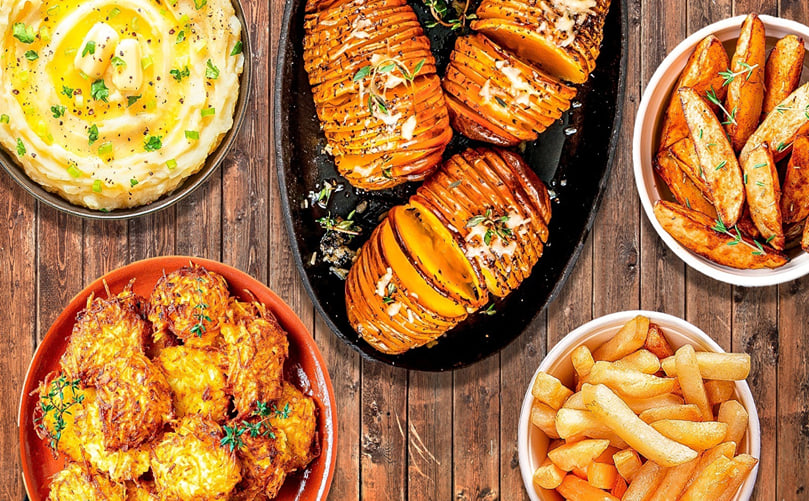
Popular Value-Added Potato Specialty Products
What is a Turnkey Processing Line?
A turnkey potato specialty processing line is a fully integrated production system delivered as a single, ready-to-operate solution. The supplier manages the entire project from engineering and equipment supply to installation, commissioning, automation, training and after-sales support ensuring the processing facility meets the customer's production objectives, site requirements and regulatory standards.
Process Engineering: Detailed process design, simulations and pilot testing optimize production capacity, yield, energy efficiency and product quality. This includes P&ID development, material balance calculations and process to identify and eliminate potential bottlenecks.
Plant Design: 3D plant layouts focus on hygienic design, efficient product flow, utility planning, drainage and future expansion. Designs also comply with applicable food safety and industry standards while supporting increased production capacity or product diversification.
Equipment Supply and Integration: Processing equipment is manufactured or sourced as a fully integrated system with standardized interfaces, factory testing and durable stainless-steel construction for reliable operation in demanding food processing environments.
Automation and Controls: Integrated PLC and SCADA systems monitor and control critical process parameters such as temperature, moisture and production throughput while providing real-time data collection and traceability.
Installation and Commissioning: The supplier oversees equipment installation, utility integration, system testing and performance validation to ensure the line achieves the specified production capacity and product quality.
Staff Training: Training programs cover equipment operation, troubleshooting, safety procedures, quality control and routine maintenance through practical on-site sessions and technical documentation.
After-Sales Support: Ongoing support includes remote diagnostics, technical assistance, spare parts supply, preventive maintenance, performance evaluations, software updates and equipment upgrades.
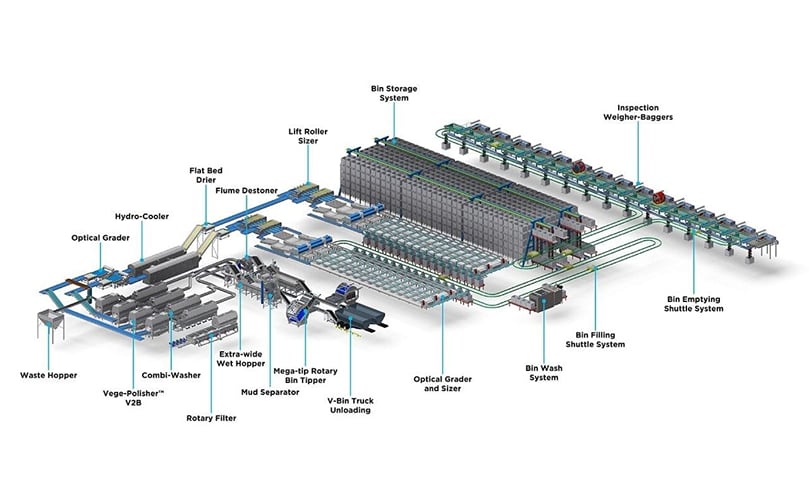
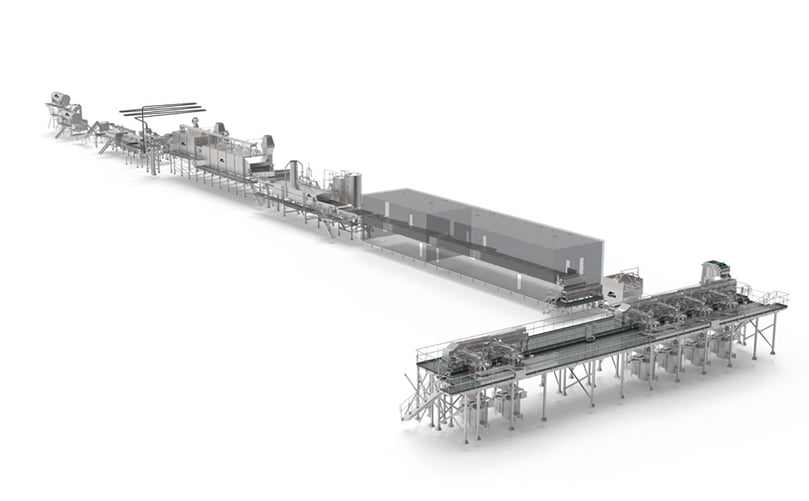
Complete Turnkey Potato Processing Plant from Design to Production
Equipment Used in a Turnkey Potato Specialty Processing Line
Specialty processing lines use robust, food grade stainless steel equipment engineered for continuous or batch production. The machinery is designed to maximize hygiene, product yield (often exceeding 80% recovery), operational reliability and flexibility for different potato varieties and production environments.
- Receiving Hoppers and Conveyors:Heavy duty, variable speed conveying systems with gentle product handling, including vibratory or belt conveyors, minimize bruising during transportation. Many systems also incorporate weighing and sampling stations for raw material quality verification.
- Washers and Destoners:Multi-stage drum, brush or flotation systems remove soil, stones and foreign materials. Water recirculation, screening and air flotation technologies improve cleaning efficiency while reducing freshwater consumption.
- Steam and Abrasive Peelers: Steam peelers provide efficient peeling with minimal peel loss (typically 8–15%), while abrasive or brush peelers are suitable for skin-on products. Peel waste separation systems support by-product recovery.
- Optical Sorters and Inspection Conveyors:Camera or laser-based inspection systems detect defects such as greening, discoloration, rot, size variation and shape irregularities. AI-assisted inspection improves sorting accuracy while minimizing the rejection of acceptable products.
- Slicers, Dicers and Shredders:Precision cutting equipment produces uniform slices, dices or shreds. Hydro-cutters and mechanical cutters are designed to handle different potato varieties while maintaining consistent product dimensions.
- Mash Preparation Systems and Mixers:Steam jacketed cookers and high shear mixers prepare uniform potato mash with controlled temperature and moisture. Automated ingredient dosing ensures consistent batch quality.
- Forming Machines and Extruders: Rotary or piston formers and extruders produce uniform shapes and weights, such as tater tots or croquettes. Servo-driven systems enable rapid product changeovers and precise shape control.
- Coating Systems, Batter Applicators and Breading Systems: Coating equipment applies batter, breadcrumbs or seasonings with controlled viscosity and temperature. Product recirculation and excess coating removal help reduce waste and oil absorption.
- Fryers, Baking Ovens and Oil Filtration Systems: Continuous multi-zone fryers operate at controlled temperatures (typically 170–185°C) with continuous oil filtration to extend oil life and reduce acrylamide formation. Baking ovens provide an alternative for oven-ready products.
- Cooling Tunnels and IQF Freezers: Rapid cooling systems stabilize the product before freezing. IQF freezers, including fluidized-bed and spiral designs, freeze products individually to prevent clumping and maintain product quality.
- Packaging Machines, Metal Detectors, Checkweighers and Palletizing Systems:Automated packaging lines include form-fill-seal machines, tray sealers, metal detectors, X-ray inspection systems, checkweighers and robotic palletizers to ensure product safety, weight accuracy and compliance with international food safety standards.
Modern equipment is typically modular, allowing future expansion while supporting energy recovery systems and predictive maintenance technologies.
Products That Can Be Manufactured on a Turnkey Line
Turnkey potato specialty processing lines are designed for versatile production through modular equipment, quick change tooling and recipe-based automation. This enables manufacturers to efficiently produce a wide range of potato specialty products while adapting to different market requirements.
A single production line can manufacture tater tots (extruded breaded cylinders), potato croquettes (coated mashed potato products), hash browns (shredded potato patties), potato bites (small formed potato products), rosti (compressed shredded potato cakes), gnocchi (ridged potato dumplings), custom formed potato shapes (e.g., novelty or portion controlled products), potato wedges (skin-on seasoned cuts), mashed potato products (for retail or further processing) and filled potato snacks (stuffed with savory fillings).
Product changeovers are simplified through PLC-based recipe management, adjustable forming dies and shared processing modules. This allows manufacturers to produce multiple products on the same line for retail, foodservice, QSR and export markets. Production capacities can be scaled from pilot-scale operations to high capacity industrial manufacturing. The line can also be configured to produce gluten free or fortified potato products to meet specific market requirements.
Raw Material Requirements for Potato Specialty Processing
The production of potato specialties requires careful selection of potato varieties and strict raw material specifications to ensure consistent processing performance, product quality and yield. Potatoes should have suitable physical and chemical characteristics while meeting applicable grading standards.
Potato Varieties: Variety selection depends on the final product and regional availability. High starch varieties such as Russet Burbank, Ranger Russet and Innovator are widely used for formed potato products, while Atlantic, Lady Rosetta, Courage and other suitable processing varieties are commonly used for specialty potato products due to their stable dry matter content and low reducing sugar levels.
Dry Matter and Starch Content: A dry matter content of 18–25% (specific gravity approximately 1.080–1.100) provides good solids content, reduced oil absorption and improved product texture. Higher starch content also contributes to better structure in formed and fried products.
Reducing Sugar Content: Reducing sugar levels should generally remain below 0.25–0.30% to minimize excessive browning and acrylamide formation during frying or baking.
Size and Uniformity: Medium to large potatoes with uniform size and regular shape help reduce processing waste and improve cutting, forming and overall production efficiency.
Storage Conditions: Potatoes are typically stored at 7–10°C under controlled humidity to maintain quality and minimize sprouting. Regular monitoring of sugar accumulation is important to maintain processing quality during storage.
Defect Tolerance: Raw potatoes should have minimal greening, bruising, rot, hollow heart and other internal or external defects, while meeting the required grading standards for the intended product.
Variety Selection According to Product: Different potato specialties require different varietal characteristics. For example, hash browns generally require high dry matter potatoes, while mashed and formed potato products can also utilize varieties with good binding properties.
Incoming potatoes are routinely tested for parameters such as specific gravity, dry matter content and reducing sugar levels to ensure consistent processing performance and product quality.
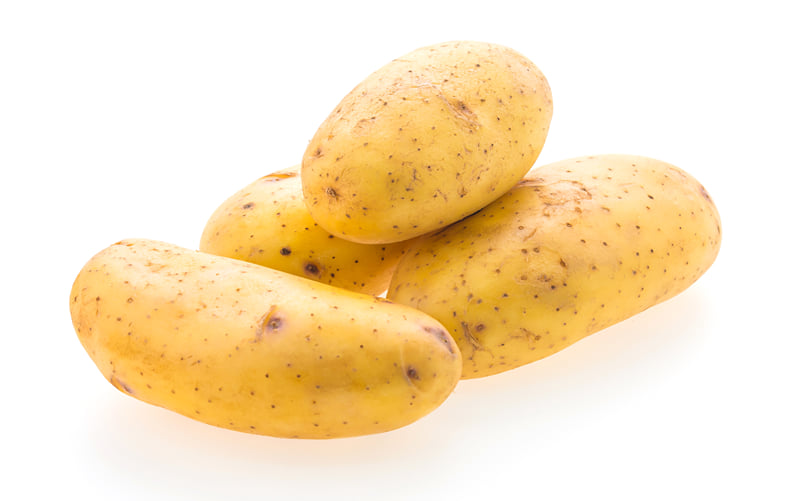
Raw Potato Selection for Specialty Food Processing
Ingredients Used in Potato Specialty Products
Potato specialty formulations are designed to achieve the desired texture, flavor, stability and processing performance while meeting product specifications and regulatory requirements. Depending on the product, formulations may include fresh potatoes, potato flakes or other potato ingredients combined with functional additives to improve binding, texture, crispiness and shelf stability.
- Starches (Potato, Modified or Resistant):Improve binding, product structure, crispiness and freeze thaw stability.
- Flours (Wheat, Rice, Corn or Gluten Free Blends):Provide structure, improve coating adhesion and support product consistency. Rice and corn flours are commonly used in gluten free formulations.
- Seasonings and Herbs: Enhance flavor using ingredients such as paprika, garlic, herbs, spices and seasoning blends.
- Dairy Ingredients:Cheese powders, milk solids, butter and cream ingredients add richness and improve the flavor of products such as gratins, Duchess potatoes and mashed potato products.
- Vegetable Ingredients and Dietary Fibers:Ingredients such as onions, carrots, peas and dietary fibers help improve nutritional value, color, texture and moisture retention.
- Proteins (Plant-Based or Egg Derived): Improve nutritional value while enhancing binding and product structure.
- Binders and Hydrocolloids:Ingredients such as cellulose, xanthan gum and guar gum improve shape retention, moisture control and stability during freezing and reheating.
Additional ingredients may include antioxidants, pH regulators and leavening agents, depending on the product formulation. Modern formulations also focus on reduced sodium, clean label ingredients and product fortification to meet market and regulatory requirements.
Processing Technologies Used in Potato Specialty Processing
Potato specialty processing uses advanced technologies to improve product quality, processing efficiency and resource utilization while meeting food safety and production requirements.
Steam Peeling: High pressure, short cycle steam peeling systems with vacuum assistance minimize peel loss while improving peeling efficiency and reducing energy consumption.
Blanching:Continuous water or steam blanchers with counter current flow remove excess reducing sugars and control enzyme activity. Precise temperature control helps prevent overcooking.
Cooking and Mixing:Atmospheric or pressure-cooking systems combined with integrated mixers ensure uniform starch gelatinization and even ingredient distribution.
Forming and Extrusion: Temperature controlled forming and extrusion systems produce consistent product shapes and textures. Multi-die systems allow rapid product changeovers.
Coating Technologies: Electrostatic or waterfall coating systems provide uniform batter or breadcrumb application. Automated viscosity control helps maintain consistent coating quality.
Frying and Baking:Continuous fryers equipped with advanced oil filtration and heat recovery systems improve frying efficiency. Vacuum frying reduces oil absorption by operating at lower temperatures, while convection, impingement or hybrid ovens produce reduced fat baked products.
IQF Freezing: Fluidized-bed or spiral IQF freezers rapidly freeze individual products, preserving product structure, texture and quality while preventing clumping during storage.
Emerging Technologies:Technologies such as pulsed electric field (PEF) pre-treatment improve peeling and cutting efficiency while reducing oil absorption. Air-frying compatible coating systems support products intended for oven or air fryer preparation.
Modern processing technologies are integrated with automated control systems to optimize production efficiency, maintain consistent product quality and support food safety and sustainability objectives.
Plant Infrastructure and Utility Requirements
Efficient infrastructure balances hygiene, safety and operational costs in diverse global settings, including seismic zones, high humidity tropical regions and cold climates.
Hygienic Zoning and Flows: Physical separation of raw, processing and packaging areas with unidirectional personnel and product flows using airlocks, footbaths and positive pressure in clean zones.
Factory Design and Material Handling: Stainless steel or epoxy floors with proper slopes for drainage along with overhead or floor conveyors optimized to minimize product damage and facilitate easy cleaning.
Utility Layout: Dedicated boiler rooms for steam generation, chiller plants for refrigeration, oil-free compressed air systems for food contact applications and backup generators for operational reliability.
Key Utility Requirements: High volume steam for peeling and cooking, potable and process water with treatment systems, substantial electricity for freezing and frying operations and wastewater treatment plants with pH adjustment and solids recovery for environmental compliance.
Supporting Plant Systems: Clean-In-Place (CIP) systems with automated chemical dosing, ventilation systems with HEPA filtration and humidity control and plant layouts designed with provisions for future production line expansion.
Regulatory and Site Considerations: Compliance with local building codes, effluent discharge limits and energy standards with modular plant designs that facilitate relocation or scaling in emerging markets.
Proper infrastructure minimizes cross-contamination risks and supports 24/7 operations with high Overall Equipment Effectiveness (OEE).
Production Capacity and Line Customization
Production lines are engineered for scalability with capacities designed to match market demand, production requirements and investment levels.
Production Capacity Options: Common production capacities include entry-level lines of 500–1,000 kg/h for regional or startup processors, 2–5 tons/h for medium-scale operations and 10+ tons/h for large exporters and multinational manufacturers.
Scalability and Modular Expansion: Pre-designed expansion points allow the addition of parallel modules, such as extra forming lines or freezers with minimal disruption to production. Phased implementation enables processors to expand capacity as demand grows.
Line Customization Options: Production lines can be customized based on specific product mixes (e.g., high coating or mashed potato products), automation level (semi-automatic or fully automatic), available floor space, local utility constraints, budget and regulatory requirements, including kosher, halal and organic certification pathways. Suppliers can also accommodate regional preferences such as spice handling and packaging formats.
This flexibility enables processors worldwide to start with modest production capacities and scale efficiently while optimizing return on investment (ROI).
Sustainability and By-Product Utilization
Sustainability is a key driver in modern potato specialty processing lines, with resource efficient designs that support corporate ESG goals and regulatory requirements in Europe, North America and increasingly Asia.
- Energy Efficiency: Heat recovery from fryers and ovens is used to preheat water or air, while Variable Frequency Drives (VFDs) on motors and pumps, energy efficient compressors and LED lighting help reduce energy consumption.
- Water and Resource Recycling: Closed loop washing and peeling systems, starch recovery units and advanced wastewater treatment systems, including anaerobic digestion, improve water efficiency and resource utilization.
- Oil Management: Continuous oil filtration and extended oil life help reduce oil consumption and minimize waste.
- Broader Sustainability Initiatives: Solar photovoltaic (PV) integration, where feasible, waste-to-energy solutions and carbon footprint tracking tools support long-term sustainability goals.
- By-Product Utilization: Potato peels are converted into animal feed, biogas through anaerobic digestion or biofertilizers. Recovered starch is utilized in food, pharmaceutical and industrial applications, while other side streams are converted into bio-based materials or snack products. This circular approach can generate additional revenue while reducing disposal costs and environmental impact.
Modern processing lines can achieve water savings of up to 30–50% through recycling while also reducing energy consumption compared with older processing systems.
Industries Served
Turnkey potato specialty processing lines support a wide range of food manufacturing and foodservice sectors.
- Frozen Food Manufacturers: High volume producers of retail and private label frozen potato specialty products.
- Quick Service Restaurants (QSRs): Consistent production of hash browns, tater tots and coated potato specialties for international and regional restaurant chains.
- Retail Food Brands: Production of packaged frozen and refrigerated potato specialty products for supermarkets and retail stores.
- Foodservice and Catering: Bulk and ready-to-cook potato specialty products for hotels, restaurants, catering companies and institutional foodservice providers.
- Institutional Kitchens: Large scale production of mashed potatoes, potato gratins, dumplings and other specialty potato products for schools, hospitals and military facilities.
- Private Label Manufacturers and Exporters: Flexible production systems designed to meet the quality and specification requirements of international buyers across Europe, the Middle East, Asia and the Americas.
Installation, Commissioning, Training and Technical Support
Turnkey solution providers ensure a smooth handover to help processors achieve reliable and efficient production in the shortest possible time.
- Factory Acceptance Testing (FAT): Pre-shipment verification of equipment and system performance at the supplier's manufacturing facility.
- Site Acceptance Testing (SAT): On-site validation of equipment performance and functionality after installation.
- Installation and Commissioning: Supervised mechanical, electrical and software integration, followed by dry runs and wet runs to verify system performance.
- Trial Production and Process Optimization: Gradual production scale-up with recipe optimization and quality tuning to achieve the required product specifications.
- Operator and Maintenance Training: Classroom training, hands-on practical sessions and digital simulator training covering daily operations, troubleshooting, safety procedures and preventive maintenance.
- Technical Documentation: Comprehensive operating manuals, spare parts lists, electrical and piping diagrams and software documentation.
- Ongoing Technical Support: Service contracts, remote diagnostics through Industrial IoT (IIoT), on-site technical support, software and firmware updates, calibration services and equipment upgrade programs.
This structured approach minimizes implementation risks and helps build long-term operational efficiency and technical competence.
Advantages and Challenges of a Turnkey Processing Line
Key Advantages of a Turnkey Solution
- Single Supplier Responsibility: Streamlined accountability, reduced interface issues and unified warranties.
- Faster Project Execution and Lower Risk: Integrated design and pre-testing accelerate project timelines and reduce integration risks.
- Optimized Integration and Performance: Harmonized components improve production efficiency, product quality, resource utilization and yield.
- Reduced Downtime and Easier Maintenance: Standardized components and predictive maintenance tools simplify maintenance and reduce production downtime.
- Scalability and Future Proofing: Modular designs support capacity expansion and future technology upgrades.
- Expertise and Regulatory Compliance: Built-in technical expertise, knowledge transfer and compliance with international standards.
Key Challenges and Considerations
- High Capital Investment: Significant upfront investment although long-term operational efficiencies can help offset the initial costs.
- Skilled Workforce Requirements: Production lines require trained operators and maintenance technicians, supported through supplier training programs.
- Utility Demand and Infrastructure: High requirements for electricity, water and steam necessitate adequate site infrastructure and utility planning.
- Raw Material Quality Variation: Seasonal and regional variations in raw material quality require adaptable processing conditions.
- Product Changeovers and Cleaning Downtime: Frequent product changeovers and cleaning operations can reduce production uptime without optimized scheduling and Clean-In-Place (CIP) systems.
- Regulatory Compliance: Compliance with varying international food safety, environmental and labeling regulations.
Overall, turnkey processing lines provide significant competitive advantages for processors focused on quality, efficiency and long-term growth, while the associated challenges can be effectively managed through careful planning and collaboration with experienced suppliers.
Quality Assurance, Packaging and Cold Chain Management
Robust quality management systems ensure compliance with international standards such as HACCP, ISO 22000, BRCGS and FDA requirements while meeting consumer expectations for food safety, extended shelf life and minimal product waste.
Ensuring Food Safety and Product Quality
- HACCP, GMP and SSOP: Integrated into the processing line design with critical control points (CCPs), such as blanching temperature and metal detection to ensure product safety and regulatory compliance.
- Inspection Technologies: Inline metal detectors, X-ray inspection systems for detecting dense contaminants, inline checkweighers and advanced vision and AI systems monitor surface quality, product consistency and composition.
- Allergen Management and Oil Monitoring: Dedicated protocols, segregated production lines where required and real-time oil quality monitoring systems (polar compounds and TPM) help maintain frying performance and food safety.
- Traceability and Monitoring: Lot tracking from farm to fork using barcode or RFID systems, combined with continuous temperature and humidity monitoring throughout processing, storage and distribution.
- Foreign Body Detection and Temperature Control: Multi-spectrum foreign body detection systems, together with rapid cooling and freezing processes, help prevent contamination and inhibit microbial growth.
Advanced Packaging Solutions for Potato Specialty Products
- Packaging Formats: Pillow bags, stand-up pouches with resealable features, retail trays, foodservice bulk packs and institutional packaging.
- Packaging Technologies: Vacuum skin packaging, Modified Atmosphere Packaging (MAP) using nitrogen and CO₂ gas mixtures to extend freshness and high barrier films to improve frozen product stability.
- Sustainable Packaging: Increasing adoption of recyclable mono-materials, biodegradable films and reduced plastic packaging designs aligned with EU single-use plastics directives and global retailer sustainability goals.
- Convenience Features: Easy-open, microwaveable and oven able packaging options designed to meet evolving consumer convenience preferences.
Cold Chain, Freezing and Storage Systems
- Blast and IQF Freezing: Rapid freezing methods preserve product texture and nutritional quality, while cryogenic freezing is used for premium and delicate specialty products.
- Cold Storage and Logistics: Automated cold warehouses with FIFO racking systems, temperature mapping and energy efficient refrigeration using ammonia or CO₂ systems.
- Export Cold Chain: Refrigerated (reefer) containers equipped with real-time GPS and temperature monitoring maintain product temperatures at -18°C or below during long-distance shipments, ensuring product quality for international markets.
- Warehouse Systems: Automated storage and retrieval systems integrated with inventory management software help minimize product handling, improve efficiency and reduce energy consumption.
Integrated quality assurance systems, advanced packaging technologies and efficient cold chain management reduce product recalls, extend shelf life and support premium positioning in competitive global markets.
Automation, Smart Manufacturing and Future Trends
Automation in potato specialty lines has evolved from basic PLC controls to fully connected, data driven systems that enhance consistency, reduce labor dependency and support agile production across global facilities with varying skill levels and regulatory environments.
Automation and Smart Manufacturing Technologies
- PLC and SCADA Systems: Provide centralized real-time monitoring and control of parameters such as temperature, speed and flow along with alarm management and historical data logging for traceability.
- Recipe Management: Digital recipe libraries enable quick product changeovers (e.g., adjusting forming pressure or blanching time), minimizing downtime during production changes.
- Vision and AI Quality Inspection: High resolution cameras and machine learning algorithms detect defects, color variations, coating uniformity and foreign objects at high speeds. These systems often outperform manual inspection and reduce waste by 10–20%.
- Digital Twins: Virtual replicas of the production line enable simulation of process changes, predictive troubleshooting and process optimization without stopping production.
- Robotics: Used for palletizing, pick and place operations and repetitive tasks in packaging and inspection areas, improving safety and consistency in high volume production.
- Predictive Maintenance and Industrial IoT: Sensors monitor vibration, temperature and equipment wear (e.g., fryers and freezers), while AI predicts potential failures, enabling scheduled maintenance and reducing unplanned downtime.
- MES Integration and Cloud Connectivity: Manufacturing Execution Systems (MES) connect production data with ERP systems, providing end-to-end visibility and enabling remote monitoring by global technical teams.
Future Trends in Potato Specialty Processing
- Industry 4.0 and AI-Driven Optimization: Autonomous process adjustments based on raw material variability with advanced analytics optimizing energy consumption and production yield in real time.
- Robotics and Advanced Vision: Increased adoption of collaborative robots and hyperspectral imaging for deeper quality analysis, including the detection of internal defects.
- Sustainable Processing: Integration of low oil and air frying technologies, smart energy management and closed loop water systems.
- Smart Packaging and Data Analytics: Connected production lines generate actionable insights for continuous improvement, while blockchain-enhanced traceability supports export requirements in markets such as the EU and North America. & nb
- Cloud Connected Factories: Enable remote diagnostics, software upgrades and supplier support, particularly benefiting facilities in emerging regions.
These advancements help processors meet growing demand for product customization while addressing labor shortages and sustainability challenges worldwide.