



Flikweert Vision is the specialist in optical sorting of potatoes and onions. With Their agricultural background and years of experience, they develop practical and intelligent solutions that perfectly align with the current needs of the sector.
By leveraging artificial intelligence and advanced camera technology, they automate and optimize the sorting process, resulting in more stable productivity and significant labor cost savings. The company work daily with an enthusiastic team to develop and improve optical sorting machines for the agro-food sector. Their ambition is to be the global leader in optical sorting for potatoes and onions.
A Disruptor in the Potato and Onion Industry:
Flikweert Vision has fundamentally changed how growers and packers work. Where traditional sorting relied heavily on manual labor, company's AI-driven optical sorting technology has introduced a new era of efficiency and precision. The agri-food sector’s dependence on human labor has been greatly reduced. Their intelligent sorting systems deliver unmatched accuracy, consistency and scalability, setting a new industry standard.
From Local Innovation to Global Impact:
The company started in the Netherlands is now transforming the agro-food sector, is now set to revolutionize the world. Flikweert Vision has proven that AI-driven sorting technology not only optimizes processes but fundamentally changes the way growers and packers operate. Flikweert Vision solutions are now available worldwide, helping businesses increase efficiency, reduce food waste, and prepare for the future.
(Click picture to watch video)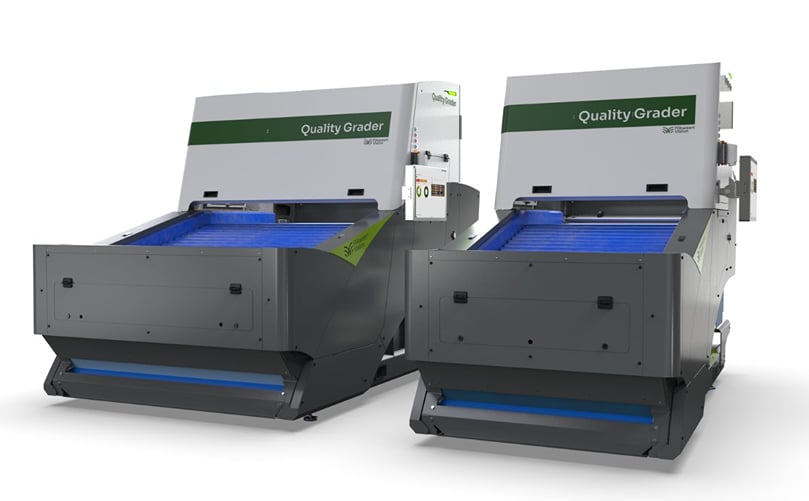
Optical sorting of ware potatoes|Flikweert Vision