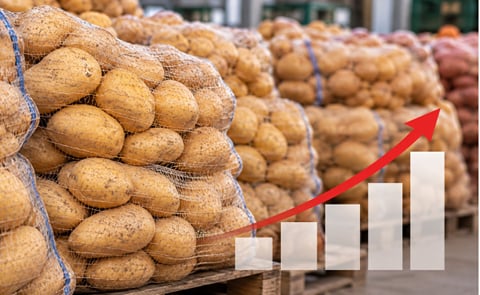

The FAO Food Price Index (FFPI) averaged 213 points in July 2012, as much as 12 points (6 percent) up from June, but still well below the peak of 238 points reached in February 2011. The July surge of the Index followed three months of decline. The sharp rebound was mostly driven by a jump in grain and sugar prices, and more modest increases in oils/fats. International prices of meat and dairy products were little changed.
The FAO Cereal Price Index averaged 260 points in July, up 38 points (17 percent) from June and only 14 points below its all-time high (in nominal terms) of 274 points registered in April 2008. The severe deterioration of maize crop prospects in the United States, following drought conditions and excessive heat during critical stages of the crop development, pushed up maize prices by almost 23 percent in July. International wheat quotations also surged (by 19 percent), amid a worsening of production prospects in the Russian Federation and expectations of a firm demand for wheat from the livestock sector for the second consecutive season because of tight maize supplies. By contrast, international rice prices remained mostly unchanged in July, with the FAO overall Rice Price index stable at 238, barely one point more than in June.
The FAO Oils/Fats Price Index averaged 226 points in July, up 5 points (or 2 percent) from June. The increase, which follows two months of contraction, maintains the index above the historical average but below the peaks recorded in 2008 and 2011. The rebound in the index was primarily driven by soyoil, reflecting the tight supply and demand outlook for soybeans, the prices of which have climbed to record levels. The current and prospective ample availabilities of palm, sunflower and rapeseed oil prevented the index from rising more pronouncedly.
The FAO Meat Price Index averaged 168 points in July, down 3 points (1.7 percent) from June and the third monthly fall in a row. Market weakness characterized the four major meat sectors, in particular pigmeat, which saw prices fall by 3.6 percent. The declines were smaller for poultry, bovine and ovine meats, in the order of 1 percent. Since the beginning of the year, the meat price index has averaged 175, virtually the same level as in the corresponding period in 2011.
The FAO Dairy Price Index averaged 173 points in July, unchanged from June, after five straight months of decline. The prices of several individual dairy products were less static: whole milk powder prices rallied by 2.7 percent, offsetting a 4.2 percent slide in butter quotations. Prices of Skim milk powder and casein dropped 1 percent, while they remained at June’s level for cheese. Since the beginning of the year, dairy prices have shed 16 percent of their value, with butter retreating the most (-27 percent).
The FAO Sugar Price Index averaged 324 points in July, up 34 points (12 percent) from June, ending the steady fall initiated in March. The upturn was triggered by untimely rains in Brazil, the world’s largest sugar exporter, which hampered sugarcane harvesting in July. Concerns over delayed monsoon in India and poor precipitation in Australia also contributed to the price increase.
FAO Food Price index up on unfavourable weather

¿Te gustaría recibir noticias como esta por correo electrónico? ¡Únete y suscríbete!
Get the latest potato industry news straight to your WhatsApp. Join the PotatoPro WhatsApp Community!
Empresa Destacada
Noticias relacionadas

Septiembre 28, 2026
México: menor oferta de papa podría impulsar los precios durante el invierno
En México, el cierre de cosechas, los menores rendimientos y la reducción de la superficie sembrada podrían restringir la oferta de papa y generar presión al alza sobre los precios entre diciembre de 2026 y febrero de 2027.

Septiembre 28, 2026
España: la sequía reduce la cosecha de patatas en 2026
La producción española de patata caerá entre un 8% y un 10% en 2026, hasta unos 1,8 millones de toneladas, con descensos de hasta 35% en Andalucía debido principalmente a la sequía y los menores rendimientos.

Septiembre 23, 2026
Chile: buscan mejorar el diagnóstico molecular de la sarna polvorienta y la sarna común en papa
En Chile, el proyecto SCAB-ID 2.0 busca validar un sistema de qPCR multiplex capaz de detectar y diferenciar simultáneamente la sarna polvorienta y la sarna común de la papa, con miras a transferirlo a laboratorios de diagnóstico agrícola.