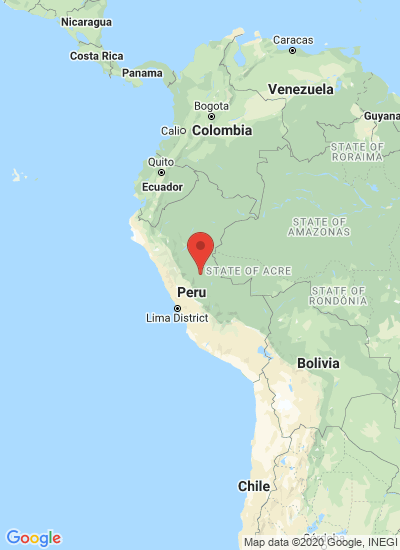

Traditional potato farming practices in the Andes that once provided in situ conservation of the vast diversity of native varieties have been waning over the past decades. Roads now bring in truckloads of rice, pasta and other sources of convenient carbohydrates to these once remote villages 4,000 meters above sea level.
By 2002, farmers were noticing that the decline of their traditional practices led to a low supply of quality potato seed and output. As well, their potatoes had become more susceptible to pests and disease.
Communities in Huancayo, Peru heard about the potato collection at the International Potato Center (CIP) and travelled to its headquarters in Lima in hopes of acquiring clean seeds.
In response, CIP began repatriating disease-free germplasm to farmers in Andean communities Ten years later, 2012 marks the first time that native potato varieties have been repatriated to the communities as in-vitro potato samples.
“Repatriation through in-vitro seedlings offers the highest quality of clean seed,” says Rene Gomez, the native potato curator at the CIP’s genebank.
“It took us 10 years to build the infrastructure and train the communities to be able to receive potato samples by in-vitro. But if you look at it from a big picture perspective, 10 years is just a dent in the history of potato farming, which dates back 10,000 years,” adds Gomez.
In 1971, when CIP began collecting potatoes from Peru’s highland, the fields abounded with diversity. Centuries of traditional farming methods meant that on average each Andean farmer planted a bountiful 400 varieties of potatoes a season on hectare-small plots.
CIP initiated its collection to conserve the genetic resources of potato and widen the selection of desirable traits for breeding improved spuds. Today, CIP houses the world’s largest potato collection – more than 7,000 accessions in an earth-quake proof, state-of-the-art conservation chamber. This vast genetic diversity is now an insurance policy to deal with unforeseen events and climate change, as biodiversity offers a wide portfolio of traits, valuable for adapting to changing environments.
CIP’s collection now serves as backup to the biodiversity lost in the fields. To date, CIP has repatriated 410 native potatoes varieties among communities across the Andes. The long-term aim is to establish thriving community genebanks to ensure that the genetic resources underpinning the food supply are secure for farmers today, and in the future.
Native potatoes get a clean start from repatriated in-vitro seedlings
¿Te gustaría recibir noticias como esta por correo electrónico? ¡Únete y suscríbete!
Get the latest potato industry news straight to your WhatsApp. Join the PotatoPro WhatsApp Community!
Empresa Destacada

Noticias relacionadas

Octubre 11, 2026
El Simposio Internacional de la Patata en Madrid destaca los principales retos y oportunidades del sector europeo de la patata
El primer Simposio Internacional de la Patata en Madrid reunió a 250 profesionales para debatir los principales retos y oportunidades de la cadena de valor de la patata.

Septiembre 28, 2026
México: menor oferta de papa podría impulsar los precios durante el invierno
En México, el cierre de cosechas, los menores rendimientos y la reducción de la superficie sembrada podrían restringir la oferta de papa y generar presión al alza sobre los precios entre diciembre de 2026 y febrero de 2027.

Septiembre 28, 2026
España: la sequía reduce la cosecha de patatas en 2026
La producción española de patata caerá entre un 8% y un 10% en 2026, hasta unos 1,8 millones de toneladas, con descensos de hasta 35% en Andalucía debido principalmente a la sequía y los menores rendimientos.