

Steam trap testing by American Plant Maintenance (APM Steam) in a food processing facility helps identify failing units, improve steam system efficiency, and support reliable production operations.
APM Steam Helps Food Manufacturers Reduce Energy Loss and Downtime with Steam Trap Surveys
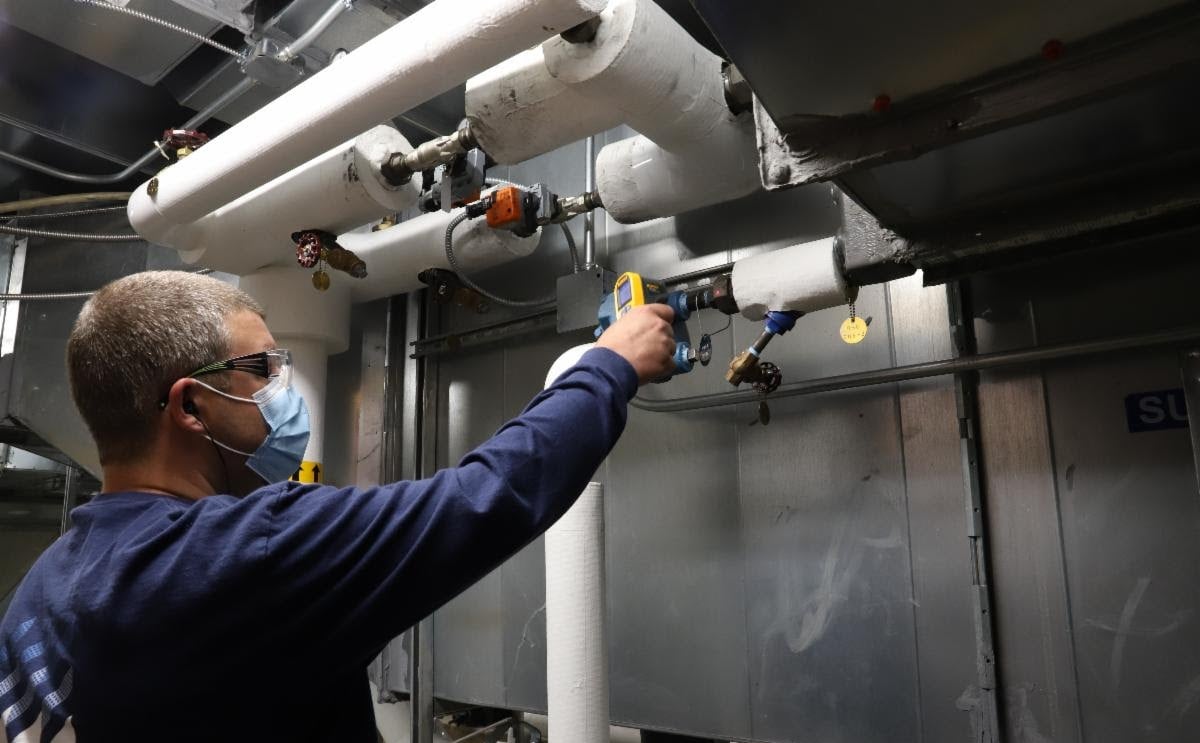
American Plant Maintenance (APM Steam), a leading provider of steam system maintenance services, highlights its steam trap surveys that create a complete inventory of steam traps, identify failing units, and uncover trap station issues that reduce thermal energy delivery and hinder proper condensate removal in food manufacturing facilities.
Many buildings use steam for heating and for other processes. In many cases, steam systems waste up to 20% of their energy through leaks. The biggest source of leaks is malfunctioning steam traps. Even well-maintained facilities experience 15-20% failure rates per year according to the US Department of Energy. Traps that haven't been maintained for a few years can have failure rates as high as 50%.
For food manufacturers, steam trap failures directly impact critical operational priorities. Failed steam traps compromise temperature control in thermal processes, which is a direct food safety concern under FSMA regulations. Malfunctioning traps also cause unplanned line stops that disrupt production schedules and reduce operational efficiency. With rising energy costs and increasing pressure to reduce carbon emissions, addressing steam system inefficiencies has become essential for food and beverage facilities managing energy-intensive thermal processes like cooking, pasteurization, and sterilization.
APM Steam experts conduct steam trap surveys to test and document operational status using ultrasound and temperature differentials. Survey data provides a complete trap inventory and extensive system information in a detailed report outlining findings and recommendations, a synopsis of results, and a return-on-investment calculation that compares replacement costs with losses associated with failed traps.
Throughout the survey, field technicians evaluate the steam trap and surrounding elements including isolation valves, inlet strainers, check valves, bypasses, and test valves. The survey identifies any issues that could prevent safe repairs or require facility shutdown.
Each trap receives a numbered stainless-steel tag for easy identification. Surveys document trap location, application, steam pressure, manufacturer, model, pipe size, temperatures, and installation details. This information highlights access issues, confined space requirements, and potential repair challenges.
The detailed ROI calculation includes survey costs, replacement traps, and labor, compared against losses from failed traps. Facility managers can review the payback period, and many facilities find repair projects pay for themselves in less than a year.
For more information, visit the APM Steam website.
Like to receive news like this by email? Join and Subscribe!
Get the latest potato industry news straight to your WhatsApp. Join the PotatoPro WhatsApp Community!
Highlighted Company

Related News

October 08, 2026
Lyckeby Begins Construction of New Tank Facility to Expand Modified Potato Starch Capacity
Lyckeby has begun construction of a new tank facility to increase modified potato starch capacity. The major investment supports its long-term growth strategy, with commissioning scheduled for 2028.

October 08, 2026
Elea PiCon Sense Wins Silver International FoodTec Award 2027 for Real-Time PEF Process Monitoring
Elea Technology received the Silver International FoodTec Award 2027 for PiCon Sense, a digital platform combining real-time acoustic and vibration monitoring with AI-supported analysis to optimise PEF processing and improve process consistency.

October 04, 2026
Ellips to Showcase AI-Powered Potato and Onion Grading Solutions at Global Produce & Floral Show 2026
Ellips will showcase four AI-powered potato and onion grading solutions at the Global Produce & Floral Show 2026 in Orlando, highlighting automation, labor savings, defect detection, higher throughput, CombiGrader and CleanFlow Pre-Sorter.