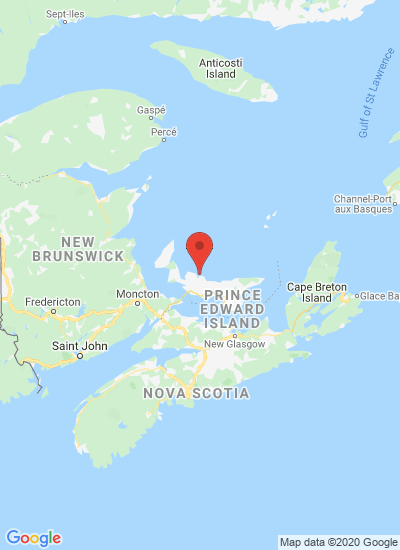

Farmers say healthy potato plants are growing in the areas grazed by cattle, which they hope will increase the crop yield this fall.
Can Cows Help Grow Better Potatoes? Canadian Researchers Test Grazing to Improve Soil Health

Researchers in Prince Edward Island (P.E.I.) are investigating whether integrating cattle into potato crop rotations can improve soil health, reduce production costs, and support more sustainable potato farming without compromising yields.
The multi-year project, led by Agriculture and Agri-Food Canada (AAFC) in collaboration with the P.E.I. Potato Board, is testing rotational grazing on forage fields before potatoes are planted. Early findings show that grazing does not reduce potato yields or increase greenhouse gas emissions, while researchers expect long-term soil benefits as grazing cycles continue.
Cattle Return Valuable Nutrients to Potato Fields
The project uses rotational grazing, where cattle are moved across forage fields in controlled strips before the land is planted with potatoes. As the animals graze, they naturally return nutrients to the soil through manure and urine.
According to Judith Nyiraneza, soil scientist with Agriculture and Agri-Food Canada, cattle manure provides a valuable source of both macro- and micronutrients essential for healthy crop growth.
Judith Nyiraneza, soil scientist with Agriculture and Agri-Food Canada:
"Manure is really rich in nutrients."
She explained that cattle deposits contain potassium, phosphorus, magnesium, zinc, calcium, iron and other nutrients that help replenish the soil naturally.
Researchers hope that repeated grazing cycles will gradually improve soil structure, increase organic matter and ultimately boost potato yields.
Lower Fuel Costs and Less Labour for Farmers
The grazing system also offers practical economic benefits for livestock producers.
Instead of harvesting forage using machinery, cattle graze directly in the field while spreading manure naturally. This reduces machinery use, labour requirements and fuel consumption.
Farmhand Levi Rayner said the approach lowers operating costs.
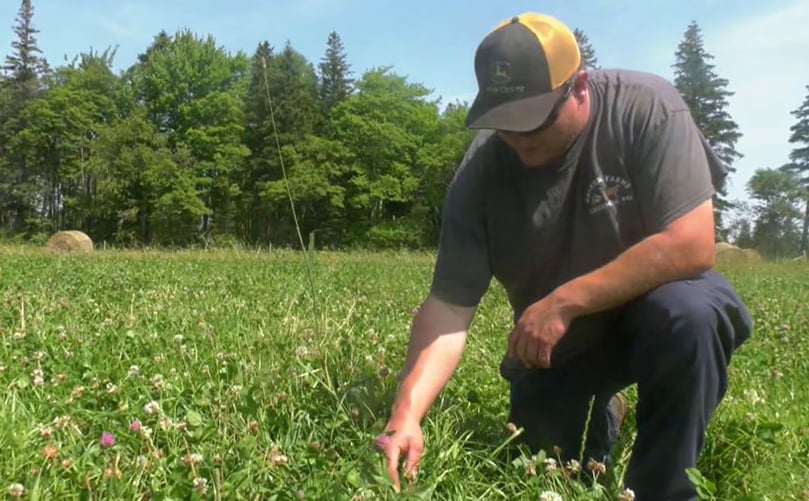
Farmhand Levi Rayner says the grass growing in fields used for the experiment is greener and faster growing.
Levi Rayner, Farmhand:
"It will save money by cutting the cost of fuel down."
Farmer Glen Rayner added that keeping cattle outdoors also benefits animal health.
Glen Rayner, Farmer:
"There's less disease when they're out here in the field, compared with being stuck in a barn."
Both farmers have already noticed greener and darker patches of grass developing around older manure deposits, suggesting improved nutrient availability.
Direct Grazing Improves Efficiency
Ryan Barrett, Research and Agronomy Specialist with the P.E.I. Potato Board, said the system eliminates the need to cut, bale and transport forage.
Ryan Barrett, Research and Agronomy Specialist with the P.E.I. Potato Board:
"We just put the cows out here, let them feed themselves," Barrett said. "So there's additional benefits and reduced costs."
The approach could improve cooperation between livestock and potato farms while making better use of available farmland.
Addressing Challenges of P.E.I.'s Sandy Soils
Although Prince Edward Island is well known for potato production, its sandy soils naturally contain relatively low levels of organic matter and are highly vulnerable to erosion.
Nyiraneza explained that heavy spring and autumn rainfall, combined with periods when fields have little crop cover, increases the risk of topsoil loss and nutrient depletion.
By incorporating grazing into the rotation, researchers hope to improve soil quality while reducing erosion over time.
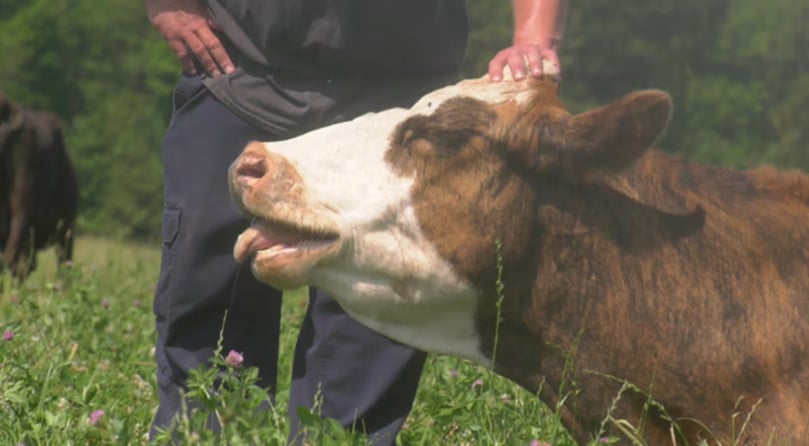
Researchers on P.E.I. are testing whether cattle can help create healthier soil for potatoes while saving farmers time and money.
Researchers Monitor Soil, Emissions and Crop Performance
Scientists are conducting detailed field measurements throughout the growing season.
Soil samples are collected before cattle enter the fields, immediately after grazing, before potato planting and throughout crop development.
Researchers also measure greenhouse gas emissions—including methane, carbon dioxide and nitrous oxide—released from the soil.
In addition, sensors continuously monitor:
- Soil moisture
- Soil temperature
- Air temperature
- Air humidity
These measurements help researchers assess how grazing influences soil health, environmental performance and potato production.
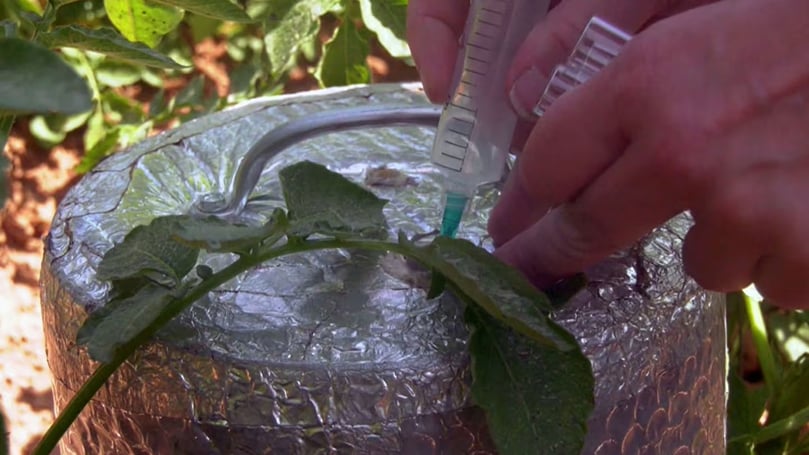
Researchers collect gas released from the soil to measure methane, carbon dioxide and nitrous oxide emissions.
Early Results Show No Yield Penalty
The first results from the study have shown encouraging outcomes.
Researchers found that potato yields and greenhouse gas emissions were comparable between grazed and non-grazed fields.
Nyiraneza said this demonstrates that grazing does not negatively affect potato production or soil quality.
Judith Nyiraneza:
"That's a good story, that grazing is not actually causing any yield penalty or any degradation of soil."
Although no increase in potato yields has yet been recorded, researchers note that the trial fields have only undergone a single grazing cycle. They believe measurable improvements may require multiple years of repeated grazing.
Judith Nyiraneza:
"We hope to see more improvement of soil properties and eventually increase potato yields."
Drone Surveys to Compare Grazed and Ungrazed Fields
This season, most of one research field near Cascumpec had been grazed for two consecutive years before potatoes were planted, while a smaller section remained ungrazed to provide a direct comparison.
Ryan Barrett:
"The crop is looking good, the soil is looking pretty healthy."
In October, researchers plan to fly a drone over both sections to capture aerial imagery. They will also collect multiple potato and soil samples to compare crop performance and soil conditions between grazed and ungrazed areas.
Seven Grazing Trials Underway Across Prince Edward Island
The Cascumpec project is one of seven grazing trials currently being conducted across Prince Edward Island.
Researchers aim to build a large dataset over several growing seasons to determine whether rotational grazing consistently improves soil health and potato production under different farming conditions.
Even if yields remain unchanged, Barrett believes the approach could strengthen collaboration between livestock and potato producers while making farmland more efficient.
Ryan Barrett:
"Forty or 50 years ago, everybody who grew potatoes also had cattle. Now that's very much not the case. I'm not saying everybody that grows potatoes has to have cows, but we can have more co-operation between those farms."
The Cascumpec trial will continue through another growing season, while researchers seek additional funding to extend the study and evaluate the long-term effects of repeated grazing cycles on soil health, sustainability and potato production.
Like to receive news like this by email? Join and Subscribe!
Get the latest potato industry news straight to your WhatsApp. Join the PotatoPro WhatsApp Community!
Highlighted Company


Related News

October 08, 2026
ICAR-CPRI Potato Varieties Cover Nearly 75% of India’s Potato Area
ICAR-CPRI's Kufri Jyoti, Kufri Bahar, Kufri Pukhraj and Kufri Chipsona-1 together cover nearly 75% of India's potato cultivation area. The varieties have boosted productivity, farmer incomes and the potato processing sector.

October 06, 2026
Dutch Potato Organisation Celebrated Potato Tuesday at Utrecht Central Station on October 6
The Dutch Potato Organisation celebrated Potato Tuesday on October 6 at Utrecht Central Station during the Week of Our Food. Visitors can enjoy free recipe booklets and discover the people behind the Dutch potato industry.

October 05, 2026
Punjab Agricultural University Introduces Four Potato Varieties for Higher Yield and Disease Resistance
PAU Ludhiana has released four potato varieties—PP-101, PP-102, PP-103 and PP-104. Yields range from 142–184 quintals/acre, with PP-103 offering early harvest and PP-104 moderate late-blight resistance. Seed is now available.