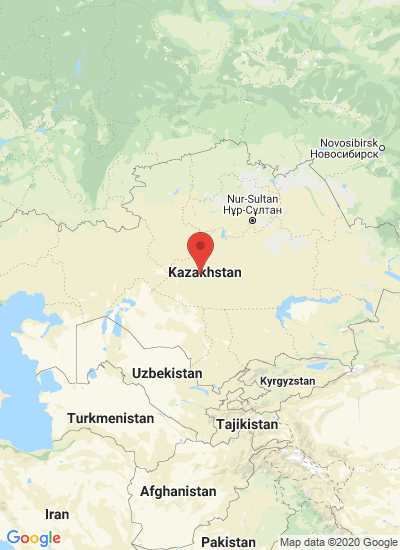

Freshly harvested potatoes in Kazakhstan — authorities monitor exports and domestic stocks as the government considers restricting shipments to stabilize prices.
Kazakhstan Signals Potential Return of Potato Export Restrictions as Threshold Nearly Reached

Kazakhstan may once again restrict potato exports after the government confirmed that export volumes are approaching the limit set to protect domestic supply. Deputy Prime Minister and Minister of National Economy Serik Zhumangarin outlined the conditions for reimposing curbs, following a year of heightened demand from neighbouring countries and sharp fluctuations in domestic prices.
Background: Six-Month Export Ban Already in Effect
Earlier this year, in January 2025, the Interdepartmental Commission on Trade Activities introduced a six-month ban on potato exports to non-EAEU countries. The decision was triggered by a 1.5-fold surge in export volumes—from 411,000 tonnes to 605,000 tonnes—driven largely by high demand from Uzbekistan and elevated export prices.
The rush in demand caused producer prices to jump dramatically within a week, rising from 170 to 270 tenge per kilogram. To stabilise the market, authorities suspended the issuance of phytosanitary certificates from 16 January and intensified market monitoring through the Ministries of Trade, Agriculture, and the antimonopoly authority.
According to official data, Kazakhstan’s potato stocks as of 19 January exceeded 850,000 tonnes—enough to meet domestic needs until the 2025 early harvest. The 2024 gross harvest reached 2.9 million tonnes, with consumption from August to December totaling 844,000 tonnes and exports reaching 620,000 tonnes.
Government Sets Export Threshold: 500,000–600,000 Tonnes
Speaking at a government briefing, Zhumangarin stated that Kazakhstan requires 2 to 2.1 million tonnes of potatoes annually, based on a consumption norm of 100 kg per person. Therefore, when export volumes hit the “critical level” of 500,000–600,000 tonnes, the government will begin restricting shipments.
Serik Zhumangarin, Deputy Prime Minister and Minister of National Economy of Kazakhstan:
"Potatoes are more expensive in neighbouring countries, and our producers benefit from exports. But once 500,000 to 600,000 tonnes are sold abroad, we will most likely close exports or introduce quotas."
Deputy Minister of Agriculture Azat Sultanov confirmed that this year’s harvest totaled 2.9 million tonnes, leaving an export potential of about 800,000 tonnes. However, accounting for losses during storage, the working threshold remains 500,000–600,000 tonnes.
So far, 300,000 tonnes of the new crop have already been exported, and another 200,000 tonnes are under contract—meaning the limit has effectively been reached.
Domestic Prices Stabilize After Earlier Spike
Zhumangarin said domestic potato prices have settled at around USD 0.34 per kilogram, down from the spring peak of USD 0.50–0.70. Earlier in the year, at the height of shortages, some cities—including Astana—introduced limits on individual purchases, and prices briefly soared to USD 0.96 per kilogram.
Authorities emphasized that ongoing monitoring is in place to prevent speculative behaviour and ensure stable pricing across the country’s markets.
Like to receive news like this by email? Join and Subscribe!
Get the latest potato industry news straight to your WhatsApp. Join the PotatoPro WhatsApp Community!
Related News

October 06, 2026
Dutch Potato Organisation Celebrated Potato Tuesday at Utrecht Central Station on October 6
The Dutch Potato Organisation celebrated Potato Tuesday on October 6 at Utrecht Central Station during the Week of Our Food. Visitors can enjoy free recipe booklets and discover the people behind the Dutch potato industry.

October 05, 2026
Punjab Agricultural University Introduces Four Potato Varieties for Higher Yield and Disease Resistance
PAU Ludhiana has released four potato varieties—PP-101, PP-102, PP-103 and PP-104. Yields range from 142–184 quintals/acre, with PP-103 offering early harvest and PP-104 moderate late-blight resistance. Seed is now available.

October 05, 2026
Idaho Potato Harvest Shows Solid Quality but Lower Yields in 2026
Idaho’s 2026 potato harvest is showing solid quality but lower yields, with frost, heat, warm nights and wildfire smoke affecting production. Planted area fell to 298,915 acres as growers report smaller crops.
Latest News


Sponsored Content
Sponsored Content
Sponsored Content