Kazuya Tasaki, President of Calbee Potato (center), Yasufumi Komagata, Manager of the Kawanishi Branch of Calbee Potato (left), Satoshi Sato, Chairman of the Obihiro City Kawanishi Processed Potato Production Cooperative (right)
Calbee Potato Harvest Ceremony 2026 Highlights Stronger Hokkaido Potato Quality and Yield

Calbee Potato Co. expects this year's Hokkaido potato crop to improve in both quality and yield, raising expectations for stronger supplies of potatoes used in potato chips, Jagarico and other processed potato products.
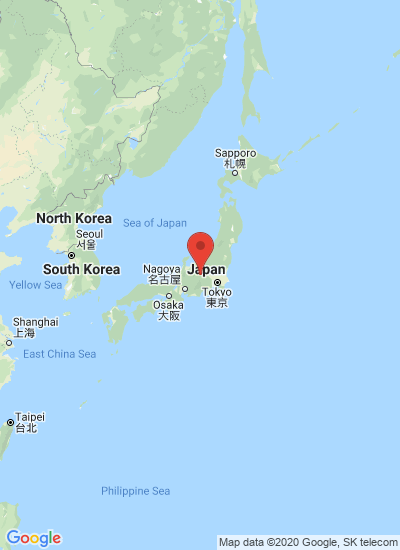
The company held its Potato Harvest Ceremony 2026 on September 1 at Tokachi Field in Kami-Obihiro, Obihiro City, Hokkaido. The ceremony was held on a 1-hectare field managed by Satoshi Sato, President of the Obihiro City Kawanishi Processing Potato Production Cooperative, where the processing variety Toyoshiro is cultivated.
2026 Procurement Expected to Reach 240,000–250,000 Tons
Kazuya Tasaki, President of Calbee Potato Co., said the company expects to procure approximately 240,000–250,000 tons of Hokkaido potatoes in 2026, exceeding the 230,000 tons procured in 2025.
Calbee Potato procured 250,000 tons of Hokkaido potatoes in 2023, 245,000 tons in 2024 and 230,000 tons in 2025. Last year's crop was affected by high temperatures and drought, resulting in lower yields and poorer quality.
Tasaki said weather conditions have been considerably more favorable this year.
Kazuya Tasaki, President of Calbee Potato Co., Ltd:
"In recent years, we have suffered from high temperatures and droughts, but this year, the average temperature has dropped compared to last year, and there has been moderate rainfall."
He explained that potatoes benefit from appropriate temperature differences during the growing season because moderate daytime temperatures support photosynthesis and nutrient accumulation in the tubers.
Kazuya Tasaki:
"Potatoes prefer temperature differences; when the temperature is moderate during the day, photosynthesis occurs and nutrients reach the potatoes, but if it's too hot, unnecessary breathing increases, making it harder to reach the potatoes."
"This year, a lot of nutrients have been lost to potatoes."
Recovery From Difficult 2025 Season
The improvement in the 2026 crop outlook comes after a difficult season for Japanese processing potato production.
In 2025, high temperatures and drought reduced both yield and quality. The supply situation affected products such as potato chips and Jagarico, which rely heavily on Hokkaido potatoes, and promotional activities had to be restrained during important year-end and high-demand periods.
This year's expected procurement of 240,000–250,000 tons would represent a significant recovery compared with 2025.
However, Tasaki remains cautious because weather conditions during the harvest period could still affect the final outcome.
Kazuya Tasaki:
"I want to say this year is a bumper harvest, but what worries me most right now are torrential rains and linear rainbands."
Heavy rainfall can make harvesting particularly difficult because potato harvesting equipment is extremely heavy and cannot easily enter saturated fields.
Kazuya Tasaki:
"When the rain pours down, the harvesters are so heavy that they can't be put in the fields, and we have to wait until they dry, which delays the harvest."
He also warned that harvesting delays during periods of high temperatures could increase crop risks.
Kazuya Tasaki:
"If we can't harvest in high temperatures, diseases and pests become more likely to occur."
Toyoshiro Variety Grown at Harvest Ceremony Field
The harvest ceremony took place at a field operated by Satoshi Sato, President of the Obihiro City Kawanishi Processing Potato Production Cooperative.
The 1-hectare field is planted with Toyoshiro, a potato variety used for processing.
Looking back at the previous season, Sato described the difficulties faced by producers as a result of unfavorable weather.
Satoshi Sato, President of the Obihiro City Kawanishi Processing Potato Production Cooperative:
"Last year, high temperatures and drought led to insufficient yields, making it a tough situation for producers. Agriculture is truly uncontrollable to the weather, and I myself feel deeply that I am a first-year student every year."
Despite these challenges, producers at the cooperative worked closely with Calbee Potato's field staff to minimize the effects of unfavorable weather.
The partners focused on avoiding low-density cultivation while also improving fertilization planning and irrigation management to support stable potato growth.
These efforts, combined with more favorable weather in 2026, are expected to have contributed to stronger crop development.
Field-Specific Fertilization and Irrigation
Calbee Potato also introduced field-specific fertilization practices during the growing season.
Rather than using the same fertilizer program across all fields, the company conducted soil analyses for individual producers and designed fertilizer applications according to the conditions of each field.
Yasufumi Komagata, head of Calbee Potato Company's Kawanishi branch, explained the approach.
Yasufumi Komagata, Head of Calbee Potato Co.’s Kawanishi Branch:
"Since fertilization is tailored to the field, we conducted soil analysis of each producer's field and applied fertilizer tailored to each field."
The company also carried out irrigation tests in selected areas where irrigation was possible, while gathering information from other production regions.
Yasufumi Komagata:
"I heard that irrigation will be possible a bit later, but we are conducting irrigation tests in some areas where it can be done while receiving information from other production areas."
Although rainfall was relatively abundant this year, Komagata observed that irrigated fields appeared to have performed better in some areas.
Yasufumi Komagata:
"This year, there was a lot of rain, so there might not have been much difference, but the irrigated areas seem better."
Smooth Planting and Favorable Weather
Komagata said the crop got off to a strong start, with favorable weather in April allowing planting operations to progress smoothly.
Yasufumi Komagata:
"April was relatively favorable with good weather, and planting proceeded very smoothly by early May."
After planting, moderate rainfall and temperatures that avoided the extreme heat experienced in previous years supported crop development.
Yasufumi Komagata:
"Afterwards, there was moderate rainfall, and the temperature did not become too hot, so the crops grew well, and we have very high expectations."
Stronger Crop Could Support Calbee Processing Products
The expected recovery in Hokkaido potato production is important for Calbee's processing business, particularly its potato chip and Jagarico product lines.
The difficulties of the 2025 season demonstrated the impact that reduced potato availability and quality can have on processing operations and marketing activities.
With procurement now expected to reach 240,000–250,000 tons, Calbee Potato is entering the 2026 harvest season with greater optimism.
Nevertheless, the company continues to monitor rainfall and extreme weather risks closely. Torrential rain and linear rainbands could delay harvesting, while prolonged high temperatures could increase the risk of diseases and pests.
For Hokkaido potato growers and processors, the 2026 season is therefore emerging as a potential recovery year after the challenges of 2025, with the final outcome depending on weather conditions through the remainder of the harvest.
Like to receive news like this by email? Join and Subscribe!
Get the latest potato industry news straight to your WhatsApp. Join the PotatoPro WhatsApp Community!
Highlighted Company

Related News

October 08, 2026
ICAR-CPRI Potato Varieties Cover Nearly 75% of India’s Potato Area
ICAR-CPRI's Kufri Jyoti, Kufri Bahar, Kufri Pukhraj and Kufri Chipsona-1 together cover nearly 75% of India's potato cultivation area. The varieties have boosted productivity, farmer incomes and the potato processing sector.

October 06, 2026
Dutch Potato Organisation Celebrated Potato Tuesday at Utrecht Central Station on October 6
The Dutch Potato Organisation celebrated Potato Tuesday on October 6 at Utrecht Central Station during the Week of Our Food. Visitors can enjoy free recipe booklets and discover the people behind the Dutch potato industry.

October 05, 2026
Punjab Agricultural University Introduces Four Potato Varieties for Higher Yield and Disease Resistance
PAU Ludhiana has released four potato varieties—PP-101, PP-102, PP-103 and PP-104. Yields range from 142–184 quintals/acre, with PP-103 offering early harvest and PP-104 moderate late-blight resistance. Seed is now available.