

Myanmar
Potato cultivation in Myanmar is primarily concentrated in the Shan Plateau, which contributes 60–70% of the country’s total production due to its favorable agroecological conditions, including high altitudes ranging from 750 to 1,200 meters, mild winters, cool dry springs, warm wet summers, and high annual precipitation between 1,900 and 2,000 mm.
Additional key potato-growing areas include river-adjacent regions in Magwe, Sagaing, Mandalay, and Kachin States, collectively accounting for about 25% of national production, where intensive winter cultivation on fertile alluvial floodplains yields up to 25 tons per hectare. In contrast, the Chin Hills contribute 8–10% of production through rainfed, shifting cultivation on small plots, resulting in lower yields of around 8 tons per hectare.
Geographically, Myanmar spans over 2,000 kilometers from latitude 10°N to 28°N and is divided into five physiographic regions, with the Shan Plateau drained by the Salween River and the rest of the country primarily by the Irrawaddy River.
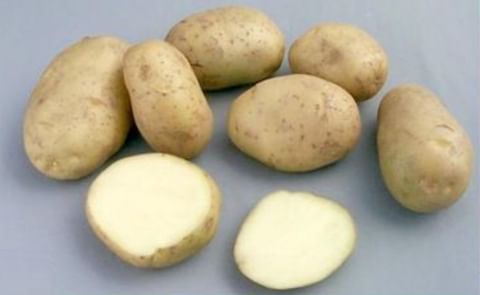
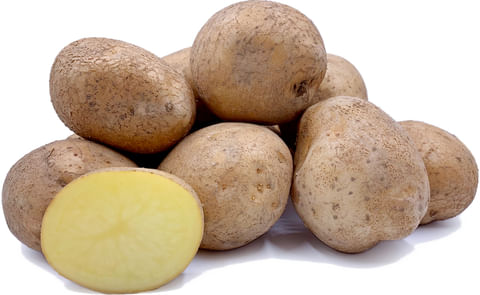
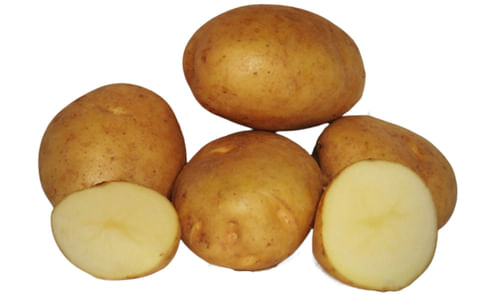
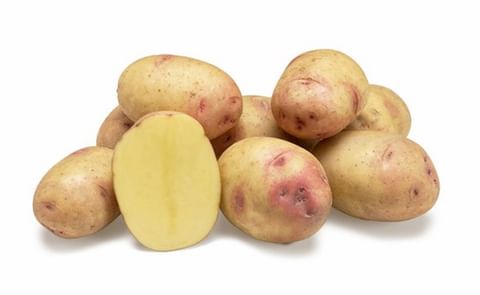
Various potato varieties are cultivated across the country, with Kufri Jyoti being the most widely grown, especially in the Naung Ta Yar region. Other trialed varieties include Granola, Jelly, Waneta, Jacqueline Lee, Lamoka, Calwhite, Carolus, Markies, Manistee, Marabel, and Rosagold.
According to FAO estimates, Myanmar produced approximately 432,363 tonnes of potatoes in 2023, with an average yield of 15,401.8 kg per hectare.
Myanmar (formerly Burma) saw the documented introduction of true potato cultivation in the mid-19th century, likely via British India or China, with the term "Tayok," meaning "Chinese potato," suggesting a Chinese origin. By 1882, seed tubers were imported from Britain, followed by the introduction of Indian varieties such as Kidney and Bengal Potatoes in 1892.
Despite initial misconceptions, including the belief that potato consumption caused goiter, adoption gradually increased. By 1915, sixteen potato varieties were under cultivation, and production expanded during World War II under British military occupation.
Commercial-scale farming was established by 1950 in the Shan Plateau, primarily with the British variety 'Up-to-Date', introduced around 1914. Although additional varieties were introduced after the 1950s, diversification remains limited due to the lack of a formal seed system providing clean, disease-free tubers.
As of mid-2023, Myanmar's population stands at approximately 54.18 million, with 65–70% engaged in agriculture, and women making up nearly half of the agricultural workforce in this predominantly rural country.





| Rank | Name | Potato Production in 2023 |
|---|---|---|
| 1 |  China China | 2,059,757,780.00 cwt |
| 2 |  India India | 1,325,890,532.00 cwt |
| 3 |  Ukraine Ukraine | 470,872,357.00 cwt |
| 4 |  United States United States | 440,745,616.10 cwt |
| 5 |  Russian Federation Russian Federation | 424,192,812.40 cwt |
| 6 |  Germany Germany | 255,894,535.80 cwt |
| 7 |  Bangladesh Bangladesh | 229,978,051.90 cwt |
| 8 |  France France | 189,738,678.50 cwt |
| 9 |  Egypt Egypt | 188,989,753.90 cwt |
| 10 |  Pakistan Pakistan | 183,417,583.30 cwt |
Statistics for myanmar
Loading...