

Global Importance and Emerging Role of Cassava Chips
Cassava chips also known as yuca or manioc chips are produced from the starchy tuberous roots of the cassava plant (Manihot esculenta). The roots are typically peeled, sliced, dried and then fried or baked to create a crisp snack or an intermediate industrial product. While often compared with potato chips, cassava chips differ significantly in raw material characteristics, processing behavior and end-use versatility.
Unlike potato chips derived from Solanum tuberosum, which have a relatively high moisture content (approximately 78–80%) and a distinctly earthy, savory flavor, cassava roots are denser, starch-rich and contain lower moisture levels (around 60–65%). This composition gives cassava chips a firmer crunch and a neutral to mildly sweet flavor profile that readily absorbs seasonings. Cassava chips are naturally gluten-free and depending on processing method, can exhibit a lower glycemic response than conventional potato chips. However, oil uptake during frying can be higher if slice thickness, drying and frying temperatures are not carefully controlled.
From a food safety perspective, potato tubers may contain solanine when exposed to light, whereas cassava contains cyanogenic glycosides. These compounds are effectively reduced to safe levels through proper peeling, soaking, drying and thermal processing making standardized processing essential in cassava chip production.
Globally, cassava is the third-largest source of dietary carbohydrates after rice and maize, serving as a staple food for more than 800 million people. Its importance is most pronounced in Africa, where it can supply up to 50% of daily caloric intake in countries such as Nigeria and the Democratic Republic of Congo (DRC). Cassavas tolerance to drought, poor soils and irregular rainfall makes it a critical crop for food security in climate-vulnerable regions. In Asia particularly Thailand, Indonesia and Vietnam cassava is predominantly cultivated for industrial applications, while in Latin America, countries such as Brazil integrate cassava into traditional foods like farofa and farinha.
Global cassava production reached approximately 333.7 million tonnes in 2023, with Africa accounting for nearly 64%, Asia 33% and Latin America contributing the remainder. This distribution highlights cassavas strategic role in feeding rapidly growing populations, especially on marginal lands unsuitable for cereals.
Cassava chips occupy a pivotal position across multiple sectors. In the snack industry, they align with rising demand for gluten-free, clean label and alternative root-based products, contributing to the expansion of the global gluten-free market projected to exceed USD 25 billion by 2030. In animal nutrition, dried cassava chips serve as a cost-effective energy source, accounting for nearly 70% of global dried cassava utilization. Industrially, cassava chips are a key feedstock for starch extraction used in bioethanol production, textiles, paper and food processing supported by policies such as Thailand bioethanol blending mandates, which helped generate cassava-based exports worth over USD 1.25 billion in 2023.
Recent policy-driven initiatives, including Nigeria push toward value-added cassava processing, further underscore the crops role in rural income generation and economic diversification. Similarly, Vietnam cassava chip exports surpassed USD 370 million during the 2024/25 marketing season, reflecting strong international demand for cassava-derived products.
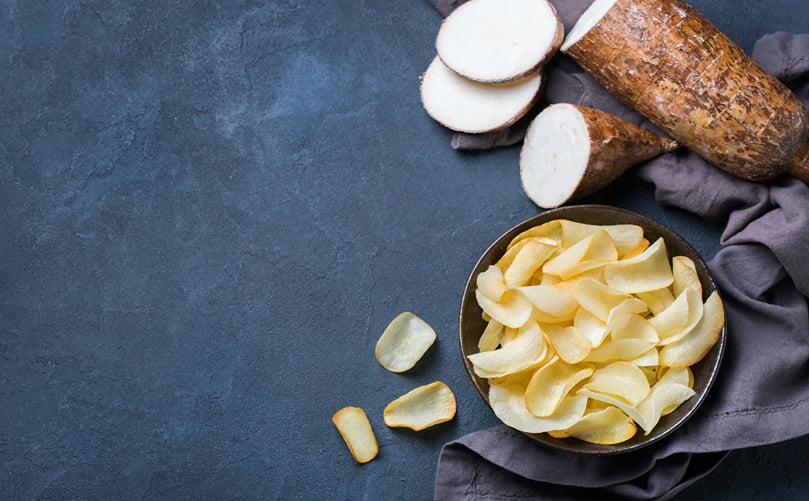
Cassava Chips Made from Manihot esculenta Roots
Historical Evolution of Cassava Chips in World Cuisines
Cassavas journey from a toxic wild tuber to a globally consumed snack spans millennia, shaped by indigenous innovation, colonial trade routes and modern food industrialization.
Cassava (Manihot esculenta) was domesticated over 10,000 years ago in west-central Brazil by pre-Columbian Amazonian communities, including Arawak and Carib groups. Through selective breeding, early cultivators transformed a naturally cyanogenic plant into a high-starch staple with larger roots and reduced toxicity. Indigenous processing techniques such as grating, fermenting, soaking and pressing were developed to detoxify the roots, producing flatbreads like beiju or casabe and sun dried slices that can be considered early “proto-chips.” Archaeological evidence from Peru dating back to around 7,000 BCE includes manioc graters, while Caribbean Taíno communities reportedly fried thin cassava slices in animal fats to create portable snack foods.
During the 16th century, Portuguese and Spanish colonizers disseminated cassava across the tropics through colonial expansion and transatlantic trade. Introduced to Africa via slave trade routes, cassava rapidly replaced yams in many regions of the Congo Basin by the 18th century due to its drought tolerance and reliability. Regional adaptations emerged, including muwogo (steamed and fried cassava chips) in Uganda and crisp snack forms resembling chin-chin in Nigeria. By the 19th century, cassava had become a critical famine-resilience crop in sub-Saharan Africa, with British colonial records documenting exports of dried cassava chips from Ghana for maritime provisions.
In Asia, cassava was introduced to Java (Indonesia) by Dutch traders in the early 17th century. By the 1800s, Javanese food traditions had incorporated cassava into kripik singkong thinly sliced, fried chips often seasoned with sambal well documented in regional food histories. Portuguese trade routes also carried cassava to India, where it became tapioca chips in Kerala and to Vietnam, where it initially served as a wartime food staple during the 1940s–1970s. Following economic liberalization after 2000, Vietnam transitioned cassava into industrial snack and starch markets. In Thailand, 20th-century commercialization led to the development of iconic lime-chili cassava chips, blending indigenous herbs with mass snack production.
Today, cassava chips represent a convergence of ancient processing knowledge and modern snack innovation, reflecting their deep cultural roots and evolving global relevance.
Cassava as a Raw Material for Food and Industrial Processing
Manihot esculenta Crantz, commonly known as cassava, manioc or yuca, is a perennial woody shrub belonging to the Euphorbiaceae (spurge) family. The crop is native to South America, particularly the border regions of Brazil and Paraguay and the foothills of the Andes. Under cultivation, cassava typically grows 1–3 meters tall, reaching up to 4 meters under optimal conditions. It develops one or several upright stems that branch near the apex and bear alternate, palmate leaves with 3–10 lobes measuring 10–30 cm across. Young leaves often display a reddish hue and the plant exudes a characteristic milky latex containing rubber-like compounds.
Cassava produces small, greenish-white flowers arranged in axillary racemes; however, sexual reproduction is rare in commercial systems. Instead, propagation relies almost entirely on vegetative stem cuttings, usually 15–25 cm long, taken from mature plants. This method ensures genetic uniformity and predictable agronomic performance. The cassava genome, sequenced in 2014, spans approximately 1.7 gigabases and contains around 30,000 genes, including those associated with drought tolerance (such as DREB transcription factors) and cyanogenic glycoside biosynthesis.
The economic yield comes from the storage roots, which develop as clusters of 4–8 cylindrical tubers, sometimes reaching 1 meter in length and 5–15 cm in diameter. These roots have a rough brown periderm and white to yellowish flesh, composed primarily of 60–80% water and 20–30% starch, with minimal protein and fat content. Cassava varieties are broadly classified into “sweet” types, containing low levels of cyanogenic glycosides (<50 mg HCN/kg fresh root) suitable for direct food use and “bitter” types, with higher cyanide levels (100–500 mg/kg) that require thorough processing and are primarily used for industrial applications. Domestication of cassava dates back 8,000–10,000 years by indigenous Amazonian communities, with global dissemination occurring in the 16th century through Portuguese trade routes.
Cassava is cultivated across tropical and subtropical regions between 30°N and 30°S, covering approximately 32 million hectares worldwide. Global production reached about 334 million tonnes in 2023, reflecting a 3% increase over the previous year. Africa dominates production, contributing nearly 63%, followed by Asia at 33% and Latin America accounting for the remainder. Major producers include Nigeria, the Democratic Republic of Congo, Thailand, Ghana, Brazil, Indonesia and Cambodia.
Thailand records some of the highest yields globally often exceeding 25 t/ha due to irrigation and intensive input use, while yields in many African regions remain lower (8–12 t/ha) because of pest pressure and limited inputs. Emerging production growth in countries such as Vietnam and Angola is driven largely by demand from starch and bioethanol industries. Global output is projected to approach 340 million tonnes, with expansion concentrated mainly in Asia.
Agronomically, cassava is valued for its exceptional resilience. As a C3 plant with a deep taproot system extending up to 2 meters, it exhibits strong drought tolerance and can survive 6–8 months of limited rainfall by reallocating photosynthates to storage roots and reducing stomatal conductance. Compared with cereals such as maize, cassava retains a much higher proportion of yield under drought stress. It thrives on acidic, low-fertility soils (pH 4.5–6.5), including oxisols and ultisols and tolerates aluminum toxicity. Fertilizer requirements are modest, typically 50–100 kg nitrogen per hectare, substantially lower than those of most cereal crops.
Optimal growth conditions include annual rainfall of 1,000–2,500 mm, temperatures between 25 and 29°C, and a long frost-free period. Nevertheless, cassava adapts to rainfall as low as 500 mm and temperature extremes ranging from 12 to 40°C. Crop maturity varies from 8 to 24 months depending on variety and intended use. Intercropping with legumes can enhance soil fertility and increase yields by 20–30%. Although pests and diseases such as cassava mosaic virus and mealybugs can cause significant yield losses, especially in Africa, improved and resistant varieties developed by institutions such as IITA have substantially reduced these risks. Owing to its high energy efficiency and low input demands, cassava remains one of the most reliable crops for smallholder farmers and a critical raw material for food, feed and industrial processing.
Compared with potatoes (Solanum tuberosum), cassava performs better on marginal soils and under drought stress but generally produces lower yields under high-input, fertile conditions. Potatoes, in contrast, deliver higher protein levels and are a richer source of vitamin C, yet they require reliable irrigation, cooler night temperatures (approximately 15–20°C) and more intensive crop management.
When compared with sweet potatoes (Ipomoea batatas), both crops exhibit strong resilience to environmental stress. However, cassava typically requires less water and produces a higher proportion of extractable starch (around 75–80%) than sweet potato (approximately 65–70%). Sweet potatoes, on the other hand, mature more rapidly often within 3–4 months and are nutritionally superior in terms of provitamin A (beta-carotene) content.
Integrated cassava sweet potato intercropping systems have shown agronomic benefits in climate-vulnerable regions such as Uganda, where improved land-use efficiency, enhanced biodiversity and complementary canopy and root architectures contribute to yield increases of approximately 15–25% under smallholder farming conditions.
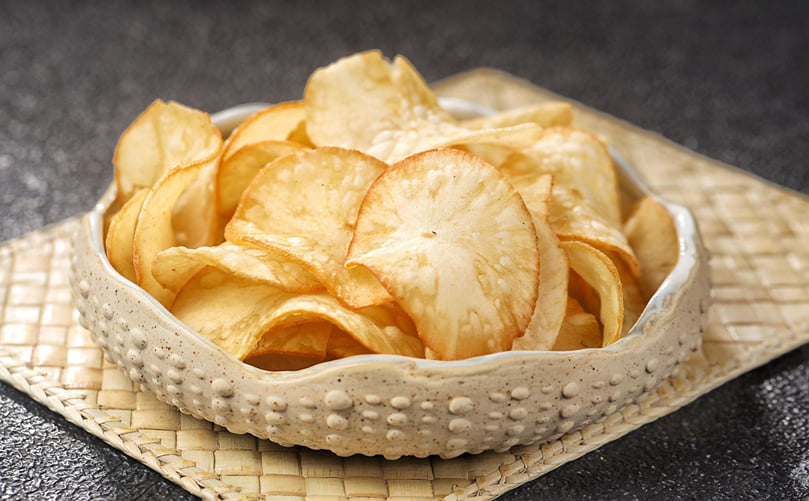
Processed Cassava Chips: From Root to Crisp Snack
Types of Cassava Chips and Their End Uses
Cassava chips can be broadly classified based on end use, flesh color and processing method. Global production of cassava chips is estimated at approximately 70 million tonnes annually, representing about 20% of total processed cassava output. Of this volume, roughly 30% is food-grade and 70% is used for industrial applications, reflecting cassavas dominant role beyond direct human consumption.
Food-Grade Cassava Chips: Food-grade cassava chips are produced primarily for human consumption and the snack food sector. They are typically thinly sliced (1–3 mm) from sweet, low-cyanide cassava varieties. Processing includes peeling, washing, blanching or soaking to reduce surface cyanogenic compounds, followed by frying or baking. Frying may be carried out using conventional deep-frying or vacuum-frying at temperatures of approximately 160–180°C, while baked or air-fried variants cater to low-oil product segments.
Due to their neutral flavor profile, cassava chips readily absorb seasonings, resulting in a wide range of flavored products. A typical serving (28 g) provides approximately 130–160 kcal, with starch contributing the majority of carbohydrates. Commercial sub-types include plain or lightly salted chips, flavored variants (such as barbecue, lime-chili, or herb blends) and extruded cassava snacks, where dough is cooked and expanded through extrusion to create puffed shapes.
Premium and health-oriented brands have expanded this segment, particularly within gluten-free and clean-label markets. Proper processing ensures residual hydrogen cyanide levels remain well below international safety thresholds (generally <10 ppm). Vacuum frying, in particular, has been shown to reduce oil uptake by 20–30% compared with traditional deep-frying.
Industrial Cassava Chips: Industrial cassava chips are thicker (typically 3–8 mm), unfried and dried either naturally or mechanically to a final moisture content of 12–14%. These chips account for nearly 70% of total cassava chip production and are primarily used as an intermediate raw material in non-food sectors.
Major applications include animal feed, where cassava chips and pellets provide a high-energy carbohydrate source for poultry and swine diets; starch extraction for food, textile, paper and adhesive industries and bioethanol production. In countries such as Thailand and Vietnam, cassava chips contribute significantly to ethanol blending programs, yielding approximately 250 liters of ethanol per tonne of dried chips through fermentation. Compacted cassava pellets derived from chips are increasingly traded internationally, particularly for feed and bioenergy markets.
Recent studies highlight improvements in drying efficiency through elevated solar drying systems, which reduce contamination and significantly increase throughput compared with traditional ground-level drying methods. These innovations are particularly relevant for industrial-scale operations in tropical regions.
Cassava Chips by Flesh Color: Cassava chips also vary by root flesh color, which influences both nutritional value and end-use suitability. White-fleshed cassava varieties dominate global production and produce pale, neutral-colored chips that are highly versatile for seasoning and industrial applications. These varieties generally contain low levels of provitamin A.
Yellow-fleshed cassava, developed through conventional breeding and biofortification programs, yields chips with a golden appearance and higher beta-carotene content. These chips are increasingly used in nutritionally enhanced snack products aimed at addressing vitamin A deficiency. Sensory evaluations indicate that yellow-fleshed cassava chips are slightly sweeter and softer in texture, with consumer acceptance comparable to that of white-fleshed chips.
Traditional and Modern Processing Methods: Traditional cassava chip processing remains widespread in smallholder systems across Africa, Asia and Latin America. It typically involves manual peeling and slicing, sun-drying over several days and open-pan frying in vegetable or palm oil. While these methods produce culturally distinctive products, they often result in variable quality, higher post-harvest losses and increased food safety risks.
Modern processing systems employ mechanized slicers for uniform thickness, controlled drying technologies and advanced frying methods such as vacuum frying or extrusion. These technologies significantly reduce post-harvest losses, improve product consistency and lower the formation of undesirable compounds such as acrylamide. Hybrid approaches, including fermented cassava chips where soaking or fermentation reduces cyanogenic compounds prior to drying are gaining attention for export-oriented markets, combining traditional knowledge with improved safety and quality standards.
From Field to Finished Chip: How Cassava Chips Are Processed
Cassava roots are typically harvested 8–18 months after planting, when starch accumulation reaches its peak, generally 20–30% on a dry matter basis. Harvesting is carried out using manual tools such as hoes in smallholder systems or mechanized From Field to Finished Chip, How Cassava Chips Are Processeddiggers in commercial operations. Care is taken to minimize mechanical injury, as bruising accelerates post-harvest physiological deterioration (PPD) through enzymatic browning and increased cyanogenic activity. Harvesting during dry weather is preferred to reduce the risk of microbial spoilage, particularly soft rot caused by Erwinia spp.
Post-harvest handling is time-critical. Roots are washed to remove adhering soil, sorted to eliminate damaged or diseased tubers (typically rejecting more than 10%) and transported in ventilated crates to processing facilities within 24–48 hours. Cassava roots begin physiological deterioration within 48–72 hours after harvest, potentially resulting in 20–50% losses if processing is delayed. In high-volume processing regions such as Thailand, conveyorized handling and hydrocooling (immersion in 10–15°C water) are used to reduce respiration rates and extend shelf life by 2–3 days.
Peeling is a critical step, as the outer rind and cortex representing approximately 5–15% of root weight contain the majority of cyanogenic glycosides. Peeling may be performed manually, by abrasion using rotary drum peelers or through steam peeling. Abrasion peelers operating at controlled rotational speeds recover 85–95% usable flesh, while steam peeling (80–100°C for several minutes) achieves high peeling efficiency with minimal flesh loss. For food-grade products, international standards require near-complete rind removal to ensure cyanide levels remain within safe limits.
Slicing follows peeling and is carried out using reciprocating or rotary slicers. Uniform slice thickness is essential for consistent drying and frying. Snack-grade cassava chips are typically sliced 1–2 mm thick to promote crispness, while industrial chips are thicker (3–8 mm) to improve drying efficiency and reduce breakage. Modern automated slicers achieve more than 95% thickness uniformity, reducing energy consumption during downstream processing. Slicing is often followed by blanching (steam or hot water at 90–100°C for 3–5 minutes) to inactivate polyphenol oxidase enzymes, reduce surface microbial load, and improve color stability.
Drying reduces moisture content from approximately 60–70% to 10–14%, inhibiting microbial growth and enabling safe storage. Traditional sun-drying remains common in parts of Africa and Asia, where slices are spread on mats or raised platforms for 2–4 days. While low-cost, sun-drying is prone to contamination, uneven moisture removal and weather-related losses. Industrial-scale operations increasingly rely on controlled drying systems such as hot-air dryers (60–80°C for several hours), flash dryers or hybrid solar–mechanical dryers. These systems provide uniform drying, higher throughput and better retention of starch quality and color compared with traditional methods.
For food-grade cassava chips, frying is the key step that develops texture and flavor through rapid moisture evaporation and starch gelatinization. Conventional deep-frying is carried out at 160–180°C using vegetable oils, producing crisp chips within a few minutes. Vacuum frying, conducted at reduced pressure and lower temperatures, significantly reduces oil uptake and limits the formation of heat-induced contaminants such as acrylamide, while preserving natural flavors. Alternative technologies, including air-frying and microwave-assisted frying, further reduce oil content and cater to health-oriented markets.
Oil absorption during frying is governed by the interaction of surface adhesion, capillary penetration and post-frying drainage, all influenced by slice porosity and moisture loss. Effective oil management includes optimizing frying temperature, controlling slice thickness and using post-frying de-oiling techniques such as centrifugation. Final moisture levels are typically reduced to 1–3%, ensuring crisp texture and extending shelf life to 6–12 months under proper packaging.
Quality control parameters for cassava chips include color, texture, breakage, porosity and microbial safety. Instrumental color measurements ensure visual consistency, while texture analysis quantifies crispness. Excessive fines and broken chips are minimized through controlled handling and packaging. Food safety systems based on ISO 22000 or equivalent standards are commonly applied, with routine monitoring of microbial counts and contaminants such as aflatoxins to meet domestic and export requirements.
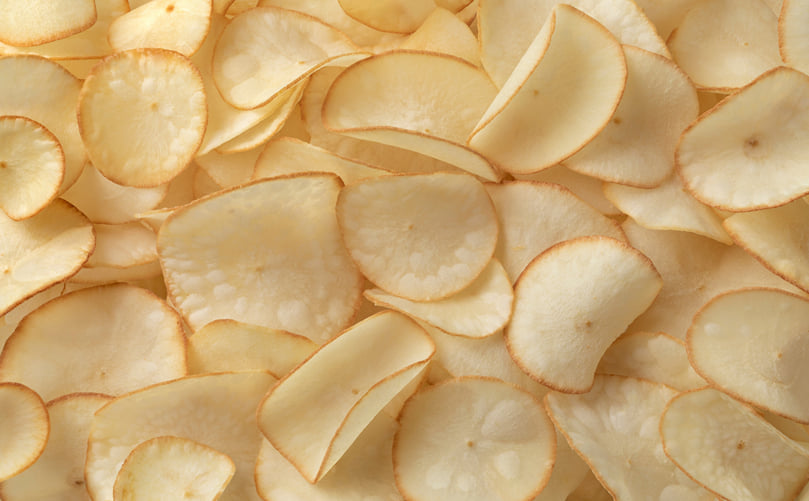
Crispy Cassava Chips
Nutritional Value and Health Attributes of Cassava Chips
Cassava chips derive their nutritional value primarily from the high starch content of cassava roots. A standard snack portion of approximately 28 g provides around 130–160 kcal, with 22–25 g of carbohydrates. These carbohydrates are largely starch-based, including both amylose and resistant starch fractions. In baked or minimally processed variants, the glycaemic index typically ranges from 45 to 55, which is comparable to or slightly lower than that of conventional potato chips, supporting a more moderate post-prandial glucose response.
Dietary fiber content averages 2–3 g per serving, consisting of both soluble and insoluble fractions. This fiber contributes to satiety and supports gut health by promoting short-chain fatty acid production during fermentation in the colon. Cassava chips also supply modest levels of essential micronutrients, including vitamin C, potassium, magnesium and iron, although iron bioavailability is limited due to the presence of phytates. Yellow-fleshed cassava varieties contribute additional beta-carotene, enhancing the provitamin A content and supporting immune and visual health.
Protein content is relatively low, typically 1–2 g per serving and lacks a complete amino acid profile. However, fortification and blending with legume or cereal proteins can significantly improve the protein contribution in value-added products.
Cassava chips are naturally gluten-free, making them suitable for individuals with celiac disease or gluten sensitivity. The presence of resistant starch supports digestive health by moderating glucose absorption and contributing to improved insulin sensitivity when consumed as part of a balanced diet. Compared with potato chips, cassava chips generally contain lower sodium levels, though potatoes provide higher amounts of vitamin C and potassium. Cassava products may offer higher levels of certain B-vitamins and fat-soluble antioxidants, depending on processing and variety.
When compared with banana chips, cassava chips typically contain less intrinsic sugar and a lower glycaemic load, though fat content varies widely depending on frying method. Banana chips are often higher in total fat and caloric density due to oil absorption during processing.
Health considerations related to cassava chips primarily involve fat and sodium content, especially in deep-fried and heavily seasoned products. Excessive intake of saturated fats and sodium may contribute to cardiovascular risk. Additionally, like many fried carbohydrate-rich foods, cassava chips may contain acrylamide, although levels are generally reduced in baked, vacuum-fried or air-fried variants.
Another emerging consideration is heavy metal uptake, particularly lead, which may occur when cassava is grown in contaminated soils. This highlights the importance of sourcing from regulated production systems and adhering to international food safety standards. Certified sourcing, routine testing and good agricultural practices are essential to ensure consumer safety.
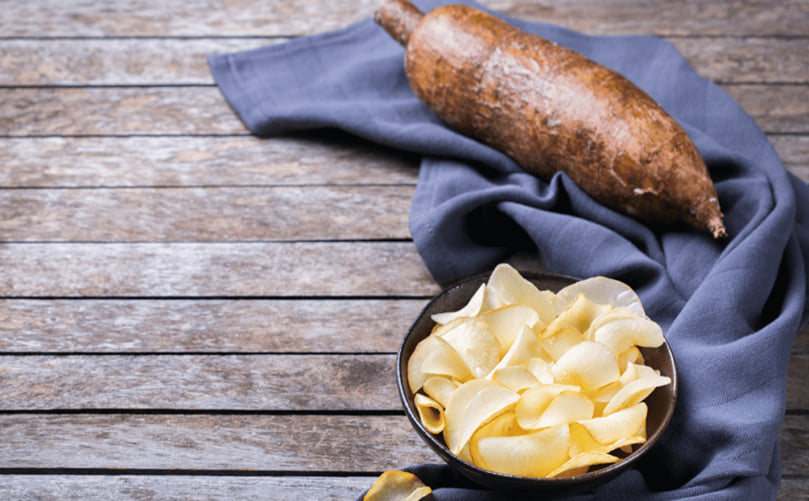
Snack Perfection: Cassava Chips
Food Safety and Cyanogenic Compounds
Cassava roots naturally contain cyanogenic glycosides, primarily linamarin, which accounts for approximately 90–95% of total cyanogens and lotaustralin, contributing the remaining fraction. These compounds are present at concentrations ranging broadly from 10 to 500 mg hydrogen cyanide (HCN) equivalents per kilogram of fresh root, with the highest levels concentrated in the peel and cortex tissues. Bitter cassava cultivars generally contain substantially higher cyanogenic potential than sweet varieties, while environmental factors such as drought stress, high soil nitrogen, and varietal genetics can further influence cyanogen levels.
When cassava tissue is disrupted through peeling, slicing or chewing, endogenous enzymes (β-glucosidases, commonly referred to as linamarase) hydrolyze cyanogenic glycosides, releasing hydrogen cyanide, glucose and ketone compounds. Hydrogen cyanide is acutely toxic at high doses, and prolonged dietary exposure to inadequately processed cassava has historically been associated with neurological disorders such as konzo and tropical ataxic neuropathy in vulnerable populations relying heavily on cassava as a staple food. Cassava leaves typically contain higher cyanogenic concentrations than roots and require more intensive processing before consumption.
Effective detoxification of cassava relies on a combination of physical disruption, enzymatic hydrolysis and volatilization or leaching of HCN. Peeling alone can remove 50–80% of total cyanogens, as a large proportion is located in the outer tissues. Grating or slicing increases enzyme substrate contact, enabling rapid liberation of free cyanide. Subsequent thermal and aqueous processing steps are critical for removal.
Boiling sliced cassava for 15–25 minutes can reduce total cyanogenic content by 85–95%, primarily through leaching and volatilization. Fermentation processes, such as those used in traditional products like gari and fufu are particularly effective; microbial activity over 48–96 hours can degrade 80–99% of cyanogenic compounds. Sun-drying and mechanical drying further lower cyanide levels through prolonged exposure and evaporation, while combined processing steps (e.g., slicing, soaking, boiling and drying) can reduce residual cyanide to very low levels suitable for food-grade cassava chips. Emerging approaches, including enzymatic treatments and breeding programs focused on low-cyanogen varieties are also contributing to improved safety.
International food safety standards strictly regulate allowable cyanogenic content in cassava products. Guidelines from FAO/WHO bodies and Codex Alimentarius generally specify maximum limits of 10 mg HCN/kg for ready to eat cassava products, including chips. Regulatory authorities in major importing markets enforce routine testing using standardized analytical methods such as alkaline distillation followed by chromatographic detection. Compliance with these limits is essential for export certification and consumer safety.
Failure to adequately control cyanogenic compounds can result in shipment rejections and significant economic losses, underscoring the importance of good agricultural practices, controlled processing and Hazard Analysis and Critical Control Point (HACCP) systems throughout the cassava value chain. Routine monitoring, use of certified low-cyanogen varieties and adherence to validated processing protocols ensure that cassava chips are safe, compliant and suitable for both domestic and international markets.
Cassava Chips in the Global Market Landscape
The global cassava market covering fresh roots and processed derivatives such as chips, starch, pellets and bioethanol has emerged as a strategically important segment of the agri-food and bio-industrial economy. The market was valued at approximately USD 171 billion, with projections indicating steady expansion toward USD 220 billion by the end of the decade, reflecting a compound annual growth rate of around 4–5%. Growth is driven by rising demand for gluten-free foods, cost-competitive animal feed ingredients and renewable biofuels, alongside increasing recognition of cassava as a climate-resilient crop.
Global cassava production stands 334 million metric tonnes, cultivated across about 32 million hectares worldwide. Africa remains the dominant producer, accounting for approximately 63% of global output, followed by Asia at 33% and Latin America contributing the remainder. While African production underpins food security and domestic consumption, yield growth in several regions remains constrained by climate stress and pest pressure. In contrast, Asian producers particularly Thailand and Vietnam achieve higher productivity through irrigation, improved varieties and mechanized processing, allowing them to play a disproportionate role in international trade.
Processed cassava products represent a significant share of global utilization. Annual output of processed cassava including dried chips and pelletsi s estimated at around 70 million tonnes, with cassava chips alone accounting for a market value exceeding USD 7 billion. This segment is expanding at an estimated 5–6% annually, supported by innovation in snack products, substitution for maize in animal feed and increasing industrial demand.
Production leadership does not necessarily translate into export dominance. Nigeria, the worlds largest cassava producer, consumes the majority of its output domestically, primarily as food. In contrast, Southeast Asian countries have developed highly efficient value chains focused on export-ready products such as dried chips and pellets with standardized moisture levels. Thailand remains a central processing and export hub, while Vietnam, Cambodia and Laos have strengthened their positions through cross-border trade and integrated supply networks.
On the demand side, global imports of cassava products are estimated at 25–30 million tonnes annually. China is the largest single importer, driven primarily by demand for cassava chips and pellets used in animal feed and bio-industrial applications. Other key importers include Malaysia, the European Union and the United States. Intra-Asian trade dominates global flows, accounting for nearly two-thirds of total trade volume, while demand growth in Europe and North America is increasingly linked to gluten-free snacks, specialty starches and sustainability-oriented sourcing.
Cassava chips play a pivotal role across multiple end-use sectors. In animal feed, they represent roughly 30% of processed cassava demand, valued for their high starch content and digestibility and are increasingly used as partial substitutes for maize during periods of grain supply volatility. In the bioethanol sector, cassava accounts for an estimated 10–15% of feedstock use in major producing countries, contributing to renewable fuel blending programs and greenhouse gas emission reductions relative to fossil fuels. The snack food segment absorbs more than one-fifth of cassava chip output, with steady growth in gluten-free and clean-label categories.
Price trends reflect a balance between expanding supply and structurally rising demand. Fresh cassava root prices remain sensitive to seasonal gluts and regional oversupply, while dried chip prices have shown greater stability due to strong feed and industrial demand. Starch prices remain comparatively firm, influenced by weather variability, energy policies, and input costs. Trade dynamics continue to favor ASEAN processing hubs, although evolving regulatory standards, sustainability certification requirements, and geopolitical trade shifts are reshaping export routes.
Despite challenges such as post-harvest losses, food safety compliance and environmental scrutiny, the cassava sector offers substantial opportunities. Advances in processing efficiency, bio-based materials and low-emission value chains are expected to enhance the role of cassava chips in global markets, reinforcing cassava’s position as a versatile and resilient crop for the future.
Cassava Chips: The Rising Star of Healthy Snacking
The cassava snack segment is experiencing robust growth, driven by consumer demand for healthier, plant-based alternatives amid rising gluten-free and clean-label trends. Globally, the cassava snacks market is projected to reach USD 25.2 billion by 2030, expanding at a CAGR of 4.1% from 2023, with cassava chips comprising a significant share due to their versatility and nutritional appeal. In 2024, the overall cassava market was valued at USD 171.1 billion, with processed snacks like chips contributing to a 4.3% CAGR through 2030, fueled by 27% of health-conscious consumers preferring low-fat, gluten-free options.
North America generated USD 33.5 million in cassava snack revenue in 2024, projected to grow at 4.1% CAGR to 2030, driven by 61% gluten-free adoption in the U.S. Emerging markets in Asia-Pacific, particularly Thailand and Vietnam, see snacks representing 22% of chip utilization, with exports supporting local innovations.
Clean-label positioning emphasizes minimal processing, non-GMO status and allergen-free attributes, aligning with vegan, paleo and keto diets. Cassava chips, naturally gluten-free and high in resistant starch, are marketed as sustainable alternatives to potato chips, with brands highlighting “farm-to-bag” transparency and absence of artificial additives. This resonates in the USD 6.8 billion cassava chips market in 2024, where consumer preference for healthier snacking drives a 4.2% CAGR to 2031.
Regional flavor innovations reflect cultural fusion and local ingredients, enhancing market penetration. In Thailand, lime-chili and tamarind variants dominate convenience stores, with seasonal festivals boosting trial by 20–30%. Southeast Asia sees salted egg cassava chips from brands like Irvins, blending Asian umami with global appeal, as noted in Mintel’s 2025 flavor trends. African innovations include plantain-infused chips in Nigeria for smoky profiles, while Latin America features garlic-lime and Brazilian farofa-inspired seasonings catering to diaspora markets.
Premium cassava chips target niche health-conscious segments with organic, low-oil formulations, priced at USD 4–6 per pack (e.g., Barnana’s Himalayan pink salt at USD 5.99 for 4 oz), emphasizing sustainability and superfood status, capturing 15–20% market share in North America. Mass-market options, like Qtela (Indonesia) or Rancrisp (Philippines), priced at USD 1–2 per pack, focus on volume in Asia (70% of sales), offering affordable, flavored varieties for everyday consumption. Emerging brands such as Siete Foods (cassava tortilla chips) bridge premium and mass segments, with 2025 launches emphasizing regenerative farming practices.
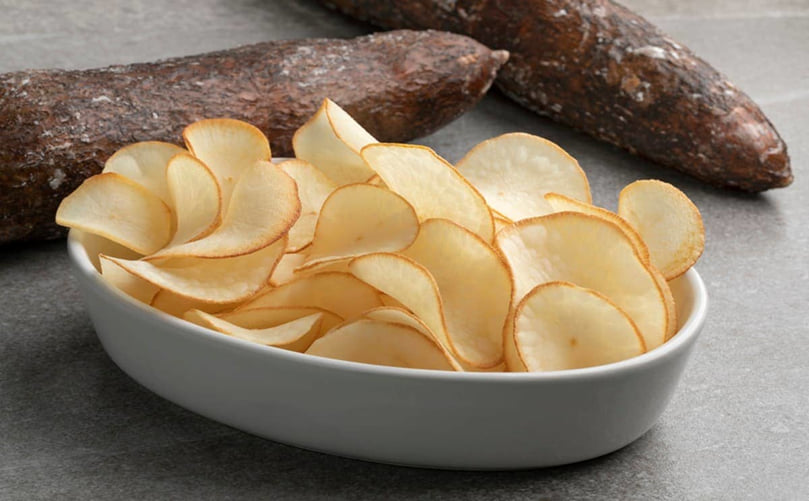
Cassava Chips: A Growing Global Snack Trend
Sustainability and Climate Resilience of Cassava
Cassavas status as a climate-smart crop is underscored by its inherent resilience, making it a cornerstone of sustainable agriculture in tropical and subtropical regions. It tolerates extreme conditions, retaining 40–60% of yield under drought, compared with maize 20% and thrives in temperatures ranging from 12–40°C. Its deep root system allows access to subsoil water during 6–8 month dry spells, enabling stable production under variable rainfall.
The Global Cassava Sustainability Forum highlights breeding strategies aimed at enhancing drought tolerance through potassium transport modifications, boosting productivity by 20–30% without additional inputs. In Rwanda, initiatives targeting 100,000 households with climate-resilient varieties aim to reduce vulnerability while promoting ecosystem services such as carbon sequestration. Projections indicate that cassava could play a key role in adapting to 1.5–2°C global warming, with integrated cropping systems in Africa delivering 15–25% higher yields under variable rainfall conditions.
Water-use efficiency favors cassava over competing tuber crops. Cassava requires 500–1,000 mm of water annually, versus potatoes (500–750 mm with higher irrigation requirements on fertile soils) and sweet potatoes (500–1,000 mm, but more sensitive to nutrient limitations). Water productivity is estimated at 3–4 kg/m³ for cassava, compared with 4–8 kg/m³ for sweet potatoes, while potatoes under stress show lower efficiency. This enables cassava cultivation on marginal lands with up to 50% less irrigation.
For smallholder farmers, cassava contributes substantially to income and food security. In sub-Saharan Africa and Southeast Asia, it provides 20–50% income boosts, with commercialization in Cambodia increasing household earnings by 30–40% through processing. In Ghana, adoption of improved varieties raised annual incomes by 366,400 FCFA per participating household. Asias cassava boom supports 2 million smallholders, with low-input farming reducing costs by 40% compared with rice production.
Waste utilization further enhances cassava’ sustainability profile. Peels, representing 20–30% of root biomass and effluents can be converted into value-added products, biogas from peels produces 0.3–0.5 m³/kg, composted fertilizers enhance soil fertility and detoxified peel residues provide high-quality animal feed, collectively reducing emissions by 30% and generating USD 50–100 per hectare. In Nigeria, cassava peel briquettes serve as an alternative fuel source, while integrated biorefineries recover up to 85% of starch from processing residues, exemplifying circular economy principles.
Unlocking Opportunities in the Cassava Chips Value Chain
The cassava chips sector presents significant opportunities for stakeholders across the value chain, fostering income growth, innovation, and market expansion. For farmers, engaging in contract farming with processors provides a stable source of revenue through guaranteed off-take agreements and premium pricing for high dry matter, low-cyanide varieties. This approach not only enhances profitability compared with traditional fresh root sales but also enables the use of imperfect or “canner” roots, reducing post-harvest waste and creating additional revenue streams. Cassavas inherent resilience to drought, poor soils, and variable rainfall further ensures reliable production, particularly in marginal and climate-vulnerable regions, securing both livelihoods and food security.
Processors benefit from a wide spectrum of opportunities to diversify and expand their product portfolios. Beyond traditional chips, cassava can be transformed into gluten-free snacks, extruded products, resistant starch, functional flours and industrial raw materials for starch, bioethanol, paper and adhesive production. Innovations in low-oil frying, air- and vacuum-frying and functional fortification enable processors to meet the growing consumer demand for healthier, nutrient-rich snack options. Modern processing technologies and adherence to quality standards also facilitate access to premium domestic and international markets.
Startups and small to medium enterprises (SMEs) find fertile ground in the cassava chips industry for agri-entrepreneurship, particularly in developing niche product lines such as organic, flavored, or functional variants. Integration of digital technologies, including IoT-enabled traceability, blockchain platforms, and predictive analytics, can optimize production, ensure quality, and reduce losses. Furthermore, e-commerce and direct-to-consumer models offer startups the ability to reach health-conscious and premium market segments across global regions, leveraging sustainability-focused branding and innovation.
Collectively, these opportunities highlight the potential of cassava chips as a platform for economic empowerment, technological innovation, and sustainable development, positioning farmers, processors, and startups to thrive in a growing, health-conscious, and globally connected market.
Crunching Obstacles: Challenges in Cassava Chip Production
Cassava chip production faces several critical challenges, starting with the perishability of fresh cassava roots. Post-harvest, roots have a shelf-life of only 2–3 days, during which physiological deterioration and cyanide accumulation occur, contributing to 20–30% global losses, with rates reaching up to 68% in Nigeria’s Kwara State. In parts of Africa, such as Oyo State, 40.8% of roots are lost due to rot and inadequate cooling.
Quality consistency is affected by variable moisture content, which can promote mold growth and aflatoxin contamination (>50 ppb), as well as uneven cyanide reduction, impacting 15–20% of output. Poor drying practices result in 10–15% rejection rates, while inconsistent inputs and climate variability exacerbate defects such as off-colors, breakage and texture irregularities.
Mechanization gaps persist, especially among smallholders. Approximately 80% of African producers rely on manual processing, inflating labor costs 2–3 times and limiting production scale. Access to mechanized equipment, such as peelers and slicers, remains constrained due to high upfront costs (USD 5,000–10,000). In Zambia, unmechanized harvesting contributes to low yields (8 t/ha).
Logistics and storage challenges in humid tropical regions further increase losses. Poor road networks and inadequate ventilation can spoil 10–20% of harvested roots during transport, while seasonal gluts overwhelm processing and storage facilities, as observed in Nigeria and Thailand. In Kenya, irregular supply schedules limit the efficiency and throughput of cassava chip processing.
Innovations and Future Trends in Cassava Chips
Improved varieties released by IITA in 2025, such as Game Changer and Obasanjo-2, offer 30–50% higher dry matter content (35%) and enhanced disease resistance. These traits are ideal for producing cassava chips with better crispness and higher yields. Market-driven breeding focuses on combining low cyanide content with consumer-desired characteristics, effectively doubling local yields and supporting safer, more nutritious chip production.
Low-oil innovations are transforming cassava chips into healthier snack options. Baked and air-fried chips reduce fat content by 40–50%, bringing it to less than 10 g per serving. Coatings such as pectin and cassava-maize blends, introduced in 2024, further improve nutritional profiles, with glycemic indices ranging from 46–54. Brazilian yuca chips now employ air-frying with lime zest, reducing acrylamide formation by 30–70%.
Fortified snacks are gaining traction, addressing malnutrition and enhancing nutrient density. Additives like moringa increase protein content by 20%, while Irish potato peel inclusion boosts fiber by 15%. Yellow-fleshed, vitamin A-enriched varieties provide up to 50% of the RDA per serving and baked products fortified with whey protein concentrate (WPC) can raise protein content to 7–14 g per serving.
Automation and digital innovations are revolutionizing production efficiency and supply chain management. Robotic peelers now operate 20 times faster than manual methods, while blockchain-enabled traceability platforms, such as Bunge 2025 digital suite, enhance transparency, reduce fraud by 40%, and improve supply chain agility. Looking ahead, biorefineries aim for zero-waste operations by 2030, integrating AI-driven predictive yield analytics to optimize processing and reduce resource losses.
Role of Research and Industry Collaboration in Cassava Chips
Breeding programs such as IITA’s NextGen Cassava and the Thailand-Germany genotype database focus on developing high-starch (35% dry matter), pest-resistant varieties. Advanced tools like CRISPR gene editing are employed to reduce cyanide content by 50–80% and boost yields up to 2× local levels. Consumer-driven traits, such as “Poundable” varieties optimized for processing are aligned with market needs to enhance chip quality and safety.
Public-private partnerships (PPPs) play a pivotal role in scaling adoption. For example, AATF’s CAMAP initiative equips 30,000 African farmers with mechanized tools, increasing incomes by 20–30%, while Rwanda’s Ingabo Syndicate supports cooperatives in value addition. In Cambodia, UNDP-private sector MOUs promote cassava processing aligned with SDG targets. In Asia, seed dissemination chains led by NARS ensure early-generation seed (EGS) availability for improved varieties.
Equipment manufacturers contribute to efficiency and sustainability. Companies like FrozeNet innovate with solar hammermills and dewatering tools, cutting energy use by 50% and reducing post-harvest losses by 20%, while Henan Jinrui provides processing lines capable of handling 10–20 t/day. NRI multipurpose units support small-scale processors with adaptable solutions.
Extension and training programs further strengthen capacity. IITA’s Farmer Field Schools (FFS) and AATF’s Good Agricultural Practices (GAP) initiatives reach 10,000+ farmers annually, emphasizing post-harvest loss reduction (20%) and value addition. In Zambia, training manuals cover chipping and grating techniques, while PlantVillage’s AI platform empowers women farmers in Uganda with real-time agronomic guidance.