

Kettle Fried Potato Chips: From Historic Kettles to a Premium Crunch Experience
Kettle fried potato chips also known as kettle cooked, batch fried or hand cooked chips are a premium style of potato snack produced by frying thick potato slices in small batches in large kettles of hot oil. This traditional process yields chips that are noticeably thicker, crunchier and more rustic than conventional varieties, with blistered surfaces, curled edges, irregular shapes and a deep roasted potato flavour that develops through extended Maillard browning.
The style has strong historical roots. The first “Saratoga chips” were reportedly created in 1853 by George Crum at Moon’s Lake House in Saratoga Springs, New York, as an intentionally thin and crispy response to a customer complaint. Although those early chips were still batch fried in cast iron or copper kettles, the modern kettle cooked category gained widespread popularity in the 1980s when Cameron Healy founded what later became Kettle Brand in Salem, Oregon.
Inspired by small producers in Hawaii, Healy revived the old fashioned, hand stirred batch process using whole potatoes, thicker cuts and high-quality oils, positioning the product as artisanal, natural and distinctly superior to mass market snacks.
Today, kettle chips are firmly positioned in the premium snack segment. Brands commonly emphasize terms such as “small batch,” “craft” and “hand cooked,” often highlighting clean labels, non-GMO ingredients and bold gourmet seasonings. While their nutritional profile is generally similar to that of regular potato chips, consumers perceive kettle chips as more authentic and higher in quality.
The true differentiation lies in visual, textural and sensory attributes, including thicker slice thickness of approximately 1.5–2.0 mm compared with 1.0–1.3 mm for standard chips, batch frying that results in significant oil temperature fluctuations, longer frying times of around 4–13 minutes versus 2–4 minutes and the retention of surface starch that creates uneven blistering and a characteristically firm, satisfying snap.
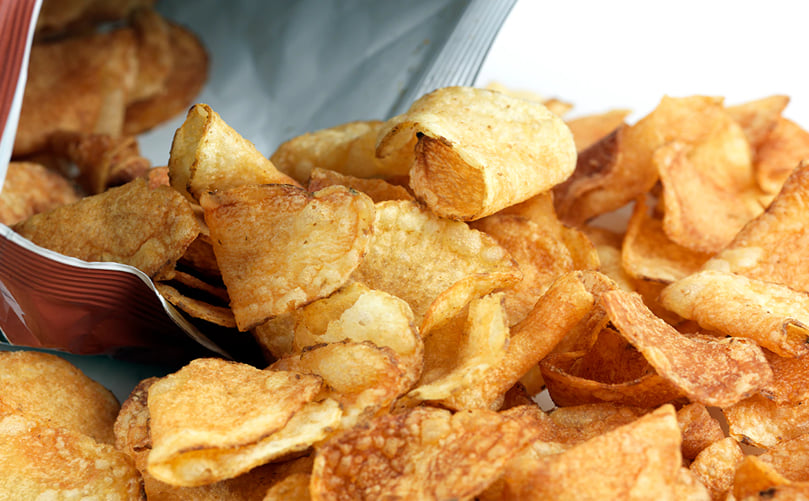
From Kettle to Crunch: Visual Hallmarks of Kettle Fried Potato Chips
The Science and Craft Behind Kettle Fried Potato Chip Processing
The defining feature of kettle chips is the batch frying process itself. Potatoes are washed and sliced thick, either after peeling or left skin-on to achieve a more rustic appearance. Unlike conventional potato chips, the slices are typically not rinsed or blanched, allowing natural surface starch to remain intact. This retained starch is critical for developing the signature blistered surface, deeper golden color and robust texture associated with kettle chips.
In a typical operation, a single batch ranging from about 23 to 136 kg, depending on fryer capacity, is introduced all at once into a large stainless-steel or traditional copper kettle containing oil heated to approximately 149–177 °C. The sudden addition of cold, moisture rich potato slices cause an immediate drop in oil temperature, often falling to around 116–127 °C within the first few minutes.
This results in the characteristic “U-curve” temperature profile, where the oil temperature remains relatively low during the initial phase as moisture rapidly evaporates, then gradually rises again as heat input stabilizes. Total frying time in modern facilities is usually between 4 and 8 minutes, although some traditional or patent documented processes may extend to 9–13 minutes.
Throughout frying, operators or automated paddles gently agitate the chips to prevent sticking, reduce clumping and ensure even heat transfer. Intense bubbling caused by steam release and starch gelatinization leads to curled edges and a blistered surface texture. Once the moisture content drops below approximately 2%, the chips are removed from the oil, allowed to drain, briefly cooled, seasoned and packaged.
While modern batch fryers often recirculate oil through external heating systems to improve temperature uniformity, the intentional temperature fluctuation and slower dehydration remain essential. These factors are key to producing the dense, hard bite texture and richer, more developed flavor that clearly distinguish kettle chips from the lighter, more uniform chips produced using continuous frying systems.
Raw-Material Selection: The Foundation of Premium Kettle Chips
Raw material quality is non-negotiable in kettle chip production because the longer frying times and thicker slices magnify any defects in color, texture or flavor. Processors therefore rely on chipping specific potato varieties bred for high dry matter content, typically around 20–25% starch, with a specific gravity commonly in the range of 1.080–1.090 or higher. High starch content provides structural rigidity, limits excessive oil uptake and delivers the characteristic crisp, hard bite expected of kettle chips.
Well established varieties include Russet Burbank, a classic choice in North America valued for its high solids and mild flavor, along with Atlantic, Snowden, Lamoka, Waneta, Lady Rosetta, Courage, Hermes and Payette. Beyond yield and disease resistance, these cultivars are selected primarily for their ability to maintain light, uniform fry color even after extended storage.
Reducing sugar levels must be kept extremely low, ideally below 0.1–0.2% combined glucose and fructose and certainly under 0.3–0.5%. Even slight increases in reducing sugars can lead to excessive browning and bitter off flavors due to the Maillard reaction during frying. To minimize this risk, tubers are typically stored at 7–10 °C to prevent cold induced sweetening. Varieties such as Lamoka and Snowden are particularly valued because of their strong resistance to sugar accumulation under cool storage conditions. Prior to processing, many facilities also recondition potatoes at warmer temperatures, around 21 °C, for several weeks to further reduce sugar levels.
Slice thickness is intentionally greater than that used for conventional chips, usually in the range of 1.5–2.0 mm, to achieve the dense texture and pronounced crunch that define kettle chips. Some artisanal producers retain the potato skins, enhancing visual appeal and contributing a subtle earthy flavor. The choice of frying oil is equally critical and focuses on thermal stability and a clean, neutral taste. High oleic sunflower, safflower, canola, peanut and avocado oils are commonly used because they resist oxidation, contain no trans fats and support “better-for-you” positioning while allowing the natural potato flavor to remain dominant.
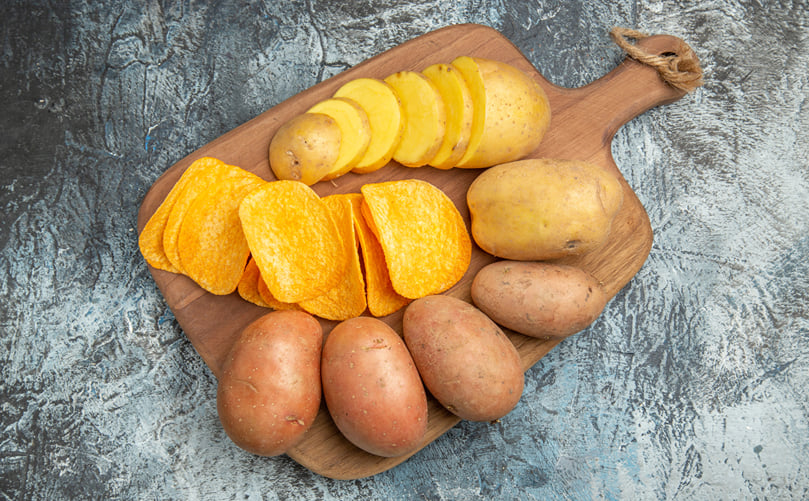
From Field to Fryer: Raw Materials That Define Kettle Chip Quality
Crunch, Texture and Flavor: The Sensory Signature of Kettle Fried Chips
The defining sensory experience of kettle fried potato chips is their thick, hard, almost explosive crunch an intense, loud “snap” that feels substantial and deeply satisfying in the mouth. This texture is distinctly different from the lighter, more delicate and more brittle crisp associated with conventional continuous fried chips. The superior bite of kettle chips originates from the combined effects of thicker slicing, typically around 1.5–2.0 mm and the batch frying process itself.
When cold, starch rich potato slices are dropped into hot oil, the oil temperature falls sharply. This brief low temperature phase allows starch granules to absorb water, swell and partially gelatinize before rapid dehydration occurs. At the same time, dissolved surface starch migrates into and around the cell walls, creating a natural “gluing” effect that reinforces the potato’s internal structure. The result is a dense, rigid matrix that produces a harder, longer lasting bite rather than a fragile, shattering crisp.
Retained surface starch also drives vigorous bubbling and steam release during frying, which forms the characteristic blistered and irregular surface. Prominent curls, folds and occasional darker toasted spots develop, giving kettle chips their rustic, hand crafted appearance. These irregularities are not defects; they are defining features that signal authenticity and contribute to pleasant variability from chip to chip within the same batch.
In sensory evaluations and consumer feedback, kettle chips consistently score higher for attributes such as “dense bite,” “robust mouthfeel” and overall eating satisfaction, particularly when eaten on their own or paired with dips. The longer, fluctuating thermal profile of batch frying also promotes a more extensive Maillard reaction, producing deeper roasted potato notes with nutty, caramelized and lightly toasted flavors that continuous fried chips rarely achieve. The audible crunch itself becomes part of the experience, often described as more engaging and even addictive, reinforcing the premium perception of kettle fried chips.
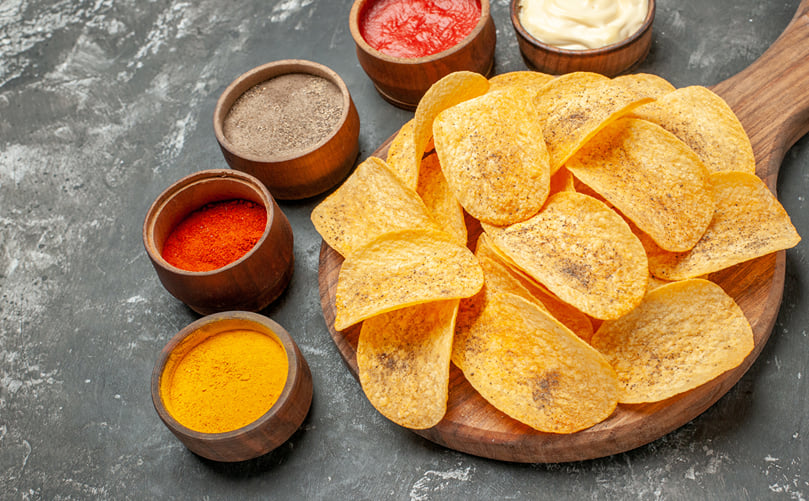
A Hard Snap and Deep Flavor: What Makes Kettle Chips Different
The Nutritional Reality of Kettle Chips: Less Oil, Premium Ingredients, Same Indulgence
Although many consumers assume kettle chips are oilier because of their thicker slices and longer frying times, controlled studies often show that they absorb slightly less oil than conventional continuous fried chips. Typical fat content for kettle chips commonly falls in the range of about 27–30%, compared with roughly 32–35% for standard potato chips. This counterintuitive result is largely due to the unique thermal dynamics of batch frying. The slower, cooler initial phase allows a firmer surface crust to develop early in the process, which acts as a partial barrier to oil penetration. In addition, retained surface starch limits oil uptake and the lower surface-to-volume ratio of thicker slices reduces the total area exposed to hot oil.
Oil absorption, however, is not uniform across all kettle style processes. Some traditional methods or extended frying regimes have been reported to produce significantly higher fat contents, reaching up to around 48% in older studies. In contrast, modern processing innovations such as precise temperature profiling, partial pre-drying and Pulsed Electric Field (PEF) treatments can substantially reduce oil uptake, with reported levels as low as 20–28%.
Despite these differences, calorie density remains high, typically around 500–550 kcal per 100 g, driven primarily by fat content. From a micronutrient perspective, kettle chips may retain slightly higher levels of naturally occurring potato nutrients, including vitamin C, potassium and dietary fiber, because the slices are generally not rinsed or blanched as extensively as those used in continuous frying systems. Premium kettle chip brands also tend to select frying oils such as high oleic sunflower, avocado, peanut or safflower oil. These oils offer improved oxidative stability, contain zero trans fats and support clean label positioning, including claims such as “non-GMO” or “better-for-you.”
Sodium levels depend heavily on seasoning formulation and typically range from about 150 to 250 mg per serving. Acrylamide formation, a byproduct of the Maillard reaction, is generally comparable to or slightly lower than that of continuous fried chips, reflecting the gentler average frying temperatures used in batch processes. Overall, while kettle chips remain an indulgent snack, their oil absorption characteristics and ingredient choices allow them to be positioned as a cleaner, more premium alternative to mass market potato chips.
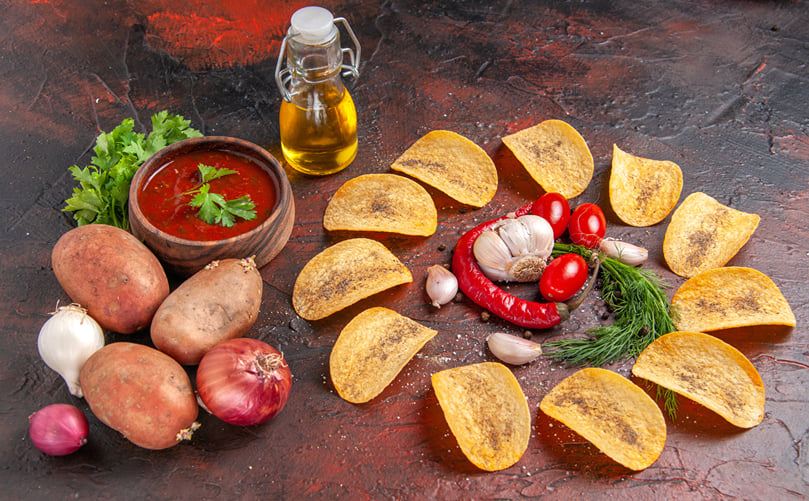
From Frying Dynamics to Nutrition: The Kettle Chip Profile
Why Kettle Chips Are a Perfect Canvas for Bold and Gourmet Flavors
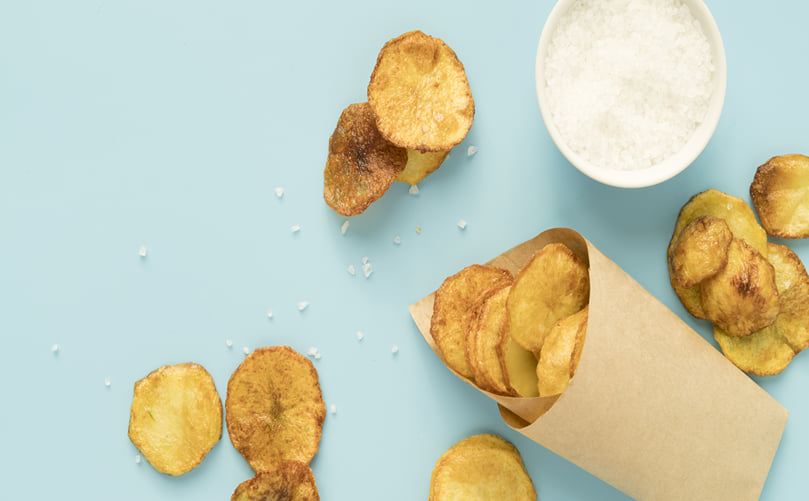
The rough, blistered and highly porous surface of kettle chips makes them exceptionally receptive to seasoning. Compared with the smooth surface of conventional potato chips, kettle chips retain significantly more dry powders, spice blends and flavor oils, delivering a bold, even and intense flavor impact in every bite. This superior adhesion is one of the key reasons kettle chips can successfully carry gourmet and adventurous flavor profiles without seasonings shedding off or tasting muted.
Simple, classic flavors perform particularly well on kettle chips. Sea salt highlights the deep, roasted potato base, while combinations such as salt and cracked pepper or sea salt and vinegar provide sharp, bright contrast. Creamy and cheese-based seasonings, including cheddar, sour cream and onion and ranch, adhere effectively to the textured surface and often taste richer and more rounded because of the chip’s rugged structure.
The greatest opportunity, however, lies in bold, regional, and globally inspired blends. Flavors such as jalapeño, spicy dill pickle, mesquite barbecue, Cajun boil, sweet Maui onion, smoky buffalo, kimchi, chamoy, rosemary and olive oil, and limited edition profiles like gochujang or truffle are especially well suited to the kettle format. The extended Maillard reaction that occurs during batch frying creates a robust, nutty and lightly caramelized potato foundation, which acts as an ideal carrier for complex layers of sweet, smoky, tangy, garlicky and spicy notes.
Brands such as Kettle Brand, Deep River, Cape Cod, Boulder Canyon, along with numerous craft and regional producers, continue to innovate with clean label and natural seasoning systems to reinforce their artisanal positioning. The end result is a snack that delivers stronger flavor intensity, greater eating satisfaction and a clear premium perception, fully aligning with what consumers expect from kettle style potato chips.
Where Texture Meets Taste: Kettle Chips and Gourmet Seasonings
Packaging, Oxidation Control and Shelf Stability of Kettle Chips
Kettle fried potato chips are generally more susceptible to oxidation and rancidity than conventional chips because of their relatively high oil content and rough, highly textured surface. These characteristics increase the exposure of frying oil to oxygen, which promotes lipid oxidation. Oxidation leads to off-flavors, rancid odors and the development of stale notes over time. However, advances in modern packaging technology have significantly improved the shelf stability of kettle chips.
Oxygen is the primary driver of quality loss, so its exclusion is critical. As a result, virtually all premium kettle chip brands rely on nitrogen flushing, also known as modified atmosphere packaging. Before sealing, the headspace inside the bag is flushed with nitrogen gas, reducing residual oxygen levels to below about 1–2%. Nitrogen is inert, odorless and non-reactive, which effectively slows oxidative reactions. In addition, the inflated nitrogen filled package helps protect the fragile, irregularly shaped chips from breakage during transportation and handling.
High barrier packaging materials play an equally important role. Most kettle chip bags are constructed from multi-layer laminates consisting of an outer printed layer, commonly PET or oriented polypropylene for strength and visual appeal, a metallized or aluminum foil layer that provides an effective barrier to oxygen and light and an inner polyethylene layer that ensures a strong heat seal. These laminate structures can achieve oxygen transmission rates below 0.5 cc per square meter per day and water vapor transmission rates under 1 g per square meter per day. When combined with nitrogen flushing, such packaging typically supports shelf lives of 9–12 months under ambient conditions, with some products achieving up to 18 months when packed in rigid cans or high-end pouches.
Many manufacturers further enhance oxidative stability by incorporating natural antioxidants directly into the frying oil or seasoning systems. Common choices include mixed tocopherols, rosemary extract and green tea polyphenols, all of which help slow the onset of rancidity without compromising clean label positioning.
Moisture control is another critical consideration. Kettle chips are fried to moisture levels below about 2%, but even minimal moisture ingress can rapidly degrade texture and cause sogginess. Nitrogen flushing helps by displacing humid air and some brands additionally use resealable pouches or stand-up bags with zipper closures to improve freshness after opening. Accelerated shelf-life studies consistently show that nitrogen-flushed kettle chips retain both flavor and crunch for significantly longer periods than air packed products, often extending perceived freshness by several weeks or even months.
Protecting Crunch and Flavor: Packaging and Shelf Life of Kettle Chips
Market Positioning and Consumer Appeal of Kettle Chips
Kettle chips occupy the premium tier of the global potato chip market, which is projected to grow steadily through the late 2020s at an annual rate of about 5–6%, with the kettle cooked segment expanding even faster due to rising consumer demand for “better” snacking options. These products typically command price premiums of roughly 20–50% per ounce compared with standard continuous fried chips. Despite the higher cost, consumers are willing to pay for the thicker crunch, bolder potato flavor and perceived artisanal quality that distinguish kettle chips from mass market alternatives.
Brand positioning strongly emphasizes authenticity through cues such as “hand cooked,” “small batch” and “traditional kettle style,” alongside clean label claims including non-GMO ingredients, no artificial flavors or colors and the use of high oleic or specialty oils. This allows kettle chips to deliver a sense of indulgence while still aligning with modern expectations of transparency and quality.
The core consumer base tends to skew urban, younger and digitally engaged, particularly among millennials and Gen Z. These consumers are often health-conscious yet still seek intense flavor and satisfying texture. For them, kettle chips represent a meaningful upgrade from conventional snacks, offering a more filling, more “real” and visually appealing product that fits well with social media driven food culture. Packaging plays a central role in reinforcing this perception, with matte finishes, earthy or muted color palettes, minimalist graphics and brand storytelling such as heritage dates or small batch narratives all contributing to a crafted, premium image. Clean label positioning, organic variants and the use of “better-for-you” oils further enable kettle chips to compete in the fast growing premium indulgence category alongside gourmet popcorn, nut mixes and specialty crackers.
In North America, kettle chips already account for a substantial and growing share of the overall potato chip market, with particularly strong momentum in artisanal, clean label and reduced fat sub-segments. At a global level, ongoing premiumization trends driven by increasing disposable incomes, urbanization and higher snacking frequency are steadily expanding the reach of kettle style chips into emerging markets, reinforcing their status as a premium snack with broad international appeal.
From Pioneer Brands to Craft Innovators: The Competitive Landscape of Kettle Chips
The kettle chip category is shaped by a combination of large multinational food companies with dedicated premium product lines and smaller craft producers that originally built and defined the segment. Together, these players balance scale, innovation and authenticity, driving continued growth and consumer interest.
Kettle Brand, owned by Campbell’s, remains the most iconic pioneer of the category. Its distinctive brown packaging, Non-GMO Project verification and bold yet familiar flavors such as Sea Salt, Jalapeño and Honey Dijon have become benchmarks for kettle style chips. The brand places strong emphasis on natural ingredients and has diversified its portfolio with extensions such as air-fried and krinkle-cut products while maintaining its core kettle cooked identity.
Cape Cod, also part of Campbell’s portfolio, represents a classic East Coast kettle chip brand. Known for its lighthouse themed packaging, exceptionally crunchy texture and clean sea salt flavor, Cape Cod has built strong regional loyalty. The brand has expanded thoughtfully with offerings such as “Waves,” a ridged kettle style chip and reduced fat options, while continuing to emphasize its heritage and traditional cooking style.
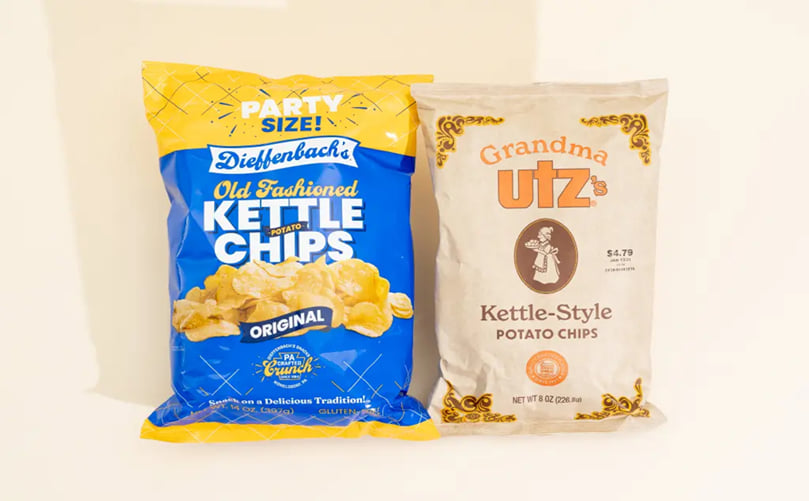
Utz, through lines such as Grandma Utz’s, has gained renewed attention in recent taste tests and consumer reviews. Its old fashioned kettle chips, often cooked in lard, deliver an intensely savory flavor and pronounced crunch that appeals to consumers seeking a nostalgic, indulgent experience rooted in traditional methods.
Boulder Canyon has carved out a strong position in the “better-for-you” premium space. By using avocado oil, olive oil and distinctive canyon-cut slices, the brand targets health-conscious consumers looking for clean ingredients, gluten free products and alternative frying oils without sacrificing crunch or flavor intensity.
Lay’s Kettle Cooked, from PepsiCo, brings the kettle chip experience to a broader audience through unmatched distribution and brand recognition. Positioned at a slightly more accessible price point, it offers mainstream consumers a gateway into the kettle cooked category while still emphasizing thicker slices and stronger potato flavor.
Beyond these leaders, several other brands play important roles in shaping the market. Deep River is known for bold seasonings and a thick, hearty crunch, while Dieffenbach’s maintains an old-fashioned kettle style, often using lard for depth of flavor. Miss Vickie’s, a premium line under Frito-Lay with Canadian roots, has strong international recognition. Herr’s and Zapp’s contribute regional strength, particularly in the eastern and southern United States, while Siete targets niche consumers with grain free, paleo friendly and avocado oil-based kettle chips. Regional and private-label brands such as Route 11, North Fork, Hannaford and 365 by Whole Foods further expand consumer choice and reinforce the premium positioning of the category.
Ongoing innovation continues to come from smaller, values-driven brands. Companies like Uglies focus on sustainability by using “imperfect” potatoes that would otherwise go to waste, while brands such as Hen of the Woods collaborate with chefs to create sophisticated, culinary inspired flavor profiles. At the same time, large food corporations increasingly acquire successful craft producers to strengthen their premium snack portfolios, ensuring that the kettle chip category remains dynamic, competitive and closely aligned with evolving consumer preferences.
Modernizing the Kettle: How Technology Is Redefining Batch Frying at Scale
Producing kettle fried potato chips at commercial scale remains significantly more demanding and costly than conventional continuous frying. Smaller batch sizes, longer frying times and the need for close operator oversight increase labor, energy and raw material costs. Oil turnover is inherently slower because each kettle contains a large volume of oil relative to the amount of product processed per batch. As a result, the oil experiences greater thermal stress and degrades more quickly, requiring frequent filtration or partial replacement.
Batch-to-batch variability is another persistent challenge. Minor differences in potato dry matter content, reducing sugar levels, slice thickness or even ambient humidity can alter the characteristic temperature drop curve, producing chips that vary from pale and undercooked to overly dark or oily within the same production run. Such variability complicates quality control and can raise reject rates.
Oil quality management is particularly critical in batch frying. Vigorous bubbling and extended exposure to heat accelerate the formation of free fatty acids and polar compounds. Without effective filtration, precise temperature control and disciplined oil management practices, rancid or off-flavors can develop rapidly. Traditional batch fryers also tend to consume more energy per kilogram of finished product than high capacity continuous systems, adding further cost and sustainability pressures.
In response, the industry has introduced a range of practical innovations that are increasingly accessible even to smaller craft producers. Modern batch fryers have evolved substantially, with systems such as PPM Technologies’ BatchWright™ and Heat and Control’s Mastermatic LDKF enabling precise control of the classic “U-curve” temperature profile. These systems allow operators to program a sharp initial temperature drop as cold slices enter the oil, followed by a controlled plateau and gradual rise, while achieving fuel efficiencies of up to about 85%. Advanced filtration, automated oil circulation and hood down fryer designs extend oil life, reduce labor requirements, and improve overall consistency. Integration with PLC controls and real time sensors now provides batch-to-batch repeatability that once depended heavily on highly experienced operators.
Pulsed Electric Field pretreatment represents one of the most promising technological advances for kettle chip production. By applying short, high-voltage pulses to whole potatoes or slices before frying, PEF gently permeabilizes cell membranes. This process can reduce reducing sugars and asparagine, key precursors of acrylamide, by roughly 20–40%, improve slice uniformity, shorten required frying times and create surfaces that absorb less oil. Recent peer reviewed studies on both regular and sweet potato kettle chips have reported oil reductions of up to about 9% and acrylamide reductions of up to 45%, while maintaining the thick, blistered texture valued by consumers. Commercial PEF systems from suppliers such as Elea, Pulsemaster and OptiCept are already in operation in industrial snack lines.
Sustainability driven innovations are also gaining momentum. Brands like Uglies utilize “imperfect” or surplus potatoes that might otherwise be discarded, converting agricultural waste into premium value products. The use of high-oleic sunflower, avocado and olive oils extends frying life and supports clean-label and “better-for-you” positioning. Closed loop oil recovery systems capture oil vapors from exhaust air, while energy efficient burners, heat recovery units and water-recycling systems in washing and peeling stages help reduce overall environmental impact. Some forward-looking producers are also experimenting with partial vacuum frying or post-fry centrifugal de-oiling to further reduce fat content without compromising the signature crunch.
Collectively, these technological and sustainability advances are narrowing the gap between the artisanal identity of kettle chips and the operational demands of modern food manufacturing. They ensure that the thick, loud, deeply flavored crunch that defines kettle chips can continue to thrive in a market increasingly focused on efficiency, health and environmental responsibility.