
From Salt to Sensation: The Global Flavor Evolution of Potato Chips
Crack open almost any bag of potato chips and you are greeted by the same irresistible ritual: the sharp snap of the seal, a burst of aroma and that first perfect crunch. What began as nothing more than thinly sliced potatoes fried in lard and sprinkled with salt has evolved into one of the most inventive, culturally expressive and commercially successful foods on the planet.
The journey began in 1817, when the earliest printed potato chip recipe appeared in a British cookbook. By the 1850s, the legend of George Crum’s “Saratoga Chips” had taken hold in the United States. For nearly a century, salt remained the only flavor. That changed dramatically in 1954, when Ireland’s Tayto introduced the world’s first seasoned crisps Cheese & Onion and Salt & Vinegar igniting a global flavor revolution.
Today, more than 1,200 documented potato chip flavors exist worldwide. The global potato chip market is valued at USD 56.23 billion, with flavored varieties accounting for approximately 64% of sales and growing faster than plain salted chips. From classic barbecue to Korean Honey Butter, Thai Salted Egg Yolk, Indian Magic Masala, Japanese Nori Seaweed and experimental collaborations such as Chili Crisp or Hot Honey, potato chips have transformed into a global flavor playground.
This guide explores that full journey from the chemistry that allows seasoning to adhere and remain stable, to the textures that shape how flavor is perceived on the tongue, to the regional preferences that turn a simple snack into a cultural passport and finally to emerging trends such as fermented umami, extreme yet balanced heat and hyper local ingredients that will define what we crunch next.
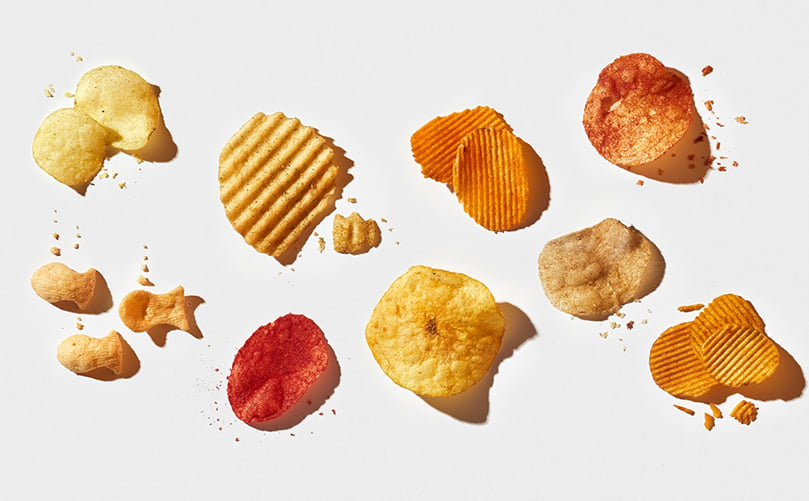
Global Flavors, One Crunch: A World Map of Potato Chip Taste
From Salted Slices to Global Sensations: The Evolution of Potato Chip Flavours
The story of potato chip flavours begins with simplicity. The earliest known printed recipe dates back to 1817, appearing in William Kitchiner’s British cookbook The Cook’s Oracle. It described thinly sliced potatoes fried in lard or butter and finished with salt, establishing the basic form of what would later become a global snack phenomenon.
One of the most famous, though historically debated, origin stories credits George Speck, better known as George Crum, a chef of mixed African American and Native American heritage working at Moon’s Lake House in Saratoga Springs, New York. According to legend, in 1853 a customer complained that his fried potatoes were too thick and soggy. In response, Crum sliced the potatoes paper thin, fried them until crisp and heavily salted them, unintentionally creating what became known as “Saratoga Chips.”
While historians point out inconsistencies in the story such as the timing of Cornelius Vanderbilt’s travels, changes in restaurant ownership and the existence of thin fried potatoes prior to this event Crum undeniably played a major role in popularizing the product. By 1860, he had opened his own restaurant, serving chips in baskets and even offering them in early forms of take-out packaging.
For several decades, potato chips remained a plain, salted snack. The early 20th century saw rapid growth in mass production, with companies such as Mikesell’s (1910) and Wise Foods (1925) expanding availability in the United States. In the United Kingdom, Frank Smith’s Crisps began including small packets of salt inside chip bags around 1920, allowing consumers to season chips themselves while maintaining freshness.
The true flavour revolution began in 1954 when Ireland’s Tayto, under the leadership of founder Joe “Spud” Murphy and technologist Seamus Burke, developed a method to bind dry seasoning directly onto chips. This breakthrough led to the launch of the world’s first flavored potato chips, most notably Cheese & Onion, followed soon by Salt & Vinegar. The innovation triggered intense competition in the UK, with brands such as Smith’s and Golden Wonder launching rival flavours and fueling what became known as the British “flavour wars.” Smith’s nationally rolled out Salt & Vinegar in the late 1960s, cementing seasoned chips as the new standard.
In the United States, flavour development followed a slightly different timeline. Barbecue flavoured chips emerged between the mid 1950s and late 1960s, with Lay’s widely credited for popularizing the category around 1967. Sour Cream & Onion followed in the 1970s, quickly becoming one of the most enduring flavours in the American market.
From the 1980s onward, potato chips evolved beyond flavour alone. Kettle cooked styles introduced deeper crunch and richer mouthfeel, while experimental products explored sweet profiles, including chocolate coated chips. Globalization further expanded the flavour landscape, introducing regionally inspired seasonings and cross cultural combinations. In the 2010s, consumer participation reshaped innovation through initiatives like Lay’s “Do Us a Flavor” campaigns, which crowdsourced ideas and produced unconventional hits such as Chicken & Waffles.
Today, more than 1,200 potato chip flavours exist worldwide. Driven by demand for novelty, clean label ingredients and cultural authenticity, potato chips have transformed from a simple salted side dish into a versatile platform for bold, experiential and globally inspired snacking.
Mapping the Crunch: The Major Flavour Families of Potato Chips
Potato chip flavours can be broadly grouped into a few major categories shaped by long standing consumer preferences as well as ongoing innovation. At the foundation are classic salted chips. Plain sea salt or lightly salted varieties remain the global number one sellers, accounting for a significant share of total chip consumption due to their clean taste, versatility and wide appeal across age groups and cultures.
Savoury and umami-based flavours form another dominant category. These include Cheese & Onion, a staple in the UK and Ireland, barbecue flavours that have been popular in the United States since the 1960s, as well as roast chicken, consommé and seaweed or nori varieties. The appeal of this group lies in umami rich components such as glutamates, yeast extracts and dairy powders, which deliver depth and lingering savouriness.
Spicy and heat driven flavours represent one of the fastest growing segments, particularly among younger consumers seeking bold sensory experiences. Flavours such as Chile Limón, Sriracha, Flamin’ Hot, peri-peri, gochujang, Hot Honey and Indian chilli based masala blends combine heat with acidity or sweetness, creating layered and addictive profiles that go beyond simple spiciness.
Tangy and acidic flavours are another well-established category, anchored by iconic profiles like Salt & Vinegar, especially popular in the UK and Ireland. Other examples include Dill Pickle, ketchup flavoured chips in Canada and lime and chilli combinations commonly found in Latin American and Asian markets. These flavours rely on sharp acids to stimulate salivation and enhance perceived crunch and freshness.
Sweet and sweet savoury flavours have gained prominence with the globalization of snack tastes. Korean Honey Butter, Maple Bacon, Sweet Chili, Cinnamon Sugar and Hot Honey fusions balance sugars with salt, spice or fat, appealing to consumers who enjoy contrast driven flavour experiences.
Indulgent cheese and dairy-based flavours round out the major categories. Nacho Cheese, Sour Cream & Onion, Ranch, Truffle, Tzatziki and various Cheddar-based profiles are particularly strong in North America and Europe. These flavours emphasize creaminess, richness and mouth coating textures, often associated with comfort and indulgence.
While classic flavours such as Salt & Vinegar, Cheese & Onion, BBQ and Sour Cream & Onion continue to dominate global sales, current trends clearly point toward globally inspired, bold, spicy and fusion profiles, with Korean, Mediterranean and cross-cultural flavour concepts gaining rapid traction.
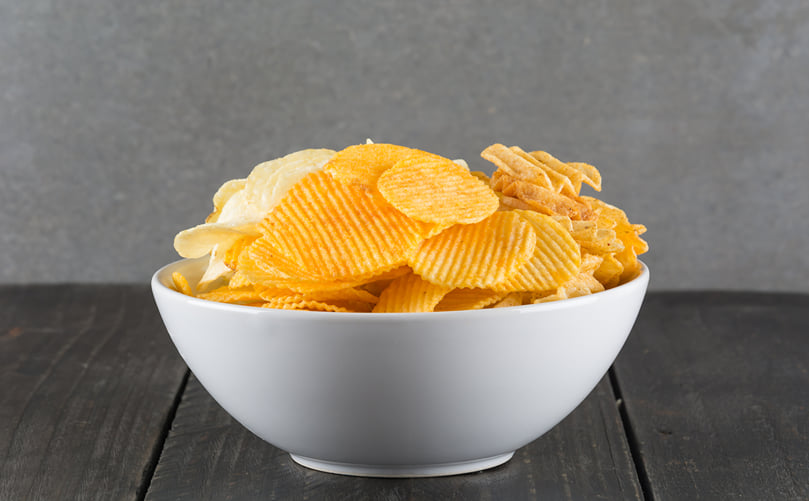
Breaking Down Potato Chip Flavours by Taste Family
Regional and Cultural Influence on Potato Chip Flavours
Regional cuisines play a decisive role in shaping potato chip flavours, with global brands such as Lay’s aggressively localizing their portfolios and offering nearly 200 flavours worldwide at any given time. By tailoring seasonings to national taste preferences, manufacturers transform a standardized product into a culturally familiar snack.
In India, flavours are heavily inspired by street food and spice blends. Magic Masala remains one of the most successful examples, combining cumin, coriander, turmeric, chilli and dry mango powder to evoke the tangy, layered profile of chaat. Other popular offerings include Spanish Tomato Tango, West Indies Hot ’n Sweet Chilli and Chile Limón, all adapted to Indian expectations for intensity and complexity.
In the United States, flavour development centers on comfort and regional barbecue traditions. Multiple barbecue styles such as hickory, honey and mesquite coexist alongside enduring favourites like Sour Cream & Onion, Dill Pickle and Salt & Vinegar. Some brands also experiment with regional nostalgia driven profiles, including Fried Green Tomato and other Southern inspired flavours.
East Asian markets emphasize umami, aroma and balance. In Japan, China and Thailand, seaweed or nori flavours are widely consumed, alongside sharper profiles such as wasabi. China has embraced bolder concepts like Roasted Garlic Oyster and Hot Chicken Noodles, while Thailand has popularized flavours such as Salted Egg Yolk and Chili Crab. South Korea’s globally influential Honey Butter flavour exemplifies the region’s preference for sweet savoury contrasts.
Across Europe and the United Kingdom, traditional flavour identities remain strong. Cheese & Onion and Salt & Vinegar are iconic in the UK and Ireland, while paprika flavoured chips dominate in Central Europe, particularly in Germany and Austria. The UK has also popularized distinctive profiles such as Prawn Cocktail, while Mediterranean influences appear in flavours inspired by tzatziki, especially in Greece.
Lay’s limited edition “Around the World” series, along with recent US launches such as Wavy Tzatziki from Greece, Masala from India and Honey Butter from Korea, highlight the commercial power of this localization strategy. By aligning flavours with national and regional taste memories, brands not only increase consumer engagement but also drive incremental sales through novelty and cultural resonance
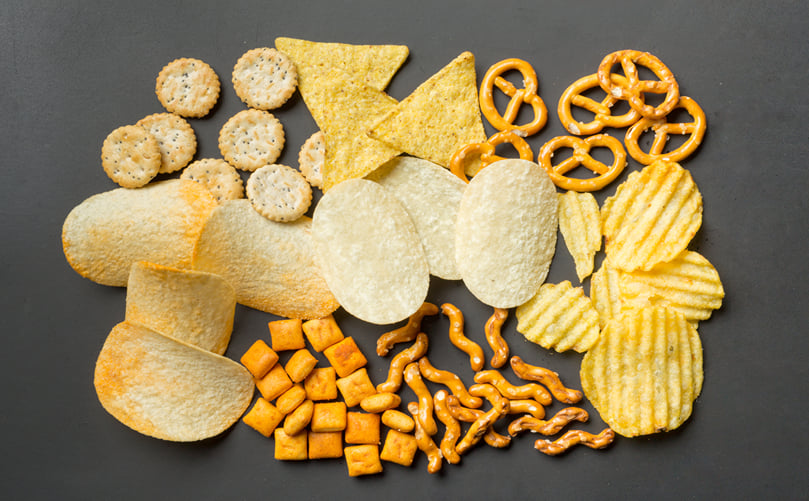
A World of Flavour: How Regional Cuisines Shape Potato Chips
Inside the Crunch: The Science and Chemistry Behind Potato Chip Seasoning
Potato chip flavour is derived from two primary sources: intrinsic aroma compounds formed during frying and added seasonings applied after frying. Together, these elements create the characteristic taste, aroma and overall sensory impact associated with potato chips.
Intrinsic flavour develops mainly through the Maillard reaction, Strecker degradation and lipid oxidation. During frying, typically conducted at temperatures between 160 and 190 °C, reducing sugars react with amino acids to form complex aroma compounds, while fatty acids undergo oxidation. A 2025 GC–IMS study examining five commercial potato chip types identified 57 volatile compounds, with aldehydes forming the dominant group. These included 17 aldehydes accounting for approximately 25–34% of total volatiles, along with 10 ketones, 9 esters, 12 alcohols, 3 pyrazines and several minor compounds.
Among the most important aroma contributors is (E,E)-2,4-decadienal, which provides the deep fried, fatty note characteristic of potato chips and originates from the oxidation of linoleic acid. Methional or 3-(methylsulfanyl) propanal, is responsible for the distinctive cooked potato aroma. Pyrazines contribute roasted, nutty and baked-potato notes and are typically formed during the final stages of the Maillard reaction. Other aldehydes such as hexanal and nonanal add green and fatty nuances. Frying generates significantly higher levels of aldehydes and ketones than baking, which explains the richer aroma profile of fried chips.
Added seasoning is applied after frying and is formulated to enhance, balance and stabilize flavour perception. Salt acts both as a flavour enhancer and a carrier for other components. Sugars such as dextrose, maltodextrin or other carbohydrates provide sweetness, balance acidity and improve adhesion to the chip surface. Organic acids, including citric acid, malic acid and vinegar powder, deliver tanginess. Fats and oils contribute mouthfeel and help bind lipophilic flavour compounds, while spices, herbs and vegetable powders such as onion, garlic and tomato define the primary flavour identity. Umami intensity is increased through ingredients like monosodium glutamate and yeast extracts, while dairy-based flavours rely on cheese powders, sour cream solids and related ingredients.
Flavour molecules can also be classified based on solubility. Oil soluble or lipophilic, compounds such as essential oils from spices and many pyrazines bind strongly to the fried chip surface and are generally more heat stable. Water soluble compounds, including acids and certain salts, dissolve quickly in saliva and release flavour rapidly in the mouth, contributing to an immediate taste impact.
Heat stability and flavour retention remain critical challenges, as many volatile compounds can degrade or evaporate during frying and storage. To address this, manufacturers commonly use encapsulation technologies, such as spray drying flavour compounds in maltodextrin, gum arabic or starch-based matrices. Encapsulated flavours can withstand frying temperatures of up to 180 °C and are released gradually during chewing, helping maintain flavour intensity and extend shelf life to approximately 6–12 months.
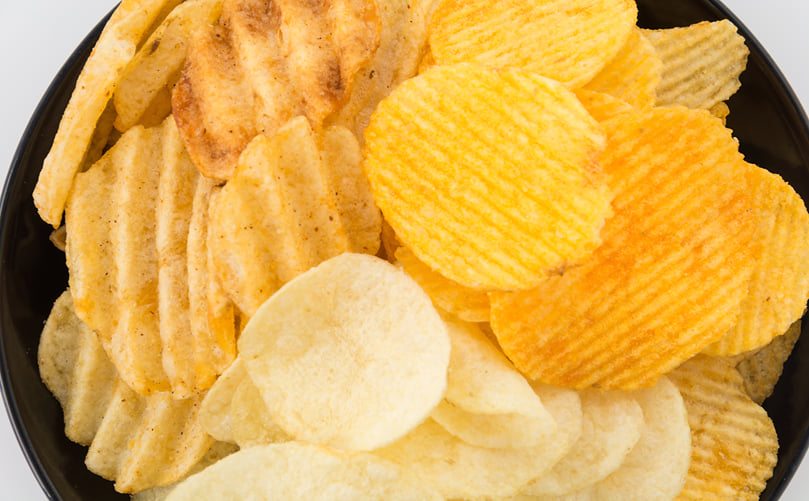
What Gives Potato Chips Their Signature Taste
Crunch Matters: How Texture Shapes Flavour Intensity in Potato Chips
Texture plays a decisive role in how seasoning adheres to potato chips and how flavour is perceived once the chip enters the mouth. The thickness of the chip, the roughness of its surface and the way it fractures during chewing all influence oil retention, seasoning load, saliva interaction and the speed and intensity of flavour release.
Thin or regular potato chips, typically around 1.0–1.3 mm thick with a smooth surface, retain relatively low to moderate amounts of seasoning. Their clean, flat structure offers limited surface area for powders to cling to, resulting in a light, crisp bite and a quick burst of flavour that fades rapidly. This makes them well suited for classic salted varieties and everyday snacking where subtlety and repeatability are valued.
Ridged or wavy chips are slightly thicker, usually around 1.3–1.5 mm, and feature grooves that significantly increase surface complexity. These ridges trap seasoning particles and hold them more effectively, delivering a stronger initial impact and a longer lasting flavour release. As a result, ridged chips are commonly paired with bold seasonings such as barbecue, sour cream or cheese-based flavours that benefit from higher powder retention.
Kettle cooked chips represent the most extreme example of texture driven flavour delivery. With thicknesses ranging from 1.5–2.0 mm and a blistered, irregular surface formed during slow, batch frying, these chips can hold two to three times more seasoning than regular chips. The porous structure acts like a sponge, absorbing oils and anchoring flavour particles deep into the surface. At the same time, prolonged frying intensifies Maillard reactions, creating a richer, nuttier base potato flavour even before seasoning is applied. The result is a dense, aggressive crunch and a layered, long lasting flavour experience typically associated with premium or deli style chips.
Stackable chips, produced from reconstituted potato dough and extruded into uniform, flat shapes, offer a different texture flavour dynamic. Their smooth, consistent surface allows for even seasoning distribution, but the reduced surface complexity limits total seasoning adhesion. Flavour delivery is therefore consistent and controlled rather than intense, making these chips ideal for uniform flavour profiles and dipping applications, as seen in Pringles style products.
Overall, texture acts as a physical flavour amplifier. Rougher, thicker and more irregular chip structures not only hold more seasoning but also enhance intrinsic potato flavour, while smoother and thinner chips deliver cleaner, faster and milder flavour experiences.
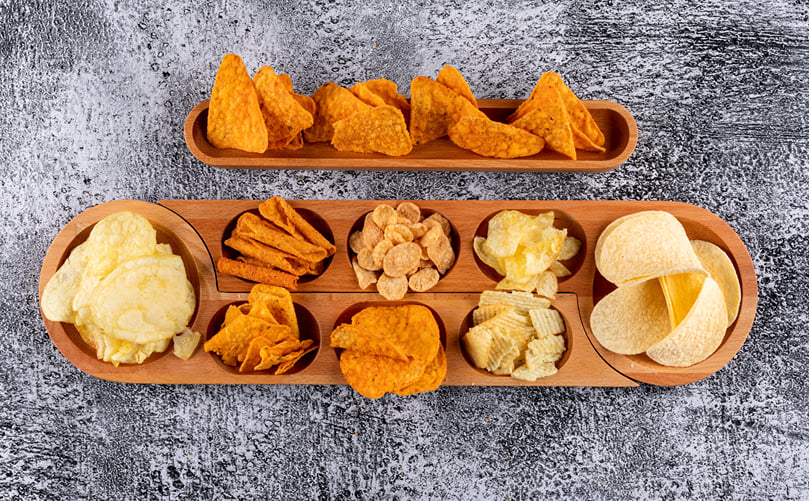
Relationship Between Chip Texture and Flavour Release
Natural vs Artificial Flavours: Regulation, Perception and Clean Label Reality
Potato chip flavour labels are governed by clear regulatory definitions, particularly under the US FDA regulation 21 CFR 101.22, which distinguishes between natural and artificial flavourings based on their source rather than their level of processing.
A natural flavour or natural flavouring is defined as an essential oil, oleoresin, essence, extractive, protein hydrolysate, distillate or any product formed through roasting, heating or enzymolysis, provided that its flavouring constituents are derived from natural sources. These sources include spices, fruits or fruit juices, vegetables or vegetable juices, edible yeast, herbs, bark, buds, roots, leaves or similar plant materials, as well as meat, seafood, poultry, eggs, dairy products or fermentation products derived from these materials. The defining criterion is that the primary function of the ingredient is flavouring rather than nutritional contribution.
An artificial flavour or artificial flavouring, in contrast, refers to any substance added to impart flavour that is not derived from the natural sources specified above. This category includes synthetically produced flavour compounds listed under regulations such as 21 CFR 172.515(b) and 21 CFR 182.60, unless those same compounds are obtained from natural raw materials through approved processes.
An important distinction is that the term “natural flavour” does not imply minimal processing. Natural flavours often undergo extensive processing, including solvent extraction, enzymatic conversion, thermal reactions and purification steps, and they may involve synthetic processing aids that are not required to appear on labels. As a result, natural flavours are not inherently “cleaner,” simpler or less technologically complex than artificial flavours.
Consumer perception has nevertheless driven a strong clean label trend. Many consumers actively avoid products labeled with “artificial flavours,” prompting manufacturers to reformulate using fermentation derived umami ingredients such as yeast extracts, spice oleoresins and encapsulated natural extracts. These alternatives allow brands to maintain flavour intensity while meeting label expectations.
From a regulatory standpoint, a “no artificial flavours” claim is permitted as long as all flavouring components meet the legal definition of natural flavouring, even when those natural flavours are highly processed or technologically sophisticated.
Health Driven Flavour Reformulation in Potato Chips
For more than 15 years, potato chip manufacturers have been quietly reformulating seasonings to reduce sodium, fat and overall calories while still preserving the addictive “just one more chip” experience. Among all reformulation efforts, sodium reduction has received the greatest attention, as salt is central to flavour perception and consumer satisfaction.
Around 2010, major companies such as PepsiCo began experimenting with so called “designer salts,” which are hollow or powder like salt crystals designed to dissolve more rapidly on the tongue. Because these smaller particles release saltiness faster, they can deliver the same perceived salt impact with up to 25% less sodium. In the same year, Frito-Lay launched nationally available “Lightly Salted” versions of Lay’s, Ruffles and Fritos, marking a clear shift toward health-oriented reformulation without abandoning mainstream appeal.
Over the following decade, flavour science advanced rapidly. Manufacturers introduced potassium chloride blends, yeast extracts, nucleotides and flavour modulators to compensate for reduced sodium while masking bitterness and metallic aftertastes. Further innovations, such as optimized crystal geometries including Alberger flake salt and micro encapsulated salt systems, enabled sodium reductions ranging from 20% to as high as 60% in certain product lines without a noticeable decline in perceived saltiness.
Efforts to reduce fat and calories followed a similar strategy focused on sensory efficiency rather than simple reduction. Companies expanded baked chip lines, shifted toward high oleic oils for improved lipid profiles, and experimented with avocado and olive oil bases in premium products. At the processing level, more intense seasoning applications after frying allowed manufacturers to reduce overall oil uptake. Encapsulation technologies ensured that flavours were protected during processing and released directly in the mouth, enhancing flavour intensity without increasing fat content.
The outcome of these combined strategies is that many modern reduced sodium or lower fat potato chips now taste as salty or even saltier to most consumers than older full sodium versions. Advances in salt structure, flavour chemistry and delivery systems have fundamentally changed how flavour intensity is achieved, allowing health driven reformulation without sacrificing consumer satisfaction.
Limited Edition and Experimental Flavours in Potato Chips
Limited edition and contest driven flavours have become one of the most powerful tools brands use to test new ideas, generate free publicity and occasionally transform a bold experiment into a permanent bestseller. These releases allow companies to innovate rapidly while involving consumers directly in the flavour creation process.
Lay’s “Do Us a Flavor” contest, launched in 2012, remains the most widely recognised example. Across multiple rounds, the campaign attracted millions of submissions worldwide and produced several winning flavours that, at least for a time, became household names. In 2012, Cheesy Garlic Bread won the contest, with Chicken & Waffles emerging as a notable finalist. The 2014 competition crowned Kettle Cooked Wasabi Ginger as the winner, followed by Southern Biscuits & Gravy in 2015 and Crispy Taco in 2017.
Beyond the official winners, numerous contest entries and limited run flavours reached store shelves and captured consumer attention. These included Greek Tzatziki, Fried Green Tomato, Bacon Mac & Cheese, Wavy Mango Salsa, Cappuccino, Everything Bagel and Sriracha. While many of these flavours were available only for a few months, some, such as Chicken & Waffles and Tzatziki, proved popular enough to return later as permanent or recurring offerings. The format of the contest created significant social media buzz and gave consumers a genuine sense of ownership in the brand’s innovation process.
Other major snack brands have adopted similar experimental strategies. Pringles has introduced limited edition flavours such as Brussels Sprouts, Hot Honey and Eggs Benedict. In the UK, Walkers ran its own “Do Us a Flavour” campaign, producing unconventional winners like Builder’s Breakfast and Cajun Squirrel. Around the world, regional one-off flavours appear regularly, including KFC Zinger chips in the Middle East and Maple Moose in Canada, reflecting local tastes and cultural influences.
These short lived flavours typically serve three key purposes for brands. They allow market testing of new concepts with minimal risk, generate free media coverage and social sharing and help keep the brand image fresh, dynamic and exciting in a highly competitive snack market.
Consumer Sensory and Psychological Appeal in Potato Chips
Flavour perception is driven by far more than taste buds alone, with taste accounting for only about 20% of the overall experience. The remaining influence comes from smell, sound, texture, memory and expectation, all of which combine to shape how a potato chip is perceived and enjoyed.
Sound plays a surprisingly important role in this process. In well-known studies conducted in 2004 and 2008 by Charles Spence at Oxford University, participants ate identical Pringles while listening to manipulated crunch sounds through headphones. When the crunch was amplified or when higher frequency sound components were emphasized, participants rated the chips as up to 15% fresher and crisper. This insight explains why chip bags are intentionally designed to be noisy and why kettle cooked chips often feel more flavourful, as their louder and longer crackle draws greater attention to the act of chewing.
Nostalgia and comfort are equally powerful drivers of preference. Flavours such as Sour Cream & Onion, BBQ and Cheese & Onion consistently rank at the top in both blind and branded sensory tests because they evoke memories of childhood, family gatherings or after school snacks. Research shows that nostalgic foods increase preference for indulgent products and strengthen emotional attachment and brand loyalty.
Branding and expectation also have a dramatic impact on flavour perception. The same chip can receive liking scores that are 20% to 40% higher when tasted with the packaging visible compared to blind tasting. Elements such as packaging colour, flavour names like “Spicy” versus “Mild” and even the sound of opening the bag shape expectations and influence how the flavour is ultimately experienced.
Consumer behaviour further splits along the line of curiosity versus familiarity. Younger consumers often seek extreme heat levels or fusion flavours for novelty, experimentation and social media appeal. In contrast, older or comfort-oriented consumers tend to prefer familiar, classic flavours that provide emotional reassurance and consistency.
Together, these sensory and psychological factors explain why a simple potato chip is often experienced as an emotional event rather than just a basic food product.
Flavour Stability and Shelf Life in Potato Chips
Potato chips are highly susceptible to flavour degradation due to their large surface area, residual frying oil and constant exposure to oxygen, light, moisture and heat. The main drivers of quality loss are lipid oxidation, which produces rancid aldehydes such as hexanal and (E,E)-2,4-decadienal, along with the gradual loss of volatile aroma compounds responsible for fresh flavour.
From a scientific standpoint, peroxide value (PV) is widely used as the standard indicator of early stage lipid oxidation. Studies consistently show that PV increases most rapidly in chips fried in regular sunflower oil, whereas chips produced with high oleic sunflower oil (HOSO) exhibit significantly greater oxidative stability. Oil composition therefore plays a central role in determining shelf life.
Packaging technology further influences flavour stability. Nitrogen flushed packaging, which displaces oxygen inside the bag, can nearly double shelf-life stability. Industrial trials have demonstrated that nitrogen flushed crisps fried in regular sunflower oil oxidize far more slowly than non-flushed equivalents, while nitrogen flushed HOSO chips show the highest overall stability. In parallel, light exposure has been shown to accelerate rancidity in transparent packaging, which is why modern chip bags typically use metallized or fully opaque films combined with antioxidants such as TBHQ, tocopherols and rosemary extract.
Seasoning technology also contributes to flavour retention. Encapsulated seasonings, commonly produced by spray drying flavour compounds in carriers such as maltodextrin or modified starch, protect volatile aromas during storage and release them during chewing. This approach can extend perceived freshness by approximately three to six months under commercial storage conditions.
Under current industrial practices, typical shelf-life ranges from six to nine months for standard potato chips and from nine to twelve months for kettle cooked or nitrogen packed premium products. However, once a bag is opened, flavour quality can decline within hours as chips rapidly absorb moisture and are exposed to oxygen.
More recent innovations include the use of rapeseed oil based oleo gels structured with rice bran wax or beeswax. These systems reduce oil uptake during frying, slow oxidative reactions, lower water activity and help maintain crunch while keeping acrylamide formation within acceptable limits.
Overall, modern flavour stability in potato chips is achieved through a combination of oil selection, particularly high oleic oils, advanced packaging systems using nitrogen flushing and high barrier films, targeted antioxidant use and flavour encapsulation. Together, these advances have transformed potato chips from a product with a shelf life of only four to six weeks into a stable, year-round snack.
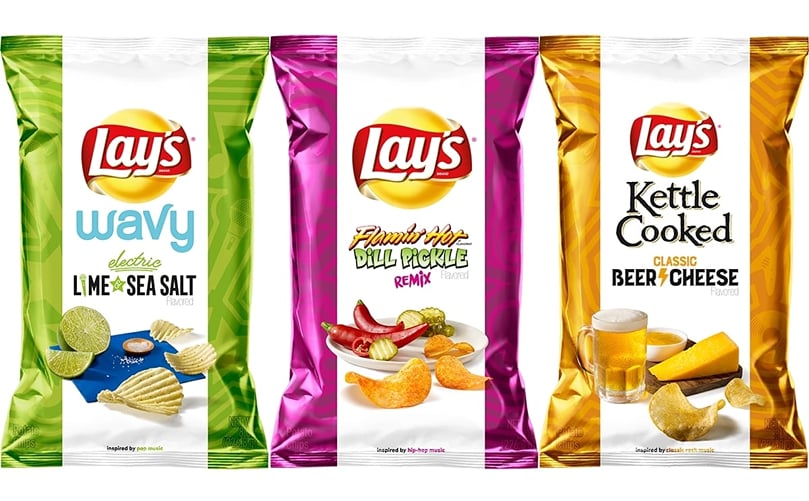
Technologies Used to Preserve Flavour and Freshness in Potato Chips
Globalization and Fusion Flavours in Potato Chips
Globalization has transformed potato chips from a simple salted American snack into a versatile platform for cross-cultural flavour experimentation. As food cultures began to travel across borders through migration, tourism and media, the potato chip evolved into a product that reflects global taste exchange rather than local tradition alone.
From the 1950s through the 1970s, the first flavoured chips remained largely regional in character. Cheese & Onion dominated the UK and Ireland, while BBQ became firmly established in the United States. These flavours were closely tied to local preferences and rarely crossed borders.
During the 1990s, increased global travel and migration introduced consumers to new taste profiles, leading to the emergence of flavours such as chilli, wasabi, curry and peri peri in mainstream snack markets. These flavours marked an early stage of internationalization, where single origin global tastes were adapted for mass consumption.
The 2000s and 2010s represented a major acceleration in localization strategies. Lay’s alone launched approximately 200 region specific flavours worldwide, tailoring products to local palates while using a globally recognisable brand. Notable examples include Magic Masala in India, Nori Seaweed across Japan and parts of Asia, Honey Butter in Korea, Salted Egg Yolk in Thailand, Prawn Cocktail in the UK and Paprika in Germany. This period demonstrated the commercial power of deeply local flavours within a global framework.
From the 2010s to the present, true fusion flavours have expanded rapidly. These blends combine elements from multiple cuisines, such as Korean Mexican profiles pairing gochujang with lime, Thai Chinese interpretations like chilli crab, Indian Mexican combinations such as masala with chile limón and sweet heat pairings including hot honey or spicy mango. These flavours are designed to feel adventurous while remaining accessible.
Brands now actively pursue “global local” strategies to drive innovation. Examples include Lay’s “Around the World” series, Pringles’ experimental releases featuring flavours like bulgogi or chilli crisp collaborations and region-specific launches that gain international attention through social media, such as salted egg yolk or birria inspired spice profiles.
The result is a snack category that mirrors global migration patterns, digital culture and online food trends. Consumers in the United States now routinely enjoy Thai style salted egg or Korean honey butter chips, while Asian markets readily adopt American style BBQ or ranch flavours. With more than 1,200 documented potato chip flavours worldwide, fusion profiles are the fastest growing segment, as they offer novelty without requiring full cultural familiarity.
Future Trends in Potato Chip Flavours
Looking future ahead, insights from Kerry Global Taste Charts, Innova Market Insights, McCormick, Datassential and Symrise suggest that consumers are seeking flavour experiences that balance novelty with nostalgia, boldness with balance and taste with multisensory engagement. Potato chips are particularly well positioned to meet these expectations due to their low risk, high impact nature as a snack.
One of the strongest emerging directions is the evolution of “swicy” flavours into more complex profiles. Newer expressions such as “swangy,” which combines sweet, spicy and tangy elements and “swavory,” which blends sweet, spicy and savoury notes are gaining momentum. Flavours like hot honey, spicy mango, pineapple sriracha and gochujang caramel are expanding rapidly, with fruit forward heat profiles such as mango habanero and yuzu chilli increasingly preferred over simple, one-dimensional burn.
Global cross pollination of cuisines is also moving decisively from niche to mainstream. Mexican flavours such as birria and chile chiltepín, Korean profiles like bulgogi and gochujang and Southeast Asian influences such as som tum are appearing more frequently in snack launches. At the same time, ingredients like dragon fruit are transitioning from being perceived as Asian specialties to global “now” flavours with broad appeal.
Fermented and functional umami flavours represent another important trend. Ingredients such as miso caramel, black garlic, kimchi spice and douchi or fermented black beans are being used to deliver depth and complexity. These profiles also carry a subtle gut health halo through association with fermentation even without explicit functional claims.
Botanical and heritage flavours are re-emerging with a modern twist. Black currant, identified by McCormick as its 2026 Flavor of the Year is gaining attention alongside smoked citrus, verjuice, pickled fruits, teff and hyper local pepper varieties. These are often paired with nostalgic yet refreshed combinations, such as brown butter with chai or maple butter, which blend comfort with curiosity.
According to Innova, sensorial exploration will continue to drive indulgence. Texture, aroma and visual appeal are becoming as important as taste, leading to louder kettle style crunch, layered seasoning systems and flavour profiles that evolve progressively in the mouth rather than delivering a single, static note.
Finally, cultural remixing is shifting toward greater authenticity. Consumers increasingly prefer clearly defined regional cues rather than vague labels such as “Asian” or “ethnic.” Simple, well executed global influences often outperform overly complex mash ups, as they feel more genuine and easier to understand.
Brands that succeed in this landscape will be those that balance excitement through nuanced heat and global flavour remixes with comfort delivered by familiar cheeses, classic seasonings and recognizable umami. Clean label transparency will further reinforce trust. In this context, potato chips remain an ideal vehicle for innovation, offering intense flavour delivery, low consumer commitment and virtually limitless adaptability.