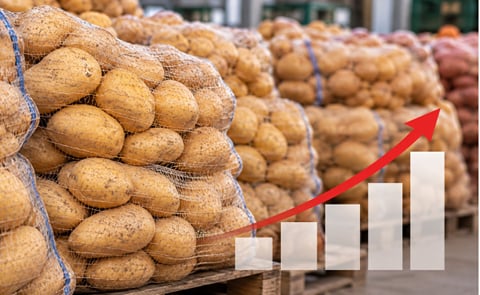

Booming potato production in the developing world could falter as the global economic slowdown reduces investment, trade and potato farmers' access to credit, a new FAO report warned today.
The threat comes at a time when potatoes have become an important staple food and a lucrative cash crop in many developing countries. China is the world's biggest potato producer, and Bangladesh, India and the Islamic Republic of Iran are now among the world's leading potato consumers.
Drawing on the most recent FAO statistics, the reportNew light on a hidden treasure shows that the potato is the world's number one non-cereal food crop, with total production reaching a record 325 million tonnes in 2007. More than half of the global harvest was produced in developing countries.
However, the report says "dark clouds are gathering over prospects for the year ahead". The global economic slowdown threatens to reduce flows to developing countries of investment and development assistance, including the support to agriculture that has helped many countries strengthen their potato sectors.
Developed countries may be tempted to raise trade barriers, which already apply stiff tariffs on imported potato products, while the banking crisis will leave many farmers with no credit to invest in production in 2009.
"Urgently needed is a vigorous new agenda for potato research and development aimed at protecting countries' food security and providing new market opportunities for potato producers,"said NeBambi Lutaladio, coordinator of FAO's International Year of the Potato 2008 secretariat.
Economic crisis threatens 'potato boom'

¿Te gustaría recibir noticias como esta por correo electrónico? ¡Únete y suscríbete!
Get the latest potato industry news straight to your WhatsApp. Join the PotatoPro WhatsApp Community!
Noticias relacionadas

Septiembre 28, 2026
México: menor oferta de papa podría impulsar los precios durante el invierno
En México, el cierre de cosechas, los menores rendimientos y la reducción de la superficie sembrada podrían restringir la oferta de papa y generar presión al alza sobre los precios entre diciembre de 2026 y febrero de 2027.

Septiembre 28, 2026
España: la sequía reduce la cosecha de patatas en 2026
La producción española de patata caerá entre un 8% y un 10% en 2026, hasta unos 1,8 millones de toneladas, con descensos de hasta 35% en Andalucía debido principalmente a la sequía y los menores rendimientos.

Septiembre 23, 2026
Chile: buscan mejorar el diagnóstico molecular de la sarna polvorienta y la sarna común en papa
En Chile, el proyecto SCAB-ID 2.0 busca validar un sistema de qPCR multiplex capaz de detectar y diferenciar simultáneamente la sarna polvorienta y la sarna común de la papa, con miras a transferirlo a laboratorios de diagnóstico agrícola.