
Global seed potato trade moves toward stronger biosecurity as certification, advanced diagnostics, and phytosanitary controls protect international supply chains.
Global Seed Potato Trade Enters a New Biosecurity Era as Countries Strengthen Phytosanitary Controls
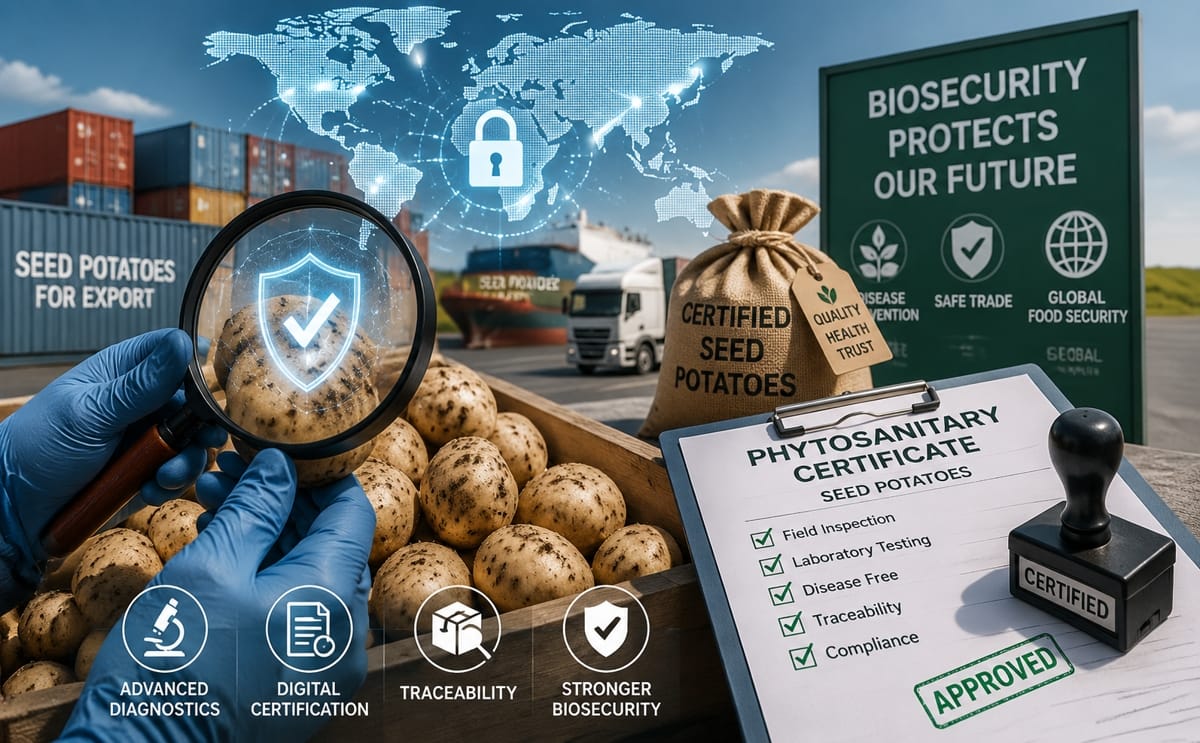
The international seed potato trade is facing increasing biosecurity pressure as countries strengthen phytosanitary regulations to prevent the spread of quarantine pests and diseases. Recent regulatory updates in major potato markets, along with the expansion of digital certification systems, highlight a growing shift toward stricter control of planting material movement across borders.
Seed potatoes remain among the most highly regulated agricultural commodities because they can act as a pathway for the introduction of economically damaging pathogens. Unlike ware potatoes, which are mainly consumed, seed potatoes are planted directly into production systems, meaning a single infected lot can introduce viruses, bacteria, nematodes or viroids into new regions.
Phytosanitary Controls Become Increasingly Important in Seed Potato Trade
Countries around the world continue to strengthen regulations governing seed potato imports as part of broader efforts to prevent the introduction of economically damaging pests and diseases.
The United Kingdom recently updated its phytosanitary requirements for seed potato imports, maintaining strict controls on planting material entering the country. Imports remain restricted to approved origins under specific conditions, including official phytosanitary certification and compliance with notification requirements.
While the update does not represent a complete change in UK seed potato policy, it reflects a wider global trend toward stronger biosecurity measures. For exporters, access to international markets increasingly depends on the ability to demonstrate compliance with strict certification standards and disease-free production systems.
Disease Risks Continue to Shape International Trade Policies
Phytosanitary regulations for seed potatoes are largely driven by the risk of introducing quarantine pests and diseases that can have long-term impacts on potato production.
Potato Spindle Tuber Viroid (PSTVd) remains one of the major concerns because infected planting material can reduce yield, affect tuber quality, and spread through commercial production systems without immediately visible symptoms. Regulatory authorities continue to monitor PSTVd as part of wider potato biosecurity programs.
Potato cyst nematodes, including Globodera rostochiensis and Globodera pallida, remain among the most important quarantine pests because they can survive in soil for many years and significantly restrict potato production once established.
Bacterial diseases such as Brown Rot caused by Ralstonia solanacearum and Ring Rot caused by Clavibacter sepedonicus also continue to influence international trade requirements because infected seed potatoes can introduce these pathogens into previously unaffected production areas.
Certification Standards Become Critical for Market Access
International seed potato trade increasingly depends on advanced certification systems that combine field inspections, laboratory testing, pathogen monitoring, and traceability.
The UNECE Seed Potato Standard (S-1) continues to support international trade by providing minimum requirements for seed potato certification and helping countries improve consistency between national certification systems. According to UNECE, differences between national certification systems can create barriers to trade, making harmonized standards important for market access.
Modern certification programs are also moving toward molecular diagnostics, including PCR- based testing, which allows early detection of pathogens before visible symptoms appear. These technologies are improving confidence in seed health and reducing the risk of disease movement through international shipments.
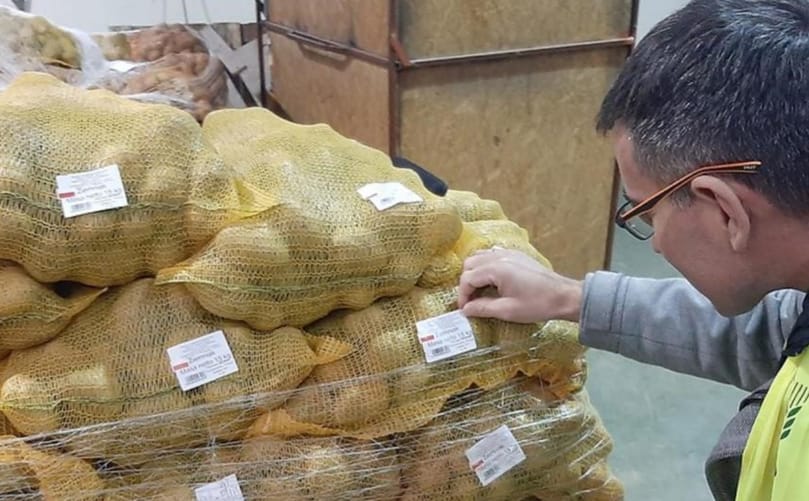
Seed potato consignments are inspected for phytosanitary compliance as countries adopt stricter biosecurity regulations and digital certification systems for international trade.
Digital Phytosanitary Certificates Transform Global Trade
Alongside stricter disease control measures, countries are increasingly adopting digital phytosanitary certification systems to improve transparency and speed up international trade.
The International Plant Protection Convention (IPPC) reported that its ePhyto Solution reached the milestone of 100 countries exchanging phytosanitary certificates electronically through the ePhyto Hub. The system is designed to improve the efficiency, security, and harmonization of phytosanitary documentation between countries.
In 2026, countries in the Near East and North Africa region also increased efforts to adopt electronic phytosanitary certification systems, with national plant protection organizations working toward greater digital integration.
For the seed potato sector, digital certification could reduce documentation delays while improving traceability from production field to international destination.
Rising Compliance Requirements Reshape Export Opportunities
While stronger phytosanitary controls help protect potato industries from disease introduction, they also increase the operational requirements for seed producers and exporters.
Seed potato suppliers must invest in disease-free multiplication systems, laboratory testing, storage management, sanitation protocols, and detailed documentation to maintain market access.
Countries with advanced certification infrastructure and strong plant health systems are likely to gain a competitive advantage, while exporters facing repeated disease interceptions or compliance failures may experience additional inspections or restrictions.
Future Outlook for Seed Potato Trade
The global demand for high-quality seed potatoes is expected to continue as growers seek improved varieties with higher productivity, disease resistance, and suitability for fresh and processing markets.
However, increasing international movement of planting material will require stronger cooperation between countries, improved diagnostics, and greater adoption of digital traceability systems.
The future of seed potato trade will depend not only on producing high-performing varieties but also on the ability of the industry to deliver healthy, certified, and traceable planting material across borders.
¿Te gustaría recibir noticias como esta por correo electrónico? ¡Únete y suscríbete!
Get the latest potato industry news straight to your WhatsApp. Join the PotatoPro WhatsApp Community!
Related News
Julio 21, 2026
Solynta Expands Hybrid True Potato Seed Portfolio with SOLHY023 Approval in Kenya
Solynta has secured approval for its hybrid true potato seed variety SOLHY023 in Kenya, expanding its HTPS portfolio with stronger late blight resistance and supporting resilient, disease-free potato production through advanced hybrid breeding.

Julio 17, 2026
Dutch Growers and NAO Back Crop Protection Covenant to Advance Sustainable Potato and Plant Sectors
Dutch growers and the Dutch Potato Organisation (NAO) support the Outline Crop Protection Covenant to reduce environmental impacts, improve water quality and boost innovation while promoting legal certainty and sustainable potato production.

Julio 17, 2026
McCain Foods Launches Ceres AI-Supported Grower Pilot Program to Improve Potato Field Visibility and Decision-Making
McCain Foods launches a Ceres AI-supported grower pilot program to improve field visibility and decision-making. The AI solution helps potato growers optimize scouting, coordination, and in-season crop management.