
"Focus on Potato"of the Plant Management Network has published a new webcast:
"Aphid Management in Potatoes"
by Juan Manuel Alvarez, Associate Professor of Entomology at the University of Idaho.
This presentation will help consultants, growers, and other practitioners in the United States to develop a better understanding about aphids, which are considered major potato pests in the U.S.
Aphids cause direct damage to potatoes by feeding on the phloem of the plant. Occasionally, high densities can kill plants. More importantly, aphids transmit viruses that cause serious diseases on potato plants that reduce the yield and quality of potatoes. This presentation introduces concepts that help identifying the most important potato colonizing and non-colonizing aphid species in several parts of the U.S.
The information presented on the management of aphids includes cultural, biological and chemical control methods. Managing aphids successfully, using any method, depends on being able to reliably monitor aphid populations in the field.
The presentation also includes recommendations on how to scout for aphids, as well as brief explanations about the two most economically important viruses that affect potatoes: Potato Leafroll Virus (PLRV) and Potato Virus Y (PVY). Understanding how aphids transmit the two viruses is critical in the management of this pest to prevent virus infections.
Even the most intense aphid control may not prevent spread of viruses unless measures are also taken to keep virus-source plants at a minimum. Information is also presented about an omnipresent weed plant in the Pacific Northwest of the U.S. that is in the same family as the potato, the hairy nightshade, which is not only a preferred host for potato colonizing aphids but also an additional inoculum source for PLRV and PVY.
Research in Idaho has demonstrated that hairy nightshade might play a major role in the epidemiology of potato viruses. The presentation includes a section on this important weed plant that is currently present in many potato-growing regions of the US.
Since at this time most of the aphid management in potatoes is done with insecticides, the final part of the presentation is dedicated to chemical control and includes recommended chemistries that not only kill the aphids but also prevent virus transmission.
This webcast can be accessed without subscription until November 30, 2010
View the webcast
New PMN webcast: Aphid management in potatoes

¿Te gustaría recibir noticias como esta por correo electrónico? ¡Únete y suscríbete!
Get the latest potato industry news straight to your WhatsApp. Join the PotatoPro WhatsApp Community!
Empresa Destacada

Related News

Julio 17, 2026
Dutch Growers and NAO Back Crop Protection Covenant to Advance Sustainable Potato and Plant Sectors
Dutch growers and the Dutch Potato Organisation (NAO) support the Outline Crop Protection Covenant to reduce environmental impacts, improve water quality and boost innovation while promoting legal certainty and sustainable potato production.

Julio 17, 2026
McCain Foods Launches Ceres AI-Supported Grower Pilot Program to Improve Potato Field Visibility and Decision-Making
McCain Foods launches a Ceres AI-supported grower pilot program to improve field visibility and decision-making. The AI solution helps potato growers optimize scouting, coordination, and in-season crop management.
Julio 14, 2026
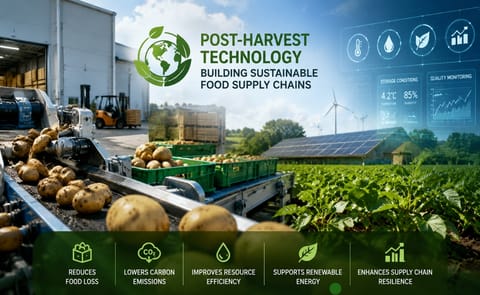
Post-Harvest Technology Emerges as a Key Driver of Sustainable Food Systems and Climate Goals
Advanced post-harvest technologies are helping cut food waste, reduce carbon emissions, improve storage efficiency, and strengthen sustainable food supply chains through AI, IoT, precision sorting, renewable energy, and smart cold storage solutions.