

Nearly a third of UK shoppers want food and grocery retailers and manufacturers to focus on reducing waste.
IGD consumer research shows 29% of shoppers think reducing waste should be one of the main sustainability priorities for the industry.
The findings come as 33 leading food and grocery companies have announced they are voluntarily committing to prevent 75,000 tonnes of waste being created by the end of 2012.
All signatories are IGD members and leading retailers, manufacturers, wholesalers and foodservice operators. They have signed up to the target to totally remove this volume of waste from their supply chains.
The industry has made great strides in recovering waste, rather than disposing of it. To drive this progress even further the companies have pledged to meet an extra target. They have challenged themselves to divert a further 150,000 tonnes of waste from disposal, mainly from landfill and sewerage, to more productive outputs such as anaerobic digestion.
Joanne Denney-Finch, chief executive, IGD, said: “Food and grocery businesses are striving continually to reduce waste from their operations. This has resulted in the majority of the product and packaging waste from their supply chain being recycled or recovered, rather than disposed of.
“The industry is now strengthening further its emphasis on supply chain waste prevention. This includes not producing the waste in the first place or redistributing it to alternative markets and charities, such as Fareshare.
“IGD is providing support to our members to help meet these targets by bringing the industry together and sharing case studies and spreading best practice.”
Simon Bailey, customer service director, Unilever UK &Ireland, said: “The companies who have promised to meet these targets are fully committed to reducing the amount of waste we produce as an industry. Our working group has been galvanising support from all parts of these businesses to ensure preventing and managing waste becomes second nature.”
Gavin Chappell, supply chain director, Asda, said: “Consumers these days hate waste of any kind, therefore as retailers, manufacturers, foodservice operators and wholesalers we all have a role to play in ensuring the supply chain is as efficient as possible.
"Our end goal should be to eradicate waste and ensure everything that leaves the factory door gets to its final destination in the same mint condition as when it left."
Both waste pledges were announced at the IGD Supply Chain Summit Thursday 18 November.
A new IGD Supply chain waste prevention guide is also being launched at the summit. This is an online guide providing practical hints, tips and case studies. It will help companies prevent and better manage their waste, and so meet the targets.
View the online waste prevention guide
Industry responds as one in three UK shoppers want waste reduction prioritised
Like to receive news like this by email? Join and Subscribe!
Get the latest potato industry news straight to your WhatsApp. Join the PotatoPro WhatsApp Community!
Highlighted Company

Related News

October 11, 2026
Agrico Shares Key Lessons for Building Strong, Sustainable Potato Sectors
Agrico's Michel de Bruin says strong potato sectors need more than quality seed, highlighting the importance of farmer knowledge, functioning markets, enabling regulations and flexible approaches tailored to local conditions.
October 11, 2026
International Potato Symposium in Madrid Highlights Key Challenges and Opportunities for Europe’s Potato Sector
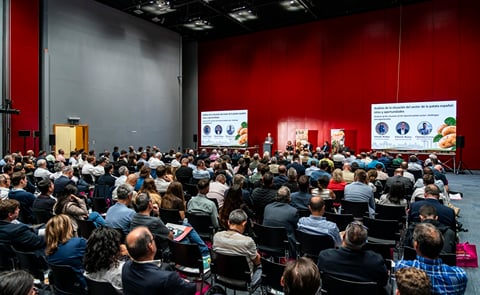
The 1st International Potato Symposium in Madrid brought together 250 professionals to discuss key challenges and opportunities in production, trade, plant health, innovation and sustainability, promoting stronger European cooperation.

October 10, 2026
India and Netherlands Strengthen Cooperation Through Seed Partnership
India and the Netherlands are strengthening cooperation in the seed sector through the India–Netherlands Seed Partnership. A recent mission included ministerial talks and a seed-sector business roundtable focused on future collaboration.