
Potatoes move through harvesting equipment during the Swiss potato harvest, which has been affected by difficult growing conditions
Swiss Potato Harvest Falls to Record Low of 333,000 Tonnes Amid Heat and Drought

Switzerland has recorded its lowest potato harvest since records began, with production reaching just 333,000 tonnes in 2026. According to Swisspatat, this is almost 20% below the six-year average of 411,000 tonnes. Scorching summer temperatures and prolonged periods of drought are cited as the main causes.
The decline is also significant in terms of yield, with growers harvesting an average of 29.4 tonnes per hectare this year. Between 2020 and 2025, the average stood at 37.9 tonnes per hectare. A lower yield was last recorded in 1965, when production averaged just 23.1 tonnes per hectare.
Potatoes are also smaller than usual this season. Despite the reduced size, quality remains good, according to estimates based on samples collected across Switzerland in August.
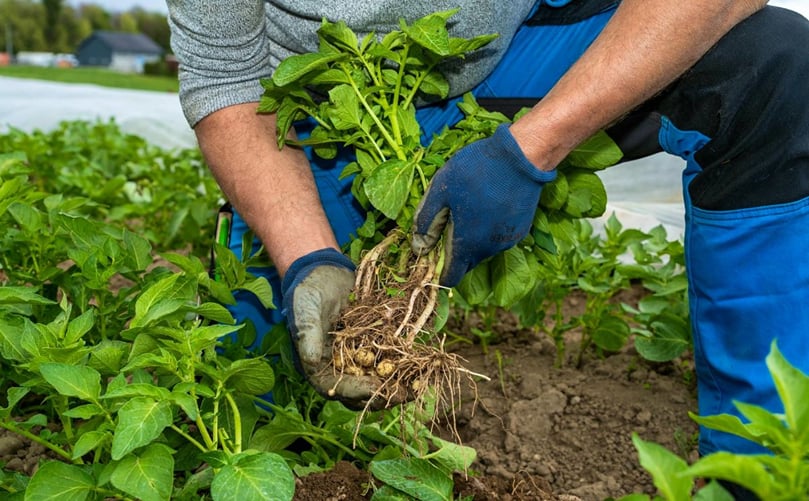
The Swisspatat professional association forecasts a deficit of around 130,000 tonnes for 2026
Imports expected to cover a 130,000-tonne deficit
Swisspatat expects Switzerland to face a potato deficit of around 130,000 tonnes in 2026, which will need to be covered by imports. The country's potato self-sufficiency rate is consequently expected to fall to 70–75%, compared with an average of around 85%.
The reduced domestic supply could result in higher potato prices and a greater presence of imported potatoes on retail shelves. However, Swisspatat does not expect an actual shortage for either consumers or the processing industry.
Irrigation makes a significant difference
Around half of Switzerland's potato acreage was irrigated this season. Yields from irrigated fields were on average 55% higher than those from non-irrigated fields.
The difference highlights the growing importance of water availability as the Swiss potato sector faces increasingly challenging climatic conditions.
Sector focuses on more robust potato varieties
Since 2020, the Swiss potato sector has increasingly focused on more robust varieties. These varieties already account for around 20% of the country's potato acreage. An agreement concluded with the Swiss Confederation in 2024 also establishes a long-term objective of increasing the share of production based on more resistant varieties.
Christian Bucher, Director of Swisspatat:
"Selection of new robust varieties can take up to 15 years. We don't have that time."
Bucher believes two areas require particular attention to maintain a reliable domestic potato supply. Switzerland needs to keep pace with the European Union regarding new breeding techniques, which could accelerate the development of robust varieties. He also wants the potato sector to be involved in developing future water-management strategies. On both issues, Bucher is calling on the Swiss Confederation to take action.
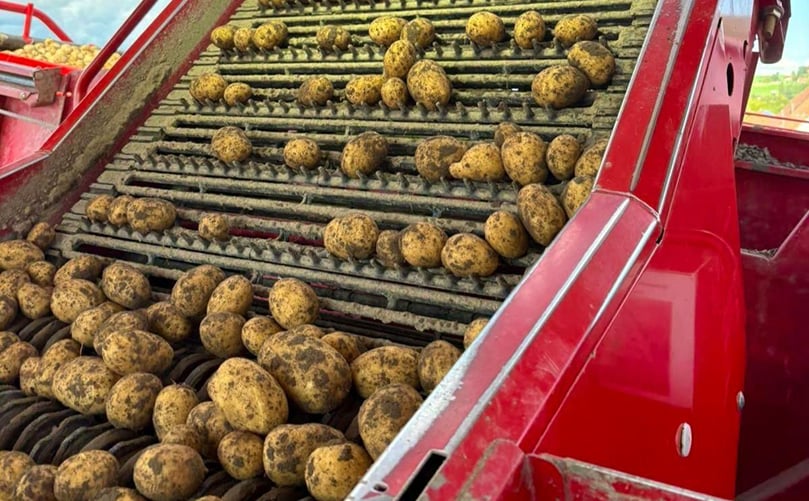
Switzerland is recording its lowest potato harvest on record in 2026 following a season marked by challenging weather conditions
Like to receive news like this by email? Join and Subscribe!
Get the latest potato industry news straight to your WhatsApp. Join the PotatoPro WhatsApp Community!
Highlighted Company

Related News

October 08, 2026
ICAR-CPRI Potato Varieties Cover Nearly 75% of India’s Potato Area
ICAR-CPRI's Kufri Jyoti, Kufri Bahar, Kufri Pukhraj and Kufri Chipsona-1 together cover nearly 75% of India's potato cultivation area. The varieties have boosted productivity, farmer incomes and the potato processing sector.

October 06, 2026
Dutch Potato Organisation Celebrated Potato Tuesday at Utrecht Central Station on October 6
The Dutch Potato Organisation celebrated Potato Tuesday on October 6 at Utrecht Central Station during the Week of Our Food. Visitors can enjoy free recipe booklets and discover the people behind the Dutch potato industry.

October 05, 2026
Punjab Agricultural University Introduces Four Potato Varieties for Higher Yield and Disease Resistance
PAU Ludhiana has released four potato varieties—PP-101, PP-102, PP-103 and PP-104. Yields range from 142–184 quintals/acre, with PP-103 offering early harvest and PP-104 moderate late-blight resistance. Seed is now available.