


August 29, 2017
Fredericton Potato Research Lab invites the public
More than 300 people stopped by Fredericton Research and Development Centre's open houseFrom the archive

![Dirk Hays,Texas A&M AgriLife Research plant geneticist: “With Ground Penetrating Radar (GPR), we can image the size of the tubers and get a correlation to the actual physical size of the potato without harvesting them. [...] We can get an almost one-to-](https://media.potatopro.com/texas-a-and-m-gound-penetrating-radar-early-potato-1200.jpg?width=480&height=295&crop=smart&mode=crop "Dirk Hays,Texas A&M AgriLife Research plant geneticist: “With Ground Penetrating Radar (GPR), we can image the size of the tubers and get a correlation to the actual physical size of the potato without harvesting them. [...] We can get an almost one-to-")
August 17, 2017
Early maturing potato cultivars can be identified using ground-penetrating radar, finds Texas A&M Agrilife
Dirk Hays,Texas A&M AgriLife Research plant geneticist: “With Ground Penetrating Radar (GPR), we can image the size of the tubers and get a correlation to the actual physical size of the potato without harvesting them. Potatoes are a dream for Ground Penetrating Radar.”From the archive


August 14, 2017
RPE brings a new crop and a new life to Old Oak Farms® Party Potatoes®
Old Oak Farms®, RPE’s core commodity brand, is bringing new life to the fingerling potato category with Party Potatoes®. In hopes to share the party nationwide, RPE has created multi-themed promotional campaign that will span over the next several months.From the archive

August 07, 2017
Parkland Potato Varieties will be hosting its annual open day.
Parkland Potato Varieties will be hosting is annual open day at the Crop Diversification Centre South in Brooks, Alberta on August 18th from 10 am to 2 pm.From the archive
August 05, 2017
New Wisconsin State laws force potato growers to apply best practices
Wisconsin Governor Scott Walker signed two new measures involving the potato industry last Wednesday. One law makes use of certified seed potatoes mandatory, the other enforces a faster response to the presence of late blightFrom the archive

August 03, 2017
Second Generation Innate® Potatoes Receive Approval in Canada
Health Canada and Canadian Food Inspection Agency (CFIA) have completed the food, feed, and environmental safety assessments of the J.R. Simplot Company’s second generation of Innate® potatoes. The authorizations enable the potatoes to be imported, planted, and sold in Canada.From the archive
Sponsored Content
Sponsored Content
Sponsored Content
June 27, 2017
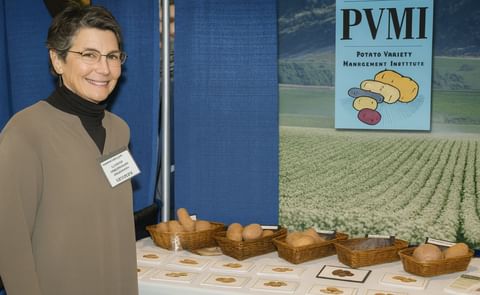
New Russet varieties - Castle Russet and Echo Russet will help US potato industry meet more stringent regulation
Two recently released new Russet varieties - Castle Russet and Echo Russet - should help the potato industry in the Pacific Northwest cope with more stringent regulations on soil fumigantsFrom the archive

June 15, 2017
Quebec eyes Seed Potato Export to Latin America and Caribbean
A couple of seed potato companies from Quebec, together with the Centre de Recherche Les Buissons (CRLB) have started an initiative to export high quality seed potatoes to Latin America and the Caribbean.From the archive

May 30, 2017
Simplot postpones commercial introduction of Innate GMO potatoes in Canada
Simplot Plant Sciences will not commercially launch its Innate GMO potatoes in Canada this year, despite regulatory approval and interest among potato farmers to grow these new potatoesFrom the archive
May 14, 2017
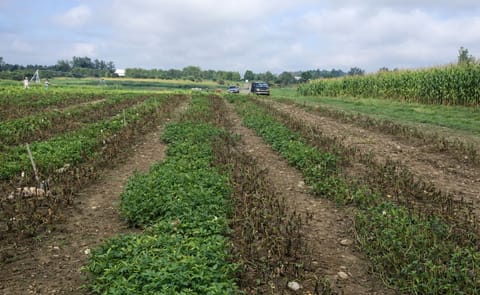
Genetically engineered potatoes approved for Maine
With little fanfare, the Maine Board of Pesticides Control unanimously approved on Friday morning the registration of three new types of genetically engineered potatoes that have been developed by Simplot Plant Sciences.From the archive

May 11, 2017
Northwest Potato Research Consortium has awarded grants for 37 regional potato projects
The Northwest Potato Research Consortium recently approved a combined $1.5 million in grant funding to 37 research projects.From the archive
May 11, 2017
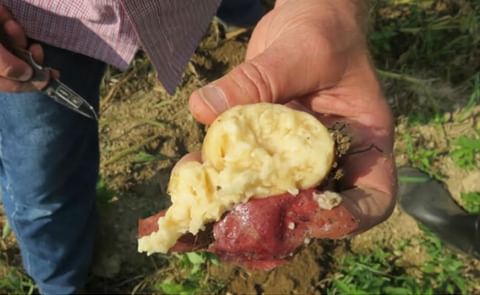
Should Seed Potato Growers start testing for Dickeya?
The potato disease Dickeya can be detected by laboratory testing — but is there enough of it present to justify the higher costs? That is the question facing Canadian Seed Potato Growers exporting to the United States who are increasingly asked for the test.From the archive
Sponsored Content
May 09, 2017
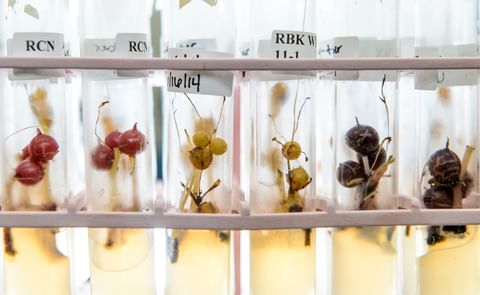
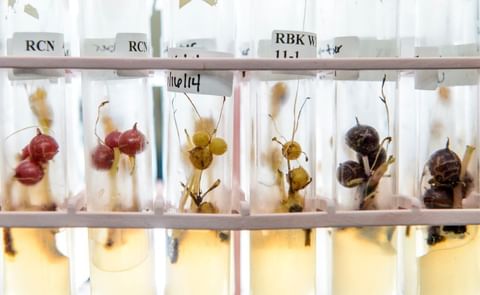
From test tube to plate, UW–Madison program keeps potatoes clean
Years before that french fry landed on your plate, the plant that would eventually give rise to the spud your fry was cut from was sealed away deep in a secure-access building, growing slowly in a test tube inside a locked growth chamber.From the archive
April 23, 2017
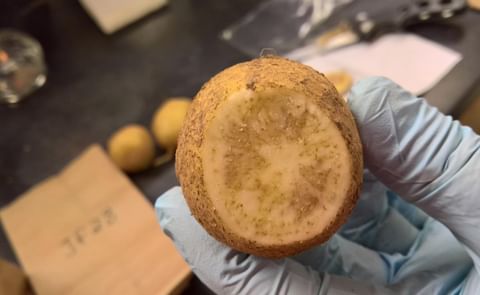
Variety screening reveals potatoes with resistance to zebrachip disease
The Texas A&M AgriLife Research plant pathology team intentionally infected potato plants with psyllids positive with the bacterium that causes zebra chip disease, in order to identify promising germplasm in the battle against the disease plaguing the US potato industry for the past 15 years.From the archive

April 19, 2017
Carisma is back! Lower GR Potato Returns to Ontario Grocery Stores
Following a highly successful launch in 2016, Canadian produce company EarthFresh is bringing its lower glycemic response (GR)* Carisma potato back to Ontario grocery retailers for an extended season.From the archive
April 11, 2017
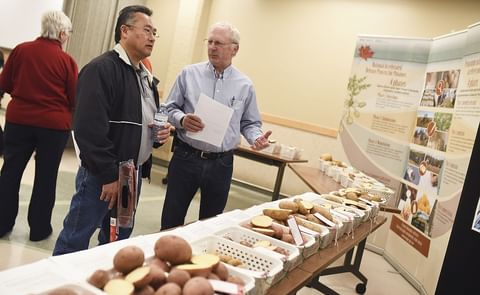
Red-skinned potato varieties lead selections by breeders
Red-skinned potatoes are sure to be on the minds and menus of many after remarkable results shown by Agriculture and Agri-Food Canada’s selections this year.From the archive

March 23, 2017
After 15+ years of absence, genetically engineered potatoes will return to Canada
Since Monsanto took their genetically modified Newleaf /Naturemark potatoes of the market in 2001, no GM potatoes have been grown commercially in Canada. But Simplot's Innate potatoes are going to change that in 2017.From the archive
March 20, 2017
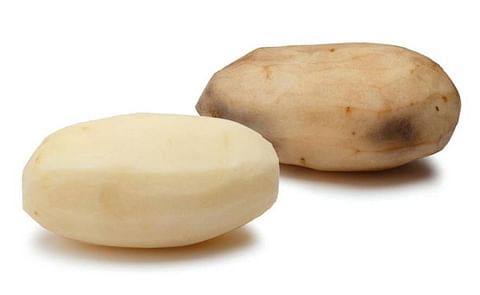
US government approved 3 more Simplot GMO potato types for cultivation and sale
The US federal government has given the final OK to three more types of potatoes genetically engineered by Boise’s J.R. Simplot Co. to resist Phytophthora - the pathogen that caused the Irish potato famine.From the archive