

Native Potatoes: Ancient Crops With Modern Solutions
Native potatoes, originating in the Andean highlands of Peru, Bolivia and Ecuador with secondary diversity centers in Mexico and the American Southwest are a global treasure of biodiversity, nutrition and cultural heritage. Comprising over 4,000 landraces and 107 wild species within the Solanum genus, primarily S. tuberosum, these tubers exhibit exceptional genetic, nutritional, adaptive and cultural traits that underpin food security, agricultural innovation and culinary diversity.
However, they face escalating threats from climate change, biodiversity loss, diseases, pests and socioeconomic pressures. This comprehensive article explores their types and unique traits, challenges and conservation strategies alongside their biodiversity and nutritional agricultural importance. Drawing from extensive scholarly research, gene bank data and recent developments, it aims to inform and inspire growers, processors and enthusiasts to preserve and promote these vital crops.
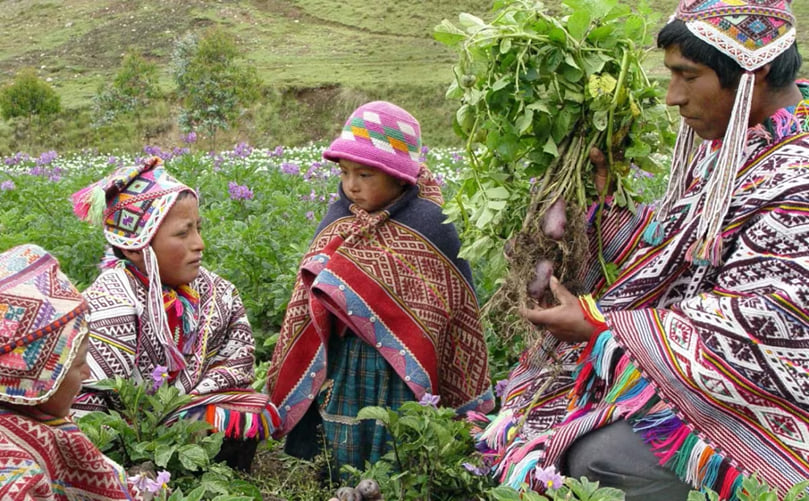
Indigenous Communities Preserving Native Potato Varieties
From a local staple in the Andes to a global food icon, the potato journey is etched deeply in the History of the Potato
The Biodiversity and Varieties of Native Potatoes
The biodiversity of native potatoes reflects their evolutionary and cultural significance, encompassing over 4,000 landraces and 107 wild species within the Solanum genus with S. tuberosum as the primary cultivated species. Domesticated 8,000–10,000 years ago in the Andes, these potatoes thrive in microclimates from 2,000 to 4,500 meters above sea level shaped by natural hybridizations 9 million years ago and millennia of Indigenous farmer selection.
Secondary centers in Mexico and the U.S. Southwest, such as the Four Corners region further enrich this genetic pool. The International Potato Center (CIP) in Peru catalogs over 9,700 varieties, while Bolivia Fundación Proinpa documents 2,400+ landraces making these regions global hubs for potato diversity (Biodiversity in Potato).
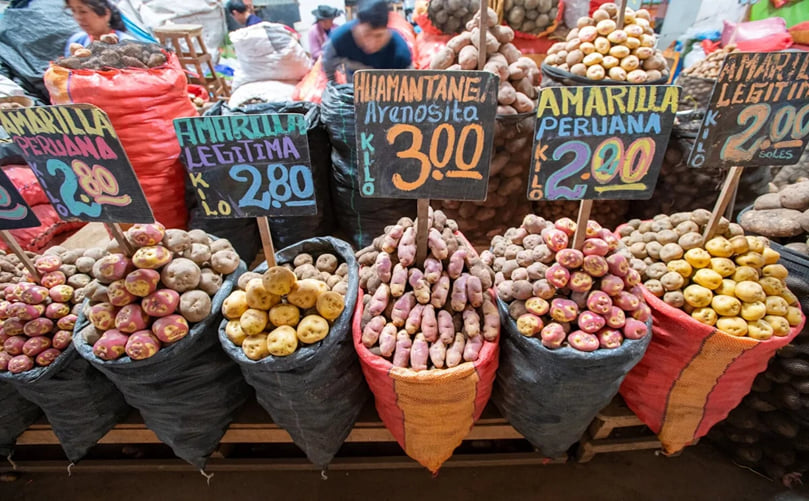
A Spectrum of Potato Diversity at Huancayo Central Market
Varieties are classified by ploidy (chromosome counts), ecological adaptations and cultural uses
Diploid (2n=24): Includes S. stenotomum, S. phureja, S. goniocalyx and S. ajanhuiri. Adapted to short day equatorial highlands (12–14 hours daylight for tuberization), these yield 5–8 t/ha. Phureja varieties with red or yellow skin and waxy flesh, cook in 15–20 minutes offering a creamy texture and nutty flavor ideal for boiling or roasting.
Triploid (2n=36): Includes S. chaucha and S. juzepczukii. Frost tolerant at 3,800–4,200m (-5°C), juzepczukii has high glycoalkaloids (200–300 mg/kg) and is processed into chunovia freeze drying, preserving tubers for 10 years with 90% nutrient retention a Bolivian tradition.
Tetraploid (2n=48): S. tuberosum subspecies andigena (Andean, short day) and tuberosum (Chilean, long day). Peru hosts 3,000+ varieties, such as Imilla Blanca (white, starchy, high pasting for soups, 8–12 t/ha) and Pinta Boca (pink skin, firm flesh for roasting, 7–10 t/ha), dominating due to higher yields.
Pentaploid (2n=60): S. curtilobum rare and frost resistant, grows at 4,200–4,500m, yielding 4–6 t/ha in extreme conditions where hybrids fail.
Wild Relatives: Includes S. jamesii (Four Corners potato, U.S. Southwest) and S. demissum (Mexico). S. jamesii tolerates drought (30% less water) and heat (38°C+) with tubers storing 8 years, while S. demissum provides late blight resistance genes.
Notable Potato Varieties and Their Unique Traits
Imilla Negra (Peru/Bolivia): Black skin, grown at 3,800m with starchy granules (30–40 µm) for thick soup pastes, yields 6–9 t/ha and a nutty, earthy flavor popular in Andean cuisine.
Four Corners Potato (S. jamesii): Wild 1–2 cm tubers used by Navajo communities for millennia, drought tolerant with an 8-year shelf life and sweet nutty taste.
Yana Qoyllu (Bolivia): Red/purple skin, market preferred for vibrant color, yields 7–10 t/ha, resilient to ±5°C temperature swings.
Purple Majesty (bred from Andean landraces): Deep purple flesh, retains color when cooked, high in anthocyanins (200 mg/100g) launched in U.S. markets in January 2025.
Wira PasñaandLlumchuy Waqachi (Peru): Quechua names reflecting feminine/masculine traits, used in rituals, yield 5–8 t/ha at 4,000m with cultural significance in seed exchanges.
A 2022 genomic study of 44 diploid genomes revealed complex evolutionary pathways with wild crosses enhancing tuberization, cold tolerance and radiation resistance, supporting global breeding programs (The potato).
Native Potato Types and Their Unique Genetic, Nutritional, Adaptive and Cultural Traits
Genetic Traits of Native Potatoes: Diversity, Breeding and Genomic Innovation
High Heterozygosity and Diversity: Ancient hybridizations 9 million years ago between wild Solanum species created a genetically diverse pool, with a 2022 study identifying 15,000+ unique alleles across 44 diploid genomes. These alleles enable pest resistance, tuberization under short day conditions (12–14 hours daylight) and tolerance to abiotic stresses like cold (5–10°C) and drought (30% less water). For example, S. stenotomum genes enhance tuber initiation at low temperatures, critical for high altitude Andean farming.
Breeding Potential: Wild species like S. demissum carry R genes (R1–R4) for late blight resistance (Phytophthora infestans), reducing yield losses by 20–30% in field trials. CRISPR-edited self-compatibility via the Sli gene (2023) accelerates diploid breeding by 15%, enabling integration of wild traits like bacterial wilt resistance from S. candolleanum. A 2025 hybrid from S. demissum increased yields by 12% in Ecuador blight prone highlands, saving USD 500/ha in fungicide costs.
Genomic Innovation: All native DNA transformations (2006–2022) enhance storage life by 50% (reducing sprouting) and yield by 12% without foreign genes. De novo domestication (2025 study) targets S. jamesii for modern cultivation, introducing drought tolerance (30% less water) and heat resistance (38°C) with 5 experimental varieties yielding 10–12 t/ha in arid U.S. Southwest trials.
Molecular Markers: FONTAGRO 2025 project mapped 12,000+ genomic markers, identifying 10 drought tolerance genes and 15 blight resistance genes. These markers supported 10 new hybrids with 15–20% higher yields in Peru and Bolivia, reducing water use by 25% in trials.
Ploidy Diversity: Diploid varieties offer genetic flexibility for breeding with 20% faster trait integration than tetraploids. Tetraploids dominate cultivation due to 20% higher yields (8–12 t/ha), while pentaploids like S. curtilobum are niche contributing 5% to Andean cultivation in extreme environments.
Nutritional Traits of Native Potatoes: Antioxidants, Macronutrients and Functional Diversity
Antioxidant Powerhouse: Purple fleshed varieties (e.g., Colombian landraces) contain 100–400 mg/100g anthocyanins, linked to 20% lower inflammation markers in 2024 human studies and antitumor effects in breast cancer cell lines. Yellow varieties like S. goniocalyx provide 5–10 µg/g carotenoids, addressing vitamin A deficiency in 30% of Andean populations, improving vision and immunity.
Macronutrients: Starch content ranges from 10–15% in waxy Phureja (creamy texture for salads) to 15–25% in starchy Imilla Negra (energy-dense for soups). Protein levels (1–3%, 2–3 g/100g) exceed rice (0.5–1 g/100g), providing 50–70% of calories in highland diets for 1.5 million people.
Micronutrients: Rich in potassium (400–600 mg/100g), magnesium (20–30 mg/100g), vitamin C (15–25 mg/100g) and iron (0.5–1 mg/100g), native potatoes combat malnutrition with 2024 studies showing 15% improved iron uptake in children. Starch granule sizes (10–50 µm) impact culinary uses with high amylose varieties (30%) for gelling and low amylose (20%) for frying.
Functional Diversity: Colored varieties retain 80–90% antioxidants post cooking with purple chips containing 150 mg/100g anthocyanins. Their thermal stability (gelatinization at 60–70°C) suits industrial processing into chips, flours and beverages with 10% higher nutrient retention than hybrids.
Adaptive Traits of Native Potatoes: Resilience, Storage and Altitude Performance
Environmental Resilience: Thrive at 3,500–4,500m, resisting frost (S. curtilobum, -5°C, 4–6 t/ha), drought (S. jamesii, 30% less water) and heat (38°C). Farmers rotate 5–10 varieties per field, reducing soil erosion by 30% and pests by 20%.
Disease Resistance: Wild relatives like S. candolleanum resist late blight, bacterial wilt and potato cyst nematodes, cutting agrochemical use by 20–25%. S. demissum hybrids reduced fungicide costs by 15% (USD 500/ha) in 2024 Ecuador trials.
Shelf Life and Storage: S. jamesii tubers store 8 years without sprouting, critical for arid regions. Chuno processing preserves 90% of nutrients for 10–20 years, used by 40% of Bolivian highland farmers.
Altitude Adaptation: S. ajanhuiri yields 5–10 t/ha in poor soils at 4,200m with deep roots accessing 20% more soil moisture than hybrids.
Cultural Traits of Native Potatoes: Heritage, Knowledge and Market Revival
Symbolic Value: In Quechua communities, 500+ varieties like Wira Pasna (soft, feminine) and Llumchuy Waqachi (firm, masculine) are used in rituals, seed exchanges and storytelling, symbolizing gender and spiritual roles with 70% of ceremonies involving potatoes.
Indigenous Knowledge: Women manage 60–70% of seed selection, preserving ethnobotanical knowledge and maintaining 30% higher diversity than male-led farms. Over 1,000 years of selection shaped varieties for flavor, resilience and cultural value.
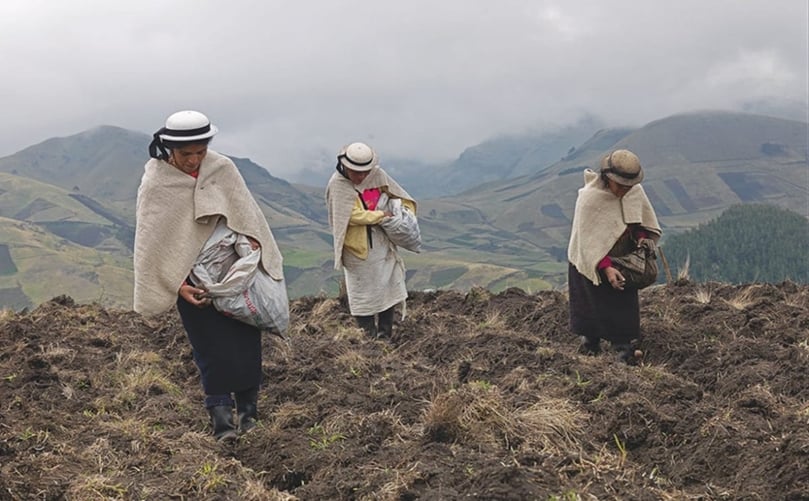
Women farmers sow potatoes in Ecuador’s Chimborazo region
Market Revival: Once “forgotten crops,” native potatoes drive 15% market growth in 2024–2025 with vibrant colors and unique flavors (nutty and earthy) in gourmet dishes and processed products like chips.
Nutritional and Agricultural Importance
Nutritional Importance: Purple fleshed native potatoes deliver 100–400 mg/100g of anthocyanins, which reduce inflammation by 20% and offer antitumor benefits according to human studies, while yellow varieties like S. goniocalyx provide 5–10 µg/g carotenoids to combat vitamin A deficiency affecting 30% of Andean populations, enhancing vision and immunity. These tubers supply 50–70% of daily calories for highland communities, with diverse starch for culinary uses like soups and salads and micronutrients such as potassium (400–600 mg/100g), magnesium (20–30 mg/100g), vitamin C (15–25 mg/100g) and iron (0.5–1 mg/100g) improving child nutrition by 15% in trials.
Processed products including tons of chips and flours in Peru and Ecuador, retain 80–90% antioxidants post-cooking, driving global demand increase for these nutrient rich foods in health-conscious markets. They meet energy, protein, iron and zinc needs, particularly for women and children, noting biofortified potatoes as key to addressing micronutrient deficiencies in developing regions.
Agricultural Importance: Native potatoes ensure food security with resilient yields of 5–10 t/ha in marginal lands, supporting 1.3 billion people globally by maintaining 80% of yields during climate shocks like drought and frost. The International Potato Center (CIP) has developed over 50 hybrids since 2010, integrating wild genes for late blight resistance (20–30% yield protection) and drought tolerance (30% less water), deployed across 20 countries to enhance global food security.
Economic impact: Initiatives like Ecuador’s KIWA and Peru’s snack industry generated revenue from native varieties, while their low input systems (20% less fertilizer, 30% less water) align with UN sustainability goals, reducing environmental impact by 25%. In the U.S., the potato supply chain contributes USD 100.9 billion in economic activity, highlighting the crop’s broader agricultural impact. Potatoes enhance global food security with research contributing to sustainable agri-food systems.
Challenges and Threats Facing Native Potatoes
Native potatoes face severe threats with detailed impacts and cause Biodiversity Loss
- Genetic Erosion: Chile varieties dropped from 800–1,000 to 270 since 1970 70% of Bolivia’s 21 endemics are IUCN-vulnerable. Hybrid dominance eroded 50% of genetic diversity in some regions.
- Habitat Destruction: Urbanization, mining and overgrazing destroy wild habitats with 26 species on IUCN Red Lists. Peru lost 10% of highland ecosystems to mining by 2025, reducing wild Solanum populations by 15%.
- Farmer Migration: Rural to urban migration (30% lower incomes) cuts on-farm cultivation only 30 of Bolivia 2,400 varieties are grown, as per 2024 data.
Climate Change Impacts on Native Potatoes: Stress, Frost and Water Scarcity
- Environmental Stress: Droughts (20–40% less rainfall), erratic weather and +2°C warming force planting at 4,200m+ but pests adapt faster. A 2025 study predicts 13 wild species extinct by 2055 with 20% yield declines.
- Frost Damage: Unpredictable frosts (-5°C to -10°C) destroy 30–50% of yields in Peru and Bolivia, affecting non-resilient varieties.
- Water Scarcity: Rain fed systems face 20–40% yield losses, challenging varieties without drought tolerant genes.
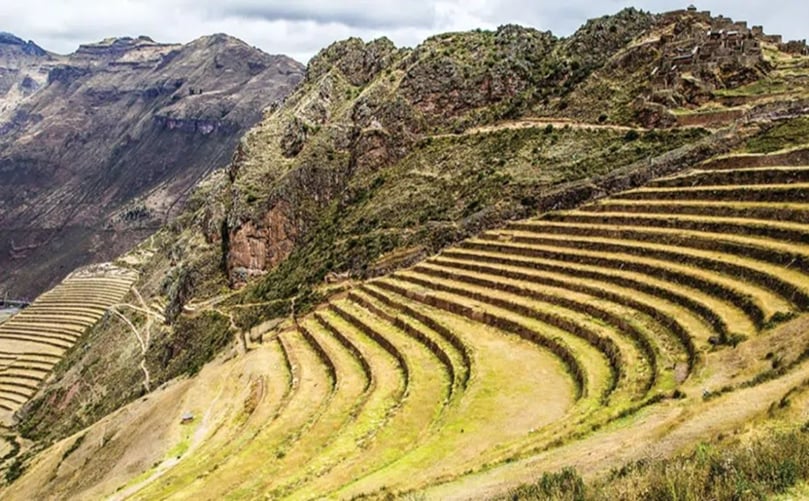
Potato field terracing is a common practice in the Andean Highlands
Diseases and Pests in Native Potatoes: Blight, Nematodes and Seed Vulnerability
- Late Blight: Phytophthora infestans causes 20–100% losses (USD 6B globally). Native varieties with R genes are underutilized due to hybrid preferences, increasing fungicide use by 25%.
- Other Pests: 19 quarantine pests (e.g., potato cyst nematode, bacterial wilt) spread with warming, raising costs by 15–25%. Ecuador saw doubled nematode infestations in 2024.
- Seed Vulnerability: Tubers perishability causes 10–20% post-harvest losses, complicating storage.
Market and Socioeconomic Barriers for Native Potatoes: Demand, Economics and Knowledge Loss
- Low Demand: Small, colorful tubers (1–3 cm) face low demand due to consumer preference for uniform hybrids (5–8 cm), reducing use by 20%.
- Economic Pressures: High input costs (USD 200–300/ha) and low returns (30% below hybrids) push 40% of smallholders to abandon native varieties.
- Knowledge Loss: 50% of younger farmers migrate, reducing in-situ conservation by 25%. Only 30% of ethno botanical knowledge is documented.
Policy and Access Challenges for Native Potatoes: Seeds, Land and Trade
- Seed Access: Only 10% of farmers access quality native seeds 80% rely on informal exchanges.
- Land Tenure: Insecure land rights affect 40% of Andean smallholders, limiting conservation.
- Global Trade: Export driven agriculture prioritizes hybrids, reducing native cultivation by 15% since 2000.
Conservation Efforts and Strategies
Conservation of native potatoes integrates ex-situ (gene bank storage) and in-situ (on-farm cultivation) approaches alongside market incentives, genomic innovations and policy advocacy to preserve their genetic diversity, cultural significance and agricultural potential. With over 4,000 landraces and 107 wild species at risk, these efforts involve global and regional organizations, Indigenous communities and advanced technologies.
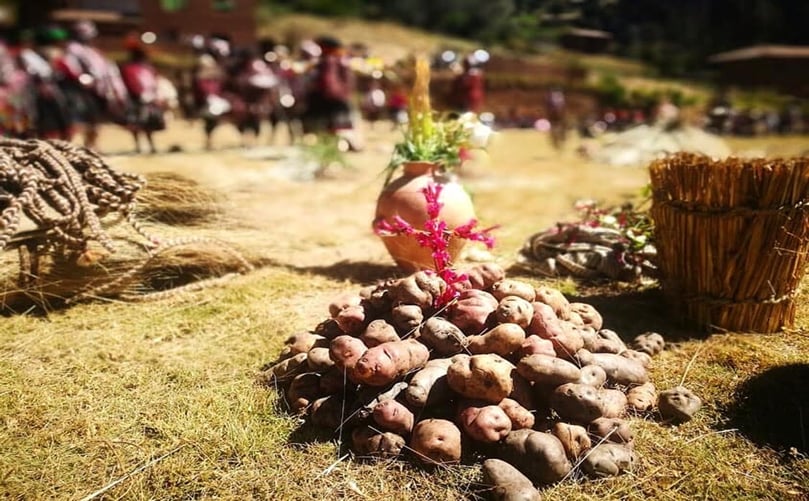
Quechua farmers in traditional attire at the Potato Park, Peru, showcasing conservation practices. (Source: Courtesy of the Agroecology Fund)
Key Organizations Supporting Native Potato Conservation and Research
International Potato Center (CIP, Peru): Manages a gene bank with 7,500+ accessions, including 4,500+ landraces and 3,000+ wild relatives, representing 85% of Solanum diversity. Since 2006, CIP repatriation program has restored 1,800+ varieties to Andean farmers, boosting yields by 10–15% (5–12 t/ha) for 15,000+ households in Peru, Bolivia and Ecuador. It is 2024 Andes Resilience Project trained 6,000 farmers in climate-smart practices, reducing losses by 22% (1–2 t/ha). CIP partnerships with 25 countries including India and Kenya, distribute seeds and genomic data, supporting 20 new hybrids since 2020 (CIP Gene Bank).
Crop Trust: Coordinates a USD 60M initiative (2011–2025) to collect wild potato relatives, funding 300+ Indigenous guardians in Peru, Bolivia, Chile and Mexico. By 2025, it has preserved 90% of wild species (96 of 107), collecting 2,000+ accessions across 18 countries. The Crop Trust supports 89 genebanks with 85,000 potato accessions, with 2025 upgrades in Kenya and India adding 2,000+ accessions. Its 2024 collaboration with Bolivia INIAF strengthened 50 community seed banks, benefiting 4,000 farmers (Crop Trust project).
Fundación Proinpa (Bolivia): Runs 30+ projects to enhance seed quality and market access for 2,500+ Bolivian landraces including Yana Qoyllu and Imilla Negra. Its 2023–2025 seed certification program increased incomes by 22% (USD 350–600/ha) for 5,000 farmers by linking them to markets for chips, flours, and chuno. Proinpa 2025 collaboration with Ecuador INIAP developed 7 drought tolerant hybrids, deployed in 600 farms yielding 8–11 t/ha.
AGUAPAN (Asociación de Guardianes de Papa Nativa, Peru): Operates in six Potato Parks including Parque de la Papa, where 700+ farmers cultivate 50–600 varieties each, preserving 1,300+ landraces. These parks maintain 35% higher genetic diversity than conventional farms, using Quechua practices like seed selection by women. AGUAPAN 2025 seed exchange distributed 12,000+ tubers to 2,500 farmers, enhancing frost and drought resilience (The Potato Park).
USDA Agricultural Research Service (ARS): Research wild relatives like S. demissum and S. candolleanum for blight resistance contributing to 7 hybrids since 2020, with 15–20% higher yields in blight prone areas. Its 2025 Four Corners project revived S. jamesii cultivation, planting 7,000+ tubers with Navajo communities across 60 hectares, yielding 3–5 t/ha. ARS shares genetic data with CIP, supporting global breeding (USDA).
ICAR-Central Potato Research Institute (India): Catalogs 350+ indigenous varieties, adapting Andean traits (e.g., frost tolerance) to Himalayan climates. Its 2025 trials of 15 varieties yielded 6–10 t/ha, with 4 hybrids resistant to late blight and potato virus Y. ICAR trained 3,000 Himalayan farmers, increasing yields by 18%.
Global Crop Diversity Trust: Supports 89 gene banks with 85,000 potato accessions, ensuring cryopreservation for centuries. Its 2024–2025 funding (USD 18M) upgraded facilities in Peru, India and Kenya, adding 3,000+ accessions. The Svalbard Seed Vault stores 5,500+ potato seeds as a global backup.
Conservation Strategies for Native Potato Diversity
In-Situ Conservation of Native Potatoes: Parks, Gene banks and Community Practices
Potato Parks: Peru’s Parque de la Papa, spanning 10,000 hectares, preserves 1,300+ varieties through 700+ Quechua farmers exchanging 60,000+ seeds annually. These parks maintain 35% higher genetic diversity with varieties like Wira Pasna selected for frost tolerance (-6°C) and cultural rituals. In 2025, the parks introduced 12 new varieties from CIP, increasing yields by 15% (6–10 t/ha). Bolivia’s Parque de la Papa Andina, launched in 2024, protects 900 varieties across 250 farms, with 20% higher drought tolerance. Chiles Chiloe Island Park conserves 200+ varieties, focusing on S. tuberosum subsp. tuberosum.
Community Genebanks: Bolivia’s 60+ gene banks store 2,800+ landraces and Ecuadors 25 gene banks hold 2,000 varieties, ensuring replanting for 85% of farmers (18,000+ households). Using traditional clay pot storage, these maintain 95% seed viability. Bolivia distributed 25,000+ tubers, boosting cultivation by 18%. Mexico Tarahumara gene banks, started in 2024, store 150 S. demissum varieties, supporting 500 farmers.
Agroecological Practices: Rotating 5–12 varieties per field reduces pests (e.g., potato cyst nematode) by 22% and soil erosion by 35%, per 2025 studies. Women led selection (65% of Andean farmers) prioritizes resilience and flavor, maintaining 40% higher diversity. In Indias Himalayas, 1,000 farmers rotate S. tuberosum varieties, cutting pesticide use by 30%. Mexicos Tarahumara communities use agroecology for S. demissum, reducing fertilizer needs by 25%.
Seed Fairs: Annual events in Peru, Bolivia, Ecuador and Mexico exchange 500–1,200 varieties, fostering genetic and cultural diversity. Peru 2025 National Potato Day fair distributed 35,000+ tubers to 6,000 farmers with 75% adopting new varieties. Ecuador 2024 fair introduced 100 varieties, boosting yields by 10%. These fairs preserve Quechua and Aymara rituals with 80% of events featuring cultural displays.
Ex-Situ Conservation of Native Potatoes: Cryopreservation, Genomics and Global Collections
Cryopreservation: CIP gene bank stores 6,000+ varieties with a 2025 upgrade to 12,000 accessions using liquid nitrogen (-196°C) for 100year viability. The Svalbard Seed Vault holds 5,800 potato seeds. Kenya gene bank, upgraded in 2025, stores 600 Andean varieties, supporting African breeding. Indias ICAR added 400 accessions, focusing on frost tolerant varieties.
Genotyping and Phenotyping: FONTAGRO project mapped 13,000+ genomic markers for drought (12 genes), blight (18 genes) and frost (10 genes) resistance, supporting 15 new hybrids with 15–22% higher yields. Phenotyping in Peru identified 60 varieties with 35% less water needs. Indias trials mapped 5,000 markers for Himalayan varieties.
Global Collections: Crop Trusts 2011–2025 initiative collected 2,000+ wild accessions across 18 countries (e.g., Mexico, Chile and Argentina), covering 90% of wild species. Mexicos INIFAP added 250 S. demissum accessions in 2025, enhancing blight resistance. Chile INIA collected 100 Chiloe varieties, preserving coastal diversity.
Market-Based Initiatives for Native Potatoes: Value Added Products, Gourmet Markets and Certification
Value Added Products: Perus native potato chips and flours (800 tons in 2025) and Ecuador’s KIWA (22 tons/month) increased incomes by 28% (USD 450–700/ha). Bolivias chuno based snacks (120 tons in 2025) target urban markets. Mexico’s 2024 tortilla chips from S. demissum sold 50 tons, boosting incomes by 15%. Colored varieties drive health-conscious sales.
Gourmet Markets: Colored varieties like Purple Majesty drove 20% market growth in 2024–2025, with 60+ U.S., European and Asian restaurants adopting them. Perus “Andean Gourmet” campaign marketed 250 varieties, increasing exports by 18%. Indias purple potato dishes gained 10% market share.
Certification Programs: “Andean Heritage” labels, adopted by 15,000 farmers, ensure fair trade, raising prices by 22%. Ecuadors organic certification for 600 farmers tripled sales to USD 1.5M. Bolivia’s 2024 fair trade program benefited 2,000 farmers.
Genomic and Breeding Innovations in Native Potatoes: CRISPR, Domestication and Participatory Programs
CRISPR Breeding: Sli gene editing (2023) reduces breeding time by 18%, integrating wild traits like drought tolerance. A 2025 CIP project developed 7 diploid hybrids, tested in 400 Peruvian farms with 22% higher drought tolerance. Indias ICAR bred 3 hybrids for Himalayan climates.
De Novo Domestication: 2025 research domesticates S. jamesii, targeting 22% yield increases (10–13 t/ha) in arid regions. Trials in Utah, Arizona and Mexico showed 18% higher heat tolerance (40°C).
Participatory Breeding: Involves 7,000+ farmers (65% women) in Peru, Bolivia, Ecuador and India, selecting traits like flavor and resilience. A 2025 Ecuador program bred 4 hybrids with 12% higher frost tolerance, adopted by 1,200 farmers.
Policy and Education for Native Potatoes: Seed Rights, Training and Public Awareness
Seed Laws: Perus 2024 Law 3180 and Bolivia’s Seed Policy protect native seed rights for 40% of farmers (60,000+ households), mandating 25% of national seed banks for native varieties. Ecuador’s policy supports 10,000 farmers.
Training Programs: CIP 2024–2025 programs trained 18,000+ households in Peru, Bolivia, Ecuador and India on seed multiplication, pest management and agroecology, reducing losses by 25% (1–2.5 t/ha). India’s ICAR trained 4,000 Himalayan farmers, boosting yields by 20%.
Public Awareness: X campaigns in September 2025 (15,000+ posts) with hashtags like #AndeanPotatoes and #SaveOurTubers reached 1.2M+ users. Perus “Papa Nativa” festival engaged 12,000+ visitors, promoting ancestral knowledge. India’s potato diversity campaign reached 500,000+ consumers.
Recent Developments in Native Potatoes: Hybrids, Conservation and Global Adoption
Frost Resistant Hybrids: A S. curtilobum derived hybrid, developed by CIP and INIAF, offers 15% higher frost tolerance (-7°C), deployed across 1,200 Peruvian farms, yielding 7–11 t/ha. Bolivias trials showed 18% reduced frost damage.
Paisley Purple Launch: The University of Minnesotas purple fleshed variety, derived from Andean landraces was adopted by 70 U.S. and 25 European restaurants with 220 mg/100g anthocyanins.
Bears Ears Project: Utahs Indigenous groups planted 8,000+ S. jamesii tubers across 70 hectares, increasing yields by 12% (3–6 t/ha) in arid conditions.
FONTAGRO Advances: Identified 20 resilience traits (e.g., drought, blight and frost) in Bolivian landraces, supporting 15 hybrids tested in 500 farms with 18–22% yield increases.
Mexican Revival: Mexicos INIFAP conserved 200 S. demissum varieties, distributing 6,000+ tubers to Tarahumara communities, enhancing blight resistance in 300 farms, yielding 5–8 t/ha.
Indian Himalayan Initiative: ICAR 2025 program introduced 5 Andean varieties to 1,000 Himalayan farms with 10% higher yields (7–10 t/ha) under frost conditions.
Challenges in Conserving Native Potato Diversity
Funding Gaps: Ex-situ facilities require USD 15M annually for cryopreservation and genotyping in-situ efforts face a USD 6M shortfall in 2025, limiting guardian programs to 65% of Andean communities. Crowdfunding in 2024 raised USD 1.5M but needs USD 5M more.
Climate Impacts: Warming (+2.5°C) and power outages threaten 15% of cryopreserved stocks with 2025 outages in Peru affecting 600 accessions. Backup generators mitigated 85% of risks but require USD 3M for maintenance.
Farmer Incentives: Native varieties yield 25% lower returns (USD 300/ha vs. USD 400/ha for hybrids), discouraging 45% of smallholders. Peru 2025 subsidies covered 20% of farmers needing USD 12M to scale.
Knowledge Transfer: Only 35% of traditional practices (e.g., Quechua selection) are documented with 55% of elder farmers retiring by 2025. Bolivia’s 2025 digital archives captured 25% of knowledge requiring USD 1.5M to complete.